

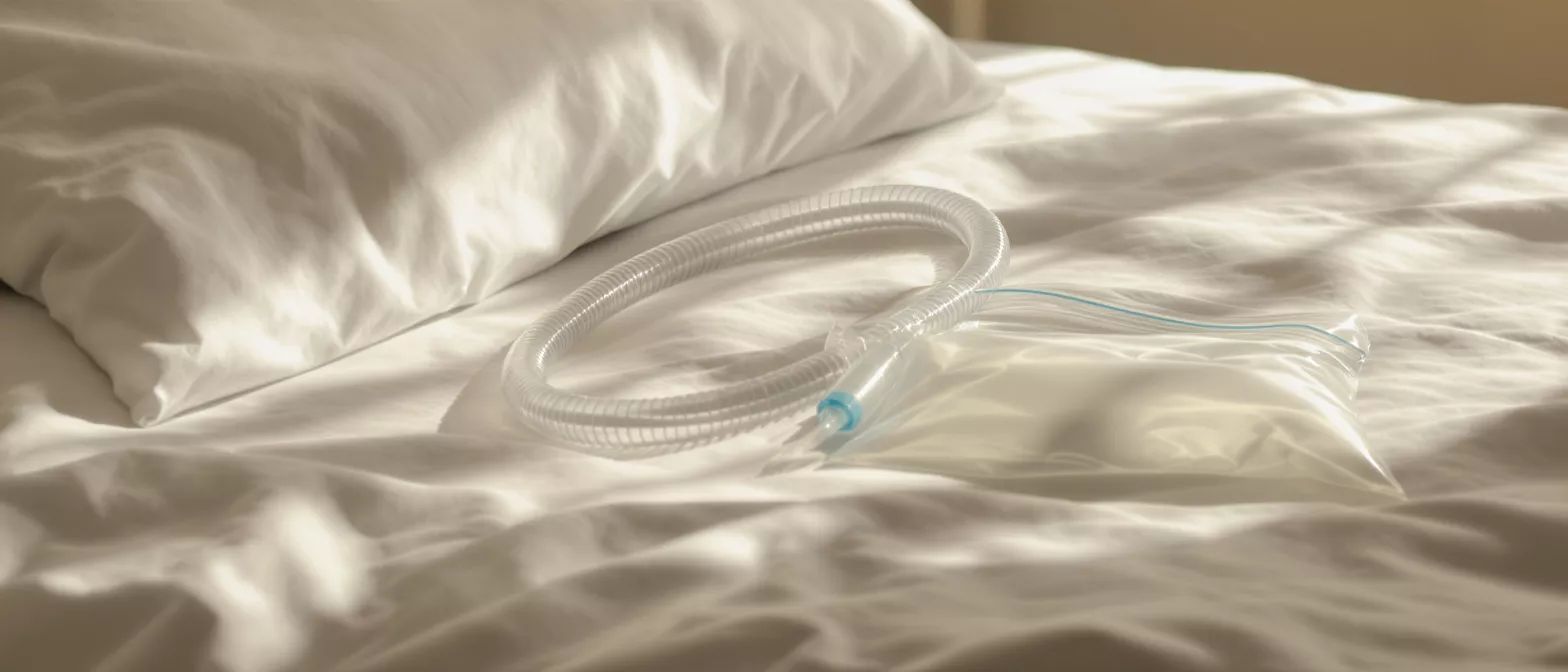
Urinary Catheter
Learn why a urinary catheter is used after heart surgery, types, care tips, and removal.
What is a urinary catheter?
A urinary catheter is a soft, flexible tube inserted into the bladder to drain urine when a patient cannot empty their bladder naturally. After heart surgery, your body needs significant time to recover, and normal bodily functions may temporarily slow down. The catheter ensures your bladder stays empty, preventing stress on your cardiovascular system while monitoring your fluid balance precisely.
The device connects to a drainage bag that safely collects urine outside the body. This setup allows your intensive care unit team to accurately measure how much urine your kidneys are producing every hour. Monitoring this output is a standard way to confirm that your heart is effectively pumping blood and that your kidneys are receiving enough oxygen.
Knowing the purpose of this tube helps reduce the fear of the unknown. Many patients feel uneasy about the idea of a bladder tube, but it is a routine, sterile tool used in operating rooms worldwide. It is designed to protect your kidneys and heart during the most vulnerable phases of recovery.
Why is a urinary catheter used after cardiac surgery?
Accurate urine output tracking: The primary reason for placing a cardiac surgery urinary catheter is to monitor your urine output meticulously. After procedures like a coronary artery bypass or valve repair, your heart is resting. Your medical team relies on urine measurements to ensure your heart is pumping strongly enough to supply blood to your vital organs.
You will be deeply sedated or asleep during your operation. While you are under anesthesia, your voluntary bladder control is paused. Without a urinary catheter, urine would accumulate in the bladder, potentially causing damage to the bladder muscle or obstructing the surgical field. The tube safely diverts fluids away while the surgical team works.
Additionally, powerful medications administered during surgery can affect how often you need to urinate. Diuretics, which help remove excess fluid from your body, will make your bladder fill rapidly. The catheter handles this rapid flow effortlessly, ensuring you remain entirely comfortable without needing to wake up or move to use the restroom.
How long will a postoperative urinary catheter remain in place?
Standard duration in the ICU: Most patients will have the tube removed within the first 24 to 48 hours after their operation. The exact urinary catheter duration depends on how quickly you wake from anesthesia and how stable your heart function proves to be. Removing the tube early is a priority, as prolonged use increases the risk of infection.
As soon as your vital signs stabilize and the intensive care monitoring lines are removed, the urinary catheter is usually next. Your surgical team will wait until you are fully awake, able to follow simple commands, and physically capable of standing or sitting to use a bedside commode. Moving your body again is a key milestone for removing the tube.
In some complex cases, the catheter may remain for a longer period. If your heart needs extra support from mechanical assist devices or if you experience acute kidney stress, the medical team will keep the tube in place for safety. Rest assured, your surgeon will remove it the moment it is medically safe to do so.
How does urinary catheter insertion work?
Insertion happens in the operating room while you are completely asleep, so you will not feel any pain or awareness of the procedure. A sterile, water-based lubricant is applied to the soft tube to ensure gentle passage through the urethra. The nurse or physician gently guides the tube until it reaches the bladder, where a small balloon is inflated with sterile water to keep it secure.
Once securely in place, urine immediately begins flowing into the collection bag. The entire process takes only a few moments and is performed under strict sterile conditions to prevent any bacteria from entering the urinary tract. Because you are sedated, the muscles are completely relaxed, which makes the insertion smooth and trauma






