

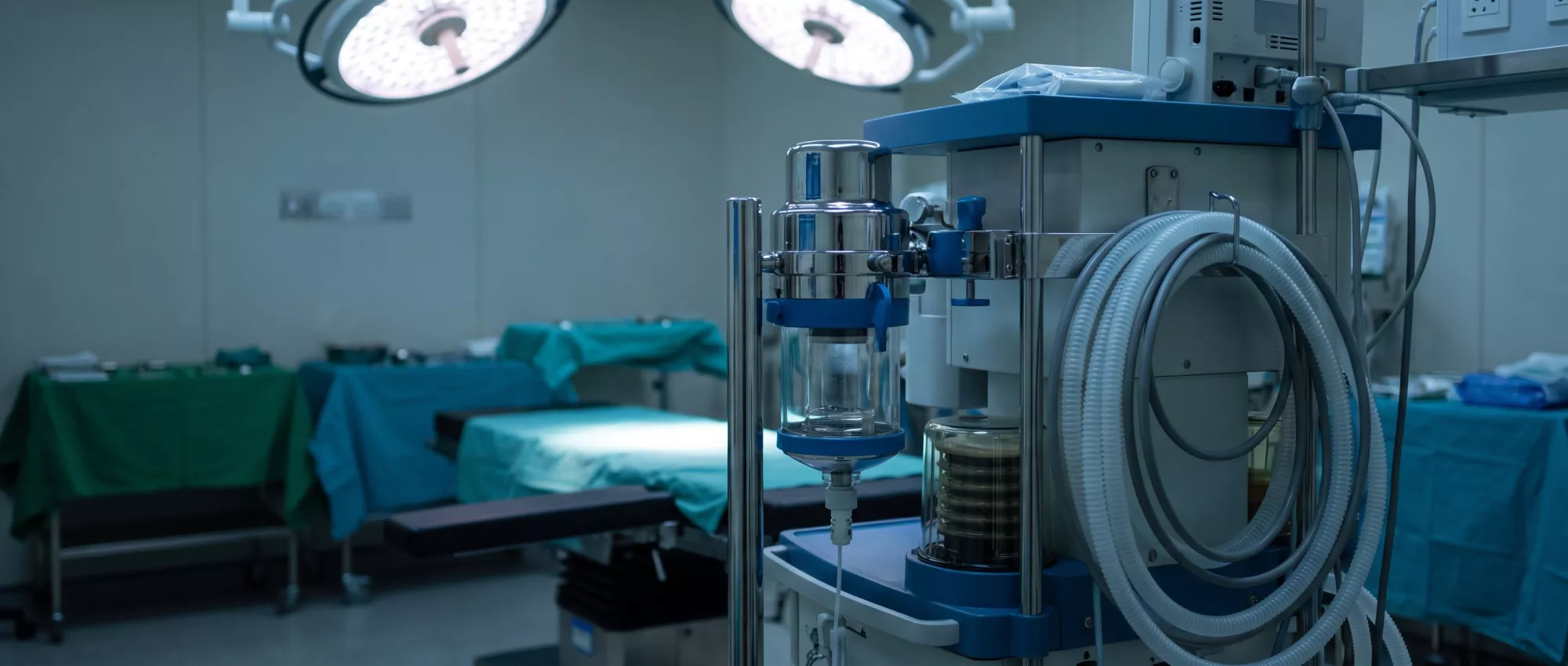
General Anaesthesia
Discover how general anaesthesia works for heart surgery: the process, risks, recovery and safety.
What is general anaesthesia
General anaesthesia is a medically induced state of unconsciousness designed to keep you comfortable, pain-free, and entirely unaware during major surgical procedures. Rather than simply putting you to sleep, this carefully managed intervention ensures your brain does not register pain signals while your body remains still and physiologically stable. It is a precise, reversible condition, not a deep sleep, and it requires continuous, second-by-second management by a specialized physician.
Difference between local and general anaesthesia: Unlike local or regional techniques that numb a specific area while you remain awake, general anaesthesia affects the entire nervous system. The medications temporarily alter how your brain's pain receptors and awareness centers function, creating a profound state of unresponsiveness. Your anaesthesiologist calculates the required medications to keep your heart rate, blood pressure, and breathing perfectly regulated throughout the operation.
Knowing the definition of this medical state provides peace of mind when facing complex cardiac procedures. A dedicated clinical team member remains at your side from the moment you enter the operating room until you are safely recovering in the intensive care unit, constantly fine-tuning your medication levels to ensure absolute safety.
How does general anaesthesia work
The process relies on a precise combination of medications that create a reversible state of unconsciousness, amnesia, and profound pain relief. The brain functions through complex electrical signals and chemical neurotransmitters, and anaesthetic drugs work by slowing down these communications. By enhancing the action of inhibitory neurotransmitters, the medications essentially quiet the nervous system, preventing the transmission of pain signals and inducing a deep, controlled sleep.
Three pillars of anaesthetic action: Anaesthesia functions on three primary levels to keep you safe during surgery.
- Unconsciousness: The brain is put into a deep sleep, ensuring no awareness of the surrounding environment.
- Analgesia: Pain pathways are blocked completely, so no pain signals reach the central nervous system.
- Immobility: Reflexes and muscle movements are suppressed to allow surgeons to operate safely.
Because your breathing is heavily affected by these medications, the anaesthesiologist will secure your airway with a breathing tube. This ensures your lungs continue to receive oxygen and clear carbon dioxide even while your natural drive to breathe is temporarily paused. Maintaining this delicate balance is the core of how modern anaesthesia keeps patients stable.
General anaesthesia for heart surgery
Applying general anaesthesia to cardiac procedures requires advanced expertise because the heart and lungs are the very systems being operated on. When undergoing cardiac surgery, such as a coronary artery bypass or valve repair, the anaesthesiologist must carefully maintain your cardiovascular stability while the surgeon temporarily takes control of your circulation, sometimes using a heart-lung bypass machine.
Cardiopulmonary bypass management: The anaesthesiologist coordinates the administration of blood thinners and monitors your body's response to the bypass machine, ensuring your tissues receive adequate oxygen throughout the procedure. This level of care ensures your heart is completely still when the surgeon is making delicate repairs, keeping your brain and other vital organs perfectly protected from ischemic stress.
Your team will use a specialized approach tailored to heart patients, carefully choosing medications that do not depress the cardiac muscle. Before proceeding with any surgical plan, your care team will review advanced hemodynamic monitoring systems to ensure your specific cardiac condition is fully supported during the operation.
General anaesthesia process step by step
Understanding the step-by-step journey helps demystify the operating room experience. The sequence begins in the preoperative area, where a nurse places an intravenous line, and ends in the recovery room, where you slowly wake up. Each phase is meticulously choreographed to transition your body safely from full wakefulness to surgical unconsciousness and back again.
Preoperative preparation: You will be given medications through your IV to help you feel relaxed and slightly drowsy before you even enter the operating room. Once you are in the operating room, monitors are attached to track your heart rhythm, blood pressure, and oxygen levels continuously. The team will also place specific vascular lines to directly monitor your heart's function.
The actual induction begins when the anaesthesiologist administers the sleep medication. Within seconds, you will drift off to sleep without sensing the progression of the surgery. You will not remember the insertion of the breathing tube or the surgical preparations, as the team ensures complete amnesia throughout the process.
General anaesthesia induction and medications
Induction is the specific moment you transition from being awake to being fully anaesthetized. Induction agents like propofol: These fast-acting medications are pushed through your IV to quickly and gently put your brain to sleep, typically within one minute. Once you are unconscious, the anaesthesiologist uses inhaled gases and continuous IV drips to maintain the depth of the anaesthesia throughout the duration of the surgery.
Maintenance of the anaesthetic state is just as critical as the initial induction. The anaesthesiologist will use a combination of volatile gases and continuous intravenous infusions to keep you completely unaware and pain-free. They continuously adjust the dosage based on your vital signs, the depth of the surgical intervention, and the expected duration of the operation.
Every drug is selected with your specific heart condition in mind, prioritizing medications that keep your blood pressure and heart rate stable.
General anaesthesia monitoring and safety
Safety is the absolute highest priority during any surgical procedure. Modern general anaesthesia is incredibly safe due to rigorous standards of intraoperative monitoring. The anaesthesiologist uses an array of sophisticated equipment to track every vital bodily function second by second, ensuring your body remains perfectly balanced while you are unconscious.
Comprehensive vital sign tracking: During your procedure, the team monitors several critical parameters to keep you safe.
- Electrocardiogram (ECG): Continuously monitors heart rate and rhythm to detect any cardiac irregularities immediately.
- Arterial blood pressure: Directly tracks blood pressure beat-by-beat to ensure organs receive adequate blood flow.
- Capnography: Measures the carbon dioxide in your exhaled breath, confirming the breathing tube is functioning perfectly.
- Bispectral index (BIS): Monitors brain wave activity to ensure you remain at the correct depth of sleep.
With these advanced tools, the anaesthesia team can instantly detect and respond to any minor physiological change. Patients looking to ensure their cardiovascular system is resilient prior to surgery may explore cardiac health optimization programs to strengthen their baseline health.
General anaesthesia risks and complications
While modern anaesthesia is remarkably safe, especially under the care of dedicated cardiac specialists, every medical procedure carries some degree of risk. Cardiac-specific risk factors: Patients undergoing heart surgery already have underlying cardiovascular conditions, making the anaesthesiologist's role even more critical in avoiding complications. The team takes extensive precautions to prevent issues such as abnormal heart rhythms, blood pressure fluctuations, or delayed waking.
Severe complications are exceedingly rare, but they can include allergic reactions to the medications, postoperative confusion, or dental damage from the breathing tube insertion. To minimize these risks, your medical history is reviewed extensively, and a customized medication plan is developed for your specific cardiac needs. Your doctors will balance the risk of the anaesthesia against the necessity of the cardiac repair.
The most common risks involve minor fluctuations in blood pressure or heart rate during induction, which the anaesthesiologist expertly manages in real-time. Open communication about your previous experiences with anaesthesia and any family history of adverse reactions is crucial for minimizing these risks.
General anaesthesia side effects and recovery
Waking up from anaesthesia is a gradual process that takes place in the intensive care unit or a specialized recovery room. Immediate postoperative side effects: It is completely normal to feel groggy, disoriented, or chilly for a few hours as the medications wear off. Some patients experience a mild sore throat from the breathing tube or slight nausea, both of which are easily treated with medication.
Cardiac surgery recovery requires close observation in the first few hours after waking up. The team will encourage you to breathe deeply and cough to clear your lungs, which helps prevent pneumonia. While the initial grogginess fades quickly, it is normal to feel fatigued for several days or weeks as your body recovers from the physical stress of heart surgery.
Following your surgical team's instructions regarding rest, wound care, and medication is essential for a smooth recovery. The lingering effects of the anaesthesia will dissipate over the first few days, but full physical stamina takes longer to return after major cardiac procedures. Patience and adherence to your rehabilitation plan are vital.
General anaesthesia awareness explained
A common fear among surgical patients is anaesthesia awareness, which is the rare phenomenon of a patient regaining consciousness during the operation. It is important to understand that modern monitoring makes this exceptionally rare, particularly in cardiac surgery. Intraoperative awareness incidence: Advances in brain activity monitoring mean the anaesthesiologist can precisely measure your depth of sleep, adjusting medications instantly to prevent any awareness.
If awareness does occur, it usually involves only auditory perception or a vague sense of pressure, rather than sharp pain. In the rare event a patient experiences this, the anaesthesiologist immediately responds by deepening the anaesthetic state. The rigorous protocols in place ensure you will not feel pain or remember the surgery.
Discussing any fears of awareness with your anaesthesiologist before the surgery can provide immense relief. They can explain the specific monitors being used and the safety nets in place to keep you comfortable and unconscious throughout the procedure, giving you and your family added peace of mind.
General anaesthesia preoperative assessment
The safety of your anaesthetic begins days before you enter the operating room. A thorough preoperative assessment is conducted to evaluate your cardiovascular health, medication history, and physical fitness for general anaesthesia. Cardiac preoperative evaluation: This involves reviewing your heart function tests, blood work, and any previous surgical experiences to build a safe, personalized anaesthetic plan.
You will be advised to stop eating and drinking at a specific time before your surgery to ensure your stomach is empty, which greatly reduces the risk of aspiration during induction. It is also vital to disclose all supplements, over-the-counter medications, and prescription drugs you take, as some can interact with anaesthetic medications.
By carefully evaluating your overall health and cardiac status beforehand, the anaesthesiology team anticipates and plans for any potential challenges. This proactive approach helps make your surgery as safe and comfortable as possible from the moment you enter the operating room. Understanding this comprehensive process transforms fear into confidence, allowing you to approach your heart surgery with trust in your dedicated medical team.






