

Heart Team: when your heart is assessed by a team, not one opinion
Learn how a heart team assesses your cardiac case, tailors treatment, and answers key questions to ask before surgery.
What is a Heart Team in cardiology?
The heart team is a dedicated group of medical professionals who jointly review your cardiac case to determine the safest, most effective treatment plan. Instead of relying on a single doctor's viewpoint, this collaborative care model brings together experts from different branches of medicine. They analyze your imaging, lifestyle, and surgical risk collectively, ensuring that the recommended intervention is truly tailored to your specific anatomy and needs.
Understanding collaborative cardiac assessment: This is not simply a matter of gathering multiple opinions in a corridor. It is a highly structured meeting where clinical cardiologists, surgeons, and imaging experts sit down together to debate the merits of medical therapy versus surgical intervention. The goal is to eliminate individual bias—because inherently, specialists tend to recommend the procedures they perform themselves.
Ultimately, this multidisciplinary group acts as your safety net. By integrating diverse medical perspectives, the team ensures that every angle of your heart disease has been thoroughly examined before any surgical or percutaneous route is recommended to you.
How does the Heart Team approach work for cardiac surgery?
When facing heart surgery, the process unfolds behind closed doors in a clinical conference room where your case is presented in full detail. The specialists review your echocardiograms, CT scans, and catheterization results side by side. They estimate your surgical risk using international scoring systems, but they also apply their collective real-world clinical experience to interpret those numbers in the context of your overall health.
What happens during a heart team intervention review: The discussion is highly analytical and often challenges initial assumptions. A good team does not simply confirm a preconceived plan; they actively question it. They weigh the durability of conventional open surgery against the potentially lower risk and faster recovery of minimally invasive approaches, ensuring the chosen path balances your long-term quality of life with immediate safety.
Once a consensus is reached, the strategy is prepared for you. This approach means that when you finally hear the recommendation, it is not a unilateral decision but a well-vetted, evidence-based plan.
Why is multidisciplinary Heart Team decision making important?
Heart team decision making is crucial because no two heart patients are exactly alike, even when they share the exact same diagnosis. A young, active patient with severe valve disease might be an excellent candidate for durable open surgery, whereas an older patient with other health conditions might fare better with a less invasive procedure. The multidisciplinary team evaluates your age, anatomy, comorbidities, and personal expectations to craft a truly individualized plan.
This collaborative model directly reduces the risk of biased recommendations. When specialists only look through their own lens—such as a surgeon only considering surgery, or an interventionalist only considering stents—the patient might not receive the most balanced advice. The team structure forces specialists to step outside their silos and argue for the best overall outcome for you.
The impact on patient confidence and outcomes: When you know your case has been scrutinized by a room full of experts, it naturally alleviates the fear and uncertainty that accompany a major diagnosis. You transition from feeling like a passive recipient of care to an empowered participant, backed by the collective confidence of a unified medical staff.
Who are the Heart Team specialists assessing my case?
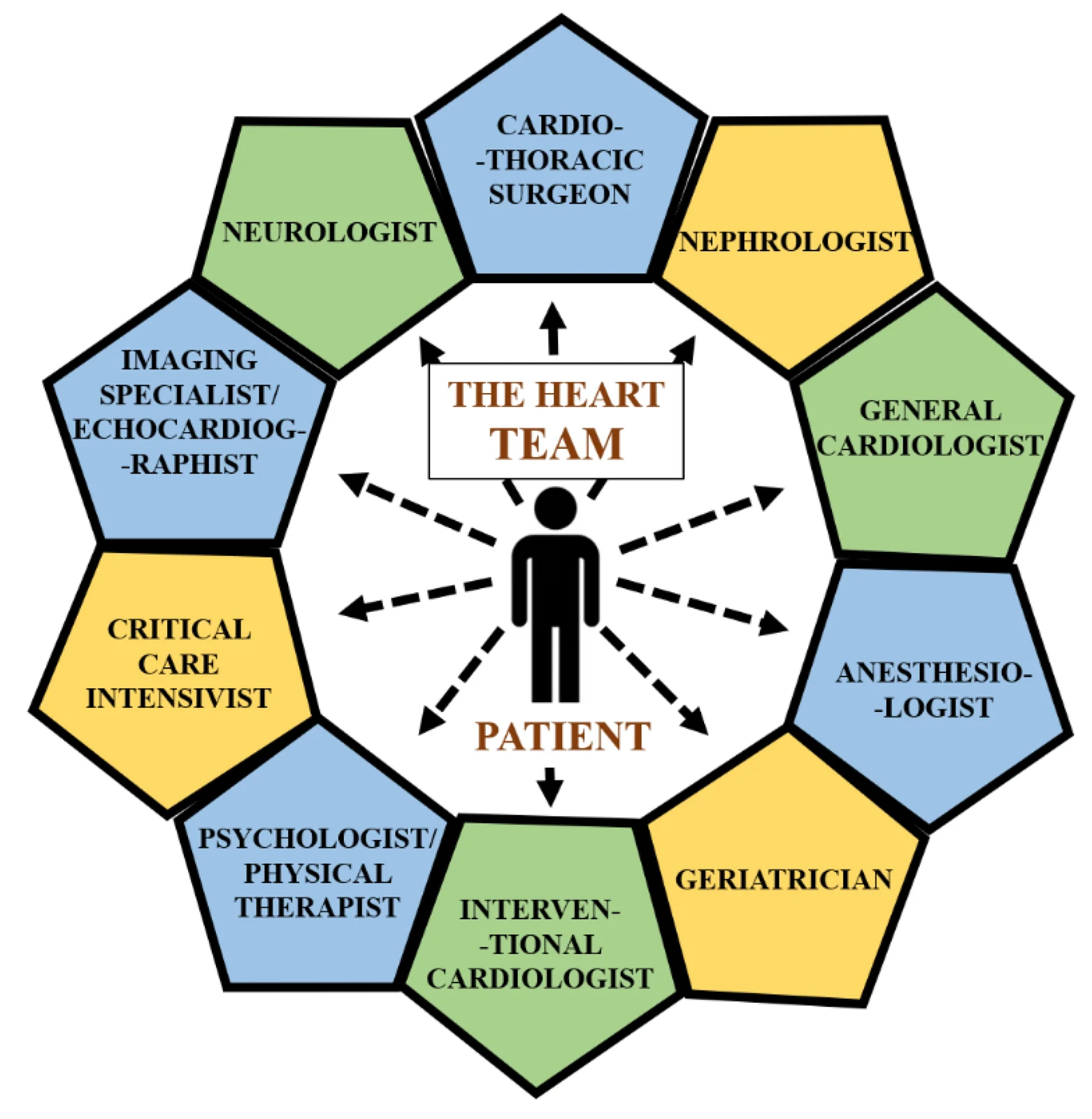
The composition of a heart team is intentionally diverse to cover every aspect of your cardiac care. The core group typically includes a clinical cardiologist, who understands the overall trajectory of your heart disease, and an interventional cardiologist, who evaluates the feasibility of percutaneous options like stents or TAVR. The cardiovascular surgeon rounds out the core, analyzing the technical viability of open or minimally invasive surgical approaches.
The role of imaging and ancillary staff: The cardiac imaging specialist is pivotal, providing the detailed echocardiogram and CT data that often defines the entire surgical strategy. Beyond the physicians, the team includes cardiovascular anaesthetists, intensive care nurses, and sometimes psychologists or respiratory therapists, all of whom contribute vital insights regarding your perioperative care and recovery.
- Clinical Cardiologist: Manages your overall heart health and medical therapy.
- Interventional Cardiologist: Specializes in catheter-based treatments.
- Cardiovascular Surgeon: Evaluates traditional and minimally invasive surgical options.
- Imaging Specialist: Provides critical anatomical data through advanced diagnostics.
Having this exact group of specialists means your case is examined from every conceivable medical angle before a final treatment plan is ever presented to you.
What are the benefits of a Heart Team for patient care?
The primary benefit of this approach is the delivery of highly personalized treatment. Because your case is reviewed by multiple experts, the resulting recommendation balances risk, durability, and your expected quality of life far better than a single opinion could. This structure inherently minimizes medical bias, as specialists must defend their proposed interventions to peers who offer alternative viewpoints.
Better long-term results and lower risk: Current cardiology guidelines emphasize that this collaborative process directly improves the quality of treatment and long-term clinical results. Patients gain access to the full spectrum of modern technology and procedural options, rather than being limited to what one specific doctor knows how to perform. This ensures the chosen intervention is genuinely the best fit for your unique clinical profile.
Furthermore, this shared decision-making framework fosters deep patient trust. When you understand that a consensus was reached by a group of dedicated professionals, it provides immense reassurance as you prepare for a major heart procedure.
How does a Heart Team evaluate treatment options like TAVR?
When evaluating options like TAVR (Transcatheter Aortic Valve Replacement), the team meticulously reviews your imaging to understand your vascular access and valve anatomy. They compare the lower immediate risk and faster recovery of a percutaneous approach against the long-term durability of conventional open surgery. This is particularly vital for older patients or those with high surgical risk who might not survive an open-heart procedure.
Comparing surgery versus percutaneous intervention: The team analyzes anatomical characteristics that could completely change the strategy. For instance, if your blood vessels are too narrow for a catheter, or if your heart's anatomy favors a mechanical valve for longevity, the team will pivot their recommendation. They do not push a one-size-fits-all solution; they find the exact tool that matches your body.
During these discussions, the team might also consider adjunctive therapies. Whether you need a remote patient monitoring device for post-operative care or a specific valve type based on your calcium burden, the team's collective expertise ensures every variable is accounted for before a final decision is made.
What Heart Team cardiology guidelines protect patients?
The 2025 guidelines from the European Society of Cardiology (ESC) and the European Association for Cardio-Thoracic Surgery (EACTS) are unequivocal: in cases of valve disease or complex coronary disease, utilizing this team is not optional, it is fundamental. These international standards mandate that decisions must be collaborative, evidence-based, and entirely centred on the patient rather than a single specialty.
Ensuring decisions are patient-centered: The guidelines do not merely focus on technical surgical execution; they heavily emphasize context. They require the team to consider your age, activity level, life expectancy, family circumstances, and your personal tolerance for risk. This ensures that the medical strategy aligns perfectly with how you want to live your life after the procedure.
Furthermore, these guidelines recommend that complex cases be treated at specialist high-volume centres. This ensures that the team reviewing your case has the extensive, ongoing experience necessary to safely manage highly complex cardiac interventions, providing an extra layer of protection for high-risk patients.
How does a Heart Team decide on valve replacement?
Deciding on a valve replacement involves weighing the mechanical properties of the valve against the patient's lifestyle and age. The team discusses whether a mechanical valve, which lasts longer but requires lifelong blood thinners, is appropriate for a younger patient. Alternatively, they might decide that a biological tissue valve, which avoids the need for heavy medication but may need replacing later, is better for an older adult.
Balancing risk, durability, and lifestyle: The anatomy of the heart is scrutinized to ensure the chosen valve will fit and function perfectly. They review CT scans to assess calcium deposits and annular dimensions, which dictate whether a surgical or transcatheter delivery method is safest. The team's goal is to find the sweet spot where procedural risk is minimized, and long-term quality of life is maximized.
- Risk Stratification: Calculating the exact operative risk based on age and comorbidities.
- Anatomical Feasibility: Assessing if the heart's structure supports the proposed valve.
- Lifestyle Matching: Aligning the valve's longevity and medication needs with patient activity levels.
By systematically working through these variables, the team ensures that your valve replacement is not just a successful operation, but a life-changing improvement tailored exactly to your future plans.
What questions should I ask my Heart Team before surgery?
Being an active participant in your care means asking the right questions. You should always confirm whether your case was actually reviewed by the full team and inquire about who specifically participated in that review. Understanding the alternatives, the rationale behind the chosen procedure, and the centre's experience with that specific intervention are vital steps in informed consent.
Empowering yourself through inquiry: Do not hesitate to ask if there are less invasive alternatives to the recommended surgery. Ask about the expected recovery timeline and what specific risks are most relevant to your particular medical history. A good team will welcome these questions, as they reflect an engaged, informed patient.
When you ask these critical questions, you ensure that the team's collaborative decision fully aligns with your personal comfort level and expectations.
Is the Heart Team approach the future of cardiac care?
While it is already the international standard, this collaborative approach undeniably represents the future trajectory of cardiac care. Medicine is increasingly moving away from unilateral, individual decision-making toward highly integrated, team-based strategies. As technology advances and new procedural options emerge, the need for multidisciplinary consensus will only become more critical to navigate the complexities of modern cardiology.
A shift toward human, analytical medicine: This model represents a more honest and deeply analytical form of medicine. It acknowledges that no single physician can be an expert in every rapidly evolving sub-specialty. By bringing diverse experts together, the medical community ensures that decisions are challenged, refined, and ultimately optimized for the person lying on the operating table.
In the end, the heart team embodies a more human approach to healthcare. It recognizes that important life decisions deserve more than one perspective, helping ensure that your treatment is rooted in collective wisdom, deep expertise, and genuine care for your overall well-being.






