

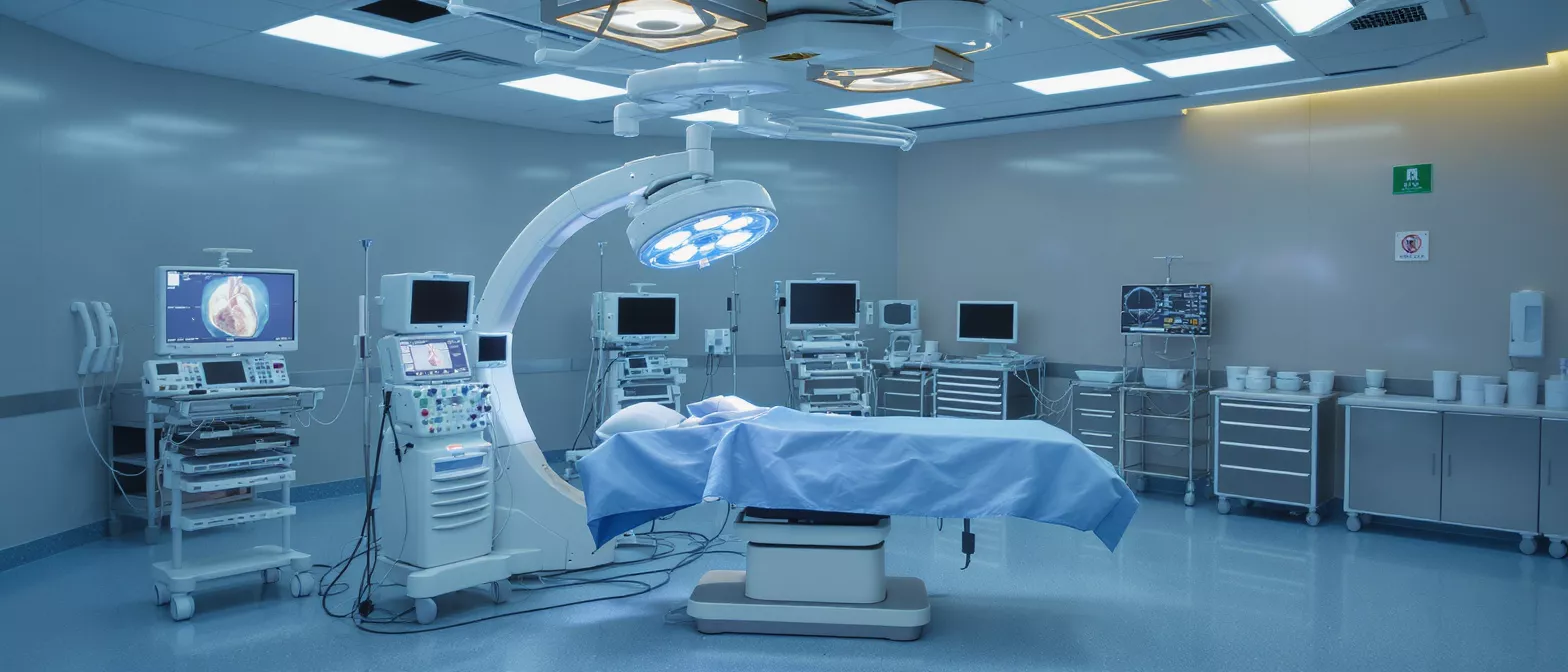
Hybrid Operating Theatre
Discover how a hybrid operating theatre transforms cardiac surgery in Guadalajara.
What is a Hybrid Operating Theatre
A hybrid operating theatre is an advanced surgical suite that combines a traditional operating room with high-end imaging capabilities. Rather than moving a patient from a surgical theatre to a separate catheterization lab, the surgical team can perform complex open and minimally invasive procedures in one room. This integration allows surgeons to use real-time 3D imaging while operating.
Why this matters for cardiac patients: In cardiac surgery, precision is everything. A hybrid suite lets surgeons verify the success of a valve repair or bypass using imaging without closing the chest. If a problem is found, it can be fixed immediately in the same room. This reduces the need for repeat surgeries.
How it differs from a standard OR: A standard operating room has surgical lights and basic X-ray machines. A hybrid operating theatre has fixed, high-definition imaging systems built into the walls and ceiling. These systems provide the surgeon with a continuous, clear view of the heart and blood vessels throughout the procedure.
How Does a Hybrid Operating Room Work
A hybrid operating room works by bringing multiple medical disciplines together under one roof. The room is equipped with a robotic C-arm—a large, moving X-ray machine—that rotates around the patient to create detailed cross-sectional images of the heart. The surgical team can switch between open surgery and catheter-based interventions without pausing.
Real-time image guidance: During a procedure, the surgeon uses the imaging equipment to navigate the heart's anatomy. The images act as a live map. This is especially useful when placing devices or checking blood flow. The team can confirm a repair is perfect before the surgery ends, removing the guesswork.
For a patient, this means a more efficient procedure. Because the team does not have to transport the patient to different parts of the hospital for imaging, the patient spends less time under anesthesia. To support these complex procedures, facilities often equip the room with advanced cardiac surgical imaging monitors.
Hybrid OR Suite Benefits for Cardiac Surgery
The main benefit of a hybrid OR suite is the ability to perform combined procedures. A patient who needs both a bypass and a stent can have both done in one session. This eliminates the need for two separate surgeries and two recovery periods. The patient is treated and recovers faster.
Improved outcomes and precision: The high-resolution imaging allows the surgeon to see the smallest blood vessels clearly. This level of detail improves the accuracy of the surgery. When a surgeon can see exactly what they are doing, the risk of complications drops significantly.
Reduced procedure time: By combining surgical and imaging steps, the total time a patient spends in the theatre is often shorter. Shorter procedures mean less stress on the patient's body, particularly the heart. This is a major advantage for older or fragile patients who may not tolerate long surgeries well.
What is a Combined Surgical and Interventional Suite
A combined surgical and interventional suite is another name for a hybrid operating theatre. It is designed for multidisciplinary teams. Surgeons, cardiologists, and imaging technicians work side-by-side. This teamwork is essential for treating complex heart conditions that cannot be solved by one approach alone.
Who uses this suite: Cardiac surgeons use it for traditional open-heart work. Interventional cardiologists use it for catheter-based treatments like placing stents or repairing valves. The suite accommodates both, meaning a patient can get a tailored treatment plan.
This collaboration leads to better patient care. For example, if a surgeon is placing a transcatheter aortic valve, the cardiologist and surgeon work together to position it perfectly. The combined suite makes this seamless teamwork possible.
Advanced Surgical Theatre Imaging Equipment Explained
The imaging equipment in a hybrid theatre is the core of its technology. The most important piece is the fixed imaging system, usually an angiography machine. Unlike portable X-ray machines, these fixed units provide crystal-clear, stable images that are vital for delicate heart procedures.
The room also has large monitors suspended from the ceiling. These monitors display the live imaging, the patient's vital signs, and previous scans. The surgeon can look up at any time and see a complete picture of the patient's heart.
Other key technology includes:
- Robotic C-arms: Provide 3D images of the heart without needing to move the patient.
- Ultrasound integration: Lets surgeons use echocardiography to check heart function during the operation.
- Advanced hemodynamic monitoring: Tracks blood pressure and flow in real-time to ensure stability.
Because the equipment is so specialized, the room requires careful planning and custom surgical suite integration services to function correctly.
Are Hybrid Operating Theatres Safe
Yes, hybrid operating theatres are very safe. They are built to the highest standards of medical safety. The advanced imaging actually increases safety by giving the surgeon constant visual feedback. They can identify and address a bleeding vessel or a misplaced device immediately, rather than discovering it after the surgery.
How radiation is managed: Because these rooms use X-rays, there is a concern about radiation. However, hybrid theatres are designed with lead-lined walls and advanced shielding. The imaging systems use low-dose settings to minimize exposure to both the patient and the surgical team. Safety is a primary focus of the design.
The environment is strictly controlled for sterility, just like a standard operating room. The air filtration systems and sterile protocols are identical. The main difference is the added layer of safety provided by the real-time imaging capabilities.
Minimally Invasive Hybrid Surgery Room Advantages
One of the greatest advantages of a minimally invasive hybrid surgery room is the ability to perform smaller incisions. Because the surgeon has high-quality imaging to guide them, they do not need to open the chest completely to see the heart. This leads to smaller scars, less pain, and a faster recovery.
Faster recovery times: Patients who have minimally invasive procedures in a hybrid suite often leave the hospital sooner. They can return to their normal lives more quickly than those who have traditional open-heart surgery. The precision of the imaging tools makes these smaller approaches possible.
This approach is not for every patient, but for those who are candidates, it is a major benefit. The hybrid room provides the perfect environment for these delicate, smaller-scale operations, making it a key reason hospitals invest in this minimally invasive cardiac operating room equipment.
Hybrid OR Catheterization Lab Differences
While a hybrid OR and a catheterization lab both use imaging, they are not the same. A standard catheterization lab is designed for non-surgical procedures, like inserting stents through a needle puncture in the groin. It is not built for open surgery. A hybrid operating theatre is built for both.
Full surgical capability: A hybrid OR has full anesthesia machines, surgical lights, and sterile airflow systems needed for open-heart surgery. A standard cath lab does not. If a catheter procedure goes wrong and requires emergency surgery, a patient in a cath lab must be moved. In a hybrid OR, the surgeon can convert to open surgery immediately.
This difference is critical for patient safety. The hybrid theatre provides a safety net that a cath lab cannot. The patient is already in a fully equipped surgical environment, ready for any contingency.
What to Expect in a Cardiac Hybrid Operating Room
From a patient's perspective, a cardiac hybrid operating room looks much like a standard operating room but with more technology. There are large screens and moving equipment arms. You will be greeted by a team of specialists, including your surgeon, an anesthesiologist, and specialized nurses.
The patient experience: You will be given anesthesia to ensure you are asleep and pain-free. The team will then use the imaging equipment to map your heart. Whether you are having a stent placed, a valve repaired, or a combination of both, the process is seamless. You will not be aware of the moving parts.
The benefit to you is the peace of mind knowing that everything you need is in one room. If the surgeon needs to check their work, they can. If they need to switch from one type of procedure to another, they can. Your care is consolidated and efficient.
Why Hybrid Operating Theatre Design Matters for Patients
The design of a hybrid operating theatre matters because it directly affects patient outcomes. The layout is planned to allow multiple teams to work without getting in each other's way. This careful planning means procedures are smoother and faster, which is better for your heart and your recovery.
A focus on better results: Every piece of equipment, from the imaging monitors to the surgical table, is placed to give the surgeon the best possible tools. This design philosophy ensures that the medical team can perform at their highest level. The room is built around the patient's needs.
In summary, a hybrid operating theatre represents the highest standard of modern cardiac care. By combining surgical and imaging capabilities in one room, it offers precision, safety, and efficiency. For patients facing heart surgery, this technology provides the best possible environment for a successful outcome.






