

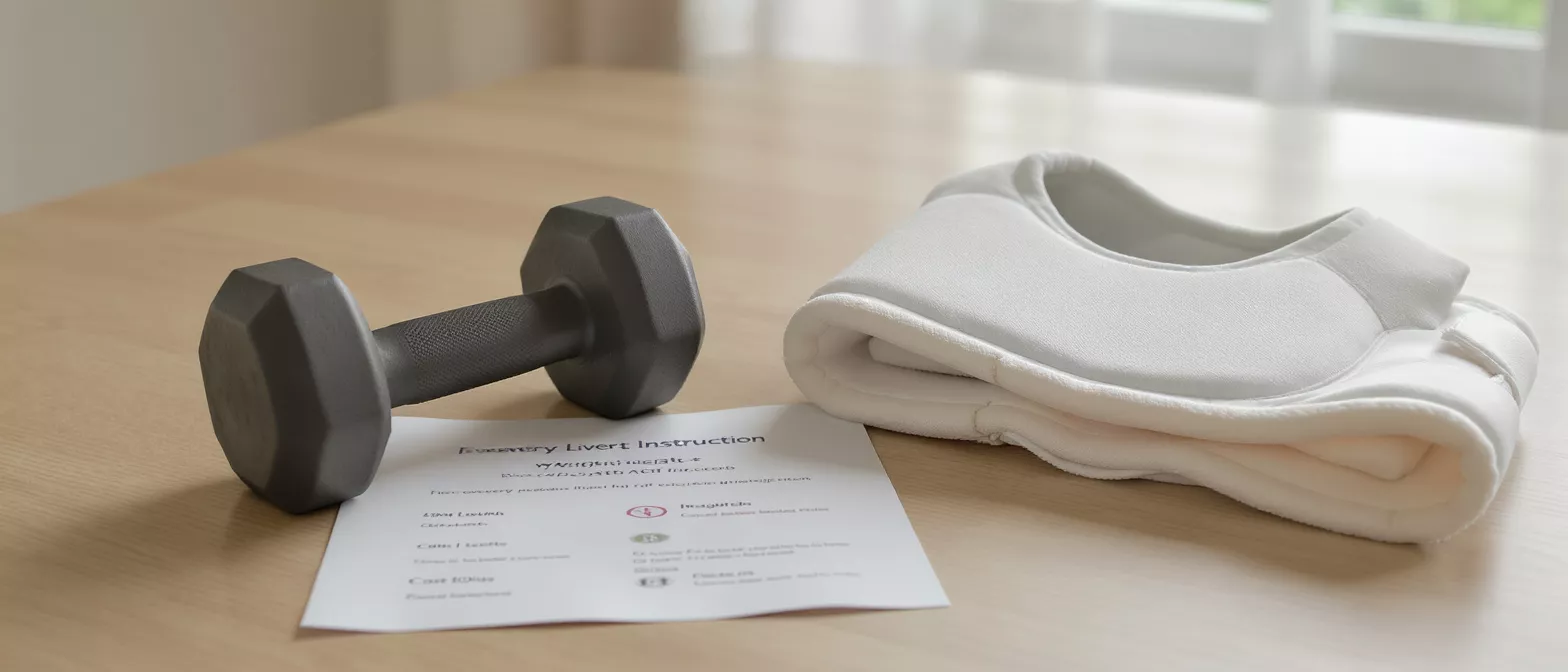
Lifting Restriction
Lifting restriction guidelines after cardiac surgery protect sternum healing.
What is a lifting restriction after heart surgery?
A lifting restriction is a specific medical guideline limiting the amount of weight you are allowed to pick up, push, or pull following a cardiac operation. When you undergo a procedure like coronary artery bypass or valve repair, your breastbone and surrounding tissues need time to heal. To protect this delicate healing process, your surgical team will issue a strict lifting restriction to prevent unnecessary strain on your chest cavity.
Why this matters to a heart-surgery patient: The sternum is intentionally opened to access your heart during open surgery. It is then wired back together, functioning like a natural fracture that requires several months to fully fuse. Lifting anything heavier than your prescribed limit places dangerous tension on these wires and the fragile bone structure, risking serious complications such as sternal instability or delayed healing.
It is completely normal to feel frustrated by these boundaries, especially if you are accustomed to an independent lifestyle. However, understanding the biomechanics behind these rules helps patients adhere to them more willingly. Abiding by your prescribed weight limits is one of the most effective ways to safeguard your recovery and ensure a successful return to normal life.
Why lifting restrictions are critical for cardiac recovery
Protecting sternal integrity: Every time you lift a heavy object, push furniture, or brace yourself, your chest muscles contract forcefully. This contraction pulls directly on the sternum. Placing excessive strain on this bone before it has fully fused can cause micro-movements, which may lead to chronic pain, clicking sensations in the chest, or incomplete bone union.
Preventing internal bleeding and complications: Heavy lifting increases pressure inside the abdomen and chest, which can stress the surgical incisions inside your body and the delicate grafts or valves that were just repaired. By following your prescribed limits, you give your tissues the calm, low-pressure environment they need to form secure, lasting seals.
During the early days of your recovery, patients often seek reliable ways to manage their daily hygiene and mobility without bending their torso. Using a long-handled reacher tool is a practical solution for picking up dropped items from the floor, ensuring you can maintain your independence without compromising your sternal precautions.
How lifting restriction guidelines work in postoperative care
Postoperative lifting guidelines are not arbitrary; they are carefully calibrated by your surgeon based on the specific incision type, the complexity of your operation, and your overall health profile. Typically, these guidelines focus on avoiding pulling, pushing, or bearing weight with your upper extremities, as these motions directly engage the pectoral muscles anchored to the sternum.
For instance, standard precautions often advise against pulling yourself up in bed using your arms. Instead, you are taught to log-roll when getting out of bed, keeping your arms crossed over your chest to minimize upper-body strain. You will also be advised to avoid lifting your arms above shoulder height for prolonged periods, as overhead reaching stretches the chest wall unnecessarily.
Following these structured guidelines meticulously ensures you do not accidentally overload your healing structures. It allows your body to funnel its energy toward tissue repair rather than managing new inflammatory flare-ups caused by overexertion. Always ask your surgical team for a written copy of your specific precautions so you can reference them easily at home.
Safe lifting after cardiac surgery: daily activity advice
Navigating daily life with weight limits requires careful planning. Activities you once performed without a second thought, such as carrying a full laundry basket, lifting a grandchild, or moving a piece of furniture, must now be approached with caution. Recovery requires a temporary shift in how you manage your household routines.
Modifying your daily routine: You will need to slide items across counters rather than lifting them, use lightweight plates and cups, and ask family members for help with heavy chores. It is vital to recognize that even seemingly trivial actions, like opening a heavy window or pushing a vacuum cleaner, generate significant force across the chest and must be avoided initially.
Many patients find that maintaining an upright posture while sitting and sleeping requires specialized support to avoid twisting or bearing weight on their arms.
Types of lifting restrictions during heart surgery recovery
Restrictions evolve as you progress through your recovery timeline. Initially, the limits are incredibly conservative to account for the acute inflammation and tissue swelling present in the first few weeks. Over time, as your surgeon confirms bone healing through follow-up imaging and physical assessments, these limits are gradually relaxed.
Here are the common phases of postoperative weight limits:
- Acute Phase (Weeks 1–4): Strict limit of 5 to 10 pounds. You may lift only items like a standard mug of coffee, a phone, or light clothing. No pushing or pulling is permitted.
- Sub-acute Phase (Weeks 5–8): Limits may increase to 10 to 15 pounds if cleared. Gentle, guided walking is encouraged, but no dynamic lifting or twisting is allowed.
- Progressive Phase (Months 3–6): Gradual return to normal activities. Formal cardiac rehabilitation begins, and light resistance training is introduced under clinical supervision.
It is essential to remember that these timelines are general frameworks. Your individual progression depends entirely on your age, underlying health conditions, and the specific nature of your cardiac procedure.
Lifting restriction timeline: When can you lift heavier objects?
Patients frequently ask when they can safely return to lifting heavier objects, such as bags of groceries or gym weights. Generally, the sternum requires about six to eight weeks to achieve initial clinical stability, though complete biological bone fusion takes longer. Most surgeons will clear you to lift up to 20 pounds after the eight-week mark, provided your X-rays show proper healing.
Returning to exercise: While you might be cleared to lift moderately at two months, returning to heavy weightlifting or intense manual labor is usually restricted for three to six months. This prevents delayed sternal complications, which can occur if the bone is exposed to repetitive, high-magnitude stress before it is fully consolidated.
Patience is your greatest asset during this timeline. Rushing the process does not speed up biological healing; it only increases the risk of setbacks. Attend all follow-up appointments so your care team can accurately gauge your readiness to advance to the next phase of physical activity.
Postoperative lifting restrictions and sternum healing
The relationship between postoperative limits and bone healing is entirely biomechanical. When your surgeon closes your chest, they use heavy stainless steel wires to hold the sternum together. These wires act as internal splints, maintaining alignment while the bone naturally regrows and fuses, much like a cast supports a broken arm.
If you violate your lifting limits, the excessive force can cause these wires to cut into the bone, potentially leading to wire fracture or sternal dehiscence, a rare but serious condition where the breastbone separates. This complication requires additional surgery to repair and significantly prolongs your overall recovery period.
To support this deep biological healing, maintaining proper spinal alignment and avoiding shearing forces across the torso is critical. Wearing a post-surgery sternal support brace can provide gentle, even pressure across the chest, reminding you to keep your arms close to your body and preventing sudden, injurious movements.
Weight lifting restrictions after cardiac surgery: common mistakes
Even the most well-intentioned patients make mistakes during their recovery. One common error is testing their limits by trying to lift something just slightly heavier than prescribed, thinking a few extra pounds will not matter. Biomechanically, lifting from the ground or below waist level requires massive core and chest engagement, making even small loads dangerous.
Another frequent mistake involves pushing motions. Patients often assume that because pushing is not technically lifting, it is safe. However, pushing a heavy door, shoving a shopping cart, or assisting a vehicle out of snow places intense strain on the pectoral muscles and the healing sternum, directly violating the spirit of the guidelines.
Finally, twisting while holding an object is a hidden danger. Reaching into the back seat of a car to retrieve a bag while seated, or turning to hand something to someone while carrying it, creates torsional stress on the bone. Torsion is particularly damaging to healing fractures and must be avoided until you receive full clearance.
Are lifting restrictions safe and how to manage them at home?
Lifting limits are inherently safe and protective, but managing them at home requires environmental preparation. Before you return from the hospital, your family should rearrange frequently used items to waist or counter height. This prevents the need to bend over, which violates sternal precautions, to reach lower cabinets or the bottom shelf of the refrigerator.
Practical home management: Place your clean clothes on a high dresser rather than in low drawers. Leave heavy pots and pans on the stove top instead of lifting them from lower cabinets. Consider using lightweight plastic versions of your daily dishware to minimize the weight you handle during mealtimes.
Accepting help is a crucial component of safe home management. Family members, friends, and community support networks can manage the heavier lifting tasks. Delegating these chores does not signify weakness; rather, it demonstrates a proactive commitment to protecting your heart surgery recovery.
Best practices for adhering to lifting limits after heart surgery
Adhering to your prescribed limits is the most effective way to ensure a smooth, uncomplicated recovery. The temporary inconvenience of restricted movement pales in comparison to the severe medical consequences of sternal complications or internal surgical stress. Treat these limits not as a burden, but as a protective shield around your healing heart.
Mindful movement: Always keep items you need to pick up close to your body. The further an object is from your center of gravity, the more mechanical advantage it has, multiplying the effective weight and the strain on your chest. Exhale naturally before you pick something up, and never hold your breath, which spikes internal pressure.
In conclusion, lifting restrictions after heart surgery are a fundamental safety mechanism designed to protect your sternum, surgical incisions, and newly repaired heart. By understanding the science behind these guidelines, preparing your home environment, and committing to mindful daily movement, you can confidently navigate your postoperative timeline. Trust in the process, lean on your support network, and prioritize your long-term cardiac health over temporary conveniences.






