

Myxoma Excision
Myxoma excision removes heart tumors to restore blood flow.
What is Myxoma Excision?
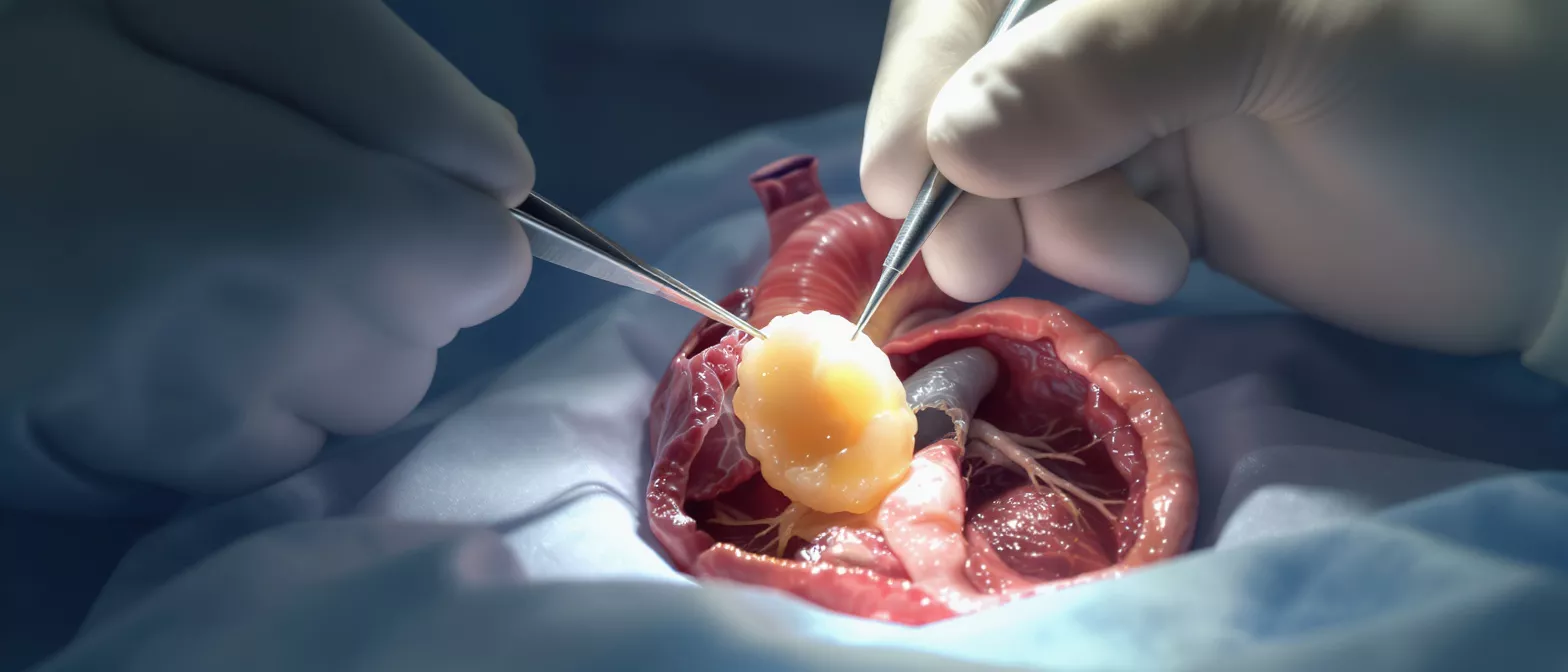
Myxoma excision is a highly specialized surgical procedure designed to safely remove a myxoma from the heart. A myxoma is the most common type of primary, non-cancerous tumor found inside the heart. These soft, gelatinous growths typically develop in the upper chambers of the heart, most frequently in the left atrium. While they are almost always benign, their physical presence inside a beating heart can cause severe mechanical obstruction and dangerous blood flow issues, making surgical removal absolutely essential for your long-term health.
Understanding the nature of a heart myxoma: These tumors often grow from a short stalk attached to the interatrial septum, the wall of tissue separating the left and right upper chambers. As the tumor grows, it can flop back and forth with each heartbeat. In the left atrium, the mass can be sucked into the mitral valve opening, temporarily blocking blood from moving from the lungs to the main pumping chamber of the heart. This sudden obstruction can cause severe symptoms that mimic heart valve disease, including shortness of breath, fainting, and extreme fatigue.
When facing a heart tumor diagnosis, understanding the exact nature of the problem provides immense relief to anxious patients. By clearly defining the tumor's size, location, and attachment point through advanced imaging, your surgical team can plan a precise and safe removal strategy. The goal of the operation is to completely extract the tumor along with a small margin of surrounding healthy heart tissue to ensure it does not return.
Why Heart Myxoma Treatment Is Necessary
Heart myxoma treatment is an urgent priority because leaving the tumor in place poses significant, life-threatening risks. Even though a myxoma is classified as a benign tumor, its location within the dynamic environment of the heart makes it act like a mechanical threat. The tumor can grow large enough to obstruct normal blood flow, or fragile pieces of it can break off and travel through the bloodstream, causing severe complications elsewhere in the body.
Dangers of delayed atrial tumor resection: One of the most acute dangers is the risk of a stroke. Because left-sided myxomas sit in the pathway of blood heading to the brain, small fragments can easily dislodge and travel upstream. Additionally, a large tumor can suddenly wedge itself into the mitral valve, creating a critical emergency where blood cannot leave the lungs. Patients may experience sudden, severe lightheadedness or fainting when changing positions, a classic warning sign that the tumor is physically blocking blood flow.
Beyond the immediate mechanical risks, myxomas can also trigger systemic inflammatory responses in the body. Patients often present with unexplained fevers, weight loss, joint pain, and elevated inflammatory markers. These symptoms occur because the tumor releases cytokines into the bloodstream.
How Myxoma Surgery Works
The mechanics of how myxoma surgery works rely on the established principles of open-heart surgery. Because the tumor is located inside the heart chambers, the surgeon must stop the heart to safely see and access the growth. To maintain life support during this brief period, a specialized bypass machine takes over the work of the heart and lungs, oxygenating the blood and pumping it back into the body so the surgical team can work in a still, bloodless environment.
The role of cardiopulmonary bypass: Once the patient is safely on the heart-lung machine, the surgeon makes an incision in the right atrium or directly through the interatrial septum to reach the tumor. The clarity provided by the bypass machine is crucial; it allows the surgeon to carefully inspect the entire heart chamber. Complete visualization ensures that no small fragments of the tumor are left behind, which is critical for preventing any future recurrence of the mass.
After gaining clear access to the heart chamber, the surgeon carefully identifies the base or stalk of the myxoma. The tumor is gently peeled away from the surrounding tissue. To lower the chance of the myxoma growing back, the surgeon will typically remove a small portion of the heart wall where the stalk was attached, although follow-up echocardiograms are still advised because recurrence can occur. The defect is then carefully repaired with a synthetic or biological patch before the heart is closed and allowed to resume its normal beating rhythm.
Types of Cardiac Tumor Removal Approaches
When planning for cardiac tumor removal, the surgical team evaluates the best approach based on the tumor's size, exact location, and the patient's overall health. While the traditional method involves a full median sternotomy—opening the chest through the breastbone—modern advancements have introduced less invasive techniques. The choice of approach is tailored to ensure the safest possible outcome while minimizing recovery time and surgical trauma to the patient's body.
Minimally invasive options for myxoma removal: In carefully selected patients, surgeons can perform myxoma excision through smaller incisions. Instead of opening the entire breastbone, a mini-thoracotomy approach uses a small cut between the ribs to access the heart. This method offers the benefits of reduced postoperative pain, a shorter hospital stay, and a much smaller, cosmetically favorable scar, all while maintaining the rigorous safety standards of traditional open-heart surgery.
- Traditional Sternotomy: Offers the widest access to the heart, preferred for very large tumors or complex anatomies.
- Minimally Invasive Surgery: Uses smaller incisions between the ribs for faster healing and less visible scarring.
- Robotic-Assisted Surgery: Utilizes advanced robotic arms for extreme precision in tumor extraction and septal repair.
Atrial Myxoma Excision Surgical Details
During atrial myxoma excision, the focus is on complete eradication of the tumor while preserving the delicate structures of the heart, particularly the mitral and tricuspid valves. The surgeon must meticulously handle the gelatinous mass to avoid fragmenting it. If the tumor is fragile and breaks apart during extraction, the loose pieces could enter the bloodstream and cause blockages in the brain or other vital organs, so the surgical team employs highly careful, controlled movements.
Repairing the atrial septum: Because most myxomas attach to the fossa ovalis in the interatrial septum, removing the tumor's root requires taking out a piece of this wall. Leaving a hole in the septum would allow oxygen-poor blood to mix with oxygen-rich blood, causing significant complications. To fix this, the surgeon reconstructs the wall using a durable patch material, typically made from the patient's own pericardium (the sac around the heart) or a safe, medical-grade synthetic fabric.
Once the tumor is fully removed and the septum is reconstructed, the heart chambers are thoroughly irrigated with saline to wash away any microscopic debris. The surgical team then closes the heart incisions, allows any trapped air to escape, and gradually weans the patient off the heart-lung machine. The heart naturally resumes its normal electrical rhythm, and the chest is closed with standard surgical wires and sutures.
Myxoma Operation Recovery in the Hospital
Myxoma operation recovery begins immediately after the surgery concludes, typically starting in the intensive care unit (ICU). Here, highly trained nurses and doctors monitor your heart rhythm, blood pressure, and breathing closely for the first 12 to 24 hours. This vigilant monitoring ensures that your heart is functioning perfectly without the tumor and that there are no immediate complications from the bypass machine or the surgery itself.
Waking up and early mobilization: Patients are usually gently woken from anesthesia a few hours after arriving in the ICU. While it is normal to feel groggy and experience some chest discomfort, pain management is a priority. A key part of modern cardiac recovery is early mobilization. Nurses will help you sit up on the edge of the bed and even take a few steps within the first day. Moving early helps prevent blood clots, clears the lungs of fluid, and accelerates the overall healing process.
After the ICU phase, you will be transferred to a standard cardiac ward for the remainder of your hospital stay, which usually lasts between four to seven days. During this time, your medical team will focus on gradually increasing your physical activity. Respiratory therapists will provide breathing exercises to keep your lungs fully expanded, and physical therapists will guide you through safe walking routines. By the time you are discharged, you should be able to walk around your room and manage basic daily hygiene independently.
Are Cardiac Myxoma Resection Risks High?
Patients frequently ask their surgeons, "Are cardiac myxoma resection risks high?" The reassuring answer is that this procedure is highly successful and considered very safe when performed by an experienced cardiac surgical team. The overall success rate for myxoma excision is excellent, and the vast majority of patients experience complete, lifelong cures with no recurrence of the tumor. However, as with any major surgery involving the heart, there are inherent risks that your surgical team takes extensive precautions to mitigate.
Understanding potential myxoma excision complications: The primary concern during the operation is preventing tumor fragments from entering the bloodstream, which could cause a stroke. Surgeons use meticulous techniques to contain the tumor during extraction. Other general risks associated with open-heart surgery include bleeding, infection at the incision site, and adverse reactions to anesthesia. Your specific risk profile depends on your age, overall health, and whether you have other conditions like diabetes or high blood pressure.
To minimize these risks, comprehensive preoperative testing is conducted. Echocardiograms, CT scans, and blood work give the surgeon a complete roadmap of your heart and the tumor before making a single incision. Furthermore, the use of advanced intraoperative imaging and monitoring ensures that the surgical team maintains absolute control throughout the procedure. The risk of leaving the condition untreated—sudden cardiac arrest or stroke—far outweighs the relatively low risks associated with the surgical removal.
Long-Term Outlook After Heart Tumor Excision
The long-term outlook after heart tumor excision is overwhelmingly positive. Once the myxoma is completely removed along with its root and a margin of healthy tissue, the chances of the tumor returning are incredibly low. Patients typically return to their normal lives with fully restored heart function, free from the frightening symptoms of breathlessness, fatigue, and fainting that the tumor previously caused. The heart's pumping action normalizes, and the systemic inflammatory symptoms resolve completely.
Life after myxoma cardiac surgery: Full recovery at home generally takes about six to eight weeks. During this period, you will be advised to avoid heavy lifting and strenuous activities to allow your breastbone or ribcage to heal properly. Your cardiologist will schedule follow-up echocardiograms to monitor your heart function and confirm that the tumor has not returned. These follow-up appointments are a standard, precautionary measure that provides peace of mind as you transition back to your daily routine.
Long-term survival after a successful myxoma excision matches that of the general population. Patients can return to exercise, work, and hobbies without restrictions once cleared by their surgeon. Adopting a heart-healthy lifestyle, including a balanced diet and regular cardiovascular exercise, supports your long-term well-being. The surgery not only removes a dangerous physical obstruction but also restores a deep sense of security and normalcy to the patient's life.
Finding the Right Cardiac Tumor Surgery Care
Finding the right cardiac tumor surgery care is a critical step in ensuring a successful outcome. A myxoma is a rare condition, and not every cardiac center has extensive experience in managing these specific tumors. You want a surgical team that not only possesses deep technical expertise in open-heart procedures but also demonstrates a compassionate, patient-first approach to care. The right medical team will guide you through the diagnostic phase, the surgery, and the recovery process with clarity and unwavering support.
Questions to ask your cardiac surgeon: Preparing for a consultation involves gathering the right information. You should feel completely comfortable asking about the surgeon's personal experience with myxoma excision, the specific surgical approach they recommend, and what to expect during the immediate postoperative period. A skilled surgeon will take the time to explain the procedure in plain language, outline the exact steps of the operation, and address any fears you or your family might have.
- Surgical Volume: "How many myxoma excisions does your team perform annually?"
- Facility Capabilities: "Does your hospital have a dedicated cardiac intensive care unit for postoperative recovery?"
- Recurrence Rates: "What is your center's historical success rate regarding tumor recurrence?"
Conclusion on Myxoma Removal Procedure
In conclusion, myxoma excision is a definitive, life-saving surgical procedure that effectively cures patients of a dangerous but non-cancerous heart tumor. While the diagnosis of a mass inside the heart is undeniably frightening for any patient or family member to receive, the reality of the treatment is highly reassuring. The surgery boasts excellent success rates, low recurrence probabilities, and a robust recovery protocol that restores patients to full, unrestricted lives.
The key to navigating this diagnosis is trusting an experienced, specialized cardiac surgical team. From the initial echocardiogram that reveals the tumor to the final follow-up appointment confirming your healed heart, comprehensive medical care makes all the difference. By understanding the necessity of the surgery, the meticulous steps taken to ensure complete tumor removal, and the highly positive long-term prognosis, patients can approach their operation with confidence rather than fear, knowing they are in capable hands.






