

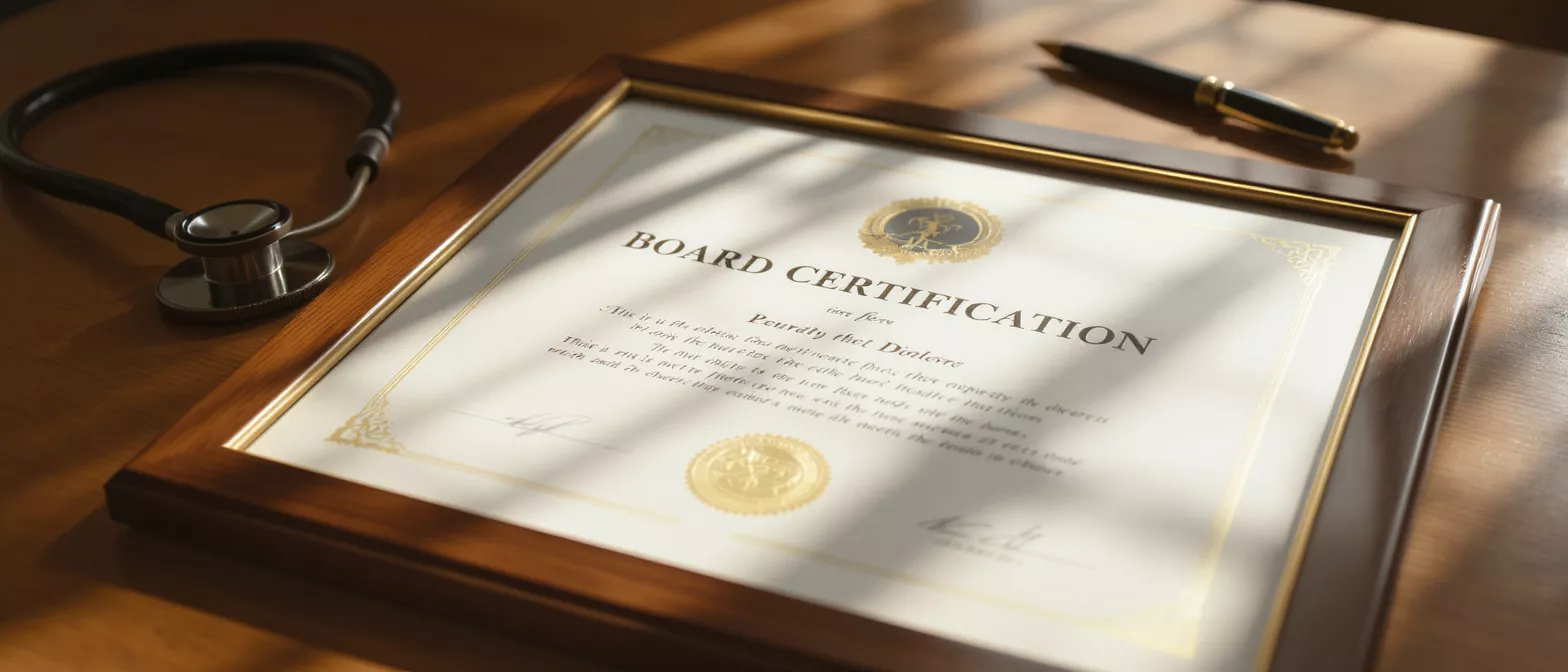
Board Certification
Learn what board certification means for cardiac surgeons and why it matters for safer outcomes.
What is board certification
Understanding what board certification means is a critical first step for any patient preparing for heart surgery. It represents a physician's voluntary commitment to a higher standard of clinical excellence, evaluated by an independent, recognized medical authority. When you see that a physician is board certified, it confirms that they have completed the necessary training and successfully passed rigorous, comprehensive examinations in their chosen specialty.
Unlike a basic medical license, which only grants a physician the legal right to practice medicine, board certification is an earned credential. It indicates that the doctor has demonstrated specialized expertise in specific areas of medicine. For a patient facing a complex cardiac procedure, this distinction provides a vital layer of reassurance. It shows that the surgeon has gone beyond state minimums and has been thoroughly tested by their peers.
The process of board certification serves to validate a surgeon's knowledge, skills, and clinical judgment. It is designed to ensure that medical professionals remain current with evolving technologies and standards of care. By choosing a board certified heart surgeon, you are selecting a professional who has proven their ability to handle intricate cardiovascular challenges safely and effectively.
Board certification requirements
Achieving this credential is a demanding, multi-step journey. The requirements begin with completing a bachelor's degree, followed by four years of medical school to earn either an MD or DO degree. After obtaining their medical degree, physicians must enter a residency program, which involves several years of intensive, supervised training in their specialty.
For those pursuing cardiothoracic surgery, the path is even longer. After a general surgery residency, a cardiac surgeon must complete a highly competitive fellowship program focused entirely on the heart, lungs, and chest cavity. Only after completing this extensive educational and clinical training can a physician apply to take their board examinations.
Residency and fellowship training: This phase involves thousands of hours of direct patient care, performing complex procedures under the close watch of experienced attending surgeons. The physician must demonstrate increasing competence before they are permitted to operate independently.
Passing rigorous examinations: Board certification requires passing both written and oral exams. These tests evaluate not only the surgeon's textbook knowledge but also their clinical reasoning, ability to manage complications, and understanding of surgical ethics.
Cardiology board certification process
How does the cardiology board certification process work? The certification journey is designed to push candidates to their intellectual and practical limits. The written examination, often known as the objective structured clinical examination, tests the physician on a vast array of clinical scenarios, including rare and challenging conditions.
The oral examination is equally demanding, typically conducted by a panel of seasoned experts. The candidate is presented with clinical cases and must explain their diagnostic approach and surgical plan in real-time. This ensures the doctor can think critically under pressure.
Once a physician passes both exams, they are granted board certified status. However, this credential is not a static achievement; it is the beginning of a career-long commitment to learning. The certifying bodies require ongoing medical education and periodic re-testing to ensure the physician maintains their high level of clinical proficiency.
Board certified cardiac surgeon meaning
What does it mean when you see a board certified doctor? In the context of cardiac surgery, it means your surgeon has dedicated years to mastering the most intricate procedures involving the human heart. It is a clear indicator of a surgeon's dedication to delivering the highest standard of care.
The board certified doctor meaning extends beyond just passing tests; it reflects a commitment to patient safety. Certified surgeons are expected to adhere to strict ethical guidelines and participate in continuous learning. They are held accountable by their respective boards, which monitor their clinical performance and professional behavior.
For a patient navigating the stress of heart surgery, this credential serves as a powerful filter. It helps distinguish those who have met a universally recognized standard from those who have not. Trusting your care to a top-rated cardiac specialist provides peace of mind when you need it most.
Board certification vs fellowship
Patients often confuse board certification with fellowship training. While both are essential components of a surgeon's education, they serve entirely different purposes. Understanding the difference can help you make an informed decision about your care.
A fellowship is a period of specialized training that a physician completes after their residency. It is where a general surgeon learns the specific skills needed to operate on the heart. Board certification, on the other hand, is the examination and verification process that proves the physician actually mastered those skills during their fellowship. A doctor can complete a fellowship but still need to pass their boards to become certified.
- Fellowship: The training phase where specialized surgical skills are acquired.
- Certification: The official credential verifying those skills have been tested and proven.
- Practice: The ongoing application of these skills in a clinical setting.
Board certification importance
Why is board certification important? The answer lies directly in patient outcomes and quality of care. Studies consistently show that hospitals and surgeons with higher volumes and specialized training have lower complication rates. When a surgeon is board certified, you have objective proof that they have been measured against a high benchmark.
The board certification importance also stems from the rigorous peer review process. To become certified, a surgeon's peers must evaluate their clinical judgment and surgical technique. This ensures the physician is not only book-smart but also practically skilled in the operating room.
For families, this credential provides a critical layer of trust during a vulnerable time. Knowing your surgeon has met these exacting standards means you can focus on recovery rather than worrying about the competence of your medical team.
Board recertification cardiology
Medicine is a rapidly advancing field, with new surgical techniques and technologies emerging constantly. Because of this rapid pace of change, initial board certification is only valid for a specific number of years. Board recertification in cardiology ensures that a surgeon's knowledge remains current throughout their career.
The recertification process requires physicians to engage in continuous learning. They must complete ongoing medical education credits, which keeps them informed about the latest clinical trials and surgical advancements. This ongoing assessment is vital for maintaining high standards of patient care.
Surgeons who actively maintain their certification demonstrate a lifelong dedication to their craft. They are not resting on past accomplishments but are continuously striving to improve their practice. This is why finding a board certified cardiovascular surgeon who actively maintains their credentials is so crucial for complex heart procedures.
Board certification verification
How can you perform board certification verification? Hospitals require all staff physicians to have their credentials verified, but patients can also check this information independently. The process is straightforward and provides an extra layer of security before surgery.
Most medical boards maintain online directories where you can search for a physician by name. These public records will show you if a doctor is currently certified, when they were originally certified, and when their certification expires. This transparency allows patients to verify their surgeon's claims easily.
It is always a good idea to verify credentials before undergoing a major procedure. While most surgeons are honest about their qualifications, confirming this information through an official channel gives you complete confidence in your medical team.
Board certification Mexico
Patients seeking cardiac care in Mexico should understand how board certification Mexico works. The certification process in Mexico is overseen by the different medical specialty academies and councils, which establish the standards for post-graduate training. These councils rigorously evaluate physicians to ensure they meet national benchmarks.
A Mexican board certified surgeon has completed an approved residency program and passed comprehensive written and oral examinations administered by their specialty council. This process mirrors the rigorous standards found in the United States and Europe, ensuring patients receive world-class care.
For international patients traveling for cardiac procedures, verifying a surgeon's Mexican board certification is a vital step. It confirms that the physician has been evaluated by a recognized national body and possesses the necessary skills to perform complex heart surgery safely.
Choosing a board certified cardiovascular surgeon
Choosing the right surgeon is the most critical decision a heart patient will make. When you select a board certified cardiovascular surgeon, you are prioritizing expertise, safety, and proven clinical judgment. This credential acts as a reliable filter in a crowded medical landscape.
A board eligible cardiac surgery candidate has completed their training but may not yet have passed their exams. While these surgeons are often highly skilled, choosing a fully certified surgeon gives added confidence. It confirms that an independent body has already verified the surgeon's competence.
Ultimately, your peace of mind is paramount. By understanding the rigorous path a surgeon takes to achieve and maintain this credential, you can approach your procedure with confidence. Trusting a certified professional ensures your heart is in the most capable hands.






