

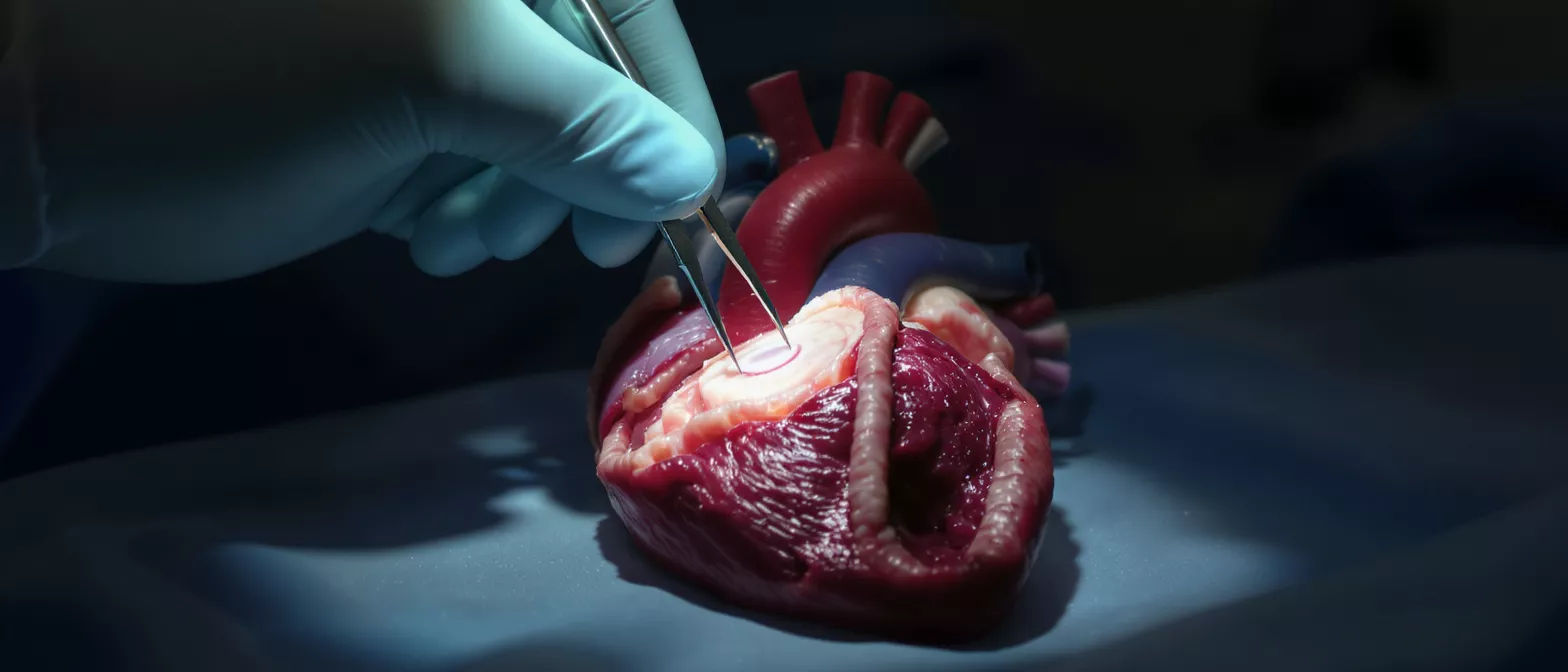
Coronary Buttons
Learn how coronary buttons are used in aortic root replacement and reimplantation surgery, including technique, safety, and recovery.
What Are Coronary Buttons in Heart Surgery?
When facing a complex cardiac procedure, understanding the surgical terminology can relieve much of the anxiety surrounding your treatment. Coronary buttons are small, carefully sculpted cuffs of native aortic tissue that surround the openings of the coronary arteries, known as the coronary ostia. These arteries are the vital pipelines that supply oxygen-rich blood directly to the heart muscle itself.
During procedures that replace the aortic root or the ascending aorta, the surgeon must temporarily detach these critical arteries from the native aorta. Rather than separating the vessels entirely, the surgical team excises them as complete, button-shaped patches. This technique preserves the natural tissue interface, ensuring a more secure and precise reattachment later in the operation.
This meticulous approach is a cornerstone of modern cardiac surgery. By transferring whole tissue segments rather than dealing with bare artery ends, surgeons can achieve a robust, leak-proof connection that promotes optimal healing and long-term cardiovascular health.
How Does Coronary Button Transfer Work?
The coronary button transfer process relies on extreme precision and advanced surgical planning. Once the patient is on cardiopulmonary bypass and the heart is still, the surgeon opens the diseased aorta. They then identify the exact locations where the coronary arteries branch off.
Using fine instruments, the surgeon cuts a circular or oval border around each coronary ostium. This creates the mobilized tissue flaps. The buttons are then left safely aside while the damaged aortic section is removed and the synthetic or biological graft is prepared and sutured into place.
Once the new graft is securely anchored, the surgeon creates matching openings in the graft walls. The mobilized coronary buttons are then meticulously sewn into these new openings, re-establishing continuous blood flow to the heart muscle. Maintaining an excellent proactive circulatory support system is essential for patient stability throughout this delicate phase.
Why Is the Button Technique Used in Aortic Root Replacement?
Aortic root replacement requires removing the section of the aorta closest to the heart, which inevitably disrupts the origin of the coronary arteries. The button technique is utilized because it provides the most reliable method for restoring this critical blood supply without causing tension or distortion.
Older surgical methods sometimes struggled with bleeding at the reattachment sites or restricted blood flow. By bringing a surrounding border of native tissue, the button technique allows the surgeon to use larger, more durable suturing patterns. This distributes tension evenly across the anastomosis, drastically reducing the risk of postoperative bleeding.
Ultimately, this method ensures the coronary arteries remain widely patent, meaning fully open and unobstructed. This preserves the heart's ability to receive the oxygen it needs to recover and function strongly after the operation is complete.
Coronary Button Mobilization and Surgical Preparation
Coronary button mobilization refers to the careful freeing of the tissue surrounding the coronary artery openings. Before making the incisions, the surgeon gently dissects the connective tissue and fat away from the outside of the aorta to clearly expose the coronary arteries.
This mobilization step is critical. It provides the necessary flexibility and length to the coronary buttons, ensuring they can reach their new positions on the graft without excessive tension. Tension-free anastomoses are essential; if the tissue is pulled too tightly, it risks tearing or causing the artery to narrow over time.
Surgeons use specialized magnification to assess the tissue quality during this phase. They look for signs of calcification or disease that might compromise the integrity of the buttons. Careful surgical tissue handling helps support a durable outcome for the patient.
Coronary Ostial Anastomosis Explained for Patients
Coronary ostial anastomosis is the medical term for the surgical connection created between the mobilized coronary button and the new aortic graft. It is the precise moment when the heart's blood supply is rerouted into its new, healthy pathway.
The surgeon uses a continuous, ultra-fine suture—often thinner than a human hair—to sew the edges of the button directly to the edges of the hole in the graft. This creates a seamless, waterproof seal. The suture material is permanent, ensuring the connection remains intact for the rest of the patient's life.
Because the anastomosis is created using the patient's own tissue (the button) and a high-quality graft, the biological compatibility is excellent. The body integrates these structures, allowing the inner lining of the blood vessels to grow naturally over the suture line, creating a smooth channel for blood flow.
Are Coronary Buttons Safe During Cardiac Surgery?
Patients frequently ask about the safety of such intricate procedures. The coronary button technique has become the gold standard precisely because it dramatically improves surgical safety. By utilizing native tissue cuffs, surgeons virtually eliminate the risk of fatal bleeding from the reattachment sites.
Risks are mitigated through meticulous surgical technique and advanced intraoperative imaging. Surgeons routinely use specialized ultrasound probes on the heart immediately after the procedure to verify that blood is flowing freely through the reattached coronary buttons. This real-time verification ensures absolute safety before the chest is closed.
While all cardiac surgeries carry inherent risks, the use of this specific technique reduces complications related to graft failure and pseudoaneurysm formation. The long-term patency rates of coronary buttons are excellent, offering patients a durable and reliable outcome for decades.
Ross Procedure and Coronary Buttons
The Ross procedure is a unique cardiac operation where the diseased aortic valve is replaced with the patient's own pulmonary valve. Because this operation involves replacing the aortic root, the coronary buttons must be detached and reimplanted into the new pulmonary autograft.
This procedure highlights the versatility of the coronary button technique. Because the patient's living tissue is used for the new aortic root, the mobilized coronary buttons must be matched perfectly to the autograft. The flexibility of the buttons allows for precise positioning, ensuring the coronary arteries are not compressed or distorted by the new valve structure.
The Ross procedure is highly specialized, and the success of the coronary reimplantation is the most critical step. The button technique allows surgeons to adapt the anatomy seamlessly, providing excellent long-term valve function and natural blood flow dynamics.
Bentall Procedure and Coronary Reimplantation
The Bentall procedure replaces the aortic valve, the aortic root, and the ascending aorta with a composite graft. Just like the Ross procedure, this requires coronary reimplantation. The coronary buttons are excised and sewn directly onto openings made in the synthetic graft.
This is often performed for patients with aneurysms or severe aortic regurgitation. The synthetic graft provides a strong, durable new aorta. The success of the entire operation hinges on the perfect execution of the coronary ostial anastomosis.
The Bentall procedure demonstrates how modern materials and classic surgical techniques merge. The synthetic graft handles the high pressure of the aorta, while the natural tissue of the coronary buttons provides a biologically compatible interface for the heart's vital arteries.
Recovery After Coronary Reimplantation Technique
Recovery following surgery involving coronary buttons mirrors standard recovery for major heart surgery, but with specific attention to coronary flow. In the intensive care unit, the medical team closely monitors the patient's heart rhythms and cardiac enzymes to ensure the reimplanted arteries are functioning perfectly.
Patients should expect a hospital stay of several days to allow for careful observation. The newly created anastomoses need time to heal, though the stable nature of the button technique means the structural integrity is established immediately. Pain management and gradual mobilization are standard parts of the recovery protocol.
At home, patients must focus on allowing the sternum to heal completely. Cardiac rehabilitation is vital to slowly rebuild cardiovascular fitness under medical supervision. Regular follow-up appointments will include echocardiograms to visually confirm that the coronary buttons are delivering optimal blood flow to the heart muscle.
- Initial Monitoring: ICU observation for heart rhythm and enzyme levels to verify coronary flow.
- Hospital Rest: Several days of inpatient recovery to ensure anastomosis stability before discharge.
- Gradual Activity: Supervised cardiac rehabilitation to safely restore cardiovascular fitness.
- Long-term Follow-up: Regular echocardiograms to monitor coronary button patency over time.
Key Takeaways on Coronary Reattachment
Understanding the surgical approach to coronary reattachment can transform a frightening prospect into a manageable medical journey. Coronary buttons represent a surgical refinement that prioritizes tissue compatibility, structural integrity, and long-term blood flow.
Whether performed as part of a Ross procedure, a Bentall procedure, or a general aortic root replacement, the button technique is the globally preferred method for coronary reimplantation. It minimizes bleeding risks, reduces tension on the arteries, and integrates seamlessly with both natural tissue and synthetic grafts.
By utilizing the patient's own tissue cuffs, surgeons provide a durable, biologically sound pathway for the heart's oxygen supply. This meticulous attention to detail ensures patients can look forward to a strong, healthy heart and an active life post-recovery. For further cardiac education and specialized surgical care, explore the resources available at Cirugía de Corazón.






