

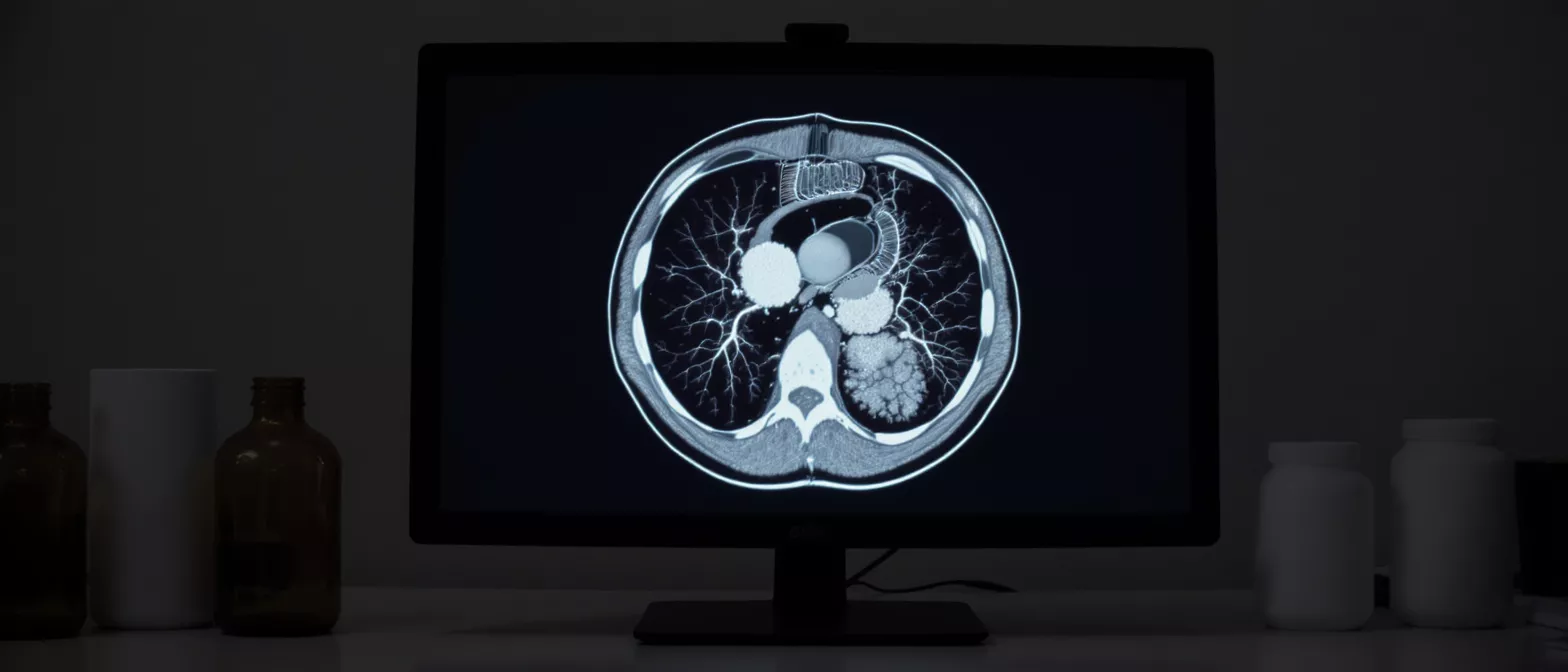
Coronary Calcium Score
Learn your coronary calcium score, risk categories, and treatment options.
What Is a Coronary Calcium Score?
Meaning of the test: A coronary calcium score is a numeric value that reflects the amount of calcified plaque in the walls of your heart's arteries. This plaque is a direct sign of atherosclerosis, a condition where fatty deposits harden and narrow the blood vessels supplying your heart muscle. Measuring this buildup helps your medical team visualize hidden risks before severe symptoms ever appear.
When plaque accumulates over years, it restricts blood flow and creates vulnerable spots in the artery wall that can rupture. By quantifying the calcium, doctors gain a clear window into the overall burden of coronary artery disease.
Understanding your score transforms vague anxieties about heart health into actionable medical intelligence. Rather than waiting for a cardiac emergency, you and your cardiologist can use this number to make informed, proactive decisions about your long-term wellness.
How Does a Coronary Calcium Score Work?
The CT imaging process: The test uses a specialized, non-invasive X-ray technology called a coronary calcium scoring CT to take rapid, detailed cross-sectional images of your heart. Unlike standard X-rays that show bones and lungs clearly, this high-speed computed tomography scanner is finely tuned to detect tiny specks of calcium within the soft tissue of the coronary arteries. It isolates these dense particles from the surrounding anatomy.
How the Agatston score is calculated: Radiologists use the Agatston calcium score to quantify what the scanner sees. This standardized formula considers both the total area of calcium deposits and their density, yielding a final number. A higher number directly correlates with a greater volume of hardened plaque within the vessel walls.
The entire scanning process takes only a few minutes to complete in an outpatient setting. You simply lie still on a table that slides through the open scanner while it captures images between your heartbeats. There are no injections, no dyes, and no recovery time needed.
Coronary Calcium Score Range and Risk Categories
Interpreting your calcium score: Proper calcium score interpretation relies on standard clinical categories that classify your risk of a future cardiac event. These categories give patients a straightforward way to understand where they stand on the spectrum of cardiovascular health. The scale begins at zero and climbs based on the volume and density of calcified plaque discovered during the scan.
- 0: No identifiable plaque. Very low risk of a near-term heart event.
- 1–99: Mild plaque burden. Moderate risk, suggesting early lifestyle changes are needed.
- 100–400: Moderate plaque burden. High risk, often requiring medication and aggressive risk factor modification.
- 400+: Extensive plaque burden. Very high risk of significant coronary artery disease, usually warranting further invasive testing.
While these ranges are medically standardized, your personal target and treatment plan will depend heavily on your age, family history, and other clinical risk factors like high blood pressure or diabetes. Always review your specific results directly with your physician.
What Does a Calcium Score of 0 Mean?
Understanding a zero score: A calcium score 0 meaning is fundamentally simple: the CT scan detected absolutely no calcified plaque in your coronary arteries. This result is highly reassuring. Clinical guidelines suggest that a score of zero indicates a very low probability of a major cardiovascular event over the following several years, assuming you have no severe, uncontrolled symptoms.
Limitations of a zero score: It is important to remember that this test only measures hard, calcified plaque. It does not visualize soft, non-calcified plaque, which can occasionally cause issues in younger patients despite a zero reading. Therefore, a zero score is highly encouraging, but it is not an absolute guarantee against all forms of heart disease.
Even with a perfect score, maintaining a heart-healthy lifestyle remains critical. Plaque can begin forming silently, so periodic reassessment may be recommended by your doctor if new risk factors emerge later in life.
When Should You Get a Calcium Score Test?
Indications for screening: A calcium score test is typically recommended for individuals considered to be at intermediate risk for heart disease, often determined by standard clinical risk calculators. If your cholesterol levels, blood pressure, or family history suggest an ambiguous risk level, this scan provides the "tie-breaker" data needed to make confident medical decisions.
Patients over the age of forty with a family history of early heart disease are often excellent candidates for this screening. It helps identify silent atherosclerosis before a heart attack occurs. Many individuals search for a "calcium score test near me" when they want to take proactive steps toward understanding their heart health, especially if they experience atypical chest discomfort that requires further investigation.
The test is generally not recommended for patients already diagnosed with severe, symptomatic coronary artery disease, as the result would not change their established treatment plan. Instead, it is a powerful tool for finding hidden risk in seemingly healthy individuals.
Coronary Calcium Scoring CT Scan Safety and Preparation
Radiation and safety profile: The coronary calcium scoring CT scan is remarkably safe for the vast majority of patients. The radiation dose used is very low, comparable to a standard mammogram or a few years of natural background radiation. Because the scan does not require intravenous contrast dye, there is zero risk of allergic reaction or kidney strain.
Preparation for the scan is minimal and simple. You will be asked to avoid caffeine and smoking for a few hours before the test so your heart rate remains steady and predictable. You simply wear a gown, remove any metal objects or jewelry that could interfere with the imaging, and lie still while the machine does the work.
Because the procedure is non-invasive and requires no sedation, you can drive yourself home and resume all normal daily activities immediately after the scan is completed. This makes it an incredibly convenient screening tool for busy individuals.
Calcium Score and Statins: Treatment After Results
How the score guides statin therapy: The relationship between your calcium score and statins is one of the most crucial clinical applications of the test. A positive score—anything above zero—confirms the presence of atherosclerotic plaque, which often prompts a doctor to prescribe statin therapy to stabilize that plaque and lower LDL cholesterol. This scan removes the guesswork in deciding whether preventative medication is necessary.
For many patients in the intermediate-risk category, deciding whether to start daily medication can be difficult. The scan provides an objective, visual answer. Seeing the actual calcium deposits allows patients to understand the physical reality of their heart disease risk, making the commitment to statin therapy much easier to embrace. Understanding your coronary calcium score means making informed, confident decisions about your cardiac care.
High Calcium Score Treatment and Next Steps
Responding to an elevated score: Receiving a high calcium score can be alarming, but it is a call to action, not an emergency. High calcium score treatment focuses immediately on aggressive medical management to stabilize existing plaque and prevent further buildup. Your cardiologist will likely prescribe statins, blood pressure medications, and aspirin therapy to dramatically lower your risk of a heart attack.
Deciding on further testing: If your score is very high, your doctor may want to evaluate the blood flow to your heart muscle to check for severe blockages. This often involves scheduling a stress test or a coronary angiogram. The calcium scan alone shows the presence of plaque, but functional tests show whether that plaque is actively restricting blood flow during exertion.
Your physician will also discuss comprehensive lifestyle changes, including dietary modifications, exercise regimens, and smoking cessation if applicable. The goal is to use the information from the scan to prevent the plaque from progressing into a dangerous blockage.
Coronary Calcium Score vs Stress Test
Anatomical vs functional testing: When comparing the coronary calcium score vs stress test, it helps to think of them as looking at two different aspects of heart health. The calcium score is an anatomical test—it shows the physical structure of your arteries and the actual plaque inside them. A stress test is a functional test—it evaluates whether your heart gets enough blood flow during physical exertion.
It is entirely possible to have a high calcium score but a perfectly normal stress test. This happens when plaque lines the artery walls but doesn't yet bulge into the channel enough to restrict blood flow. Conversely, a stress test is better at identifying "soft" plaque that might suddenly rupture and cause a heart attack, which the calcium scan cannot easily see.
Doctors often use both tools together when necessary. The calcium score tells us if disease is present, and the stress test tells us if that disease is affecting your heart's function. This combined approach ensures a highly accurate diagnosis.
Understanding Your Heart Scan Calcium Score Results
Putting your heart scan into context: Taking the time to truly understand your heart scan calcium score results requires more than just memorizing a number. It demands a thorough conversation with a cardiac specialist who can interpret the data in light of your unique medical history. Your score is a powerful baseline that establishes your current cardiovascular status and helps map out a preventative care plan.
Living with your results: Whether your score was zero, moderate, or high, the goal of screening is always empowerment. Low scores bring peace of mind and a mandate to maintain healthy habits. Higher scores bring focus, prompting necessary medical interventions that save lives by preventing heart attacks before they happen.
At our practice, patient education is the cornerstone of excellent cardiac care. Dr Molina takes pride in explaining these complex results in plain, reassuring language, ensuring patients and their families feel comfortable and informed. If you have concerns about your heart health, discuss your risk factors with your doctor.






