

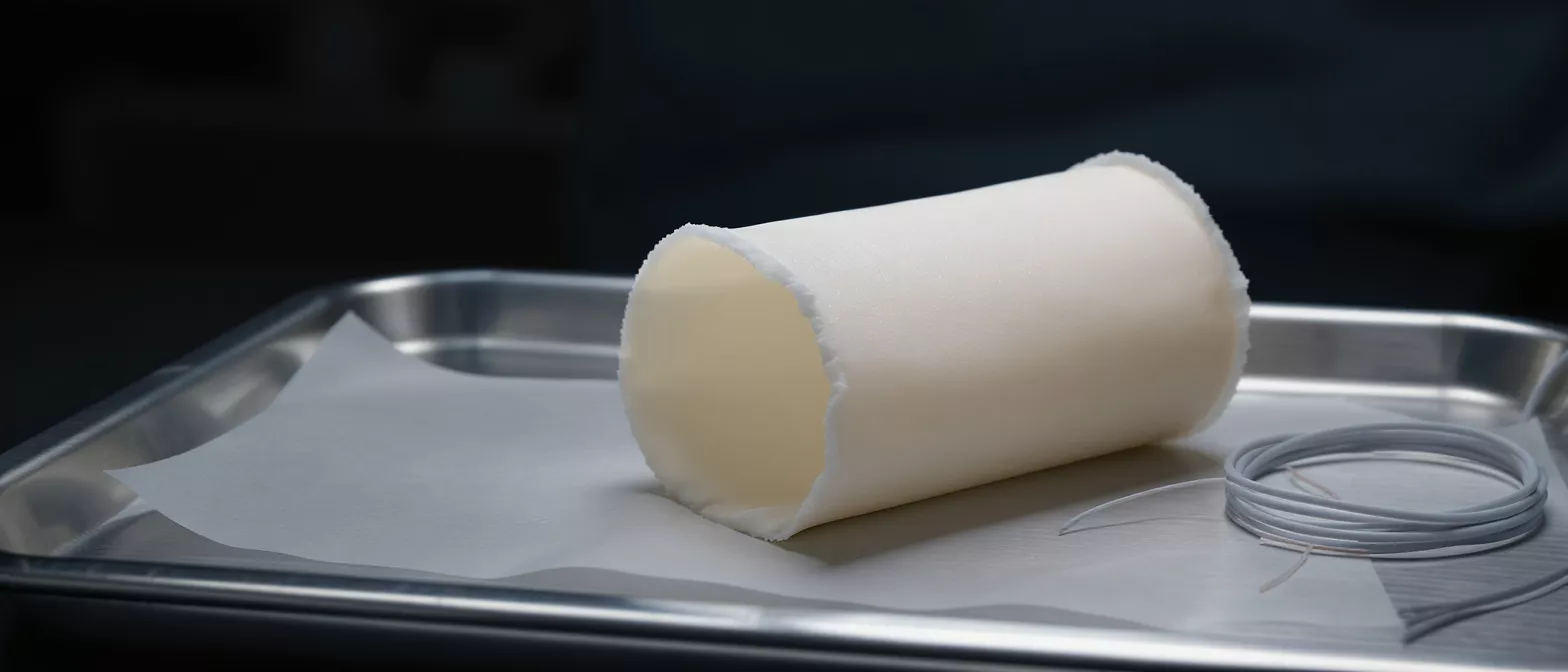
Pericardial Skirt
Discover how a pericardial skirt reinforces valves and grafts in complex heart surgery.
What does pericardial skirt meaning reveal about heart repair?
Understanding the pericardial skirt meaning provides clarity for patients facing complex valve or aortic operations. It is essentially a biological collar, meticulously crafted by the surgeon from a piece of the pericardium, which is the protective sac surrounding the heart. This tailored cuff is designed to wrap around the base of a repaired valve or a synthetic graft, acting as a durable yet flexible seal.
By bridging the gap between rigid artificial components and delicate native tissue, the skirt ensures that blood flows precisely where it should without leaking. This technique provides a customized anatomical fit that synthetic materials alone often cannot achieve, adapting to the unique contours of a patient's cardiac structure.
How does bovine pericardial skirt compare to autologous tissue?
Surgeons choose between autologous pericardium, taken directly from the patient, and bovine pericardium, sourced from cattle, based on the specific demands of the operation. A bovine pericardial skirt is often favored in complex or emergency scenarios because it is commercially pre-treated, consistently thick, and ready for immediate use without requiring harvesting from the patient.
Autologous tissue advantages: Harvesting the patient's own pericardium eliminates any risk of immune rejection and ensures perfect biological compatibility. The body recognizes the tissue as its own, allowing for rapid cellular in-growth and seamless integration into the heart's native architecture.
Conversely, bovine tissue undergoes a rigorous chemical process to remove all cellular material, leaving behind a sterile collagen scaffold. This makes it exceptionally strong and durable, which is highly beneficial for reinforcing high-pressure zones like the aortic root where tissue integrity is paramount.
When is pericardial skirt heart surgery recommended?
Pericardial skirt heart surgery is typically recommended for patients undergoing complex reconstructions where natural tissue is too fragile or damaged to hold sutures independently. It is frequently utilized during aortic root replacements, mitral valve repairs, and procedures to correct structural defects where reinforcing the annulus is necessary for a successful outcome.
In cases of endocarditis, where infection has destroyed native heart tissue, the pericardial skirt acts as a robust substitute. It allows surgeons to securely anchor prosthetic valves or grafts even when the surrounding tissue is severely compromised, effectively restoring cardiac integrity.
Ultimately, the decision to use this technique stems from the surgeon's commitment to achieving a leak-proof, durable repair that will withstand the heart's continuous mechanical stress over a lifetime.
Why choose a pericardial patch skirt over synthetic alternatives?
The choice to utilize a pericardial patch skirt over synthetic materials is driven by biocompatibility and mechanical performance. Synthetic patches, while strong, can sometimes cause friction or calcification over years of constant cardiac movement, potentially leading to tissue erosion or delayed failure.
Biological pericardium mimics the natural elasticity of heart tissue. This flexibility allows the pericardial skirt to expand and contract with the beating heart, effectively dissipating mechanical stress rather than transferring it to the native tissue or sutures, which significantly reduces the risk of structural breakdown.
Furthermore, the natural collagen structure of pericardial tissue encourages the patient's own cells to colonize the patch. Over time, this transforms the skirt from an inert barrier into a living, vascularized component of the heart, which is a vital advantage for long-term patient survival and quality of life.
How is the pericardial skirt procedure performed step-by-step?
The pericardial skirt procedure begins after the chest is opened and the patient is placed on cardiopulmonary bypass, which temporarily takes over the function of the heart and lungs. The surgeon then assesses the damaged area, determining the exact dimensions needed for the tissue cuff to ensure a precise, tension-free fit.
Next, the pericardial tissue—whether autologous or bovine—is meticulously trimmed and shaped into the cylindrical skirt. The surgeon uses continuous, fine sutures to anchor this biological collar around the base of the repair site, carefully distributing tension to eliminate any gaps that could cause paravalvular leakage.
Intraoperative verification: Before completing the operation, the surgical team utilizes specialized imaging and pressurized saline tests to confirm the absolute integrity of the seal. The heart is then allowed to resume its normal beating rhythm, and the surgeon closes the chest once hemostasis is confirmed.
What factors influence pericardial skirt surgery cost?
The overall pericardial skirt surgery cost is generally incorporated into the comprehensive billing of the primary cardiac operation, such as a valve replacement or aortic repair. The specific cost factors depend heavily on the complexity of the underlying condition, the length of time spent on cardiopulmonary bypass, and the specific type of pericardial material selected by the surgical team.
Utilizing a bovine pericardial skirt may carry different material costs compared to harvesting autologous tissue, which requires additional operative time but eliminates the expense of commercially processed biological products. Hospital stays, intensive care monitoring, and postoperative rehabilitation also contribute to the total financial investment.
Patients should consult with their hospital's billing department and their insurance providers to understand the coverage for biological tissue reinforcement. It is important to recognize that investing in this technique often prevents costly future reoperations by providing a more durable, long-lasting structural repair.
What makes the pericardial skirt suture technique reliable?
The reliability of the pericardial skirt suture technique lies in its ability to create a continuous, even distribution of tension across a highly dynamic surface. Surgeons use specialized, non-absorbable sutures that are designed to remain intact indefinitely, anchoring the biological tissue securely to the native heart muscle or prosthetic component.
To prevent the fine suture threads from cutting through delicate cardiac tissue under pressure, the surgeon often employs tiny Teflon pledgets. These small felt pads act as miniature washers, broadening the surface area of the suture hold and preventing tearing, which ensures the pericardial skirt remains locked firmly in place.
This meticulous suturing method is what creates the hemodynamic seal. By eliminating weak points along the suture line, the technique prevents postoperative bleeding and secures the long-term structural success of the heart surgery.
How does pericardial skirt reconstruction aid aortic aneurysm repair?
Pericardial skirt reconstruction plays a critical role in the surgical management of aortic aneurysms and dissections. When the aortic root becomes dangerously dilated or dissected, the native tissue is often too fragile to safely anchor a synthetic graft, creating a high risk of catastrophic suture line bleeding.
By interposing a pericardial skirt between the rigid graft and the fragile native aorta, surgeons create a robust, flexible buffer zone. This biological collar absorbs the immense pulsatile stress of the bloodstream, effectively sealing the junction and preventing the graft from pulling away from the native tissue over time.
For patients, this means a significantly reduced risk of postoperative hemorrhage and a more durable structural outcome. The pericardial skirt effectively bridges the anatomical gap, restoring the aortic root to a stable, functional state.
What is the long-term durability of a pericardial skirt repair?
The long-term durability of a pericardial skirt repair is highly favorable, as the biological tissue is designed to become a permanent, living part of the heart. Over the months following the operation, the patient's own cells infiltrate the collagen scaffold of the pericardium, effectively transforming the patch into vascularized, native-like tissue.
Resistance to degradation: Because the skirt is seamlessly integrated into the body, it resists the degradation and calcification that frequently compromise purely synthetic materials. This cellular in-growth ensures that the repair remains strong, flexible, and fully functional for decades.
While lifelong cardiac monitoring remains essential to ensure overall heart health, the pericardial skirt itself requires no specialized maintenance. Patients can confidently expect their biological repair to withstand the mechanical demands of a normal, active lifestyle.
What is the general pericardial skirt prognosis and summary?
The general pericardial skirt prognosis is excellent, offering patients a safe and highly effective solution for complex cardiac structural repairs. By leveraging the natural biocompatibility of pericardial tissue, surgeons can achieve leak-proof, durable seals that synthetic materials struggle to match.
This technique fundamentally improves the safety profile of intricate valve and aortic surgeries by preventing paravalvular leaks and reinforcing fragile native tissue. The ability of the skirt to integrate seamlessly into the heart's architecture ensures long-term mechanical stability and reduces the likelihood of future reoperations.
In summary, the pericardial skirt is a remarkable surgical innovation that combines biological compatibility with structural resilience. For patients facing complex cardiac repairs, this technique provides a durable foundation for restored heart function and a lasting return to health.






