

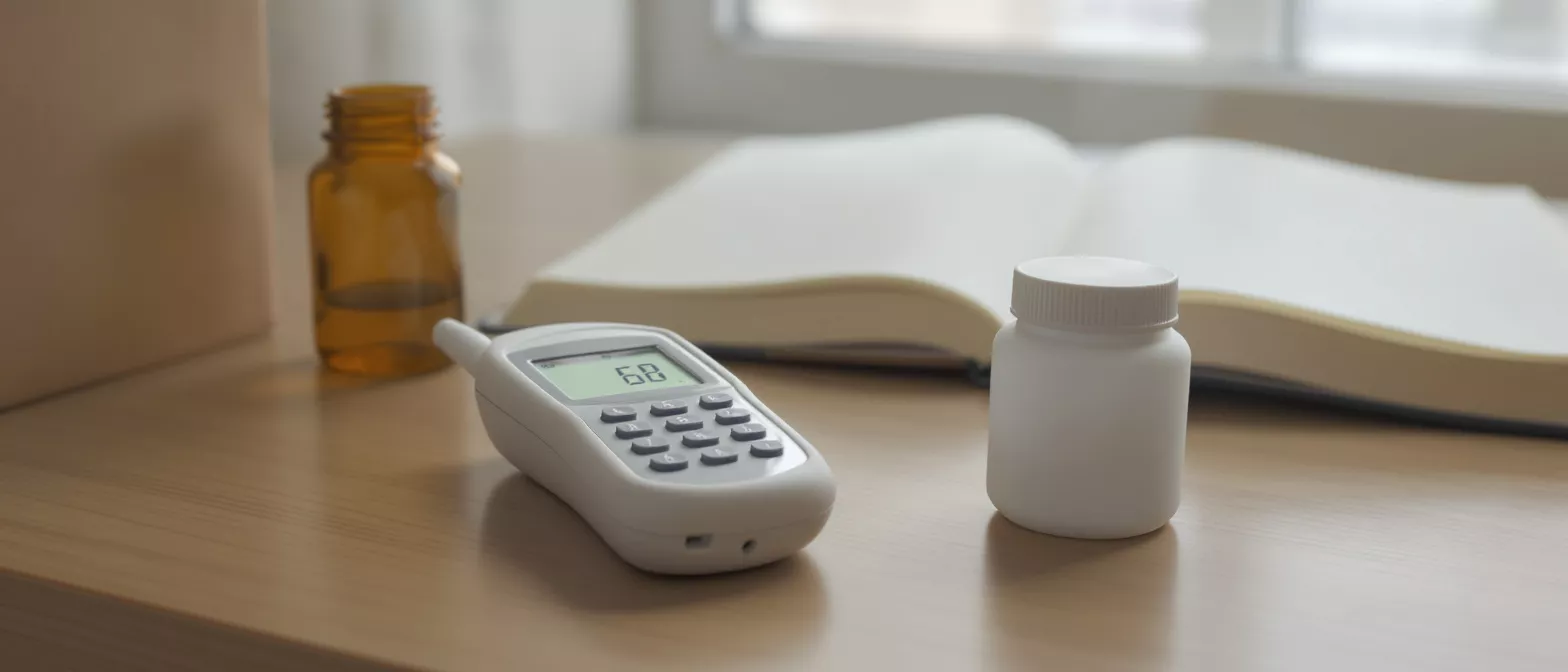
Point-of-care INR Testing
Learn how point-of-care INR testing helps cardiac surgery patients monitor blood clotting quickly and accurately, with devices, home use, and benefits.
What Is Point-of-Care INR Testing?
Point-of-care INR testing is a rapid medical test used to measure how quickly your blood clots, performed right where you are receiving care rather than in a centralized hospital laboratory. INR stands for International Normalized Ratio, a standardized number that tells your medical team how thin your blood is. For patients recovering from heart surgery, this number is critical because it ensures that blood-thinning medications are working effectively to prevent dangerous clots without increasing the risk of bleeding.
How it differs from standard blood draws: Traditional lab tests require a venous blood draw from your arm, transported to a lab, with results taking anywhere from an hour to several hours. Point-of-care coagulation testing uses a single drop of blood from a simple finger prick, providing an accurate INR reading in just a few minutes.
This immediate access to data allows your cardiac surgical team to make swift, informed decisions about your medication dosages. When you are in the delicate recovery phase following a valve replacement or other cardiac procedure, having rapid access to your clotting status provides peace of mind and enhances your overall safety.
How Point-of-Care INR Testing Works
The technology behind a portable INR monitor is designed to be highly efficient and user-friendly. A small lancet is used to prick the side of your fingertip, producing a tiny droplet of blood. This droplet is then carefully applied to a single-use test strip that has already been inserted into the handheld scanning device.
The chemical reaction inside the device: The test strip contains reagents that react with your blood sample, initiating a clotting process. The point-of-care coagulation monitor measures the exact time it takes for this reaction to occur and mathematically converts it into the INR value. This process perfectly mirrors the biological mechanisms evaluated by traditional hospital labs but does so within a miniaturized, portable format.
Because the device does all the heavy calculation, the patient or nurse simply waits for the screen to display the result. There is no need for complex preparation, centrifuges, or extensive technical knowledge to operate a bedside INR testing unit successfully.
Why INR Testing for Warfarin Patients Matters After Cardiac Surgery
Following certain cardiac surgeries, such as mechanical heart valve replacements, your cardiologist will prescribe anticoagulant medications like warfarin to prevent blood clots from forming on the new hardware. Because every patient metabolizes this medication differently, warfarin monitoring point-of-care systems become essential to ensure the dosage remains highly individualized and safe.
The therapeutic window: Your medical team will establish a target INR range tailored specifically to your surgical procedure and medical history. If your INR is too low, you are at risk for life-threatening clots; if it is too high, you face an increased risk of spontaneous bleeding.
Regular testing is a cornerstone of postoperative care. The mechanical valve introduces a surface where blood might naturally want to clot, making consistent anticoagulation therapy a permanent requirement for your long-term health and recovery.
Point-of-Care INR Testing vs Lab: Differences Explained
Patients often wonder if a rapid INR testing device is as dependable as a traditional venous blood draw analyzed in a hospital laboratory. While minor variations can exist, point-of-care INR testing accuracy is exceptionally high and widely accepted in modern clinical cardiology. The primary difference lies not in the reliability of the result, but in the speed and convenience of the delivery.
Capillary versus venous sampling: Point-of-care devices analyze capillary blood from the fingertip, whereas lab tests use venous blood drawn from the arm. Despite this biological difference, both methods calibrate to the same international standards, ensuring the numerical INR values are universally understood by all healthcare providers.
- Speed: Point-of-care devices deliver results in one to two minutes, whereas traditional lab processing can take an hour or more during high-volume hospital shifts.
- Sample volume: A single drop of blood is sufficient for a bedside test, while traditional labs require a full vial, which can be stressful for patients with difficult veins.
- Location: Bedside testing happens wherever the patient is located, eliminating the need to transport fragile postoperative patients to a separate phlebotomy room.
Benefits of Rapid INR Testing During Early Recovery
The immediate postoperative period after heart surgery is a highly vulnerable time for the patient. Rapid INR testing allows the medical team to adjust medication doses quickly, responding in real-time to how your body is reacting to the trauma of surgery and the introduction of new anticoagulants. This agility dramatically reduces the risk of complications during early recovery.
Reducing anxiety for patients and families: Waiting for lab results can be an agonizing experience for concerned family members. Knowing that a simple finger prick yields immediate, actionable data about the patient's blood clotting status provides immense emotional relief during a stressful hospital stay.
Furthermore, rapid testing facilitates more frequent monitoring without subjecting the patient to repeated, uncomfortable venous punctures. The clinical team can establish a more detailed, dynamic picture of how the patient's blood is responding over a 24-hour period.
Point-of-Care INR Testing Accuracy and Reliability
Modern INR testing devices undergo rigorous quality control and clinical validation before they are ever approved for patient use. They utilize advanced microfluidics and precise biosensors to ensure that the INR point-of-care scanner reads the blood sample with a high degree of clinical certainty. While no medical test is completely without a margin of error, these devices are trusted by leading cardiac centers worldwide.
Quality control protocols: To maintain point-of-care coagulation monitor accuracy, healthcare providers perform routine checks using known control solutions. These liquid controls have pre-determined clotting values, ensuring the device is reading both high and low ranges correctly before being used on a patient. This helps ensure the INR blood test results genuinely reflect the patient's true physiological state.
If a result ever seems unusually high or completely out of expected range, the medical team can immediately perform a traditional venous draw to verify the reading. This built-in verification system adds an extra layer of safety for the recovering cardiac patient.
Home INR Monitoring and Self-Testing Devices
As patients transition from the hospital to home, the need for frequent monitoring continues. An INR self-testing device empowers patients to take an active role in their postoperative care. With proper training from the cardiac care team, patients can safely use a home INR monitoring system to check their levels a few times a week, reporting the data to their physician remotely.
Gaining independence safely: Learning to use a home INR self-testing meter gives patients the freedom to travel, work, and resume daily activities without being tethered to a clinical laboratory schedule. This independence significantly improves the quality of life for long-term anticoagulation patients.
Your clinical team will ensure you are thoroughly comfortable with the finger-pr






