

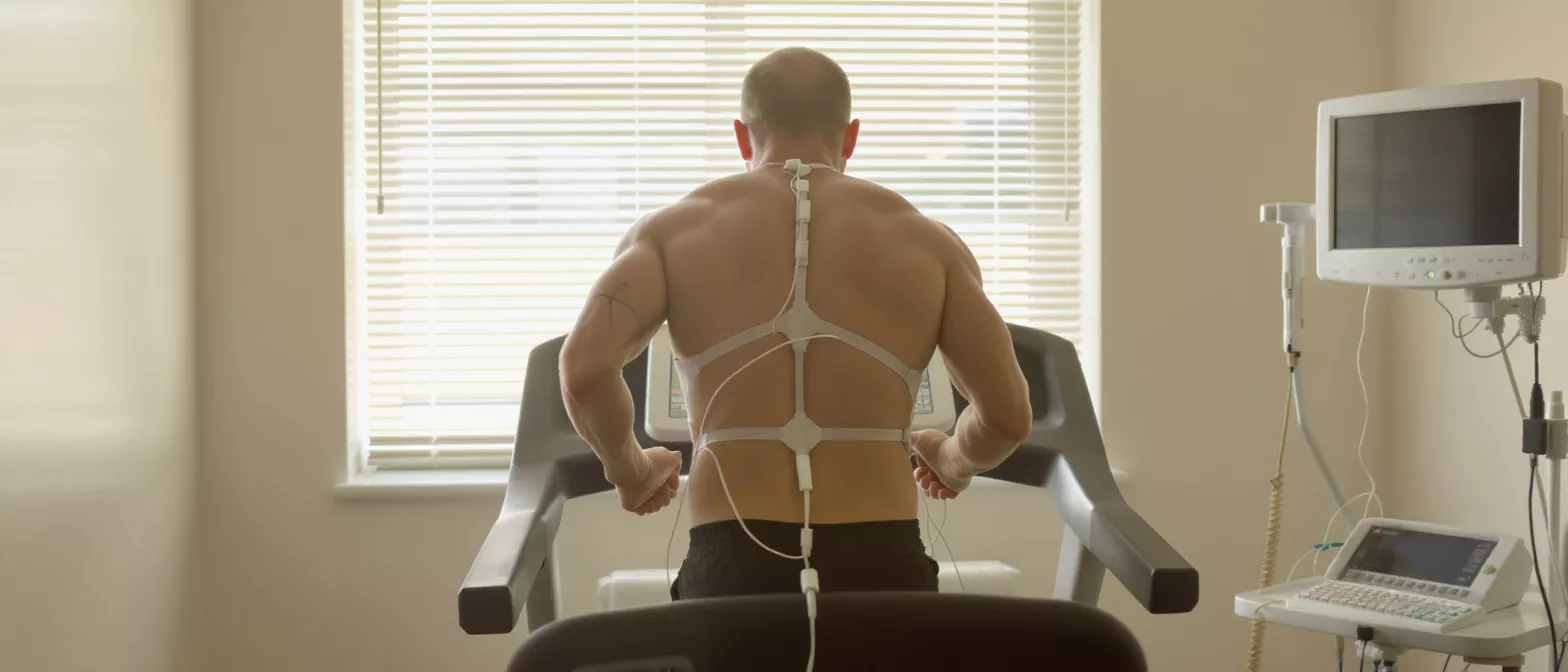
Treadmill Test
Learn what to expect from a treadmill test, how to prepare, and how to understand your results.
What is a treadmill test?
A treadmill test is a non-invasive diagnostic tool used to measure how well your heart functions when it is placed under physical stress. When you exercise, your body requires more oxygen, which forces your heart to pump harder and faster. By monitoring your heart's electrical activity during exertion, doctors can evaluate cardiac fitness and spot potential problems.
For patients facing cardiac surgery, this evaluation provides critical baseline data. It reveals the severity of conditions like coronary artery disease by showing exactly when the heart muscle begins to struggle. Seeing how your cardiovascular system responds to an increasing workload helps your medical team decide if a surgical intervention is necessary and plan the safest approach for your specific anatomy.
Exercise tolerance test basics: Also known as an exercise tolerance test, this evaluation compares your resting heart function to your peak exercise capacity. The contrast between these two states tells the cardiology team whether blood flow to the heart muscle is adequate or if there are blockages limiting oxygen delivery. It provides an objective measure of cardiovascular fitness that a resting exam cannot capture.
Why your cardiac surgeon orders a stress test
A cardiac surgeon relies on a stress test to see the true physiological limits of your heart. A resting electrocardiogram might look perfectly normal because the heart is not being challenged. By forcing the heart to work harder, hidden issues become visible, allowing your doctor to accurately gauge the severity of valve problems, heart failure, or arterial blockages before scheduling a surgical procedure.
Assessing surgical risk: Before any major heart operation, your care team must confirm that you are physically strong enough to undergo the procedure. The test evaluates your cardiovascular reserve and lung capacity, serving as a crucial measure of surgical viability. This ensures that your body can withstand the physical demands of the operation.
By establishing your baseline heart health, the surgeon can also set realistic recovery expectations. If your heart performs well during the treadmill test, it suggests a smoother postoperative recovery. Understanding these risks and benefits helps patients and families feel more confident and informed about the surgical plan.
How an exercise stress test works
An exercise stress test works by gradually increasing the physical demands on your cardiovascular system while continuously monitoring your vital signs. As you walk on the treadmill, the speed and incline slowly increase, requiring your heart to pump more blood. This controlled stress reveals how effectively your heart handles the extra workload in real-time.
Electrocardiogram stress test monitoring: During the cardiac exercise test, technicians attach electrodes to your chest to record the electrical patterns of your heart. This electrocardiogram stress test tracking shows rhythm irregularities, blood pressure changes, and oxygen consumption, providing a complete picture of your heart's performance under physical strain.
Because the intensity goes up slowly, the test remains manageable for most patients. If you feel fatigued or experience chest pain, the medical team can stop the treadmill immediately. The controlled environment ensures constant oversight while pushing your heart just enough to gather the required data.
How to prepare for a treadmill test
What to wear: Proper treadmill test preparation is essential for accurate results. You should wear comfortable, loose-fitting clothing and sturdy walking shoes. Avoid heavy meals or caffeine for at least three hours before the appointment, as a full stomach or stimulants can alter your heart rate and blood pressure readings.
It is important to inform your doctor about any medications you take. Some prescriptions, particularly heart medications, may need to be paused before the test to ensure the results accurately reflect your unmedicated cardiac function. Never stop taking medication without explicit instructions from your surgical team.
- Footwear: Wear supportive athletic shoes to prevent slipping.
- Hydration: Drink plenty of water the day before to ensure good vein access.
- Medication list: Bring a complete list of your current prescriptions.
What to expect during the treadmill test procedure
The treadmill test procedure follows a strict, monitored protocol designed for patient safety. After the electrodes are placed on your chest, you will start walking on the treadmill at a slow, flat pace. Every few minutes, the machine will automatically increase the speed and tilt upward, making it feel like you are walking up a steep hill.
Monitoring your physical response: Throughout the test, a nurse or technician will frequently ask how you feel. They will check your blood pressure continuously and watch the electrocardiogram monitor for changes in your heart's electrical activity. You should report any chest tightness, dizziness, or shortness of breath immediately so they can adjust the test.
The test continues until you reach your target heart rate or develop symptoms that prompt the doctor to stop the session. Once the treadmill stops, you will sit or lie down while the staff continues monitoring your heart as it returns to its resting state. This entire procedure usually takes about 15 to 20 minutes.
Understanding your treadmill test results
Understanding treadmill test results requires looking for specific changes in your heart's electrical patterns and blood pressure response. A normal result means you reached your target heart rate without chest pain or abnormal wave shifts on the monitor, suggesting strong coronary blood flow. This outcome is highly reassuring for patients awaiting surgery.
Interpreting abnormal findings: If the test shows abnormal results, it often indicates that part of your heart is not receiving enough oxygen during exertion. This finding might point to a blocked artery, an irregular heart rhythm, or poor exercise tolerance. Your surgeon will use this data to determine if you need an angiogram or a more aggressive treatment plan.
Your doctor will explain what the specific findings mean for your surgical journey. Abnormal results do not always mean emergency surgery is required, but they provide a map of where the heart is struggling and guide the next diagnostic steps.
Is a cardiac stress test safe?
Yes, a cardiac stress test is generally very safe. Because the test is performed in a clinical setting, medical professionals are present the entire time to monitor your vitals and respond to any distress. The risk of a serious complication is incredibly low, making it a highly reliable diagnostic tool for pre-surgical evaluation.
Managing emergencies: While complications are rare, the testing facility is fully equipped to handle cardiac emergencies. If an irregular rhythm or sudden blood pressure drop occurs, doctors have the necessary medications and clinical-grade defibrillation devices nearby to stabilize you immediately. Your safety is the top priority throughout the evaluation.
Your doctor will evaluate your overall health before recommending the test to ensure it is appropriate for your condition. If you have severe mobility issues or an acute heart condition, alternative imaging stress tests might be used instead of a treadmill.
Treadmill test for heart versus resting EKG
A treadmill test for heart evaluation differs significantly from a resting electrocardiogram. A resting EKG records your heart's electrical activity while you are lying still, which is excellent for detecting previous heart attacks or chronic rhythm issues. However, it cannot capture problems that only appear when the heart is stressed.
Dynamic versus static monitoring: The cardiac exercise test provides a dynamic view. By forcing the heart to work harder, the treadmill reveals blockages that only restrict blood flow under high demand. It highlights the difference between a heart that functions well at rest and one that struggles under the physical demands of daily life or surgery.
Both tests are important, but they serve different purposes. Your surgeon may order both to get a complete picture of your heart health, ensuring every angle is evaluated before proceeding to the operating room.
Find a treadmill test near me
If your physician recommends an evaluation, searching for a treadmill test near me is the logical next step. Local access to high-quality cardiac diagnostics is vital for prompt assessment and timely surgical planning. Finding a reputable clinic ensures you receive accurate results in a comfortable, well-equipped setting.
Considering local costs and access: When researching facilities, consider the treadmill test cost Guadalajara options if you are traveling internationally or living locally. Accessing care through a specialized center helps ensure continuity between your diagnostic testing and your surgical team.
Choosing the right facility means finding a place that prioritizes patient education and clear communication. A frightened patient or family member needs a supportive environment where doctors explain the process and results thoroughly. Having your test and surgery at the same institution streamlines your entire medical journey.
Heart health screening takeaways
Heart health screening is a critical component of preparing for cardiac surgery. The treadmill test remains one of the most reliable ways to see how your heart performs under pressure. It transforms a static snapshot into a dynamic movie of your cardiovascular system.
Conclusion: For a patient facing heart surgery, this test provides reassurance, maps out hidden dangers, and guides the surgical strategy. Understanding what the test is, how to prepare, and what the results mean removes the fear of the unknown. Knowledge is the best defense against anxiety when navigating cardiac care.
Ultimately, a treadmill stress test is a safe, routine step toward a healthier heart. Trust your medical team, communicate your symptoms during the exam, and use the results to build a confident path forward for your surgical treatment.






