

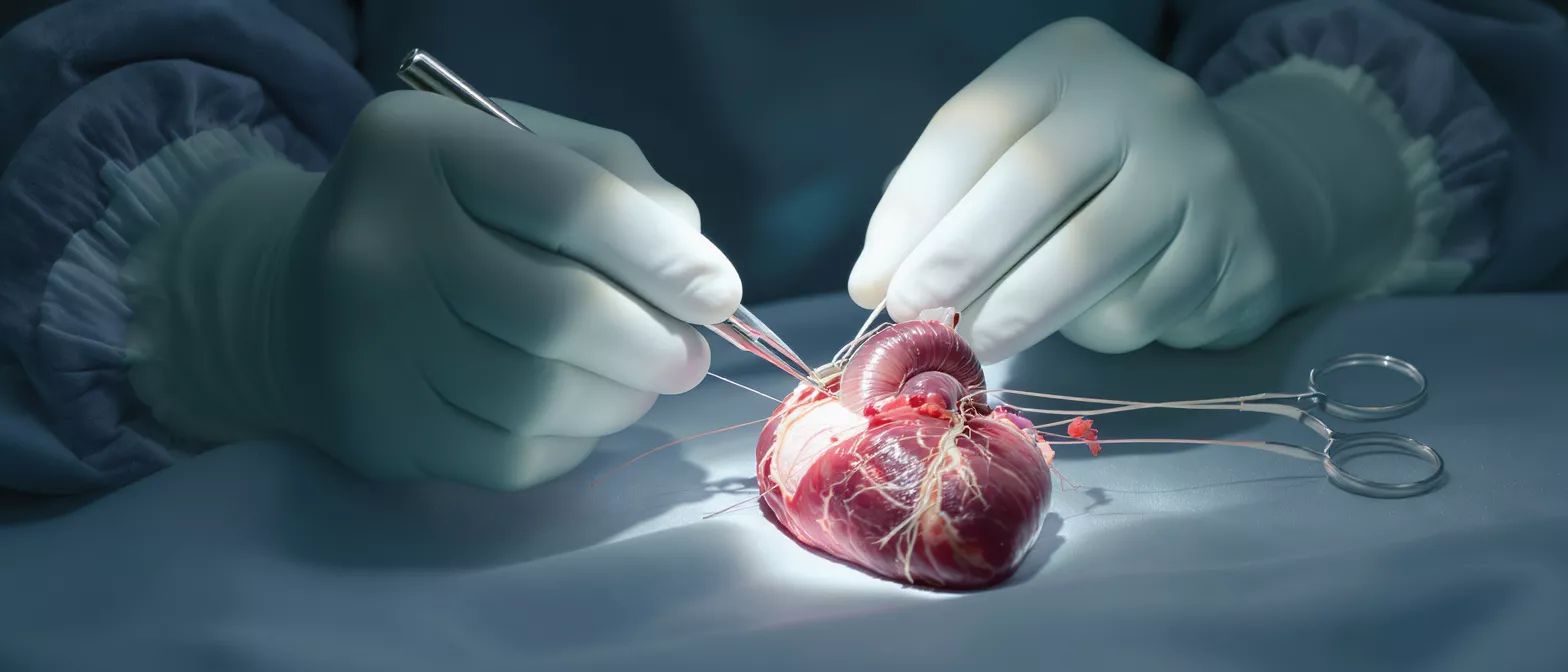
Valve-sparing Root Replacement
Learn about valve-sparing root replacement, a surgery that preserves your aortic valve.
What is Valve-Sparing Root Replacement?
Valve-sparing root replacement is an advanced cardiac surgical technique used to repair a damaged or enlarged aortic root while keeping the patient's natural aortic valve intact. The aortic root is the section of the aorta closest to the heart, which houses the valve leaflets that control blood flow out of the left ventricle. When this area swells, forming an aneurysm, the surrounding tissue stretches and compromises the valve's ability to close properly, leading to leakage.
Why preserving your native valve matters: Traditional surgical approaches for an aortic root aneurysm repair often involve replacing both the damaged aorta and the native valve with a mechanical or biological prosthesis. While effective, artificial valves come with lifelong considerations, such as the need for permanent blood thinners or the eventual degradation of biological tissue. Sparing the native valve eliminates these specific long-term risks.
For a patient facing thoracic aortic surgery, the prospect of losing a natural valve can be daunting. This valve-preserving root replacement technique offers a reassuring alternative. By keeping your own valve, the heart maintains its natural blood-flow dynamics, which often translates to a better quality of life and reduced reliance on daily medications postoperatively.
How Valve-Sparing Aortic Surgery Works
The surgical principle explained: During valve-sparing aortic surgery, the cardiac surgeon carefully removes the swollen outer wall of the aortic root while meticulously detaching and preserving the delicate valve leaflets. Once the diseased tissue is gone, a strong, synthetic tube graft is brought into position to replace the damaged aorta. The surgeon then reattaches your native valve inside this new durable graft.
The procedure requires extraordinary precision and is typically performed while the heart is temporarily stopped, utilizing a heart-lung machine to maintain circulation. The coronary arteries, which branch off the aortic root to supply blood to the heart muscle, are also temporarily detached and reconnected to the new graft. This ensures that the heart continues to receive the oxygen-rich blood it needs after the repair is complete.
Because the valve itself is not diseased in these cases—only the surrounding structural support is weakened—reattaching the native leaflets inside a rigid graft restores normal valve function. The new graft provides a stable foundation, allowing the valve to open and close efficiently without leaking, effectively curing the underlying structural problem.
Best Candidates for Aortic Root Aneurysm Repair
Not every patient with an aortic aneurysm is a candidate for a valve-sparing operation. The ideal candidate has an enlarged aortic root but possesses native valve leaflets that are still thin, flexible, and free from significant calcification or structural damage. Preoperative imaging, such as an echocardiogram or CT scan, helps the surgical team evaluate the quality of the valve before deciding on the surgical approach.
Evaluating valve tissue quality: If the valve leaflets have thickened over time, become heavily calcified, or exhibit severe wear from a long-standing condition, repairing them may not be durable. In these situations, a standard valve replacement might be recommended instead. The goal of heart valve preservation is to provide a repair that lasts decades, which is only possible if the foundational tissue is healthy.
Patients with connective tissue disorders, such as Marfan syndrome or Loeys-Dietz syndrome, frequently develop aortic root aneurysms at a younger age. These individuals are often excellent candidates for valve-preserving techniques, as their valve leaflets typically remain structurally normal despite the aggressive enlargement of their surrounding aortic tissue.
Types of Valve-Sparing Operations
Surgeons generally utilize two primary techniques to perform a valve-preserving root replacement: the reimplantation technique and the remodeling technique. Both aim to restore normal anatomy and stop valve leakage, but they differ slightly in how the graft is secured to the heart's remaining structures. The choice depends heavily on the surgeon's expertise and the specific anatomical characteristics of the patient's aortic root.
Understanding the David procedure: The David procedure, formally known as the reimplantation technique, is the most widely utilized method. It involves placing the entire native valve complex inside a cylindrical synthetic graft, creating a very robust and durable new root. This approach is highly effective at stabilizing the valve and preventing future enlargement of the surrounding tissues.
Alternatively, the remodeling technique involves shaping the graft to mimic the natural curves of the aortic root, attaching it directly to the remaining tissue. While this allows for slightly more natural movement of the valve, the reimplantation method is often preferred for patients with connective tissue disorders due to its superior strength in reinforcing the entire root structure.
- Reimplantation (David procedure): Valve is placed entirely inside a new synthetic graft for maximum structural support.
- Remodeling technique: The graft is tailored to the natural shape of the existing root, allowing for physiological valve movement.
Benefits of Aortic Valve Preservation
The primary advantage of a valve-sparing root replacement is the avoidance of long-term complications associated with artificial valves. Patients who keep their native valve do not face the risk of structural valve deterioration that limits the lifespan of biological prosthetics. Furthermore, they are typically spared the rigid, lifelong commitment to anticoagulation therapy required by mechanical valves.
Avoiding lifelong blood thinners: Mechanical heart valves require patients to take daily anticoagulant medications for the rest of their lives to prevent blood clots. This carries a continuous risk of bleeding complications and necessitates frequent blood monitoring. By preserving your natural valve, this lifestyle burden is entirely bypassed, allowing for a more normalized routine post-surgery.
Beyond the medical benefits, maintaining your own valve ensures optimal blood flow dynamics. The heart is finely tuned to work with the specific structure of your native valve, and keeping it often results in better overall heart function and exercise tolerance in the years following thoracic aortic surgery.
Are Valve-Sparing Procedures Safe?
Valve-sparing root replacement is a complex operation that requires a highly specialized surgical team and a dedicated cardiac intensive care unit. While all major heart surgeries carry inherent risks, this procedure is performed safely in specialized centers with excellent outcomes. The safety of the operation relies heavily on the experience of the heart surgeon and the thorough preoperative screening process.
Understanding surgical risks: As with any cardiac valve preservation operation, potential risks include bleeding, infection, and adverse reactions to anesthesia. Because the procedure involves stopping the heart, there are also risks related to temporary heart-lung machine circulation. However, modern surgical techniques and advanced monitoring have significantly minimized these risks, making the procedure remarkably safe for appropriately selected patients.
Patients are closely monitored in the intensive care unit immediately following surgery to ensure stable recovery. The medical team takes every precaution to manage pain, prevent infection, and support the heart as it resumes its normal workload. Open communication with your surgical team about their specific success rates and safety protocols is highly encouraged.
Valve-Sparing Root Replacement Recovery Guide
Recovery from a valve-sparing root replacement follows a similar timeline to other major open-heart procedures. Patients typically spend the first few days in the cardiac intensive care unit, where vital signs and heart function are continuously observed. Once stabilized, the focus shifts to gentle mobilization and gradual physical therapy to rebuild strength before returning home.
Timeline for returning home: Most patients remain in the hospital for five to seven days following uncomplicated aortic root remodeling or reimplantation surgery. Full recovery, including the ability to return to strenuous activities and work, generally takes six to twelve weeks. During this period, patients must allow their breastbone to heal completely and gradually increase their cardiovascular endurance under medical supervision.
Cardiac rehabilitation plays a crucial role in optimizing recovery. A structured rehab program provides supervised exercise, nutritional guidance, and emotional support. Engaging fully in rehabilitation helps patients regain their confidence and ensures the best possible long-term outcome after their heart surgery.
Bicuspid Aortic Valve Repair Considerations
A bicuspid aortic valve is a common congenital condition where the valve has two leaflets instead of the normal three. Patients with this condition frequently develop aortic root aneurysms earlier in life. The feasibility of performing a valve-sparing operation on a bicuspid valve depends entirely on the specific anatomy and the degree of leaflet wear.
When repair is possible: If the bicuspid valve is still relatively flexible and functions well without heavy calcification, a valve-sparing approach can often be successfully utilized. The surgeon may modify the leaflets slightly to improve their coaptation—the way they seal together—before securing them within the new synthetic graft. This specialized bicuspid aortic valve repair requires advanced surgical training and careful intraoperative assessment.
In cases where the bicuspid valve has become severely damaged or restricted over time, attempting to spare it may not provide a durable repair. The surgical team must be prepared to convert to a valve replacement if the native tissue proves unsalvageable. The priority is always to provide the safest, most effective, and longest-lasting solution for the patient's specific cardiac condition.
Ascending Aorta Replacement and Remodeling
The aortic root connects directly to the ascending aorta, the vessel arch that carries blood upward from the heart. When a patient requires aortic root aneurysm repair, the surgeon must evaluate the entire ascending aorta for signs of enlargement or weakness. If the aneurysm extends beyond the root, an ascending aorta replacement is performed concurrently to ensure the entire compromised vessel is treated.
Extending the repair safely: Combining an ascending aorta replacement with a valve-preserving root replacement is a standard and highly effective practice. The surgeon uses a continuous synthetic graft to replace both the root and the ascending segment, ensuring uniform structural integrity throughout the thoracic aorta. This comprehensive approach mitigates the risk of future aneurysm formation in the adjacent segments.
- Complete aortic evaluation: Preoperative scans map the entire thoracic aorta to identify all weakened areas.
- Seamless graft integration: A single synthetic tube can be used to reconstruct both the root and ascending aorta.
- Future aneurysm prevention: Replacing the entire diseased segment eliminates the risk of rupture in the treated areas.
Summary of Heart Valve Preservation
Valve-sparing root replacement represents a pinnacle of modern cardiac surgery, offering patients a durable solution for aortic aneurysms without the drawbacks of artificial valves. By utilizing techniques like the David procedure, skilled surgeons can restore structural integrity to the heart's main outflow tract while keeping the patient's natural leaflets intact. This approach significantly improves long-term quality of life by avoiding blood thinners and preserving natural blood flow.
Making an informed decision: Understanding the nuances of valve sparing aortic surgery empowers patients to have meaningful conversations with their healthcare providers. If you or a loved one are facing an aortic root aneurysm, discussing the possibility of a valve-preserving operation with an experienced heart surgeon is a critical step. It is essential to seek out specialized centers that possess the technical expertise required for these intricate repairs.
Advances in cardiac valve preservation continue to evolve, making these complex procedures safer and more accessible. For individuals navigating thoracic aortic surgery in Guadalajara or surrounding regions, specialized care is available.






