

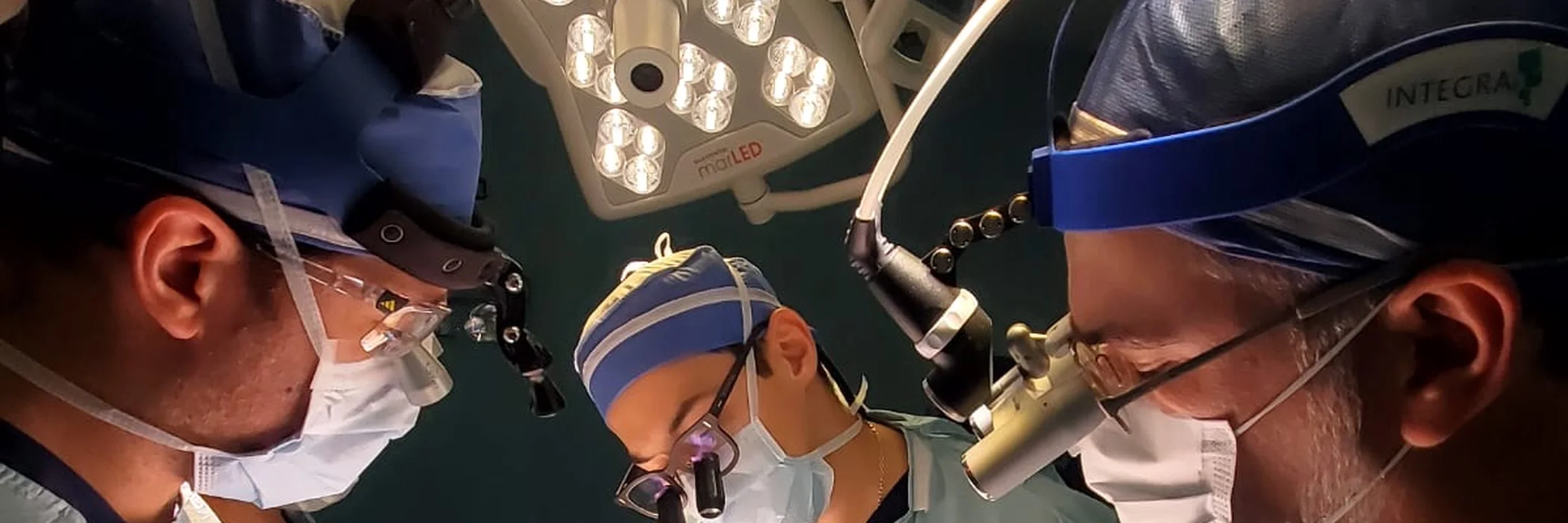
The David procedure: replacing the aortic root while keeping your own valve
The David procedure replaces a dilated aortic root while keeping your own aortic valve.
When the aortic root is dilated, the traditional operation replaces both the aorta and the aortic valve. For the right patient there is another option: replace the diseased aorta and keep the valve you were born with.
That operation is the David procedure, also called valve-sparing aortic root replacement or aortic valve reimplantation. It is one of the most technically demanding operations in cardiac surgery, and one of the most rewarding, because a patient who keeps a healthy native valve avoids the lifelong trade-offs of an artificial one. This guide explains what it involves, who is a candidate, and how we decide.
What is the aortic root, and what goes wrong?
The aortic root is the first part of the aorta, where it leaves the heart. It holds the aortic valve, whose three thin leaflets open with each heartbeat and close to stop blood flowing back into the heart, and it is where the two coronary arteries arise.
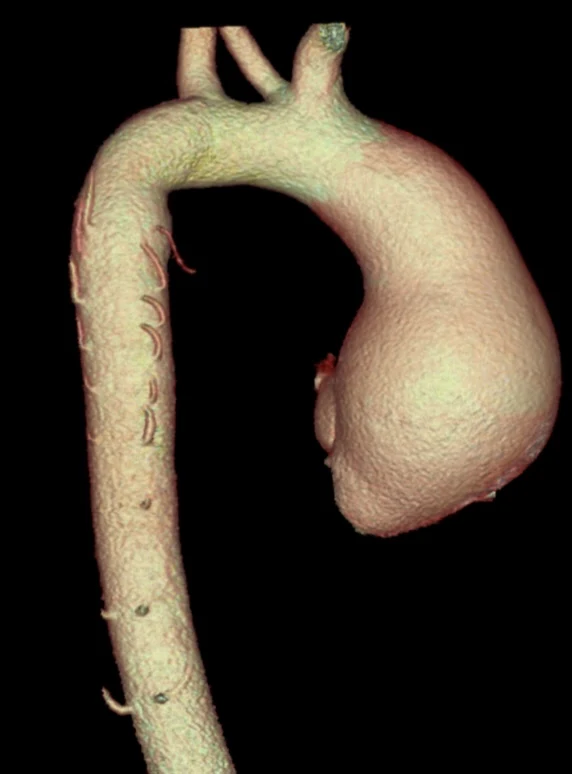
When the wall of the root weakens it gradually dilates, forming an aortic root aneurysm. This can happen with age and high blood pressure, but it is especially common with:
- Marfan syndrome and other inherited conditions of the connective tissue
- A bicuspid aortic valve, a valve with two leaflets instead of three
- A family history of aneurysm or aortic dissection
Two things happen as the root dilates. The wall becomes thinner and more likely to tear (an aortic dissection) or rupture, which is a surgical emergency. And as the base of the valve is stretched, leaflets that are perfectly healthy can no longer meet in the centre, so the valve starts to leak. That leak is aortic regurgitation, and in these patients the problem is the frame of the valve, not the valve itself.
What is the David procedure?
The operation was developed by the Canadian surgeon Tirone David in Toronto and first reported in the early 1990s. The idea is simple to describe and demanding to perform:
- The dilated aortic root is removed, leaving the patient’s own valve leaflets in place, together with the small cuffs of tissue where the coronary arteries arise.
- A tube graft of synthetic fabric, sized to the patient, is placed around the valve and anchored below it.
- The native valve is reimplanted inside the graft: its supports are re-sewn so that the leaflets sit in their natural geometry and meet properly again.
- The coronary arteries are reattached to the new root.
- Before leaving the operating room, a transoesophageal echocardiogram confirms that the valve opens fully and closes without a significant leak.
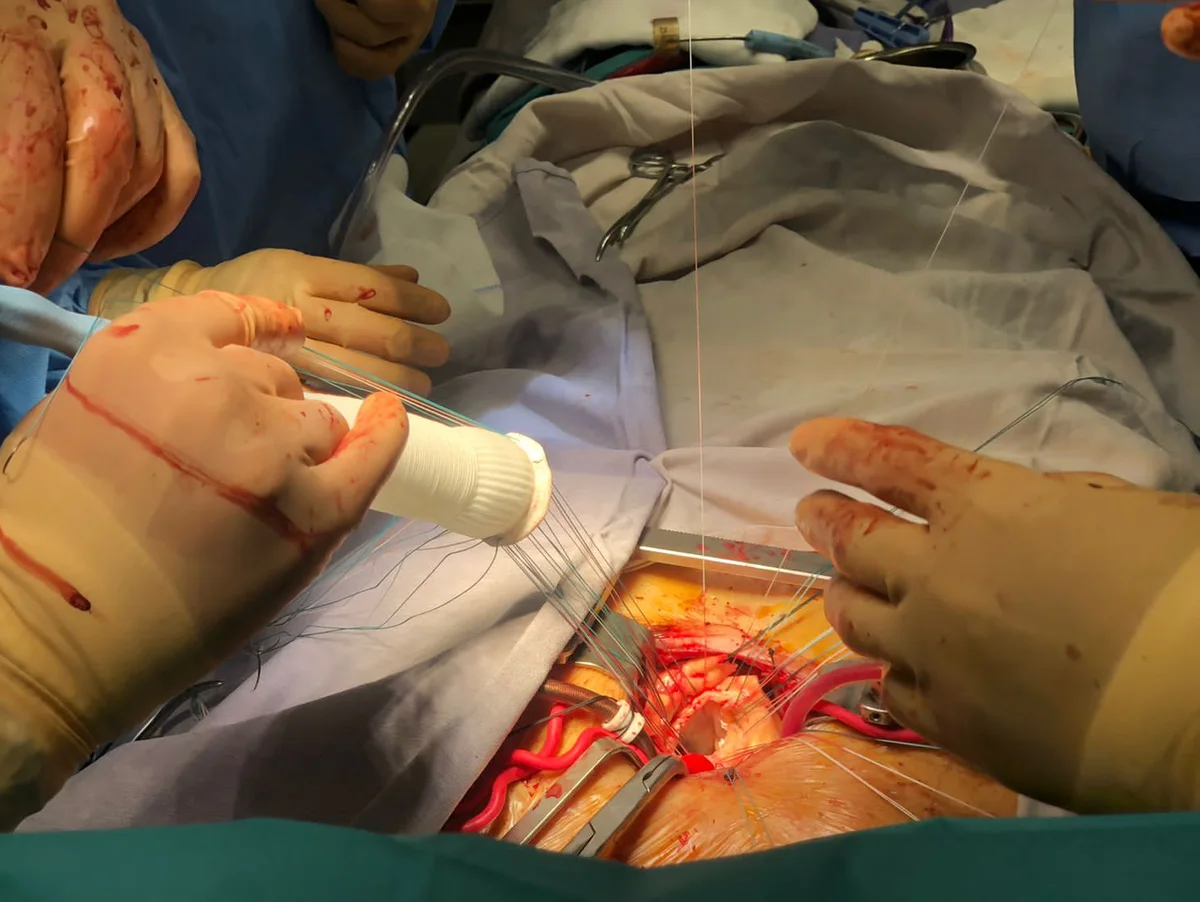
The result is a root that will not dilate again, around a valve that is still the patient’s own. The operation is done with the heart-lung machine, through a full sternotomy: an opening down the centre of the sternum, which gives the access this precise reconstruction needs.
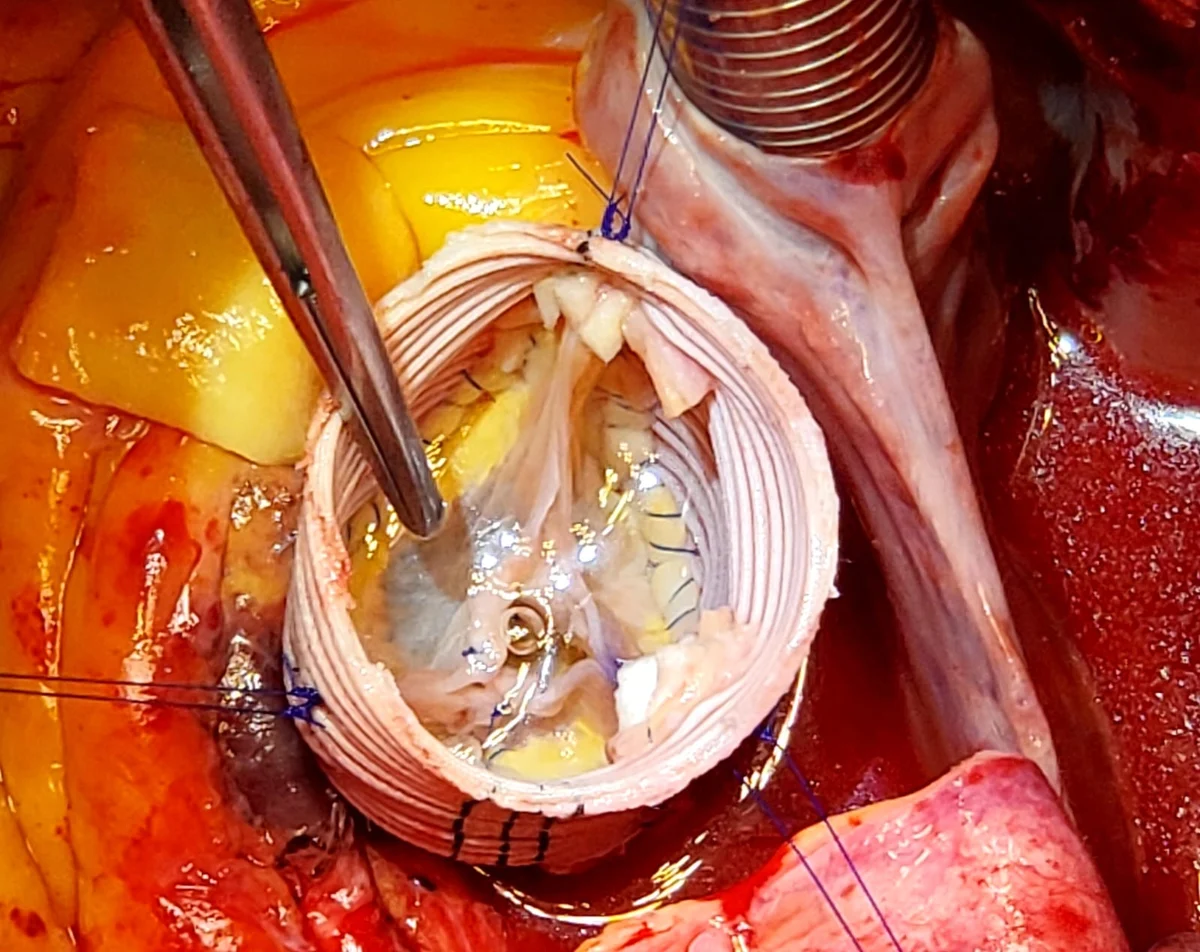
A related technique, the Yacoub or remodelling procedure, also preserves the valve but reshapes the root differently. We use it as an alternative when the anatomy calls for it. See valve-sparing root replacement.
David or Bentall?
The alternative is the Bentall procedure, which replaces the root and the valve together with a single prosthesis, a tube with an artificial valve already mounted in it. It is a highly effective operation with decades of excellent results, and it is the right choice when the valve itself is too damaged to keep. But it leaves the patient with an artificial valve:
- A mechanical valve lasts a lifetime but needs anticoagulation with warfarin for life, with regular blood tests and a constant balance between the risk of clots and the risk of bleeding.
- A biological valve avoids lifelong anticoagulation but wears out, typically over 10 to 20 years, and sooner in younger patients, so a further procedure is likely later in life.
When the native valve can be preserved well, the David procedure avoids both of those trade-offs. Most patients need no long-term anticoagulation, the valve has no built-in expiry date, and the risks that come with a prosthesis inside the heart, such as valve thrombosis or prosthetic infection, are reduced. That is why, in suitable patients, Dr. Alejandro Molina offers the David procedure as the first option.
When a Bentall is the right operation, our team performs it through a mini-sternotomy, a partial opening of the upper sternum of about 5 to 6 cm, an approach very few teams in Mexico offer. It means less blood loss and a faster recovery for patients whose valve cannot be kept. You can read more in our guide to aortic surgery and aneurysms.
| David procedure | Bentall, mechanical valve | Bentall, biological valve | |
|---|---|---|---|
| Your own valve | Kept | Replaced | Replaced |
| Lifelong warfarin | Usually not needed | Needed | Not needed |
| Valve wear over time | Native valve; durable in suitable patients | Very durable | Wears out, typically in 10–20 years |
| Who it suits | Healthy or repairable leaflets | Damaged valve, younger patients | Damaged valve, older patients |
| Technical demand | High; needs an experienced team | High | High |
Who is a candidate?
The single most important factor is the quality of the valve leaflets. The David procedure is suitable when the leaflets are thin, mobile and free of significant calcification, even if the valve is leaking because the root is dilated. It is typically considered for:
- Aortic root aneurysms in younger and middle-aged adults with a good-quality valve
- Patients with Marfan syndrome or other inherited aortic conditions, often before the aneurysm becomes large
- Selected patients with a bicuspid valve whose leaflets can be preserved or repaired
- Selected cases of acute aortic dissection, in experienced centres
It is usually not the right choice when the leaflets are heavily calcified, thickened or torn, when there has been endocarditis that destroyed the valve, or when a long and complex operation would not be in the patient’s best interest. In those cases a Bentall, done well, is the better operation. Part of a surgeon’s job is to be honest about which one you need.
When is surgery recommended?
For an aneurysm of the aortic root, surgery is generally recommended once the diameter reaches about 5 to 5.5 cm, depending on the patient. The threshold is lower, and surgery is often recommended earlier, in Marfan syndrome and other genetic conditions, with a bicuspid valve and additional risk factors, with a family history of dissection, or when the aneurysm is growing quickly. Surgery may also be recommended when the leak in the valve becomes severe or starts to affect the heart.
There is an important link between timing and the chance of keeping your valve: the earlier a dilating root is treated, the more likely it is that the leaflets are still healthy enough to preserve. Waiting until the valve is badly damaged can take the David procedure off the table.
How we assess you
- CT angiography of the chest, to measure the root and the rest of the aorta precisely and plan the operation.
- Echocardiography, transthoracic and usually transoesophageal, to study the leaflets in detail and decide whether the valve can be preserved.
- Coronary assessment, by CT or catheterisation, depending on your age and risk factors.
- Your history: family history of aortic disease, genetic conditions, blood pressure and general health.
If you have been told you need a Bentall and nobody has discussed the possibility of keeping your own valve, it is worth asking, and a second opinion is reasonable.
Surgery and recovery
The operation is done under general anaesthesia and usually takes several hours. Most patients spend a day or two in intensive care and around a week in hospital, although every recovery is different. Because the sternum is fully opened, it takes about six to eight weeks to heal, during which you should not drive or lift anything heavy. Most people return to normal daily activities within two to three months. Our guide to life after heart surgery covers what to expect at home.
Afterwards, you will have regular echocardiograms to check that the valve continues to close well, and good control of blood pressure matters for the rest of the aorta. In most patients no long-term anticoagulation is needed.
What are the results?
In experienced centres, long-term series following patients for 15 to 20 years show that most people who have a David procedure do not need further surgery on the valve. The results depend heavily on choosing the right patients and on the experience of the team, which is why the assessment before surgery matters as much as the operation itself. A small proportion of patients develop a leak over the years and may need another procedure, which is one more reason for regular follow-up.
More on the aorta
For a broader view of aneurysms of the ascending aorta, root and arch, including the Bentall procedure and emergencies, read our guide to aortic surgery and aneurysms. You can also read about aortic aneurysms in general.
If you have a dilated aortic root, or have been told you need a valve replacement because of one, bring your CT and echocardiogram to a consultation, in person in Guadalajara, Querétaro or Hermosillo, or by video from anywhere. We will tell you honestly whether your valve can be kept.
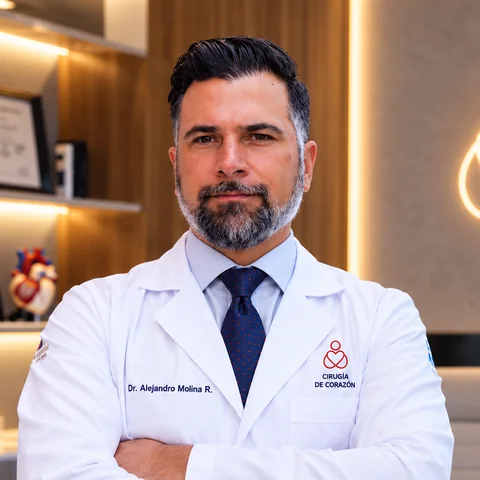
About the author
Dr. Alejandro Molina Romo is a cardiovascular surgeon practising in Guadalajara, Querétaro and Hermosillo. He trained in cardiothoracic surgery at the Universidad de Guadalajara, completed advanced training in cardiac surgery, minimally invasive surgery, robotic surgery and structural interventions at the University of Montreal, and a fellowship in structural cardiology and TAVI at CHU Bordeaux, France. He performed the first robotic mitral valve repair in the Ángeles Health System and the first robotic heart surgery in Guadalajara.
Medical degree: Universidad Autónoma de Guadalajara, Cédula Profesional 5757260 · Cardiothoracic surgery: Universidad de Guadalajara, Cédula de Especialidad 10768871 · Current certification, Consejo Nacional de Cirugía del Tórax, no. 447
This content is educational and does not constitute personal medical advice. Every cardiac case is unique and requires individual assessment by a specialist medical team. The results described come from published studies and do not guarantee outcomes in any individual case. Always consult the doctor treating you before making decisions about your treatment.
Book a video consultation
Come with your questions. We review your studies together and give you an honest recommendation for your case.





