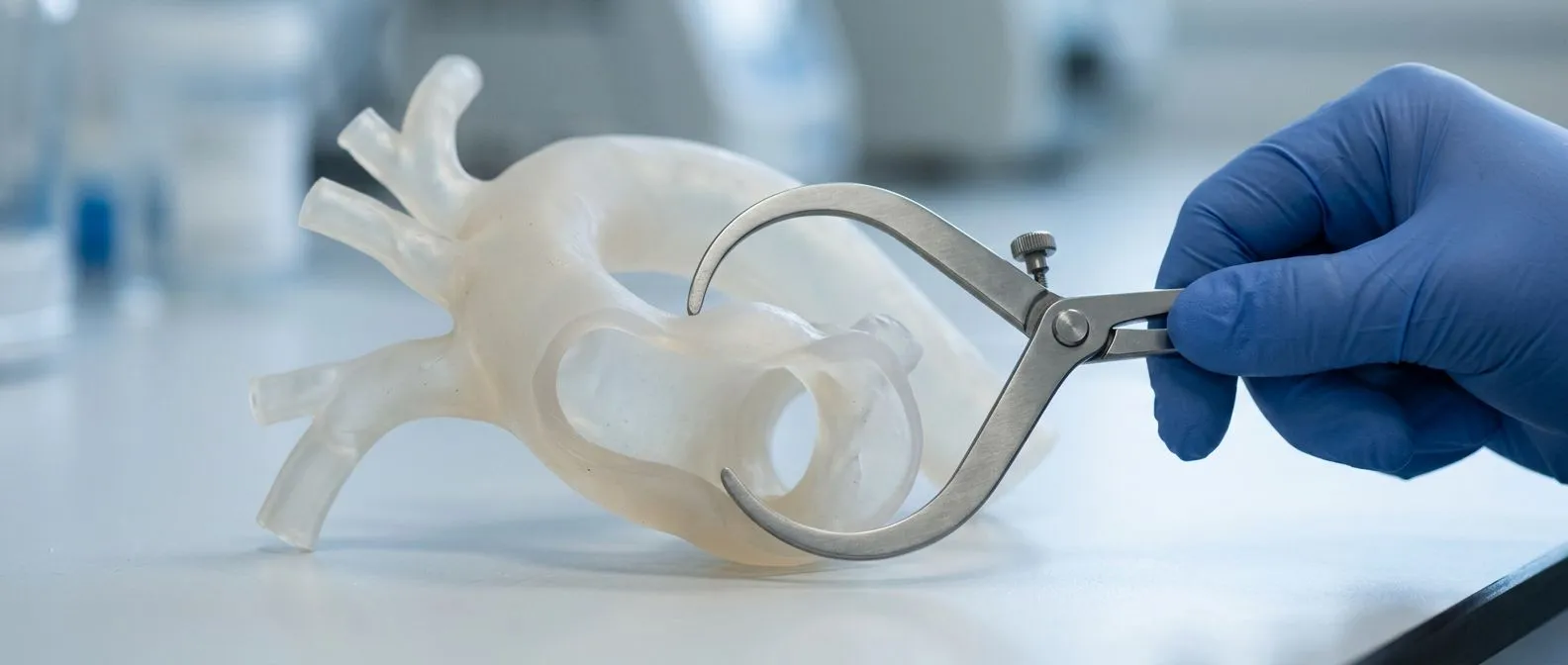
Aortic Root Aneurysm: Valve-Sparing or Bentall
Aortic root aneurysm surgery can save your valve or replace it.
If you or a family member has been told the base of the aorta — the large artery that carries blood out of the heart — is enlarged, you are likely facing two big questions: how serious is this, and does it always mean open-heart surgery? An aortic root aneurysm is a ballooning of the very first stretch of the aorta, right where it meets the aortic valve. The good news is that modern aortic root aneurysm surgery offers two well-established paths, and in many cases the native valve can be preserved. This guide walks you through what the condition is, when repair is recommended, and how to think about the choice between valve-sparing surgery and the Bentall procedure.
What Is an Aortic Root Aneurysm?
Where the problem sits: The aortic root is the short segment of the aorta just above the aortic valve, encircling the valve like a crown. When its wall weakens, it widens — this is a form of Thoracic Aortic Aneurysm, meaning an aneurysm of the chest aorta rather than the belly. The danger is not the widening itself but the risk of rupture or of Aortic dissection: a true cardiovascular emergency in which the wall tears.
Why it happens: The most common causes are long-standing high blood pressure, a bicuspid aortic valve (a valve born with two leaflets instead of three, where gene studies have identified contributors such as SMAD6 in aneurysm cohorts), connective tissue conditions such as Marfan syndrome, and simple aging. A bicuspid valve is especially important, because it affects both the valve and the root together.
How big is too big: Doctors measure the aorta on imaging in centimetres. A normal aortic root measures around 3–4 cm in adults. Most guidelines recommend repair once the root or ascending aorta reaches 5.5 cm in an average-risk patient, or earlier — often 4.5–5.0 cm — when there is a bicuspid valve, a family history, or a connective tissue disorder. Every case we review is assessed by our multidisciplinary team against international practice guidelines before a recommendation is given.
Aortic Root Aneurysm Symptoms and Warning Signs
Most aneurysms are silent: An aortic root aneurysm usually causes no symptoms at all until it is large. Many are discovered by chance on a chest X-ray, an echocardiogram (an ultrasound scan of the heart) done for another reason, or a CT scan. This silence is why people with risk factors are advised to have imaging rather than wait for discomfort.
When symptoms do appear: A large root can press on nearby structures and cause a deep, dull chest ache, shortness of breath, or hoarseness. A leaking valve — as the aneurysm stretches the ring the valve sits in — can produce fatigue, breathlessness on exertion, or a new heart murmur your doctor hears with a stethoscope.
Emergency signs — act immediately: Sudden, severe, tearing pain in the chest or between the shoulder blades, fainting, or symptoms of stroke call for emergency services at once. These can signal dissection or rupture, and minutes matter. Never drive yourself to hospital with symptoms like these.
How Is a Heart Aneurysm Diagnosed and Measured?
The first test is usually an echocardiogram: This painless ultrasound shows the valve, the root diameter and how the heart is working. It is often how an enlarged root is first noticed, and it allows your team to see whether the valve itself is leaking or narrowed.
CT or MRI confirms the picture: A computed tomography (CT) scan with contrast dye, or magnetic resonance imaging (MRI), maps the full aorta from root to abdomen with precision. Because the aorta is a continuous vessel, the whole length needs imaging — a root aneurysm can coexist with an Abdominal Aortic Aneurysm lower down, and the surgical plan depends on knowing about both.
Genetics and family screening: If the aneurysm occurs at a young age, or if relatives have had aneurysms or dissections, genetic testing and screening of first-degree family members are reasonable steps. Knowing your own anatomy — and your family's history — changes how closely your aorta is watched.

When Does Aortic Root Aneurysm Surgery Become Necessary?
Size drives the decision: Surgery is advised when the root reaches roughly 5.5 cm, or at smaller diameters (commonly 4.5–5.0 cm) if growth is rapid, the valve is bicuspid, there is a family history of dissection, or a connective tissue condition such as Marfan syndrome is present. Annual or semi-annual imaging tracks growth between decisions.
Leaking or diseased valves change the plan: If the aneurysm has stretched the valve until it leaks significantly, or if the valve is bicuspid and failing, replacing rather than repairing it may be the better route. Conversely, a healthy three-leaflet valve inside a dilated root is exactly the situation where valve-sparing surgery shines.
Symptoms or complications tip the balance: Chest pain attributable to the aneurysm, significant valve leakage, or any sign of dissection moves surgery from "recommended" to "urgent." Between the routine and the emergency lies a band of grey, and that is where a careful, individual discussion with your surgical team matters most.
What Is the Bentall Procedure?
One operation, two replacements: The Bentall procedure replaces the entire aortic root together with the aortic valve, using a single manufactured graft that includes a valve at its centre. The coronary arteries — the small vessels feeding the heart muscle itself — are re-attached to the graft in little buttons of tissue. A Modified Bentall is a refined modern version of this operation with improved techniques for the coronary re-implantation and the seal around the graft.
Who it suits best: The Bentall is the workhorse operation when the valve itself is beyond repair — heavily calcified, badly bicuspid, or already replaced once. It is also preferred when the root is extensively damaged by dissection or infection. It has decades of results behind it and remains the most widely performed root operation worldwide.
The trade-off: A mechanical valve lasts a lifetime but requires blood-thinning medication (warfarin) permanently; a tissue valve avoids blood thinners but wears out and may eventually need a redo. This trade-off is the single biggest factor in choosing between a Bentall and a valve-sparing operation, and it is personal — your age, lifestyle, and preference all count. In our consultations we take the time to explain what the studies actually show, in plain words, and to answer every question before any decision is made.
What Is Valve-Sparing Aortic Root Surgery?
Keeping your own valve: Valve-sparing aortic root surgery — often called the David procedure after its pioneer — replaces the enlarged root with a straight tube graft while keeping the patient's own valve, which is re-implanted inside the graft. The goal is a durable repair without a prosthesis in the valve position.
Who is a candidate: The best candidates have a valve with good structure: pliable leaflets, a bicuspid valve in good condition, or a trileaflet valve that is simply stretched by the dilated root. If the leaflets are diseased, calcified or destroyed, sparing them will not give a good long-term result. A related operation, Valve-sparing Root Replacement, is precisely this re-implantation technique.
Why patients want it: Sparing the valve avoids lifelong warfarin (with a mechanical Bentall), avoids the predictable degeneration of a tissue valve, and keeps the native valve's natural haemodynamics. Specialised centres report excellent long-term durability in experienced hands — but it is technically demanding surgery, and outcomes depend heavily on the surgeon's experience with the technique. Our team performs conventional, minimally invasive and robotic procedures, and we recommend the less invasive route only where the evidence supports it for that specific patient.
Bentall Procedure vs Valve Sparing: How Do You Choose?
The valve is the deciding factor: A healthy or repairable valve points toward sparing; a damaged valve points toward replacement. Beyond that, the choice weighs your age, your tolerance for blood thinners, your activity, and whether you are a woman planning pregnancy, among other factors. There is no universally correct answer — only the right answer for your anatomy.
Key questions to bring to your consultation:
- Is my valve structurally sound? If the leaflets are healthy, sparing is often possible.
- Am I willing to take warfarin for life? A mechanical valve demands it; a spared valve usually does not.
- What is my age and expected valve lifespan? Tissue valves and younger patients do not always match well.
- How experienced is this team with valve-sparing? It is a technique where surgeon volume genuinely matters.
- Do I have a genetic condition or family history? This can push toward earlier repair and influences the technique.
Second opinions are normal here: Because the choice between these two operations is genuinely nuanced, a second opinion is not a sign of doubt — it is a mark of a careful decision. We encourage second opinions and treat seeking one as a normal part of deciding about heart surgery.
Aortic Root Aneurysm Surgery Recovery Timeline
The first days: Both operations use the same approach — a median sternotomy (an incision through the breastbone), or in selected cases a minimally invasive incision. You will spend a night or two in intensive care, and most patients are out of bed within a day and walking the ward by day two or three. Hospital stay is typically around five to seven days.
Weeks one to six: Expect fatigue that improves steadily, and a sternal precaution period of about six weeks — no lifting more than roughly 5 kg, no driving until your team clears you, and gentle walking as the main exercise. For people asking how long it takes to recover from aortic dissection surgery, the honest answer is similar: weeks for the incision, but two to three months before returning to work and full activity, and longer if the operation was an emergency.
Months and beyond: Cardiac rehabilitation — a supervised programme of progressive exercise — speeds and strengthens recovery. Lifelong surveillance imaging of the remaining aorta follows, because a repaired root does not remove the need to watch the rest of the vessel. At our practice, the first contact is a free video consultation where we talk through the condition and say which studies are still needed, so no unnecessary ones are ordered.

Aortic Root Aneurysm Surgery Risks and Safety
What the honest risks are: Root surgery carries real risks — bleeding, infection, stroke, heart rhythm disturbance, kidney injury, and the need for a permanent pacemaker in a small number of patients. These risks vary with age, other health conditions, urgency, and whether the valve is spared or replaced. They are precisely the numbers your surgical team should quote to you, not hide from you.
Risk is individual, not statistical wallpaper: Risk scores such as EuroSCORE II estimate operative risk from your specific profile, and a good discussion covers them in plain numbers. Elective repair in a stable patient is far safer than emergency repair — one more reason not to wait until the aneurysm is symptomatic. The patient's imaging is reviewed before a technique is proposed, because the anatomy of the valve leaflets is what decides whether sparing is realistic.
Reducing what you can control: Stopping smoking, controlling blood pressure, and optimising other conditions before surgery all lower risk. So does choosing a team that does this operation regularly. For patients with a primary thrombus or unusual pathology of the thoracic aorta, management is guided by the specific findings — a reason specialised imaging review matters.
Can an Aortic Aneurysm Shrink on Its Own?
Short answer: no, but it can be slowed: An aneurysm does not shrink spontaneously. However, aggressive blood pressure control — especially with beta-blockers or other agents that reduce the force of each heartbeat — measurably slows growth. Avoiding heavy straining, smoking, and stimulant drugs also protects the aortic wall.
What monitoring involves: Expect a CT scan or MRI at intervals your team sets — usually every six to twelve months for a stable root, more often if growth is detected. Small increases in diameter between scans are common and expected; rapid growth is what changes the plan.
When to seek help urgently: Any sudden, severe chest or back pain, fainting, or new weakness or numbness is an emergency — do not wait for a scheduled appointment, and do not attempt to self-diagnose. This is also why a heart aneurysm is treated proactively: the operation is done to prevent the emergency, not to rescue you from it.
Related terminology: A Penetrating Aortic Ulcer is a different lesion — an ulceration burrowing into the aortic wall — and a Valve Cusp is one of the leaflets of the valve itself. Knowing your heart: the aortic valve is the subject of its own detailed guide on this site, and understanding the valve helps you understand why the root and valve decisions are so often made together.
In summary, an aortic root aneurysm is a serious but highly manageable condition when it is monitored and treated on schedule. Modern aortic root aneurysm surgery gives you two proven options — valve-sparing repair when your valve is healthy, and a Bentall or Aortic Root Replacement when it is not — and for some patients, Transcatheter Aortic Valve Implantation (TAVR) or a Surgical Aortic Valve Replacement combined with a graft may be discussed within a broader plan. The right choice depends on your anatomy, your age and your priorities, and it should be reached with a team that reviews every case against international guidelines. If you have been told your aortic root is enlarged, do not self-diagnose or wait for symptoms — discuss your situation with a qualified cardiac team and book a consultation to get the answers specific to you.