

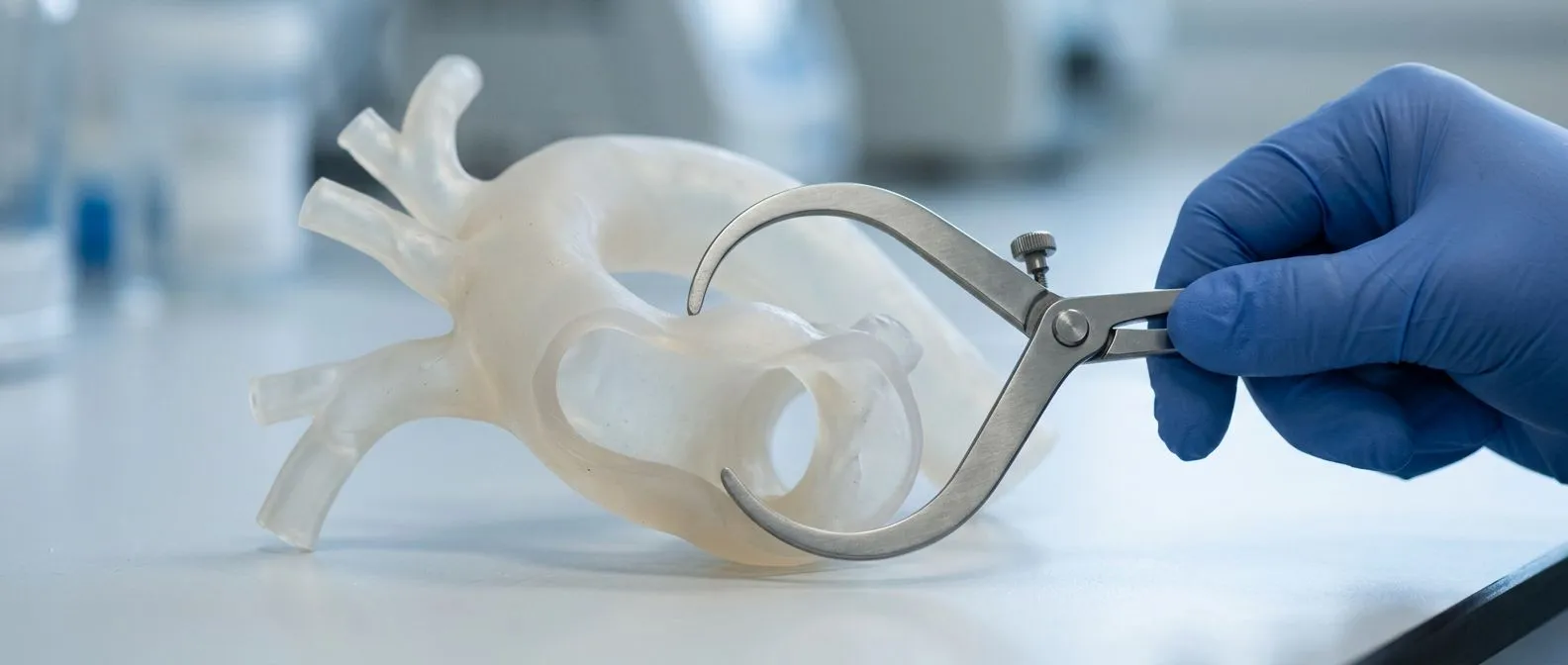
Aortic Diameter: When Size Means Surgery
Learn the aortic diameter surgery threshold by age, measurement accuracy, and when watchful waiting ends.
When doctors talk about the aortic diameter surgery threshold, they are talking about a single measurement that can change everything: the width of the body's largest artery, measured in centimetres, and the point at which watching it becomes safer than operating on it. If you have just been told your aorta is "dilated" or "aneurysmal," the number probably felt abstract and frightening at once. This guide walks through what that number means, how it is measured, when surgeons recommend intervention, and when careful monitoring is the right choice — so you can arrive at any consultation with clear, sensible questions.
What Is a Normal Aortic Diameter?
The aorta by the numbers. The aorta is the main artery that carries oxygen-rich blood from your heart to the rest of your body. It runs from the heart upward (the ascending aorta and aortic root), curves like a walking cane (the arch), then travels down through the chest and abdomen. A normal adult ascending aorta measures roughly 2 to 3 centimetres across, and the abdominal segment about 2 centimetres. Anything wider than these ranges is described as dilated.
What "dilated" actually means. A dilated aorta is not a disease in itself — it is a measurement. When the wall of the artery weakens, blood pressure pushes it outward and it balloons, forming what is called an Aortic Aneurysm. In the chest this is a Thoracic Aortic Aneurysm; below the diaphragm it is an Abdominal Aortic Aneurysm, which is the more common type overall. Most aneurysms grow slowly, over years, and cause no symptoms at all.
Why size matters so much. The wider the artery becomes, the thinner and more stressed its wall — the same physics that make an over-inflated balloon easier to pop. Above a certain width, the risk of Aortic Rupture or an aortic dissection (a tear in the artery's inner lining) rises sharply, and both events can be fatal within minutes. Aortic dissection: a true cardiovascular emergency is how clinicians rightly describe it. The entire purpose of tracking the aortic diameter surgery threshold is to operate before that happens, not after.
How Is the Aortic Diameter Measured — and How Accurate Is It?
Echocardiogram: the usual first look. Most people learn their aortic diameter from an echocardiogram — an ultrasound of the heart, done with a probe on the chest. It is painless, radiation-free, and good at measuring the aortic root and the first portion of the ascending aorta. Its main limitation is that it cannot see the whole artery; the arch and abdominal segments need other tools.
CT and MRI: the full picture. A CT scan with contrast dye maps the entire aorta in seconds and is the workhorse for planning any operation. MRI offers similar detail without radiation, which matters for younger patients who need decades of monitoring. Aortic diameter MRI measurement accuracy is generally excellent, but technique matters: the artery must be measured perpendicular to its flow, on a defined plane, because an oblique cut falsely inflates the number by a few millimetres.
Why one or two millimetres can change a decision. Because measurements vary between machines, operators, and even heartbeats, doctors look at trends rather than single readings. We always ask for the actual images, not just the report number, and we remeasure key levels ourselves before any recommendation about surgery. In our practice, every case is reviewed by the multidisciplinary team against international practice guidelines before a recommendation is given, and the patient receives a clear proposal with the alternatives.
Aortic Diameter Surgery Threshold by Age
The general rule. Most international guidelines set the classic aortic diameter surgery threshold at 5.5 centimetres for the ascending aorta in an average adult. Below that, monitoring is usually preferred; above it, the yearly risk of dissection or rupture begins to outweigh the risks of preventive surgery. This is the number around which nearly every aortic size surgery recommendation is built.
Lower thresholds for some people. The threshold drops — sometimes to 4.5 or 5.0 centimetres — for patients with connective tissue conditions such as Marfan syndrome, for people with a bicuspid aortic valve, for those with a strong family history of dissection, and for some very small-statured patients. Aortic diameter surgery threshold by age also matters: a 5.2-centimetre aorta in a healthy 70-year-old may be watched calmly, while the same measurement in a 35-year-old with decades of growth ahead often justifies earlier repair.
Body size counts too. Surgeons sometimes index the measurement to body surface area, because a 5-centimetre aorta occupies a larger fraction of the circulation in a small person than in a tall one. Indexed values can move the preventive aortic surgery measurement threshold earlier in smaller patients. This is exactly the kind of individual calculation a specialist team performs before advising surgery — the number alone is never the whole story.

Ascending Aortic Aneurysm Size for Surgery: When Is Aortic Surgery Needed?
The ascending aorta is the danger zone. When is aortic surgery needed most urgently? The ascending segment — the part just above the heart — carries the highest risk of fatal dissection, so ascending aortic aneurysm size for surgery is the most studied question in this field. Elective repair at or above 5.5 centimetres, and earlier where the risk factors described above apply, is the standard endorsed by aortic aneurysm diameter guidelines from major cardiovascular societies.
What the operation involves. Repairing the ascending aorta is open surgery: the chest is opened, the heart-lung machine takes over circulation, and the diseased segment is replaced with a synthetic graft. In selected patients a less invasive approach through a small right-chest incision is possible. Aortic replacement size criteria also apply here — the surgeon chooses a graft diameter matched to the patient's own anatomy rather than simply "large."
Why surgery before a crisis. Elective aortic surgery, planned in advance, is done in controlled conditions with a surgical team of your choosing. Emergency surgery for a dissection carries far higher risk and worse outcomes. Patients who come in with a measurement and a plan usually do far better than patients who arrive through the emergency door — which is the entire argument for knowing your numbers early. We recommend the less invasive route only where the evidence supports it for that patient.
Aortic Root Diameter Surgery Threshold and the Bicuspid Valve
The root is a special case. The aortic root is the widening at the very base of the aorta, where the aortic valve sits inside the artery. An Aortic Root Aneurysm is treated differently from a simple ascending aneurysm because the valve is involved. When the root dilates, it can pull the valve leaflets apart and cause Aortic Insufficiency — a leak that makes the heart work harder. The aortic root diameter surgery threshold is often lower than 5.5 centimetres, and repair may be recommended around 5.0 centimetres, earlier still with valve disease or genetic conditions.
Bicuspid aortic valve changes the calculus. About one to two percent of people are born with a bicuspid aortic valve — two leaflets instead of the normal three. These valves are associated with faster aortic enlargement, so bicuspid aortic valve diameter surgery thresholds are stricter: guidelines typically favour repair at 5.0 centimetres, and earlier if there is a family history or rapid growth. Anyone with a bicuspid valve should have their aorta measured, not just the valve.
Valve-sparing options. In many root cases the valve itself can be preserved while the artery is replaced — a valve-sparing root repair. When the valve cannot be saved, it is replaced at the same time, sometimes through a catheter-based route. Transcatheter aortic valve replacement, or TAVR, replaces the valve without opening the chest, though root aneurysms usually still need conventional repair. Early Detection of Aortic Stenosis in the Community During Flu Vaccination illustrates how opportunistic screening can catch valve and root disease earlier in ordinary populations — a reminder that these conditions are often silent until measured.

Aortic Diameter 4.5 cm: Watchful Waiting or Surgery?
The grey zone. Many patients are told their aorta is 4.5 or 5.0 centimetres and then face an anxious question: is that dangerous? The honest answer is that an aortic diameter 4.5 cm reading falls into a well-established watchful waiting zone for most people, while an aortic diameter 5 cm reading approaches the point where specialists start planning repair — especially if other risk factors are present. Neither number means an emergency is imminent.
What watchful waiting involves. Monitoring is active, not passive. A typical surveillance plan includes:
- Imaging every 6 to 12 months: echo, CT, or MRI, with the same technique each time so measurements are comparable.
- Blood pressure control: keeping pressure low reduces the force pushing on the weakened wall; beta-blockers are often used.
- Risk-factor care: stopping smoking, treating cholesterol, and avoiding heavy straining or stimulant use.
- A clear trigger point: an agreed measurement or growth rate at which surgery is scheduled — decided before, not during, a scare.
How we support patients in the grey zone. In the consultation we take the time to explain what the studies actually show, in plain words, and to answer every question before any decision. If your aorta is in the monitoring range, you should leave the appointment knowing exactly when your next scan is and what number would change the plan.
Aortic Aneurysm Growth Rate Surgery Guidelines
Growth can matter more than absolute size. An aorta that sits at 4.8 centimetres for five years is far less concerning than one that reached 4.8 from 4.2 within a year. Aortic aneurysm growth rate surgery guidelines generally treat enlargement of more than about 0.5 centimetres per year as a warning sign that justifies intervention even below the standard size threshold. That is why measurement technique must stay consistent — a jump may be real growth, or it may be a different scanner.
Growth is not always smooth. Aneurysms tend to enlarge in quiet phases punctuated by stretches of faster expansion, and they grow slightly faster in smokers and in people with uncontrolled blood pressure. This unpredictability is why surveillance intervals shorten as the aneurysm gets bigger, and why a missed scan can matter.
Other findings that accelerate decisions. Imaging sometimes shows related problems that lower the threshold for surgery on their own: a Penetrating Aortic Ulcer (a sore that burrows into the artery wall), a localised outpouching called a saccular aneurysm, or blood collecting in the wall. Findings like these are treated as part of Acute Aortic Syndrome when they cause pain, and they rarely get the luxury of long watchful waiting.
What Is the Treatment for a Dilated Aorta?
Medication and lifestyle come first. For a dilated aorta below the surgical threshold, "treatment" means controlling the forces that stretch it: blood pressure medication (often beta-blockers or similar agents), avoiding heavy lifting and extreme exertion, stopping smoking, and regular imaging. There is no pill that shrinks an aneurysm; the goal is to stop it growing and to buy time safely.
Open repair versus endovascular repair. When surgery is indicated, there are two broad routes, and the endovascular aortic repair size threshold differs from the open one:
- Open surgical repair: replacing the diseased segment through the chest or abdomen with a synthetic graft. Used for the ascending aorta and arch, where stents are not suitable. Aortic Arch Replacement and Aortic Root Replacement are the most complex versions of this, and Aortic Aneurysm Repair in general follows the same principle: remove the weak segment, restore a durable one.
- Endovascular repair (TEVAR/EVAR): a stent-graft delivered through an artery in the groin, no chest incision. Best suited to the descending thoracic and abdominal aorta, and typically used when the anatomy offers healthy landing zones for the stent.
- Combined procedures: when the valve is also diseased, valve surgery and aortic repair are done in one operation — a common scenario in root aneurysms and in heart valve and aortic surgery threshold decisions.
Matching the route to the patient. Aortic dilation surgery criteria include not just the size but the patient's age, frailty, anatomy, and valve condition. In our practice, led by Dr Alejandro Molina, we perform conventional, minimally invasive, robotic and transcatheter procedures, and we recommend the less invasive route only where the evidence supports it for that specific patient. Reduction aortoplasty with external wrapping associated with aortic valve replacement in high-risk patients is one example of how surgical teams have adapted techniques for patients who cannot tolerate a full standard repair — tailoring the operation to the person is a long-standing principle in this field.
Familial Aortic Aneurysm Screening Size: Should Your Family Be Checked?
Aneurysms run in families. A significant share of thoracic aneurysm patients have a close relative with the same condition, often undiagnosed until a crisis. Familial aortic aneurysm screening size guidance is therefore deliberately cautious: first-degree relatives (parents, siblings, children) of someone with a thoracic aneurysm or dissection should have their aorta imaged once, and repeated periodically if any dilation is found.
Lower thresholds for affected families. In families with a known genetic condition or a history of dissection at modest sizes, surgery is often advised at 4.5 to 5.0 centimetres rather than waiting for 5.5. If a relative's aorta ruptured or dissected at a particular measurement, your own team will want more margin than the general population threshold. Genetic counselling is worth discussing in these families, and pregnancy requires specialised aortic surveillance.
What screening looks like in practice. Screening is usually a single echocardiogram or CT, takes under an hour, and involves no needles for the echo version. A specialist can review imaging from any city and explain, in plain language, whether the numbers need follow-up or simply reassurance. If you have lost a family member to an aortic event, tell any doctor who measures you — it changes the thresholds they use.
Living With a Dilated Aorta: What Comes Next
The reassuring core of this article. Most people with a dilated aorta will never experience rupture or dissection, because the aortic diameter surgery threshold exists precisely to intervene before danger arrives. Knowing your measurement, having it tracked with consistent technique, controlling your blood pressure, and knowing your agreed trigger point convert a vague fear into a manageable plan.
Practical takeaways. Keep copies of every scan; ask whether each new measurement was made the same way as the last; tell any new doctor about your aorta before procedures that raise blood pressure; and never sit on a sudden symptom. Severe tearing chest or back pain, fainting, or unequal pulses are emergency symptoms — call emergency services immediately, do not wait for a scheduled appointment.
Getting the right opinion. If you have been given a measurement and are unsure what it means for you, the aortic diameter surgery threshold is not one number for everyone — it is a number adjusted to your valve, your family history, your body size and your growth rate. Patients who bring their images to a focused consultation usually leave with far clearer answers than patients who try to interpret reports alone. Dr Molina trained in cardiothoracic surgery at the Universidad de Guadalajara, in cardiac, minimally invasive, robotic and structural surgery at the University of Montreal, and in structural cardiology and TAVR at CHU Bordeaux, and the first contact is a free video consultation: we get to know the patient, talk through the condition, and say which studies are still needed so no unnecessary ones are ordered. We encourage second opinions and treat seeking one as a normal part of deciding about heart surgery — the final decision is always yours. General background on aortic disease and its management is available from the National Institutes of Health, and nothing here replaces a discussion with your own cardiac team.






