

Aortic surgery and aneurysms
Aortic aneurysm surgery can prevent rupture if done before emergency.
Aneurysms of the ascending aorta, root and arch: when to operate, preserving your own valve with the David procedure, Bentall through a mini-sternotomy, and what to do in an emergency. Below we explain when aortic aneurysm surgery is needed and how it is done.
Treatment of aneurysms of the ascending aorta, aortic root and aortic arch — including preservation of the aortic valve (the David procedure) and Bentall through a mini-sternotomy, an approach very few teams in Mexico offer.
There is a reality many patients are unaware of: not every disease that threatens the heart happens inside it.
The aorta — the main artery that arises directly from the heart and carries blood to the rest of the body — can become diseased silently over years. No symptoms. No warning signs. Until the damage is severe enough to become an emergency.
An aortic aneurysm is exactly that: a progressive dilatation of the arterial wall which, if it is not treated in time, can end in dissection or rupture with devastating consequences.
The good news is that when it is detected and treated electively — that is, before the emergency happens — the results are very good. The problem is that many patients do not know they have one, or do not know who to turn to when they receive the diagnosis.
At Cirugía de Corazón we are a team specialising in the treatment of diseases of the thoracic aorta. We operate at several centres in Mexico and offer the most advanced techniques available — including procedures very few teams in the country perform. This approach is part of our wider philosophy of minimally invasive cardiac surgery: always seeking the least invasive approach that is safe for each patient.
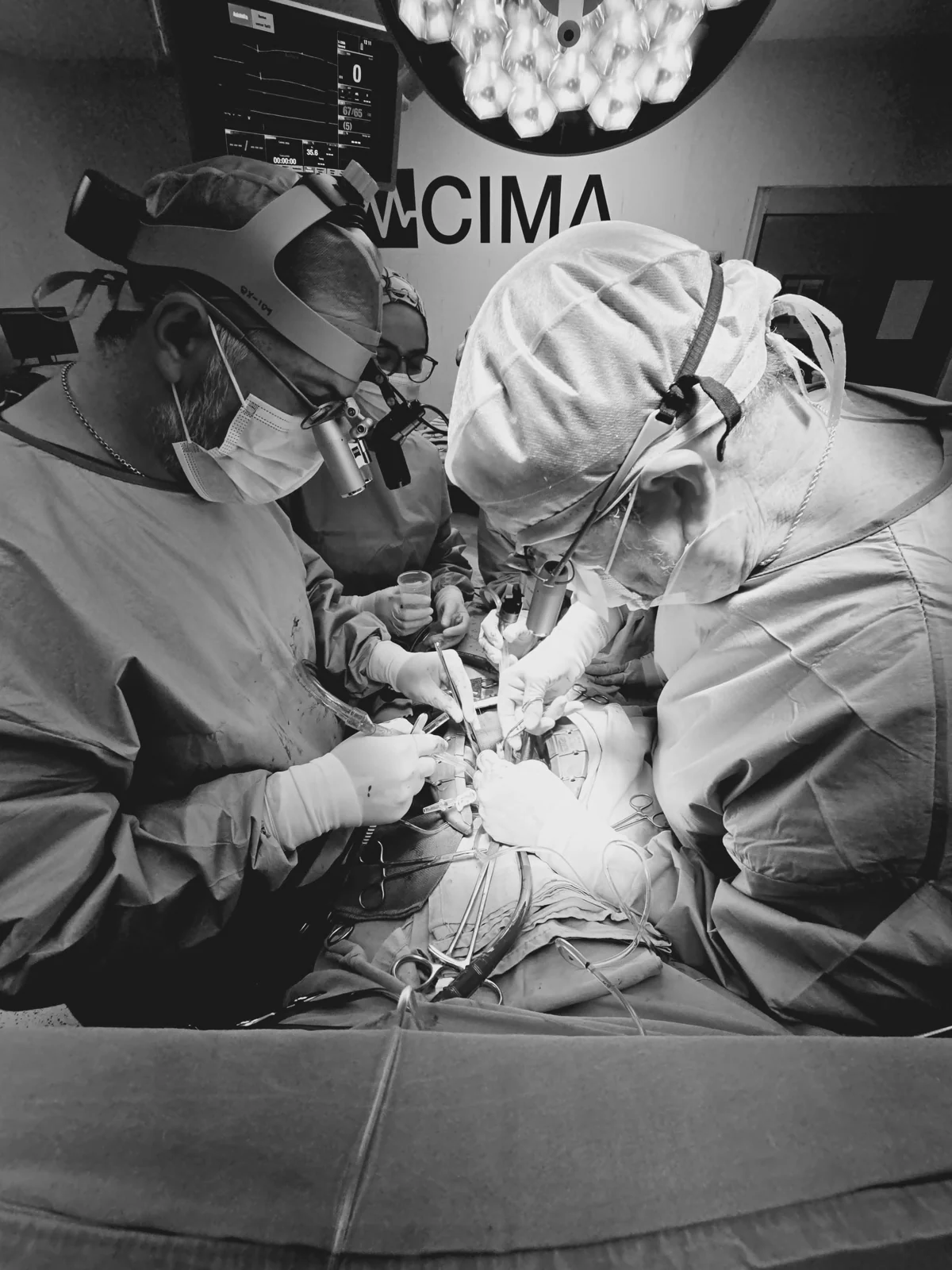
What is an aortic aneurysm?
The wall of the aorta is made up of several layers of tissue designed to withstand the pressure of every heartbeat — more than 100,000 times a day.
When that wall weakens — through genetic factors, high blood pressure, calcification, or conditions such as Marfan syndrome or a bicuspid aortic valve — it begins to dilate. That abnormal widening is what we call an aneurysm.
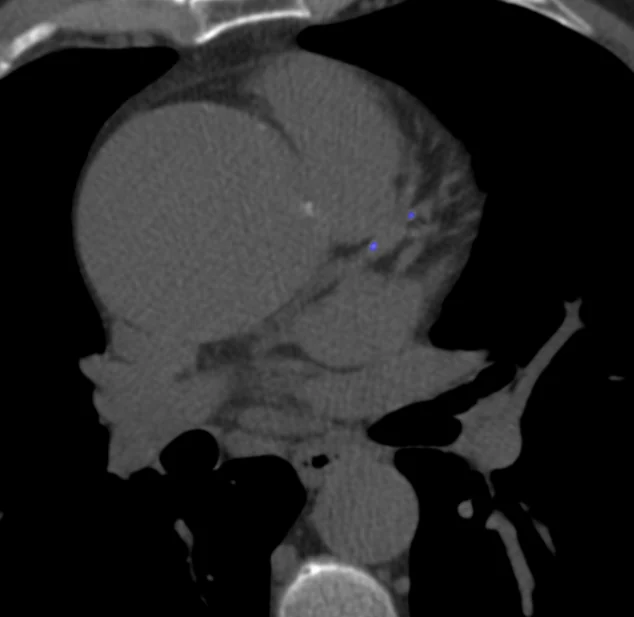
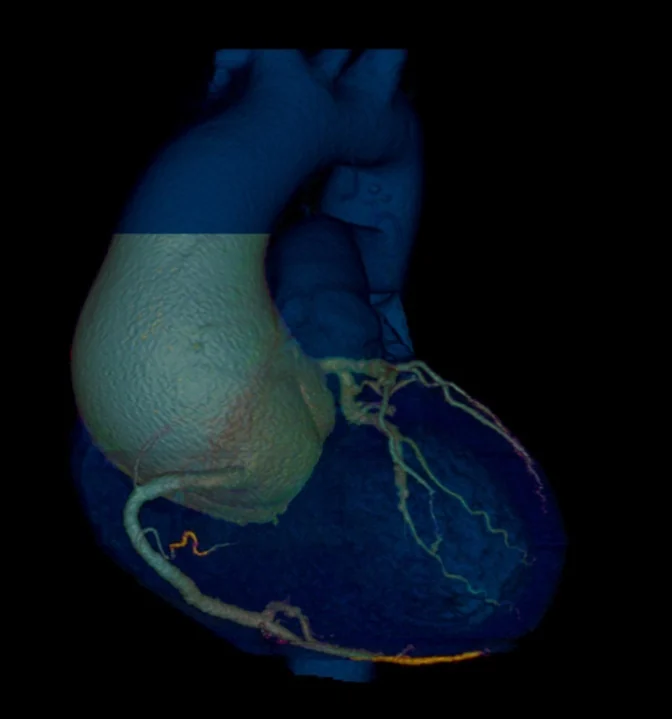
The main risk of an untreated aneurysm is twofold:
Aortic dissection — the inner layer of the wall tears and blood begins to flow between the layers of the vessel. It is an emergency with an immediate risk to life.
Rupture — the wall gives way completely, with massive bleeding. Without immediate treatment it is almost always fatal.
The hardest thing about aneurysms is their silence. Most do not hurt, produce no symptoms, and are found incidentally on imaging done for other reasons. That is why regular follow-up matters so much in patients with risk factors.
When is aortic aneurysm surgery needed?
Not every aneurysm requires immediate surgery. The decision depends on size, rate of growth, location and the individual characteristics of the patient.
As a general rule, in the ascending aorta we consider surgery when the diameter exceeds 5 cm in patients without additional risk factors. In patients with Marfan syndrome, a bicuspid valve, a family history of dissection, or rapid growth, the thresholds are lower — sometimes we act before that diameter is reached.
Waiting too long has consequences. But operating too soon carries risks as well. That is exactly the conversation we have with every patient — with their studies in hand, without haste, with all the available information.
We never take this decision in isolation. Every case goes through our Heart Team — a joint assessment between cardiologists and surgeons — before we recommend any path.
The segments of the aorta we treat
Aortic root and ascending aorta
This is the segment that arises directly from the heart. Aneurysms here are the most frequent and the ones we treat most often. Depending on whether the aortic valve is affected or not, the surgical approach varies.
Aortic arch
The arch is the portion of the aorta that curves over the heart, and from which the arteries carrying blood to the brain arise. Surgery here is technically more complex — it requires special management of the cerebral circulation — but in experienced hands the results are very good.
Descending thoracic aorta
For aneurysms in this segment, in most cases today the treatment is endovascular — that is, without open surgery, placing a prosthesis from inside the artery through a catheter. It is a less invasive procedure with excellent results in favourable anatomy.
Preserving the aortic valve: the David procedure
Here I want to talk about something we consider one of the pillars of our practice — and which unfortunately very few teams in Mexico offer routinely.
When a patient has an aneurysm of the aortic root, the traditional solution has been the Bentall procedure: replacing both the aortic root and the aortic valve with a composite prosthesis. It is an effective and well-documented operation. But it means the patient is left with an artificial valve — mechanical or biological — with everything that entails in the long term.
There is a better alternative for selected patients: the David procedure, also known as aortic valve reimplantation.
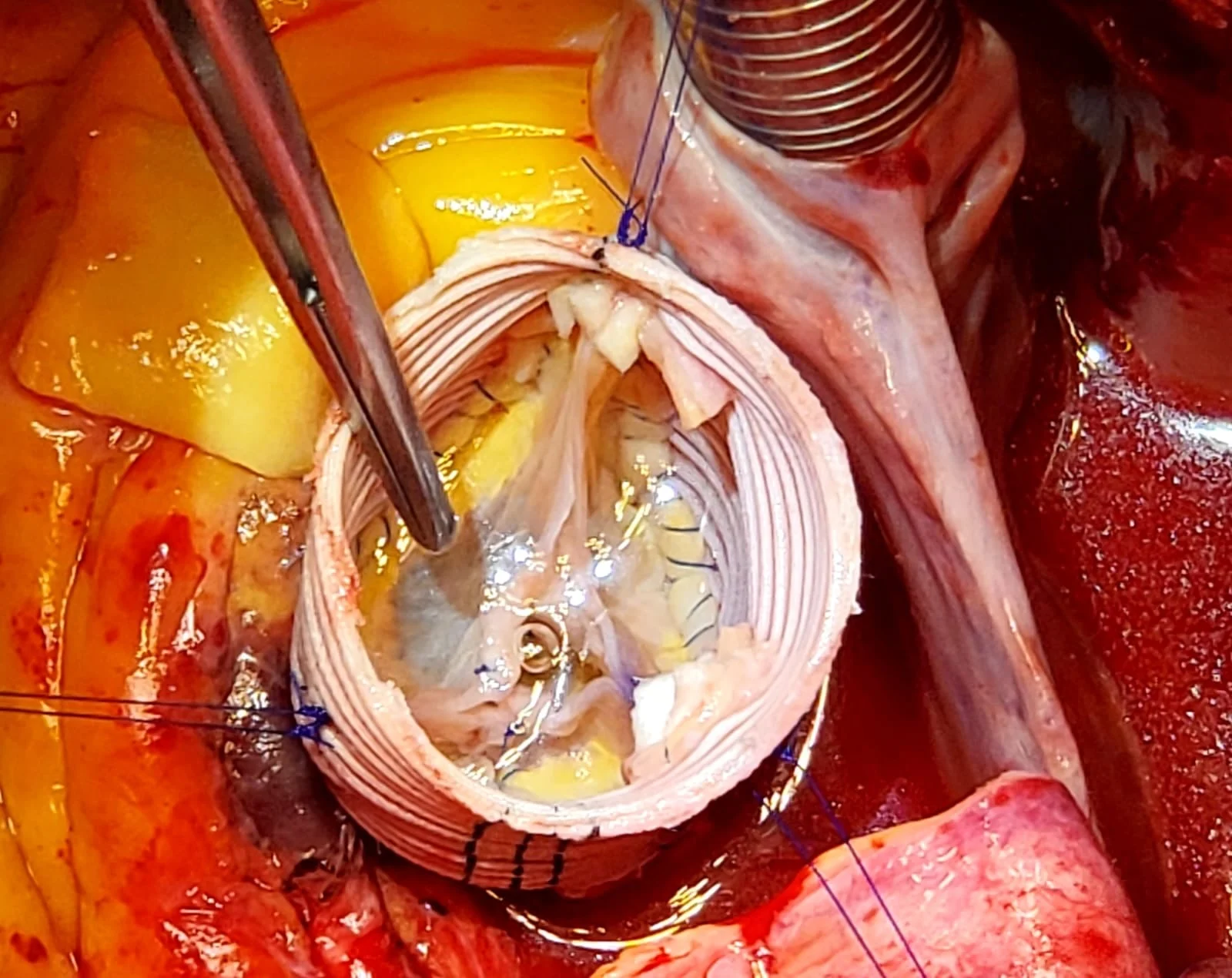
In this procedure we replace the diseased aortic root with a Dacron tube, but we preserve the patient's original aortic valve. The valve is reimplanted inside the tube, preserving its function.
Why does preserving the valve matter so much?
Because your own valve, well preserved, works better than any prosthesis. It does not require lifelong anticoagulation as a mechanical valve does. It has no expiry date as a biological one does. And it eliminates all the risks associated with having a prosthesis inside the heart — infection, thrombosis, deterioration.
In our practice, Dr Alejandro Molina performs the David procedure as the first option in suitable patients. The Yacoub procedure — another valve-preserving technique — is used as an alternative in cases where the anatomy indicates it.
Preserving the aortic valve is technically demanding. Not every team offers it and not every patient is a candidate. But when it can be done well, the long-term benefits are clear.
If you have been told you need a Bentall and nobody has talked to you about the possibility of keeping your own valve, a second opinion is worth having.
The Bentall procedure: when replacement is the right indication
When the aortic valve is too damaged to be preserved — through severe calcification, endocarditis, or unfavourable anatomy — the Bentall procedure remains the gold standard.
Bentall consists of replacing the aortic root and the aortic valve in a single operation, using a valved conduit — a prosthesis that combines the valve and the segment of aorta in one piece. The coronary arteries are reimplanted into the new root.
It is a highly complex operation, with excellent results in experienced centres. And in our team we perform it with one important difference.
Bentall through a mini-sternotomy: less is more
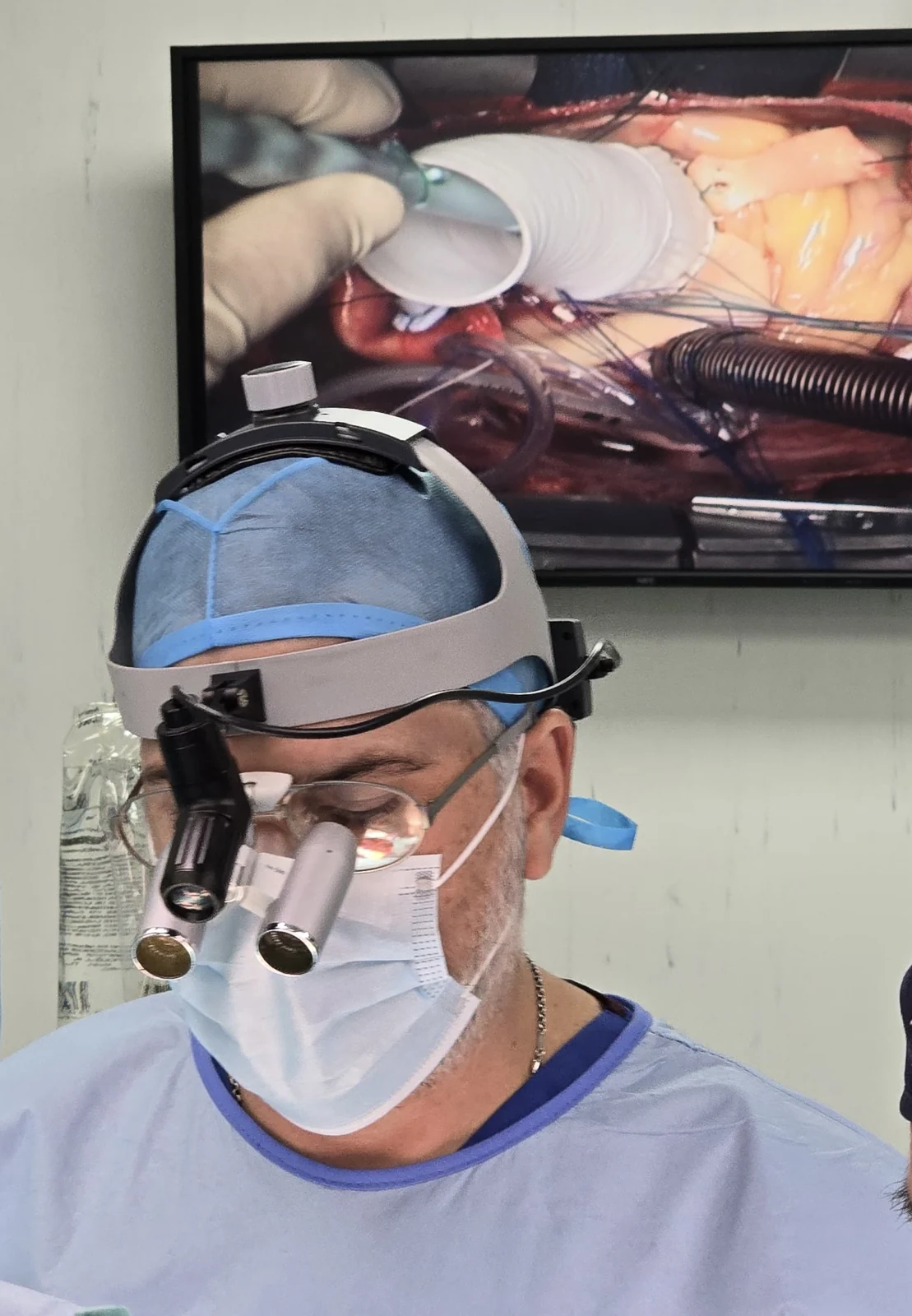
At Cirugía de Corazón we perform the Bentall procedure through a mini-sternotomy, an approach very few teams in Mexico offer — a partial opening of the sternum of just 5 to 6 centimetres, instead of the conventional full opening.
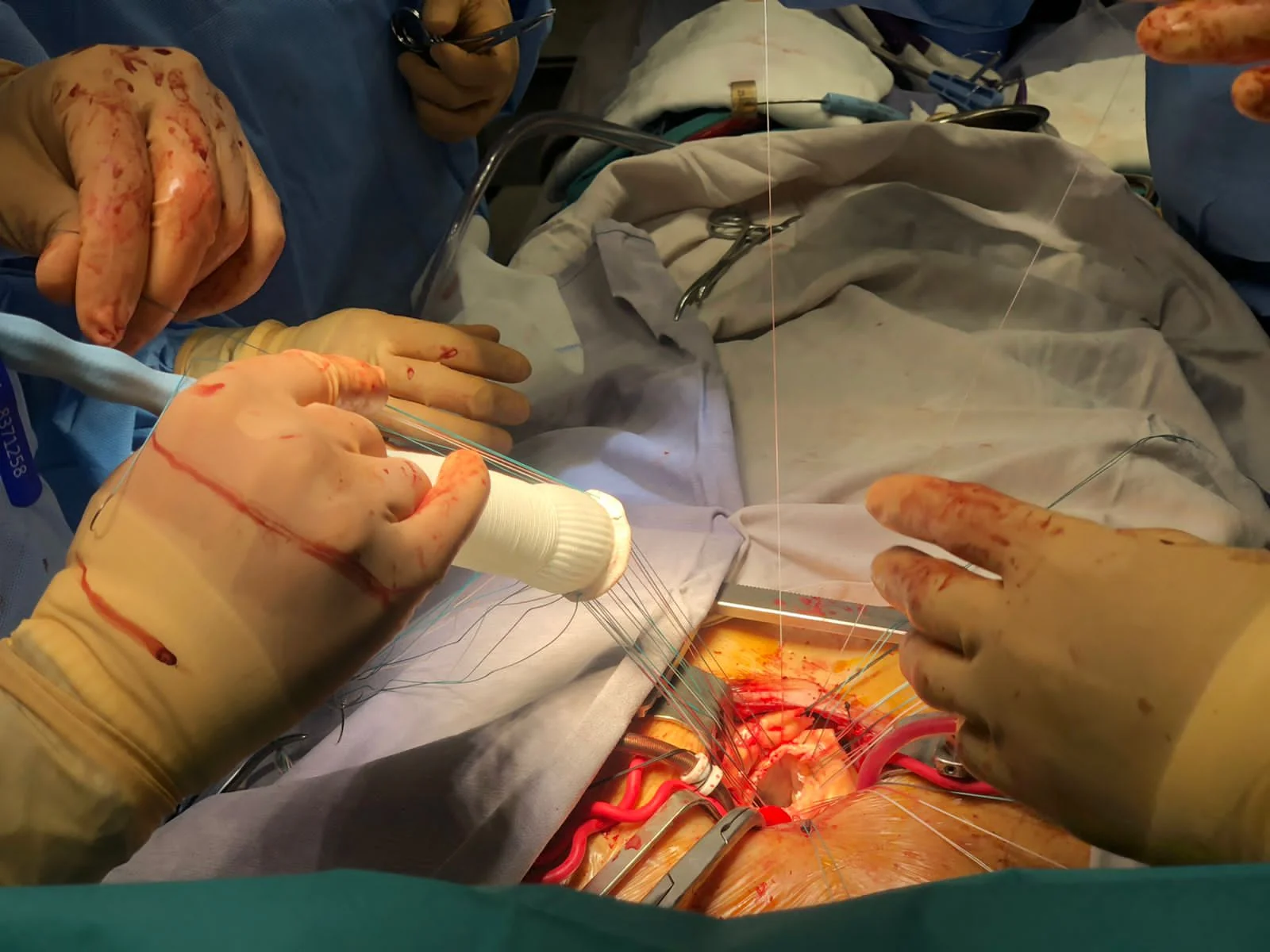
The sternum is not opened along its full length. Only the upper portion is accessed, enough to carry out the procedure with the same safety and precision as the conventional technique — but with concrete benefits for the patient:
- Less postoperative pain
- Less blood loss and less need for transfusion
- Faster recovery
- Fewer physical limitations during convalescence
- A smaller scar
For an operation of Bentall's complexity, these benefits are significant. They do not change the surgery itself — they change it for the patient.
Am I a candidate for these procedures?
The assessment is the most important step. What we analyse:
- The size and shape of the aneurysm, measured precisely with three-dimensional CT angiography.
- The state of the aortic valve, which determines whether you are a candidate for preservation (David) or replacement (Bentall).
- The extent of the aneurysm — whether it involves only the root, the ascending aorta, the arch, or several segments.
- Additional risk factors — Marfan syndrome, bicuspid valve, family history, hypertension.
- Your general health — cardiac function, other medical conditions, age.
What studies do I need to bring?
- CT angiography of the chest. This is the fundamental study for assessing aortic aneurysms. It gives us precise measurements, three-dimensional shape and surgical planning. If you have only one study, make it this one.
- Transthoracic echocardiogram, to assess the function of the heart and the state of the aortic valve.
- Transoesophageal echocardiogram, when we need greater detail about the valve and the aortic root.
- Coronary catheterisation, in patients over 40–45 or with coronary risk factors, to rule out disease in the heart's arteries before surgery.
- Routine laboratory tests — full blood count, blood chemistry, kidney function and clotting tests.
If you have previous studies — even from months ago — bring them all. How things have changed over time is very valuable information.
A word about emergencies
Everything described so far applies to patients who come to us electively — that is, with an established diagnosis and time to plan.
But the reality of aortic surgery also includes emergencies. And among them, one deserves special mention.
Aortic dissection: the emergency that does not wait
Aortic dissection is, without exaggeration, one of the most critical situations in cardiovascular medicine.
It happens when the inner layer of the aortic wall tears and blood begins to force its way between the layers of the vessel, creating a false channel that expands with every beat. The pain is typically sudden and intense — often described as a tearing in the chest or back — and can be mistaken for a heart attack.
What makes aortic dissection so dangerous is its speed. The worldwide statistics are stark: between 40 and 50% of patients who suffer a dissection do not reach hospital. For those who do, every minute without diagnosis and treatment worsens the outlook — particularly when the dissection involves the ascending aorta, which requires emergency surgery.
If you or someone near you has sudden, intense pain in the chest or back — unlike any pain they have felt before — go to an emergency department immediately. Do not wait. Do not drive yourselves. It is an absolute emergency.
Our team has experience in managing these situations. If you or a relative are in that position, contact us — the path is different, but we can still help you.
Where do we perform these procedures?
We operate at several hospitals in Mexico. Our main bases are Guadalajara, Hermosillo and Querétaro, but if you are in another city, contact us — there are often more accessible solutions than it might seem.
The next step
If you have a diagnosis of an aortic aneurysm, a diseased aortic valve, or simply want a second opinion on what has been proposed to you, the first step is a consultation.
Bring your studies — especially the CT angiogram if you have it — and your questions. From there we build the most suitable path for your case together.
If you want to know about the other procedures we perform, see our guide to common procedures and conditions.
This content is educational and does not constitute personal medical advice. Every case is unique and requires individual assessment by a specialist medical team. Always consult the doctor treating you before making decisions about your treatment, particularly if you take anticoagulants or other cardiovascular medicines.
About the author
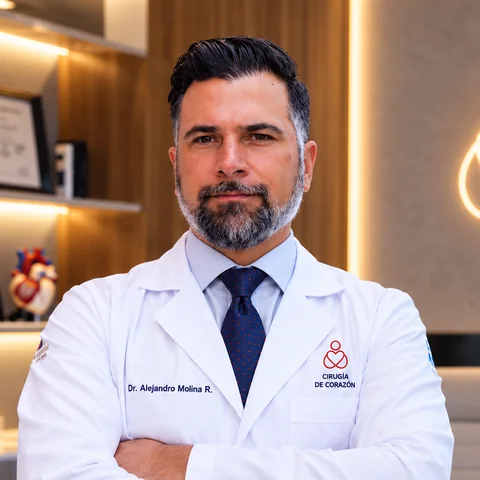
Dr Alejandro Molina is a cardiovascular surgeon practising in Guadalajara, Querétaro and Hermosillo. He trained in cardiothoracic surgery at the Universidad de Guadalajara, completed advanced training in cardiac surgery, minimally invasive surgery, robotic surgery and structural interventions at the University of Montreal, and a fellowship in structural cardiology and TAVR at CHU Bordeaux, France. He performed the first robotic mitral valve repair in the Ángeles Health System and the first robotic heart surgery in Guadalajara.
Medical degree: Universidad Autónoma de Guadalajara, Cédula Profesional 5757260 · Cardiothoracic surgery: Universidad de Guadalajara, Cédula de Especialidad 10768871 · Current certification, Consejo Nacional de Cirugía del Tórax, no. 447
Talk to a specialist
Request a free video consultation to clear up your questions and make a better-informed decision.





