


Heart Surgeon Fellowship Training: What It Involves
Heart surgeon fellowship training takes years of advanced cardiac surgery practice.
When a family hears that someone needs heart surgery, one of the first questions that matters is simple: who is going to do it, and how were they trained? A heart surgeon fellowship training is the final, most demanding stage of that preparation, and understanding it helps you judge whether the surgeon in front of you is truly equipped for your case. This guide walks through the whole pathway, from medical school to fellowship, in plain language, and explains what each stage actually teaches. It also covers how patients can use this information when choosing a cardiac team.
What Is a Fellowship Training?
A Fellowship is a period of supervised, specialist training that a doctor completes after finishing residency. In general medicine, residency teaches the broad discipline; fellowship narrows the focus to one organ system, one set of procedures, or one patient population. For heart surgeons, that means years of operating on the heart and chest under the guidance of senior surgeons who have already done thousands of cases.
Why it exists at all. Cardiac surgery is one of the most technically demanding fields in medicine. The stakes of a single operation are high, and techniques such as valve repair, coronary bypass, and aortic surgery each require judgment and manual skills that only develop with repeated, supervised practice. Fellowship exists to close the gap between "qualified surgeon" and "surgeon qualified in this specific procedure."
What a fellow actually does. During fellowship, the trainee operates as the primary surgeon on many cases, with an attending surgeon scrubbed in alongside. They also run clinic visits, review imaging, manage patients in intensive care, and take part in case discussions. By the end, the fellow is expected to manage a full cardiac surgical service safely and independently. For patients, this matters because a fellowship trained cardiac surgeon has been formally assessed on exactly the kind of operation being proposed.
How Long Is Heart Surgeon Fellowship Training?
The total heart surgeon education timeline is long, and it is worth knowing the full picture before meeting a surgeon. The journey typically runs as follows:
- Medical school: four to seven years depending on the country and system, ending with a medical degree.
- General or cardiothoracic residency: five to eight years of supervised hospital training, depending on the pathway chosen.
- Fellowship: one to three further years focused on adult cardiac surgery, congenital heart surgery, or a technique such as minimally invasive or robotic surgery.
Country differences. In the United States, the common route is five years of general surgery residency followed by a two to three year cardiothoracic surgery fellowship. In integrated programs, a trainee enters cardiothoracic surgery directly and completes six to eight years in one continuous pathway. In Mexico, cardiothoracic surgery is a recognized residency in its own right, usually four years, often followed by additional fellowship years abroad. The exact years matter less than the principle: nobody becomes a heart surgeon quickly.
By the time a cardiac surgeon is certified and practicing independently, fifteen or more years may have passed since they started medical school. That is the reality behind the title on the door, and it is a reasonable question to ask any surgeon you meet: how many years of training sit behind your practice, and in which specific procedures? In our team's case, Dr Molina trained in cardiothoracic surgery at the Universidad de Guadalajara and then completed further fellowship-level training in cardiac, minimally invasive, robotic and structural surgery at the University of Montreal, and in structural cardiology and TAVR at CHU Bordeaux.
What Qualifications Do You Need for a Cardiac Surgery Fellowship?
Entry into a cardiac surgery fellowship is competitive everywhere in the world. Cardiac surgery fellowship requirements start with a completed medical degree and, in most systems, a finished residency in general surgery or cardiothoracic surgery. Programs review examination scores, surgical case logs, letters from senior surgeons, and often research output, because many fellowships expect trainees to contribute academic work as well as clinical.
The selection process. In the United States, cardiothoracic fellowship positions are filled through a national matching process, similar to the system used for residency. In Mexico, fellowships are typically secured through direct application to teaching hospitals, sometimes including an interview and a period of observation. Elsewhere in Latin America and Europe, arrangements vary, but the pattern is the same: the program wants proof that the applicant can operate safely and think clearly under pressure.
What separates successful applicants. Program directors consistently look for steady hands demonstrated over a long logbook, honest self-assessment, and the ability to work inside a team, because cardiac surgery is never a solo effort. A candidate who shows sound judgment in crisis situations counts for more than one with only impressive exam scores. For patients reading this, the takeaway is reassuring: the surgeons who reach independent cardiac practice have already been selected, repeatedly, by people whose job was to filter carefully.
Do You Get Paid for Fellowship Training?
Yes, in most systems fellows receive a salary, although it is far below what a fully qualified cardiac surgeon earns. In the United States, a fellow is paid as a resident-level physician, typically in a modest annual range that rises slightly with postgraduate year. The pay reflects that the fellow is still in training: they produce enormous value for the hospital, but they are also learning and require supervision.
The financial trade-off. Someone who trains through the longest pathway accepts many years of modest income before earning a specialist's salary. That is one reason Medical News Today and similar patient resources emphasize that physician training is a decade-and-a-half commitment, not a course. For families choosing a surgeon, it is worth understanding this: a surgeon who has completed long fellowship training has deliberately chosen depth over speed.
Where patients' money goes. Fellowship salaries are paid by hospitals and universities, not by patients directly. What a patient pays for a cardiac operation reflects the full surgical team, the technology used, the hospital's costs, and the surgeon's experience. That is why costs differ so much between a large teaching hospital and a smaller private clinic, and why asking for a clear, itemized proposal before surgery is always reasonable. In our consultations, every patient receives a clear proposal with the alternatives, and the final decision is always theirs.
What Does Being Fellowship Trained Mean?
The phrase "fellowship trained" appears on many surgeon profiles, and it carries a specific meaning. It tells you the surgeon completed formal, supervised specialist training beyond residency in a defined area, and was assessed on it. It does not automatically mean the surgeon is excellent at everything; it means they chose extra depth in one area and a program certified that depth.
Why the label matters for patients. If you need a mitral valve repair, a surgeon whose Subspecialty Training focused on valve surgery has spent additional years doing exactly that operation. If you need aortic surgery for an aneurysm, a surgeon with aortic fellowship experience has handled those specific anatomical problems repeatedly. Matching the surgeon's fellowship to your disease is one of the most practical checks a patient can make.
What it does not guarantee. A fellowship is a floor, not a ceiling. Ongoing case volume, outcomes data, and honest communication matter just as much. A reasonable surgeon will welcome questions about how many of your specific procedure they perform per year and what their typical recovery pathway looks like. We encourage second opinions and treat seeking one as a normal part of deciding about heart surgery, because a confident specialist should never fear a second look.
Types of Cardiac Surgery Fellowship Programs
Not all cardiac fellowships are the same, and knowing the main types helps you read a surgeon's credentials accurately:
- Adult cardiac surgery fellowship: coronary bypass, valve repair and replacement, and aortic surgery in adults. This is the broad core qualification.
- Pediatric cardiac surgery fellowship: congenital heart defects, from newborn repairs to complex adolescent reconstructions. A separate world with its own anatomy and techniques.
- Minimally invasive and robotic fellowship: operations through small incisions or with robotic instruments instead of a full sternotomy. Requires a dedicated learning curve.
- Heart transplant and mechanical support fellowship: transplantation and ventricular assist devices for end-stage heart failure.
Adult versus congenital. The distinction matters because adult and pediatric cardiac surgery are genuinely different disciplines. A world-class adult coronary surgeon may have limited pediatric experience, and vice versa. Families of a child with a congenital defect should specifically seek surgeons whose fellowship and ongoing practice are in congenital heart surgery.
Advanced and combined programs. Some institutions offer advanced cardiac surgery fellowships that combine techniques, for example minimally invasive valves plus transcatheter procedures. These hybrid programs reflect where the field is heading: many patients today benefit from a team that offers conventional surgery, keyhole surgery, and catheter-based options under one roof, so the recommendation is driven by the patient rather than by the surgeon's only skill. Every case in our practice is reviewed by the multidisciplinary team against international practice guidelines before a recommendation is given, precisely so that the least invasive adequate option can be identified.
How the Heart Surgeon Training Pathway Works
The heart surgeon training pathway can look like a maze from outside, but it follows a clear logic: each stage adds responsibility only after competence is demonstrated. Stage one is medical school, where the future surgeon learns anatomy, physiology, and how to think like a physician. Stage two is residency, where a doctor learns to operate, first assisting, then performing increasingly complex procedures under supervision.
Stage three: fellowship and certification. Fellowship adds the cardiac specialist layer. After it, most surgeons sit a board certification examination — in the United States through the American Board of Thoracic Surgery, in Mexico through the relevant national specialty boards. The heart surgeon board certification process is not a formality; it involves written and oral examinations in which the candidate defends real cases before senior examiners.
Stage four: ongoing. Certification is maintained through continuing education, re-certification cycles, and case review. Surgeons also attend regular mortality and morbidity meetings where every complication in the service is discussed openly. This system of continuous scrutiny is invisible to patients but constant, and it is one of the strongest safety mechanisms in modern surgery. When you ask a surgeon about their most recent training, you are asking whether that fourth stage is still active.

Minimally Invasive and Robotic Heart Surgery Fellowship
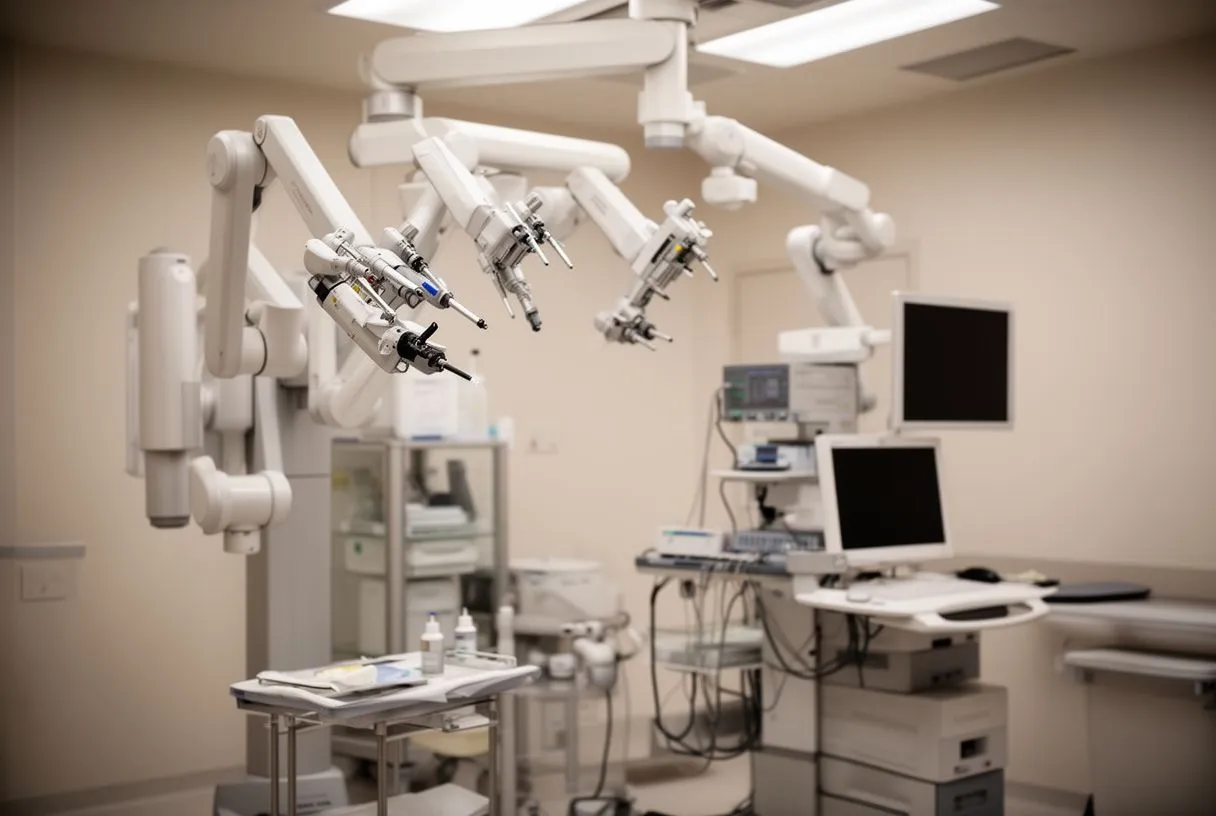
Minimally invasive cardiac surgery has changed what recovery looks like for many patients. Instead of dividing the breastbone through a full sternotomy, the surgeon operates through a small right-chest incision, or with robotic arms inserted through ports the width of a finger. The operation on the heart is the same in principle; the access is radically different.
Why it needs its own fellowship. The learning curve for robotic mitral valve repair is long, because the surgeon loses direct touch with the tissue and must translate hand movements through a console. Programs in robotic heart surgery fellowship training dedicate an entire year or more to building this skill, with simulation practice before any patient case. A surgeon who offers robotic surgery after a proper fellowship and a supervised case series has done the responsible version of this transition.
What patients gain, and when. Smaller incisions usually mean less pain, lower infection risk, faster mobilization, and a quicker return to work. But the technique is not automatically better for every patient: severely calcified vessels, emergencies, or certain anatomies may still call for conventional surgery. The evidence supports the less invasive route only in selected patients, which is why the recommendation should come from a team that genuinely offers all options. Dr Molina performed the first robotic mitral valve repair in the Ángeles Health System and the first robotic heart surgery in Guadalajara.
Interventional Cardiology Fellowship vs Surgery
Patients are often surprised to learn that a cardiologist and a cardiac surgeon train along different roads entirely. Interventional cardiology is a subspecialty of cardiology, reached after internal medicine residency and a cardiology fellowship, in which the doctor learns to treat the heart through catheters — thin tubes threaded from the wrist or groin into the heart's arteries and valves. There is no chest incision and no open heart.
Where the pathways diverge. A cardiac surgeon trains in the operating room, handles the heart directly, and manages bypass machines, valve repairs, and aortic reconstructions. An interventional cardiologist manages stents, angioplasties, and catheter valve procedures. Neither replaces the other: a blocked coronary artery might be treated with a stent by a cardiologist, or with bypass surgery by a surgeon, depending on the anatomy, and sometimes both work together on the same patient.
Why the heart team exists. Modern guidelines require that decisions between catheter treatment and surgery be made jointly. In TAVR — transcatheter aortic valve replacement, a new aortic valve delivered through a catheter — a cardiologist and a cardiac surgeon work side by side in the same procedure. This is the model our practice follows: the team covers valve disease, coronary disease, the aorta and structural heart conditions, performing conventional, minimally invasive, robotic and transcatheter procedures, and recommends the less invasive route only where the evidence supports it for that patient. If a cardiologist and a surgeon both see your case before a recommendation, that is a strength, not a redundancy.
How to Choose a Heart Surgeon Fellowship Trained Specialist
Knowing the training system gives you practical questions to ask. When you meet a cardiac surgeon, you are entitled to clear answers, and a good surgeon will provide them without hesitation:
- Training background: Where did they complete residency and fellowship, and in which procedures specifically?
- Current volume: How many of your exact operation do they perform per year now?
- Team structure: Will your case be reviewed by a multidisciplinary team before a recommendation is made?
Reading the credentials honestly. Certification, fellowship pedigree, and years of experience are all meaningful, but none of them substitutes for how the surgeon communicates with you. A surgeon who explains what the studies actually show, in plain words, and answers every question before any decision is showing you the most reliable signal of all: how they will behave when the difficult moments come. In our consultations we take the time to explain what the studies actually show, in plain words, and to answer every question before any decision is made.
Practical logistics for international patients. Many patients travel for cardiac surgery, and the practical questions matter as much as the clinical ones: which studies are needed before arrival, what the recovery timeline looks like locally, and how follow-up will be arranged after returning home. The first contact in our practice is a free video consultation: we get to know the patient, talk through the condition, and say which studies are still needed so no unnecessary ones are ordered; a face-to-face visit at the consulting rooms in Guadalajara, Querétaro or Hermosillo follows when the patient decides to go ahead.

Understanding heart surgeon fellowship training does not make you a surgeon, but it makes you a far better participant in your own care. You now know what the words on a surgeon's CV mean, how long the pathway really is, and which questions reveal whether a specialist's training matches your disease. The next step is not to diagnose yourself from this article — it is to bring your situation to a qualified cardiac team, ask these questions directly, and make the decision with full information. The final decision about your heart should always be yours, made with a team that explains everything plainly.






