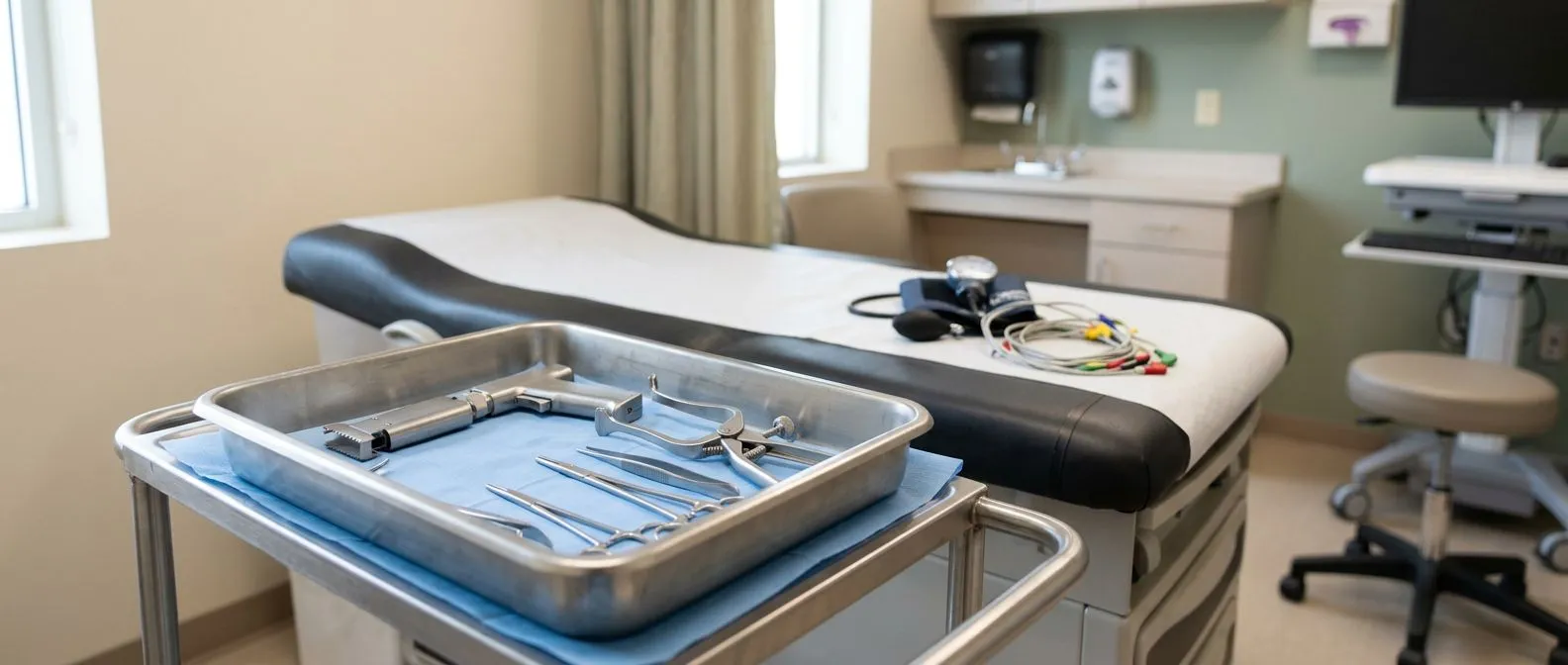
Cardiothoracic Surgeon: What They Treat and When
Cardiothoracic surgeon role: what heart and chest conditions they treat, how they differ from cardiologists, and when to book a consultation in Guadalajara.
If you or someone close to you has been told that heart surgery might be needed, one of the first questions is usually simple: which doctor actually does this? That doctor is the cardiothoracic surgeon — a specialist trained to operate on the heart, the lungs, the vessels of the chest, and the organs inside the ribcage. In this guide we explain the cardiothoracic surgeon role in plain language: what the title means, how it differs from a cardiologist, which conditions and operations fall under their care, and when it makes sense to ask for a surgical opinion. Our aim is that by the end you can sit in any consultation and understand every word.
What Is a Cardiothoracic Surgeon?
A cardiothoracic surgeon is a medical doctor who completes general medical training, then a general surgery residency, and then several more years of dedicated fellowship training in operations of the chest. In most countries this adds up to fifteen or more years of education before that surgeon operates independently. The training covers the heart and its valves, the great vessels such as the aorta and pulmonary artery, the lungs and pleura (the lining around the lungs), the esophagus, and the chest wall itself.
What the training actually includes: beyond anatomy, a cardiothoracic surgeon learns cardiopulmonary bypass — the use of a heart-lung machine that takes over circulation during open operations — plus minimally invasive and robotic techniques, and increasingly transcatheter procedures done through a catheter rather than an open incision. Modern practice spans all of these, and the choice between them is made patient by patient.
Different titles you may hear: the terms Cardiothoracic Surgeon, Cardiovascular Surgeon and Cardiac Surgeon overlap heavily. "Cardiovascular" usually signals a focus on the heart and blood vessels, "cardiac" on the heart alone, and "cardiothoracic" the broadest scope including the lungs and chest. In day-to-day care the person you meet is often one and the same.
Our team is a multidisciplinary group of cardiac surgeons led by Dr Alejandro Molina, with consulting rooms in Guadalajara, Querétaro and Hermosillo, and our practice covers valve disease, coronary disease, the aorta and structural heart conditions. That breadth matters: a patient with two problems — a narrowed valve and blocked coronary arteries, for example — is evaluated as a whole rather than pieced apart.
What Is the Full Meaning of Cardiothoracic?
The word breaks into three parts, and each names a region the surgeon treats. "Cardio" comes from the Greek kardia, the heart. "Thoracic" refers to the thorax — the chest cavity between the neck and the diaphragm, the muscle that powers breathing. Put together, cardiothoracic literally means "heart and chest." A heart and lung surgeon, as the phrase is sometimes used by patients, is describing the same specialist.
Inside the thorax: the chest holds the heart in its pericardial sac, the two lungs wrapped in pleura, the trachea and main bronchi, the esophagus running behind the heart, the aorta arching over and descending through the chest, and the thymus. Damage, disease or tumors in any of these structures can fall to a cardiothoracic surgeon.
Why the word matters to you: when a report says "mediastinal mass" or "thoracic aortic aneurysm," it is naming something in this chest compartment, and that is exactly the territory this specialty is trained in. Understanding the word removes some of the fog from imaging reports and referrals, which is why we take the time in consultation to explain what the studies actually show, in plain words, before any decision is made.
Cardiothoracic Surgeon vs Cardiologist: Who Does What?
The confusion between the two is the most common question we hear, and the distinction is easier than it sounds. A cardiologist is a physician — a specialist in diagnosing and treating heart disease with medicines, catheter-based procedures such as angioplasty and stents, and devices like pacemakers. A cardiothoracic surgeon is a surgical specialist who operates when the heart, valves, aorta or chest need repair that medicine cannot achieve.
Where the work overlaps: the two specialties work side by side. A cardiologist finds the blocked artery and places the stent; a coronary artery bypass surgeon reroutes blood around it when stenting is not the right answer. A cardiologist diagnoses severe aortic stenosis; a valve replacement surgeon — or the same team through a catheter — treats it. Many hospitals run joint "heart team" meetings where both decide together which approach serves the patient best.
What this means for your appointment: if you have been seeing a cardiologist and surgery has come up as a possibility, you will typically be referred for a cardiothoracic surgery consultation. That is not a downgrade of your cardiologist's care; it is a second specialist weighing in on the treatment route. Every case we review is examined by the multidisciplinary team against international practice guidelines before a recommendation is given, and the patient receives a clear proposal with the alternatives. The final decision is always the patient's.
What Operations Does a Cardiothoracic Surgeon Do?
The operations fall into a few familiar families. Knowing them by name helps you follow any conversation about your own case.
- Coronary surgery: coronary artery bypass grafting (CABG, often called "bypass surgery"), which uses a vein from the leg or an artery from the chest wall to carry blood around a blocked coronary artery.
- Valve surgery: repair or replacement of the aortic, mitral, tricuspid or pulmonary valves — done conventionally through the breastbone, through smaller incisions, robotically, or via catheter (TAVR for the aortic valve).
- Aortic surgery: repair or replacement of the aorta when it dilates, tears or dissects.
- Thoracic surgery: lung resections for tumors, treatment of pleural disease, and chest wall procedures.
- Congenital surgery: correction of congenital heart defects — structural problems present from birth, from holes between chambers to malformed valves.
Approaches within each operation: the same bypass operation can be done through a full sternotomy (breastbone divided), a ministernotomy, or robotic ports between the ribs. The heart-lung machine can sometimes be avoided entirely in "beating-heart" bypass. We perform conventional, minimally invasive, robotic and transcatheter procedures, and we recommend the less invasive route only where the evidence supports it for that particular patient. The operation is chosen for the patient, not the patient for the operation.
Cardiothoracic Surgeon Conditions Treated: A Complete List
The cardiothoracic surgeon conditions treated span a wide clinical map. Coronary artery disease is the most common: plaque narrowing the arteries that feed the heart muscle, causing angina (chest pressure) or contributing to heart attacks. Valve disease comes next — aortic stenosis and regurgitation (a valve that is too tight or leaking), mitral valve prolapse and leaks, and infections of a valve called endocarditis.
Aortic conditions include thoracic aortic aneurysm surgery candidates: an aorta dilated beyond a safe diameter. Guidelines generally consider repair when the ascending aorta reaches about 5.5 cm, earlier in people with genetic connective tissue conditions such as Marfan syndrome, and urgently for a dissection — a tear in the vessel wall that is a life-threatening emergency.
Other conditions on the list: heart failure in selected cases (ventricular assist devices, or surgical reconstruction), arrhythmias treated surgically such as atrial fibrillation ablation done at the time of other surgery, congenital heart defect surgeon referrals in both children and adults, tumors of the heart and mediastinum, lung cancer and other chest tumors, empyema and pleural effusion (infected or accumulated fluid around the lung), and trauma to the chest. A chest surgery specialist is often the right doctor for any of these.
When to See a Cardiathoracic Surgeon?
Most patients do not go looking for a surgeon on their own; a cardiologist, a family doctor or an emergency physician sends them. But it helps to recognize the situations where a surgical opinion is genuinely warranted, so you can ask for one.
- Chest symptoms that tests confirm: angina or reduced heart pump function where imaging shows blockages that stenting cannot fully address.
- A murmur with consequences: a diagnosed valve that is now severe by echocardiogram and causing symptoms — breathlessness, fatigue, swelling, fainting.
- An enlarged aorta on a scan: any aneurysm approaching the surgical thresholds, or any family history of aortic disease.
- Emergency signs: crushing chest pain, a tearing pain between the shoulder blades, sudden severe breathlessness or collapse — these need emergency care immediately, not a scheduled consultation.
When in doubt, ask: a surgical consultation is an evaluation, not a commitment. It answers one question — is surgery the right option for you, and if so which kind? We encourage second opinions and treat seeking one as a normal part of deciding about heart surgery; a decision of this size deserves more than one perspective. If a surgeon is reluctant for you to get another opinion, that itself is information worth noting.
What Does a Coronary Artery Bypass Surgeon Actually Do?
Bypass surgery is the classic operation of the specialty, and it remains one of the most studied procedures in medicine. The coronary arteries are the small vessels that supply the heart muscle itself. When they narrow with plaque, the muscle downstream is starved — first under exertion, then potentially at rest. A bypass does not remove the blockage; it builds a new route around it.
The graft material matters: the surgeon typically uses the internal mammary artery, an artery already running inside the chest wall near the heart — the best long-term graft available — and often adds a saphenous vein from the leg or the radial artery from the forearm. The number of grafts gives the operation its common name: double, triple or quadruple bypass.
How the decision is made: the choice between stenting and bypass depends on the anatomy — how many vessels, where, how complex — and on patient factors like diabetes, valve involvement and heart pump strength. Large-scale clinical evidence, summarized in journals such as the leading cardiovascular literature hosted at Oxford Academic, has repeatedly shown that for certain patterns of disease — particularly the left main artery and extensive three-vessel disease — bypass offers more durable protection than stenting alone. In our consultation we take the time to explain what the studies actually show, in plain words, and to answer every question before any decision.
Valve Replacement Surgeon: Surgery, TAVR and Recovery
When a valve fails, the heart has to work harder to do its ordinary job. The aortic valve can narrow (stenosis) and gradually strangle the heart's output; the mitral valve can leak (regurgitation) and flood the lungs. The modern question is no longer simply "surgery or nothing" but "which repair route, through which access."
Open valve surgery: conventional valve replacement or repair is done through the breastbone with the heart-lung machine, though a growing share is now done through a small right-chest incision (minimally invasive) or robotically. A mitral valve — especially the posterior leaflet — can often be repaired rather than replaced, and repair usually preserves the valve's own tissue, which tends to age better. Replacement valves come as mechanical (very durable, needing lifelong blood thinners) or biological tissue valves (no long-term thinners, but a limited lifespan).
TAVR — the catheter option: transcatheter aortic valve replacement delivers a new tissue valve through a catheter, usually from an artery in the groin, without opening the chest. It began for patients too frail for open surgery and has expanded to broader groups as evidence has grown. It is not automatically "better" — durability data is younger, and some patients do better with a surgical valve — which is precisely why the heart team model matters.
Dr Molina's background in this field: Dr Molina trained in cardiothoracic surgery at the Universidad de Guadalajara, in cardiac, minimally invasive, robotic and structural surgery at the University of Montreal, and in structural cardiology and TAVR at CHU Bordeaux; he performed the first robotic mitral valve repair in the Ángeles Health System and the first robotic heart surgery in Guadalajara. The wider team also trained at Jena, Bad Berka and Buffalo, so a patient asking about robotic or catheter options is being advised by people who perform them routinely.
Recovery After Cardiac Surgery: What the First Months Look Like
Recovery deserves as much planning as the operation itself, and honest expectations prevent a great deal of anxiety. The hospital stay after a routine bypass or valve surgery is commonly several days to about a week: one to two days in intensive care, then step-down care. Walking usually starts within a day or two of surgery.
The breastbone needs time: the sternum takes roughly six to eight weeks to knit, and during that window patients must not lift, push or pull heavy loads — a rule people underestimate. Driving, returning to desk work and returning to physical work follow different timelines, set individually with the surgical team.
Wound care is not trivial: surgical wounds — breastbone, leg or forearm harvest sites — can heal slowly, especially in people with diabetes, obesity or poor circulation. Chronic wound care is its own recognized clinical field: research into the challenges of treating chronic wounds notes that a significant share of surgical and chronic wounds are complicated by prolonged healing, which is why structured follow-up matters rather than leaving patients to manage dressings alone. Checking the healing wounds at follow-up visits matters precisely because a small problem caught early stays small. At the tissue level, slow-healing wounds involve prolonged inflammation driven by enzymes such as matrix metalloproteinases, proteins that break down tissue matrix and, when overactive in a chronic wound, delay closure — a mechanism documented in reviews of these enzymes in human disease.
The emotional side is real: weeks of low mood, disturbed sleep and vague fatigue after cardiac surgery are common and usually improve; cardiac rehabilitation programs — supervised, progressive exercise — help both recovery and long-term confidence, and we encourage every eligible patient to attend one.
Is a Thoracic Surgeon for Lung Cancer the Same Doctor?
Often, yes. Because "cardiothoracic" includes the chest, many surgeons in this specialty also operate on the lungs. If a chest CT finds a lung nodule or a tumor, the thoracic surgeon for lung cancer on your referral may well be the same cardiothoracic surgeon who handles hearts — though some practices divide the work between dedicated cardiac and dedicated thoracic teams.
What lung surgery involves: depending on the finding, it may be a wedge resection (removing a small piece), a lobectomy (removing one lung lobe — the standard curative operation for many early lung cancers) or a pneumonectomy (an entire lung). Much of this is now done with minimally invasive or robotic techniques, which generally mean smaller incisions and shorter hospital stays than open surgery.
How lung care connects to heart care: the same consultation can untangle problems that overlap — a patient with both a lung lesion and significant coronary disease needs one team that can plan both safely, since some treatments affect the other. This is a quiet advantage of a combined cardiothoracic practice: the plan is made for the whole chest, not one organ at a time.

Choosing a Heart Surgeon in Guadalajara: What to Ask
When you search for a heart surgeon in Guadalajara — or in Querétaro, Hermosillo, or anywhere — the volume of names can feel overwhelming. A few concrete questions will sort the list faster than any advertisement.
Questions worth asking at any consultation:
- Training and volume: where did the surgeon train, and how often do they perform the specific operation being proposed? Experience concentrates around specific procedures, not the specialty in general.
- The full option set: is the recommendation conventional, minimally invasive, robotic or transcatheter — and why is that the right one for you rather than the routine one?
- Who reviews the case: is the recommendation checked by a heart team, or made by one person in one meeting?
- The recovery plan: what happens after discharge — wound checks, rehabilitation, who to call at 2 a.m.?
- Second opinions: will the team support you getting one?
Practical notes for international and traveling patients: many people from abroad come to Mexican cardiac centers for care, and the logistics — travel timing, records in English or Spanish, insurance coordination — should be part of the plan, not an afterthought. Our first contact is a free video consultation: we get to know the patient, talk through the condition, and say which studies are still needed so no unnecessary ones are ordered; a face-to-face visit at the consulting rooms follows when the patient decides to go ahead. That first conversation costs nothing and commits you to nothing.
The bottom line: the cardiothoracic surgeon role is to operate on the heart, aorta, lungs and chest when disease reaches the point that surgery — open, minimally invasive or through a catheter — offers the lowest risk and the best future for your situation. Every case is different, and the right answer for a neighbor may be wrong for you. Bring your questions, bring your studies, and discuss your own situation with a qualified cardiac team before deciding anything on your own.