


Elective Heart Surgery: Planning the Right Time
Elective heart surgery planning starts with timing and preparation.
What Is Elective Heart Surgery and Why Timing Matters
When a cardiologist recommends elective heart surgery, the word "elective" can feel confusing. It does not mean the procedure is optional or cosmetic. Rather, it means the operation is planned in advance because your condition is serious enough to warrant surgical repair or replacement, but stable enough that you are not in immediate danger. This planning window — often weeks or even a few months — gives your medical team time to optimize your health, coordinate logistics, and reduce every avoidable risk before you ever enter the operating room.
Timing matters because the condition of your body on the day of surgery influences outcomes more than most patients realise. Guidelines from the American College of Cardiology emphasise that pre-operative risk stratification — using tools such as EuroSCORE II — helps teams decide whether to proceed now or address modifiable factors first. A patient whose aortic diameter sits at 5.5 cm or above, for example, has a clear surgical threshold; but if that same patient also has uncontrolled diabetes or a recent respiratory infection, the team may delay to bring those issues under control. You can review these guideline principles at ACC.
Why "elective" does not mean "whenever you feel like it": Even though you are not in the emergency room, the underlying disease — whether it involves the ascending aorta, a diseased valve, or coronary blockages — continues to progress. Waiting too long can transform a straightforward planned operation into an urgent one performed under far less favourable conditions. The goal of elective heart surgery planning is to find the sweet spot: enough time to prepare thoroughly, but not so much time that the disease advances past the point where surgery offers its full benefit.
How to Prepare for Elective Heart Surgery
Preparation for a planned heart operation is a phased process. It begins with a comprehensive cardiac evaluation — imaging such as echocardiograms, CT scans, or coronary angiograms — that gives your surgeon a precise anatomical map. If you have an atheromatous plaque in a coronary artery, the team needs to know its location and severity before deciding between bypass grafting using an arterial graft and a stenting approach such as balloon angioplasty. This is also when your medications are reviewed: certain drugs like aspirin may need to be continued, while blood thinners might be paused or adjusted.
What patients can do at home before surgery: Your role in preparation is substantial. Smoking cessation is the single most impactful step you can take — even two to four weeks without tobacco improves lung function and wound healing. If your surgeon recommends it, light walking maintains cardiovascular tone. Dental check-ups matter because oral bacteria can enter the bloodstream and seed an infection on a newly implanted valve. Nutrition matters too: adequate protein intake supports tissue repair, and managing your weight lowers anaesthetic risk. If you are scheduled for a procedure that may require donated blood, ask whether donating your own blood ahead of time — known as autologous blood — is an option at your centre.
Mental and logistical preparation: Anxiety before heart surgery is normal and expected. Many patients benefit from speaking with a counsellor or joining a pre-surgery education session. On the practical side, arrange for a family member or friend to stay with you for the first week at home, prepare meals in advance, and ensure your home is set up so you will not need to reach overhead or climb stairs unnecessarily in the early days. Having a clear plan removes a significant layer of stress, letting you focus entirely on healing.
Types of Non-Emergency Heart Surgery
Elective cardiac surgery covers a broad spectrum of procedures, each targeting a different structure within the heart. Valve surgery is among the most common planned operations. When the aortic valve becomes narrowed — a condition called aortic stenosis — blood flow from the heart is restricted, causing breathlessness, chest pain, and fainting. Surgeons can replace the diseased valve with either a mechanical prosthesis or a biological tissue valve. In selected patients who are too high-risk for open surgery, transcatheter aortic valve replacement (TAVR) offers a less invasive alternative using a balloon-expandable valve delivered through a catheter, typically via an arterial line in the groin.
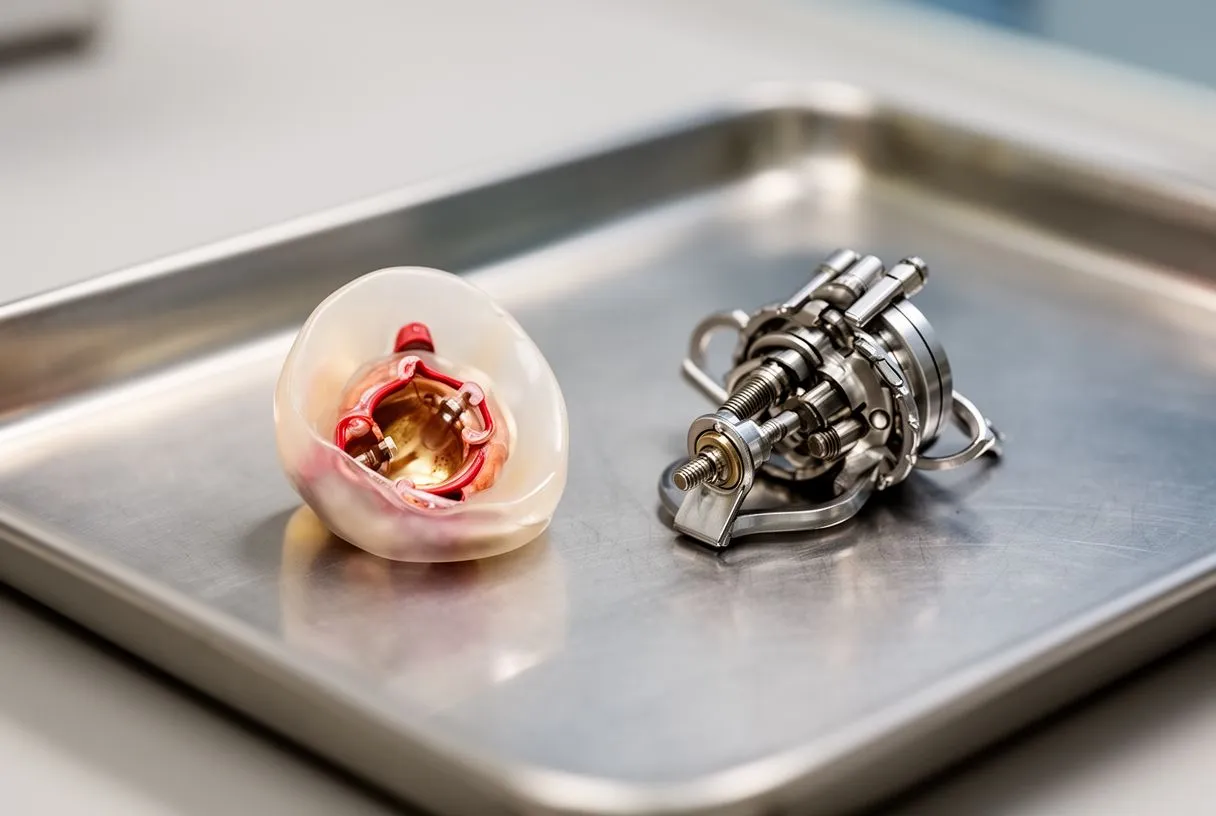
Tricuspid valve interventions: The tricuspid valve, located between the right atrium and the right ventricle, is increasingly recognised as a source of significant symptoms when it leaks — a condition called tricuspid regurgitation. Research on transcatheter treatment for tricuspid valve disease has expanded the options available to patients who may not tolerate open surgery. You can explore this research at Transcatheter treatment for tricuspid valve disease. For isolated tricuspid regurgitation, outcomes and therapeutic interventions continue to evolve; a useful summary of current understanding is available at Isolated tricuspid regurgitation: outcomes and therapeutic interventions.
Coronary and aortic procedures: Beyond valves, elective surgery includes coronary artery bypass grafting (CABG), where a healthy blood vessel is rerouted to bypass a blocked artery. When the ascending aorta enlarges beyond guideline thresholds, an elective repair prevents the catastrophic risk of dissection or rupture. Some patients require a combined procedure — for instance, a valve replacement paired with a bypass — and planning becomes even more critical because operative time is longer and the team must coordinate multiple technical steps. Each of these categories carries its own preparation checklist, risk profile, and recovery trajectory, which is why your surgical plan is tailored to your specific anatomy and overall health.
Best Time for Elective Heart Surgery Scheduling
There is no universal "best month" for elective heart surgery, but there are windows that make more sense for individual patients. Your cardiologist will weigh the natural history of your disease against modifiable risk factors. If your valve disease is severe but stable, scheduling four to six weeks out gives you time to optimise your fitness, complete dental work, and arrange logistics without allowing the condition to deteriorate. If imaging shows rapid progression — for example, an aortic root that is growing quickly or a ventricle that is beginning to dilate — the team may recommend a shorter planning interval.

Seasonal and practical considerations: Some patients prefer to avoid scheduling during flu season because respiratory infections can delay surgery. Others consider family calendars — wanting to be present for a wedding or a graduation — and ask whether waiting an extra month is safe. Your surgeon can give you an honest answer based on your imaging and functional status. Never assume that delay is harmless; ask directly: "If we wait eight weeks, does my anatomy change in a way that makes surgery harder or less successful?"
Coordinating multidisciplinary availability: Elective cardiac surgery is not performed by a single surgeon. It requires an anaesthetist, a perfusionist who operates the heart-lung machine, intensive care nurses, and often an imaging specialist. If your case is complex — involving, for example, an autograft procedure where your own tissue is used to replace a valve — the team may need additional planning sessions. Scheduling is a coordination exercise, and the date you are given reflects the availability of every critical team member, not just the surgeon's calendar.
Elective Heart Surgery Recovery Timeline
Recovery from elective heart surgery follows a recognisable arc, though every patient's pace varies. The first phase is the intensive care unit, typically lasting one to two days. Here, your heart rhythm, blood pressure, and drainage are monitored continuously. An arterial cannula may remain in place for blood pressure sampling, and you will likely have temporary pacing wires on your chest. Once you are stable, you transfer to a step-down ward where the focus shifts to mobilisation — sitting up, walking short distances, and beginning pulmonary exercises to re-expand your lungs after anaesthesia.
Weeks one to six at home: Most patients go home within five to seven days after a straightforward valve or bypass operation. At home, the first two weeks centre on pain management, incision care, and gradually increasing walking distance. You will likely feel fatigued — this is normal as your body redirects energy toward healing. Arm pain on the side where your internal mammary artery was harvested (if used as a graft) is common and usually resolves over several weeks. Driving is typically restricted for four to six weeks, and lifting anything heavier than a few kilogrammes is avoided to protect your sternum as it knits back together.
Cardiac rehabilitation and long-term recovery: Around the six-week mark, many patients begin a structured cardiac rehabilitation programme — supervised exercise sessions combined with education on nutrition, medication, and stress management. Full recovery, meaning return to all normal activities including exercise and work, generally takes three months for open-heart procedures and less for minimally invasive or transcatheter approaches. The investment you make in rehabilitation pays measurable dividends: patients who complete cardiac rehab programmes show better functional outcomes and lower rates of complications. Your team will set milestones specific to your procedure and your baseline fitness.
Are There Risks With Elective Cardiac Surgery
Every surgical procedure carries risk, and honest discussion of those risks is a cornerstone of informed consent. The advantage of elective surgery is that many risks can be anticipated and mitigated before the operation. Bleeding, infection, stroke, and kidney injury are the most commonly discussed complications. Your surgical team uses risk calculators — incorporating factors like age, lung function, kidney function, and the complexity of the planned procedure — to estimate your individual risk profile. When a risk factor is modifiable, the team addresses it during the planning phase rather than accepting it as inevitable.
Rhythm disturbances and what they mean: Atrial flutter and other arrhythmias are relatively common in the early days after heart surgery, particularly after valve operations. These rhythm changes are usually temporary and managed with medication or, in some cases, a brief electrical correction. Your team will monitor your heart rhythm continuously in the hospital. If you experience palpitations, dizziness, or shortness of breath after discharge, you should contact your cardiac team promptly. In rare cases, a serious arrhythmia may require treatment with an automated external defibrillator, though this is uncommon in the elective surgery context.
Understanding your individual risk picture: A key phrase to remember is "lowest risk for your situation." No surgeon can promise zero risk, but the entire purpose of elective planning is to move you from a position of higher, uncontrolled risk to the lowest achievable risk on the day of surgery. Ask your team for your specific EuroSCORE II or equivalent risk score, and ask what each number means in plain language. If your calculated risk of stroke is, for example, two percent, that means two out of one hundred patients in your risk band experience a stroke — and ninety-eight do not. Understanding these numbers helps you make decisions based on evidence rather than fear.
What to Expect During Your Elective Heart Surgery Steps
On the morning of surgery, you will arrive at the hospital having fasted from the night before. The pre-operative area is where you meet your anaesthetist, who will place intravenous lines and review your medications one final time. Once in the operating theatre, general anaesthesia is induced and a breathing tube is placed. For open-heart procedures, the surgeon accesses the heart through a sternotomy — an incision down the centre of the chest. If a heart-lung machine is used, it takes over the work of your heart and lungs, allowing the surgeon to operate on a still, bloodless field.
What happens while you are asleep: The duration of surgery depends on the complexity. A single valve replacement may take two to three hours of operative time, while a combined valve and bypass procedure can take four or more. If your surgery involves the tricuspid valve, the team pays particular attention to protecting the right side of the heart and ensuring that the repair or replacement is durable. Throughout the procedure, transoesophageal echocardiography provides real-time imaging so the surgeon can confirm that the repair or replacement is functioning properly before closing the chest.
Waking up and the first hours: You will wake in the intensive care unit, sometimes still connected to a ventilator for a brief period until your breathing is stable. It is normal to feel groggy, cold, and disoriented. Tubes and monitoring lines are present but are removed progressively as you recover. Your family will be updated at key milestones. The first time you sit up and stand — usually within twenty-four to forty-eight hours — feels monumental, and it marks the transition from "surgery" to "recovery." Every step forward from this point is a step toward home.
Elective Heart Surgery in Guadalajara: Planning Travel and Care
For patients travelling to Guadalajara, Querétaro, or Hermosillo for elective cardiac surgery, planning extends beyond the hospital walls. International patients need to coordinate travel, accommodation, and post-operative follow-up in a city that may be unfamiliar. Pre-operative consultations can often begin remotely, with imaging and records reviewed ahead of your travel so that your in-person assessment is efficient.

Practical steps for international patients:
- Medical records transfer: Gather all echocardiograms, angiograms, and lab results in advance; have them translated if necessary.
- Travel timing: Plan to arrive several days before surgery for final assessments, and allow two to three weeks in-country before flying home.
- Post-operative accommodation: Arrange a comfortable recovery space near the hospital for the period between discharge and your clearance to travel.
- Language and communication: Confirm whether an interpreter will be available for consultations and whether discharge instructions will be provided in your preferred language.
Insurance and cost considerations: Many international patients choose Mexico for cardiac surgery because of the combination of specialist expertise and cost transparency. It is important to discuss the full cost of your planned procedure — including surgeon fees, hospital stay, anaesthesia, imaging, and any potential additional days in intensive care — before committing. If you have international insurance, check whether your policy covers elective procedures abroad and what documentation is required for reimbursement. Your cardiac team can provide the detailed medical documentation that insurers typically request, but you should initiate that conversation early in the planning process so there are no surprises on the financial side.
Signs You May Need to Move From Planned to Urgent Surgery
Even with careful elective heart surgery planning, your condition can change. Recognising the warning signs that your situation has shifted from planned to urgent is critical. New or worsening chest pain at rest, sudden breathlessness that limits your ability to walk across a room, fainting or near-fainting episodes, and rapid or irregular heartbeats that do not resolve on their own are all red flags. If you experience any of these, you should not wait for your scheduled surgery date — you should seek immediate medical attention.
Subtle changes that warrant a call to your team: Not every warning is dramatic. An atypical infarction — a heart attack with unusual symptoms — can present as indigestion, jaw discomfort, or unusual fatigue, particularly in women and older adults. If you notice that your exercise tolerance has dropped noticeably in a short period — for example, you could walk two blocks comfortably last month and now struggle after half a block — report this to your cardiologist. Changes detected on auscultation, where your doctor hears a new or louder murmur through a stethoscope, can also signal that your valve disease has progressed. These are not reasons to panic, but they are reasons to reassess the timeline.
When to go to the emergency department: If you develop severe chest pain lasting more than a few minutes, pain radiating to your arm or jaw, sudden severe breathlessness, or you lose consciousness, call emergency services immediately. Do not drive yourself to the hospital. In some cases, a patient who was scheduled for elective surgery weeks later may be admitted for an expedited or emergency operation. The transition from elective to urgent changes the surgical approach and sometimes the options available, which is why proactive communication with your cardiac team whenever your symptoms shift is so important.
Questions to Ask Your Cardiac Team Before Surgery
A well-prepared patient asks good questions. Your consultation before elective heart surgery is not just for the surgeon to explain the plan — it is your opportunity to understand the procedure, the risks, the alternatives, and the recovery in enough detail to make confident decisions. Bring a written list. Bring a family member or friend who can take notes, because the volume of information can be overwhelming. There is no such thing as a foolish question when it comes to your own heart.
Key questions for your consultation:
- About the procedure: What exactly will you do during the surgery, and how long do you expect it to take?
- About risk: What is my individual risk score, and what factors are driving it? What can I do before surgery to lower that risk?
- About medications: Which of my current medications should I continue, and which should I stop before surgery? When should I stop them?
- About recovery: How many days will I be in hospital, and what milestones must I reach before going home? When can I return to driving, work, and exercise?
- About alternatives: Are there less invasive options for my condition, such as a transcatheter approach instead of open surgery? Why is the recommended option the best fit for me?
Making the decision that is right for you: The goal of elective heart surgery planning is not to rush you toward an operation but to ensure that, if surgery is the right path, you reach the operating room in the best possible condition at the right time. Every patient's situation is unique, and the information in this guide is intended to support — not replace — a personal conversation with a qualified cardiac team. If you are considering heart surgery or have been told you may need a valve or coronary procedure, we encourage you to book a consultation with Dr Alejandro Molina and his team in Guadalajara, Querétaro, or Hermosillo. A thorough evaluation will clarify whether surgery is needed now, whether preparation time is advisable, and what the right plan looks like for your heart and your life.






