

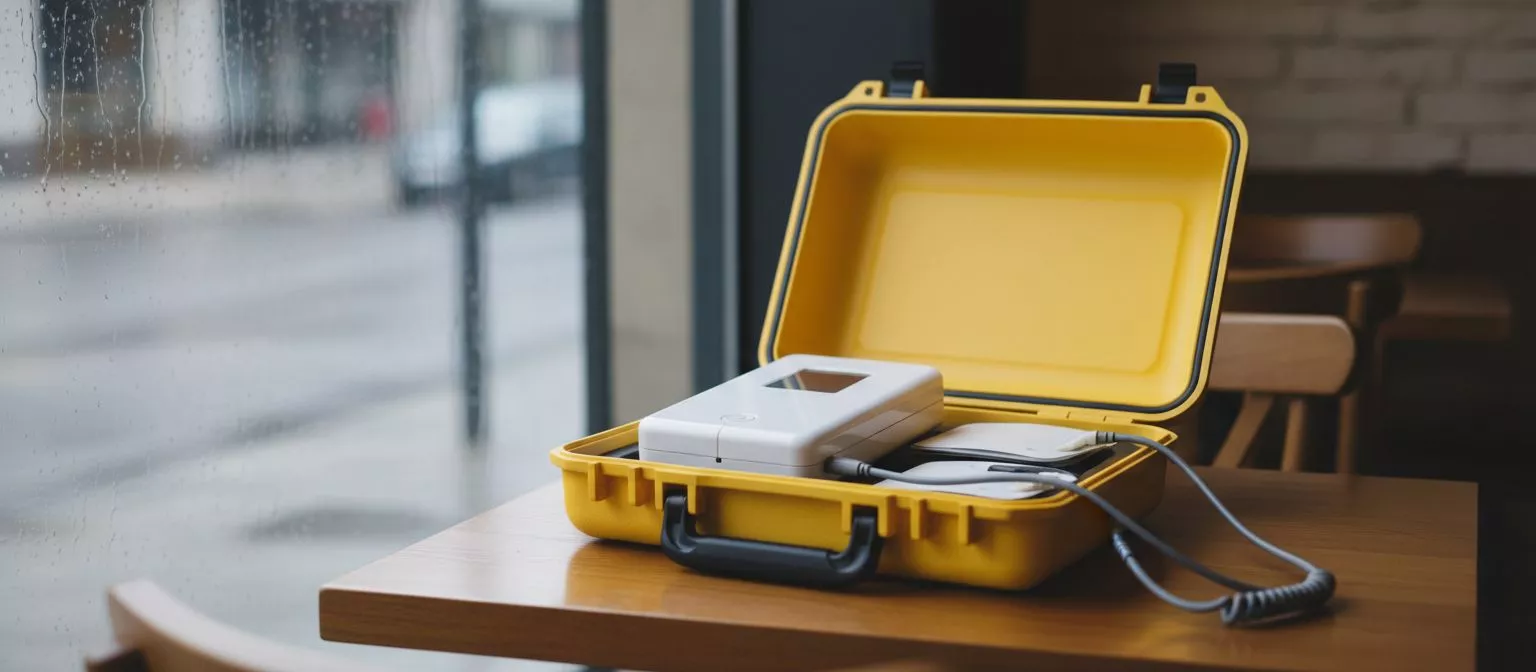
AED
Learn what an AED is and how to use this life-saving device during cardiac arrest.
What is an AED
An AED, or automated external defibrillator, is a portable electronic device designed to respond to sudden cardiac arrest. It analyzes the heart's rhythm and, if it detects a life-threatening irregularity, delivers an electric shock to help restore a normal heartbeat. These devices are built to be used by laypeople, not just medical professionals. If someone collapses suddenly, this equipment can be the decisive factor in saving a life before emergency medical services arrive.
Heart surgery patients and their families often worry about emergencies at home. Understanding what this technology does brings critical peace of mind. The device acts as an immediate response system that bridges the gap between collapse and advanced hospital care, ensuring that a window of survivability remains open.
Modern versions are lightweight, battery-operated, and highly intuitive. When minutes matter most, having access to a home AED device removes the technical guesswork from resuscitation. Their sole purpose is to shock the heart back into a pumping rhythm when it quivers uselessly.
How an AED Works During Cardiac Arrest
Detecting fatal arrhythmias: The machine operates by reading the electrical activity of the heart through sticky electrode pads placed on the chest. It specifically looks for ventricular fibrillation or pulseless ventricular tachycardia, chaotic rhythms where the heart muscle merely quivers instead of pumping blood to the brain.
If a shockable rhythm is identified, the device prepares to deliver an electrical current. This current momentarily stops the chaotic electrical storm inside the heart. When the heart restarts, it has a chance to fall back into a normal, organized rhythm that effectively pumps blood.
If the device detects a normal pulse or a flatline rhythm that cannot be corrected by electricity, it will simply instruct the rescuer to continue CPR. The intelligence built into the unit ensures that a shock is never delivered unless it is clinically required, protecting the patient from unnecessary trauma.
Why an AED Matters for Heart Surgery Patients
Recognizing cardiac vulnerability: Patients recovering from cardiac surgery often face a period where the heart muscle is healing and electrically sensitive. While strict hospital protocols protect them during the initial recovery, the risk of sudden complications remains a reality for those with severe underlying heart disease.
For families managing a loved one's recovery at home, knowing that emergency response equipment is nearby is profoundly reassuring. It transforms a feeling of absolute helplessness into a position of readiness. A layperson cannot manually diagnose a fatal arrhythmia, but an automated external defibrillator accurately can.
Time is the most critical factor in a cardiac event. For every minute that passes without defibrillation, the chances of survival drop significantly. Having immediate access to this technology protects a surgical patient's fragile recovery investment.
- Rapid response: Immediate access collapses the time between collapse and life-saving shock.
- Brain protection: Restoring circulation quickly prevents irreversible oxygen deprivation.
- Empowered caregiving: Gives families a concrete, actionable tool during a terrifying moment.
Types of AEDs: Fully Automatic vs Semiautomatic
Understanding the difference between models helps families make informed choices. Both types analyze the heart and decide if a shock is needed, but they differ in the final delivery step.
Semiautomatic versions: These devices analyze the heart rhythm and, if a shock is advised, audibly warn the rescuer to stand clear. The rescuer must then physically press a flashing button to deliver the shock. This provides a moment of psychological control, ensuring the rescuer is physically ready.
Fully automatic versions: Once the pads are applied, the machine issues a countdown and delivers the shock entirely on its own without a button press. This removes hesitation, which is valuable in high-stress situations where a rescuer might panic or freeze.
How to Use an AED Step by Step
Using this medical equipment is designed to be universally straightforward. The moment you turn the machine on, it begins to speak, providing clear audio instructions for every subsequent action.
First, apply the adhesive pads directly to bare skin on the person's chest. One pad goes on the upper right side below the collarbone, and the other goes on the lower left side beneath the armpit. The device will analyze the heart rhythm and instruct you to stop touching the patient.
If a shock is required, the machine will tell you to stand clear. Whether it delivers the shock automatically or instructs you to press a button, you must ensure no one is in contact with the patient. After the shock, the device will instruct you to immediately resume chest compressions.
- Power: Turn the unit on immediately.
- Placement: Expose the chest and apply pads exactly as shown in the diagram.
- Clear: Ensure no one touches the patient during rhythm analysis and shock delivery.
- Compress: Resume CPR immediately after the shock or if no shock is advised.
AED Safety Features and Voice Instructions
Fail-safe engineering: Modern automated external defibrillators are built with extensive safety features to prevent accidental shocks. The internal computer strictly governs the electrical output, meaning a shock cannot be delivered unless specific, life-threatening criteria are met.
The device will refuse to shock a normal heartbeat or a completely flatlined heart, as electricity is useless in those scenarios. Voice prompts guide the rescuer through the entire process, from pad placement to CPR pacing, acting as a virtual medical coach during the emergency.
This intelligent guidance means even a person with no prior medical training can perform a complex life-saving intervention. The clear voice instructions reduce panic and cognitive overload, allowing the rescuer to focus completely on executing the physical steps.
AED Placement and Accessibility in Public Spaces
Accessibility in public environments dictates survival rates for sudden cardiac events. These machines are typically housed in highly visible, alarmed cabinets near building entrances or central gathering areas.
When an emergency occurs, a bystander can retrieve the unit quickly. Opening the cabinet often triggers a local alarm to alert others that a rescue is underway. Many public devices are instantly ready, meaning anyone can access them without a key to ensure zero delay in retrieval.
For families of heart patients, recognizing the universal green sign indicating an AED location is vital. Whether in an airport, a shopping mall, or a clinic, knowing where to find this equipment in a split second changes the outcome of a sudden collapse.
Are AEDs Safe to Use on Children
Yes, they are completely safe for pediatric use, though a minor adjustment is required. Most units come with a switch or specialized pediatric pads that reduce the energy of the electrical shock delivered to a small body.
If a child collapses, the rescuer simply applies the pediatric pads or flips a key on the device to adjust the electrical output. This prevents trauma to a small heart while still correcting the chaotic arrhythmia. Understanding this versatility helps families caring for pediatric cardiac patients.
If only adult pads are available in an immediate emergency, they can still be used on a child by placing one pad on the center of the chest and the other on the back, between the shoulder blades. The priority is always to attempt resuscitation without waiting for perfect equipment.
AED Maintenance and Battery Readiness
Ensuring rescue readiness: A defibrillator is only useful if it functions perfectly the moment it is needed. These machines perform daily self-checks, monitoring their internal circuitry and battery capacity silently in the background.
If the battery runs low or a component fails, the device emits a loud chirping sound and flashes a warning indicator. This active monitoring means that as long as the device is not actively alarming, it is ready to save a life.
Routine maintenance is minimal but critical. The adhesive electrode pads have an expiration date because the gel that conducts electricity degrades over time. Replacing an AED replacement battery and pads on schedule ensures the equipment never fails when the heart needs it most.
AEDs in Community Rescue and Survival
The survival rate of sudden cardiac arrest relies heavily on immediate bystander intervention before paramedics arrive. Widespread deployment of automated external defibrillators in communities directly correlates with higher survival rates and better neurological outcomes for survivors.
For heart surgery patients, knowing that their community and family understand this technology creates a robust safety net. Cardiac surgery is a profound physical journey, and access to immediate emergency intervention protects that progress.
Understanding what this machine does removes the fear of the unknown. By empowering families and bystanders with intelligent, accessible technology, the medical community ensures that life-saving coronary care extends well beyond the walls of the hospital.






