

Cardiopulmonary Resuscitation Steps: How Bystander CPR Saves Lives
Learn cardiopulmonary resuscitation steps to act fast in cardiac emergencies.
Cardiac arrest is one of the most frightening things a family can witness. The heart stops pumping, the person collapses, and every second counts. Knowing the cardiopulmonary resuscitation steps before an emergency happens turns that fear into action. For families coping with heart disease, this is not abstract knowledge — it is a practical skill that may one day protect someone you love. This guide walks through what to do, why each step matters, and what to expect if a loved one survives.
What Are Cardiopulmonary Resuscitation Steps and Why They Matter
Cardiopulmonary resuscitation — CPR for short — is the emergency technique used when someone's heart stops beating effectively. By pressing rhythmically on the chest, you manually pump blood to the brain and vital organs. It is not a cure. It is a bridge that keeps the brain alive until the heart can be restarted with a defibrillator or advanced care.
Why minutes matter more than anything else: Brain tissue begins to die within four to six minutes of cardiac arrest. Bystander CPR started before emergency services arrive can double or even triple the chances of survival. That is why the steps matter more than perfect technique — blood moving imperfectly is far better than no blood moving at all.
Who should learn these steps: Everyone. You do not need a medical degree or a hospital setting. CPR is designed for ordinary people in ordinary places — at home, at work, on a sidewalk. Most cardiac arrests happen at home, so the person most likely to save your life is someone standing next to you. If you are reading this because a family member has been diagnosed with a heart condition, learning CPR is one of the most meaningful things you can do alongside their treatment plan.
What to Do if Someone Is Unconscious and Not Breathing
Before you begin compressions, confirm that the person is in cardiac arrest — not simply fainting, sleeping, or having a seizure. Cardiac arrest is sudden: the person collapses, loses consciousness, and stops breathing normally. It may follow warning symptoms such as chest pain, palpitations, or shortness of breath, or it can arrive with no warning at all.
Check responsiveness and breathing: Tap the person firmly on the shoulder and shout, "Are you okay?" If there is no response, look at their chest for breathing. Occasional gasping — called agonal breathing — is not normal breathing. It is a reflex that can persist briefly after the heart stops and does not mean the person is recovering. No response plus no normal breathing means assume cardiac arrest and begin CPR immediately.
Call for help before you start: If someone else is nearby, point directly at them and say, "Call emergency services and bring an automated external defibrillator if one is available." If you are alone, call emergency services yourself, put the phone on speaker, and start compressions while the dispatcher guides you. Many emergency dispatchers are trained to coach bystanders through CPR over the phone, so you are never truly on your own.
Cardiopulmonary Resuscitation Step by Step: The Chain of Survival
The cardiopulmonary resuscitation steps follow a logical sequence often described as the chain of survival. Each link depends on the one before it, and breaking any link reduces the person's chance of walking out of the hospital. The chain moves from recognition and calling for help, to immediate compressions, to defibrillation, to advanced care and post-arrest recovery.
Step one — scene safety and position: Make sure the environment is safe for both you and the person. If the person is on a soft surface like a bed or sofa, move them to a firm, flat surface. Compressions on a soft surface push into the mattress rather than the chest wall, reducing their effectiveness. Kneel beside the person, close enough to compress without straining your back.
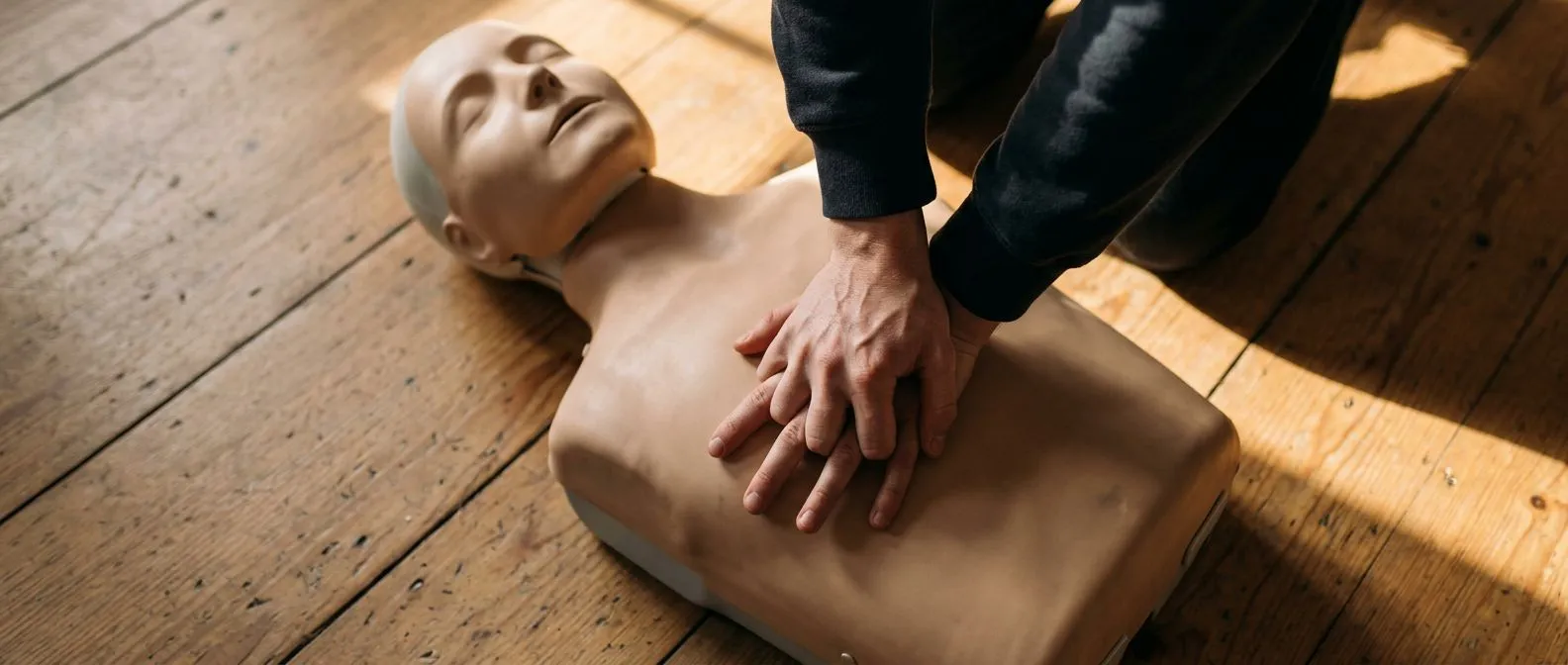
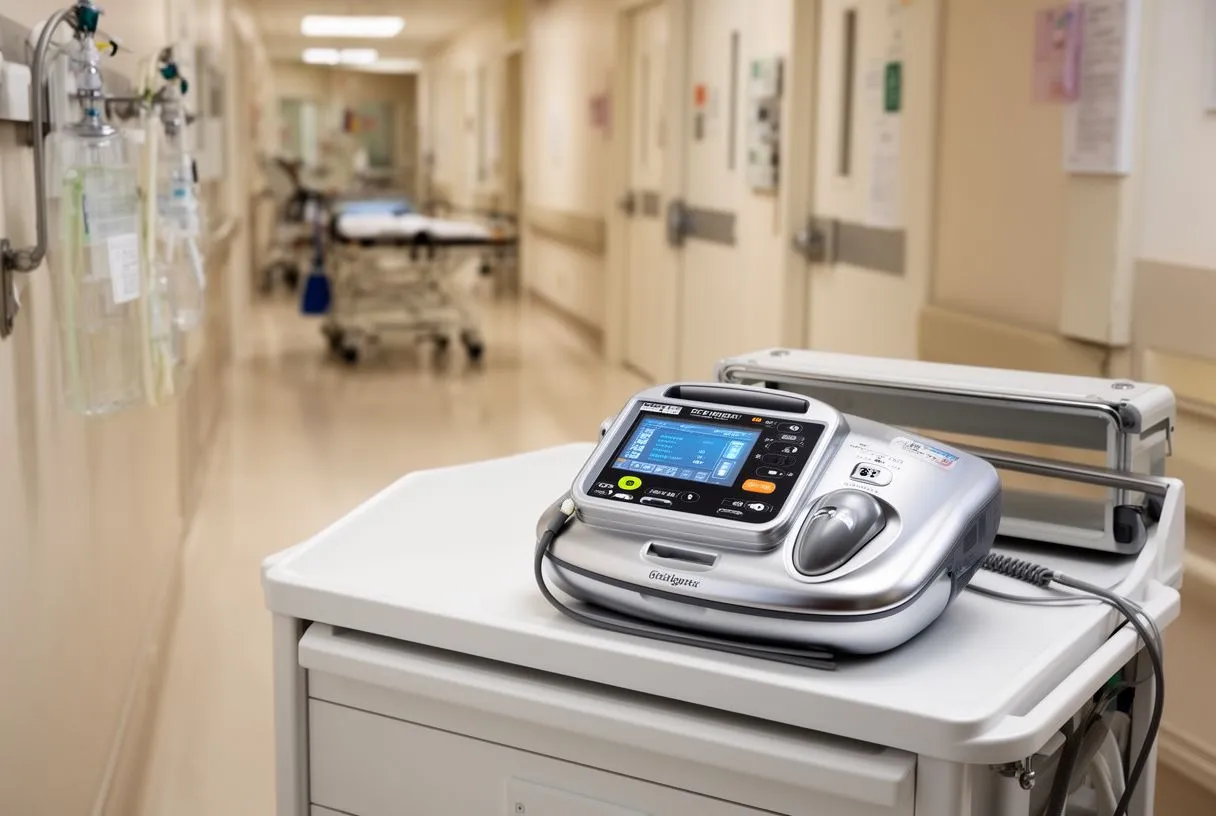
Step two — compress and count: Place the heel of one hand on the centre of the chest, between the nipples, and the other hand on top. Push down hard and fast, and let the chest come all the way back up between compressions so the heart can refill with blood. Continue without interruption until help arrives or the person shows clear signs of life. If an automated external defibrillator arrives, attach it and follow its voice prompts while someone continues compressions.
How Many Presses Do You Do in CPR?
The recommended compression rate is 100 to 120 presses per minute — roughly the beat of the song "Stayin' Alive." You do not count a fixed total; you keep going until help takes over. The number matters because pace controls how much blood reaches the brain with each push.
Why the pace matters: Too slow means the brain receives too little blood. Too fast means the heart does not have time to refill between compressions, so each push moves less blood. The AHA's current guidance keeps this window narrow precisely because both extremes hurt outcomes. Counting out loud, or playing the rhythm in your head, helps you stay in range when adrenaline is high.
The 30:2 ratio: If you are trained and giving rescue breaths, the standard cycle is 30 compressions followed by 2 breaths. If you are doing hands-only CPR, compressions are continuous with no pauses for breathing. In both cases, the presses are the priority — breaths are secondary for most adult bystanders.
Hands-Only CPR vs CPR With Rescue Breathing
For most bystanders, hands-only CPR is the recommended approach. This means continuous chest compressions without mouth-to-mouth rescue breathing. Research has shown that for adults who collapse suddenly outside a hospital, hands-only CPR is at least as effective as conventional CPR with rescue breaths, and bystanders are more willing to act when mouth-to-mouth contact is not required.
When rescue breathing still matters: Conventional CPR with rescue breaths remains important in certain situations. Infants and children, and anyone found already unconscious and not breathing for a prolonged period, benefit from added oxygen. People with cardiac arrest caused by breathing problems — such as drowning, drug overdose, or severe asthma — also need rescue breathing. If you are trained and confident, alternate 30 compressions with 2 breaths.
Practical reality for untrained bystanders: If you have no training and no dispatcher is coaching you, do hands-only CPR. Do not waste time worrying about technique details you are unsure of. Pushing on the centre of the chest at a steady, forceful pace is far better than doing nothing. The worst action is hesitation born from fear of doing it wrong — imperfect CPR still keeps blood moving to the brain.
Proper CPR Hand Placement and Compression Depth
Where you place your hands and how deeply you compress both affect whether blood actually reaches the brain and heart. Correct hand placement is on the lower half of the breastbone — the sternum — at the centre of the chest. Avoid pressing on the ribs, the upper abdomen, or the side of the chest, as these positions can cause injury and are ineffective at circulating blood.
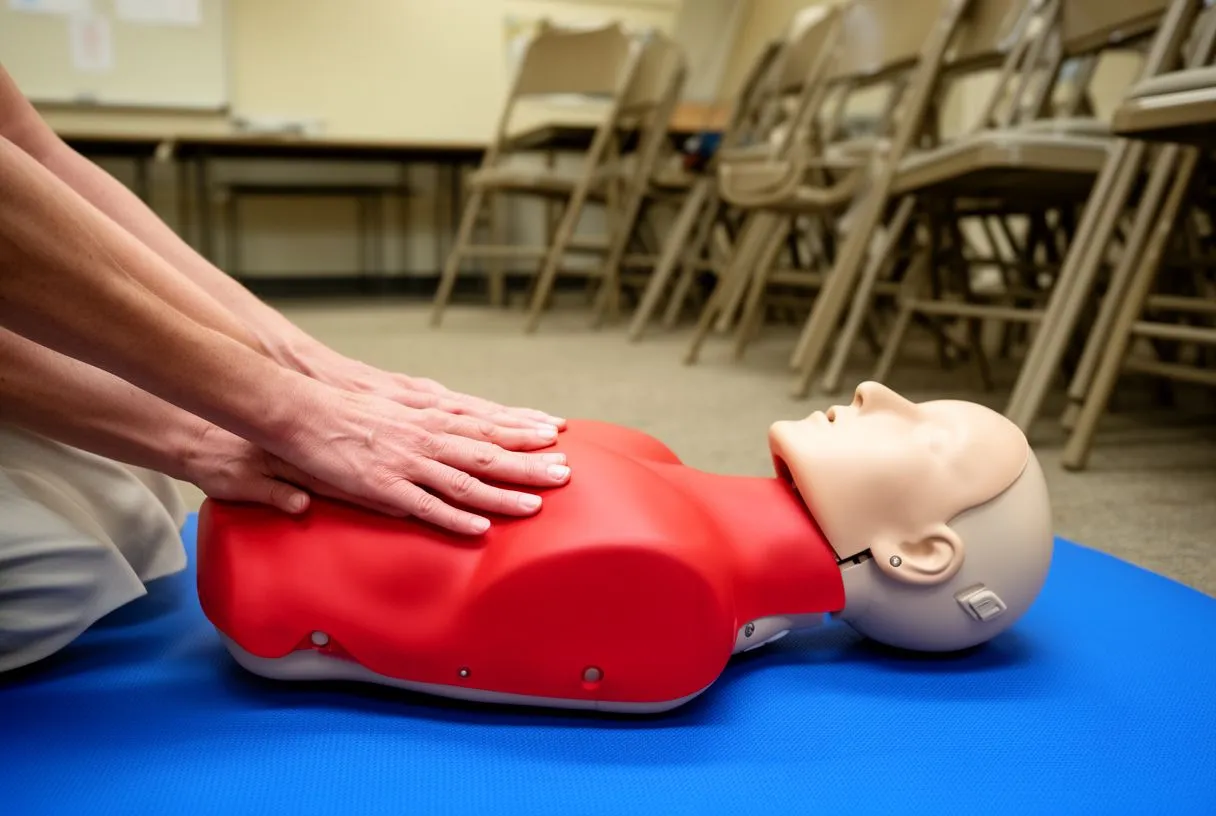
How deep to push: For an adult, compress the chest at least 5 centimetres but no more than 6 centimetres. Pushing too shallow does not squeeze enough blood from the heart; pushing too deep increases the risk of rib fractures without adding benefit. After each compression, let the chest return completely to its starting position. If you lean on the chest between compressions, you prevent the heart from refilling, which defeats the purpose of each push.
Body mechanics to sustain compressions: Position your shoulders directly over your hands and keep your arms straight. Use your upper body weight to drive compressions rather than your arm muscles. Bending at the elbows will fatigue you within minutes. If another bystander is available, switch every two minutes to maintain quality — fatigue sets in quickly and depth suffers before you notice it yourself.
CPR on an Unresponsive Person With an Obstructed Airway
This is a common question: which step should you add when performing CPR on an unresponsive person with an obstructed airway? If the person choked before collapsing, the added step is to look inside the mouth before giving rescue breaths. If you can see a solid object, remove it with a finger sweep. Never perform blind finger sweeps — you can push the object deeper.
How this changes the sequence: Obstructed airway guidelines modify two things. First, rescue breathing becomes more important than in hands-only CPR, because the problem is oxygen delivery rather than the heart itself. Second, if a breath does not go in, reposition the head and try again before assuming a blockage. Chest compressions themselves can also help dislodge an object — they work much like abdominal thrusts.
If the person is still responsive: If someone is choking but still conscious and coughing, encourage them to keep coughing. Do not start CPR on a person who is conscious and breathing. CPR begins only when the person becomes unresponsive and stops breathing normally. A short first-aid course covers choking relief for adults, infants, and children, and it is worth taking if you care for someone at risk.
When to Start CPR and When to Stop
Start CPR when a person is unresponsive and not breathing normally. You do not need to check for a pulse unless you are trained and confident in doing so quickly. Untrained bystanders often waste precious seconds searching for a pulse that is difficult to find, even for professionals. The threshold is simple: no response, no normal breathing — begin compressions.

When to stop or pause: Stop CPR when emergency responders take over, when the person begins to breathe normally and responds, when the scene becomes unsafe, or when you are too exhausted to continue and no one can take over. If an automated external defibrillator arrives, pause only to attach the pads and follow the voice prompts. If the AED advises a shock, clear the person and deliver it, then immediately resume compressions.
Legal and ethical reassurance: Many bystanders hesitate because they fear legal consequences if the person does not survive. Good Samaritan laws in most countries protect individuals who voluntarily provide emergency assistance in good faith. You are not expected to be a perfect rescuer. You are expected to try. Doing nothing is the only genuinely harmful choice.
CPR Without Training: Can You Still Save a Life
You do not need a certification card to save a life. The core of CPR — pushing hard and fast on the centre of the chest — can be explained in under a minute and performed by almost anyone physically able to compress an adult chest. Dispatcher-assisted CPR, where an emergency operator coaches you through the steps over the phone, has been shown to significantly improve survival from out-of-hospital cardiac arrest.
What training adds: Formal CPR training gives you muscle memory, confidence, and familiarity with rescue breaths, AED operation, and child and infant techniques. It also covers choking, the recovery position, and team dynamics. These skills are valuable, and a short course — often completed in half a day — is worth the investment. But training is an enhancement, not a prerequisite for action.
Practical first action for the untrained: If you witness a collapse and have no training, do three things: call emergency services, put the phone on speaker, and push on the centre of the chest hard and fast. Follow the dispatcher's instructions on hand placement, depth, and when to use an AED. Your willingness to act is the single most important variable in those first minutes. If your loved one has a heart condition, ask their cardiac team whether the family should take a CPR course — most teams will say yes.
CPR Survival Rates and Life After Cardiac Arrest
Survival from out-of-hospital cardiac arrest varies widely depending on where it happens, how quickly CPR begins, and whether an AED is available. Bystander CPR can double or triple survival compared with waiting for emergency services alone. The strongest predictors of a good outcome are immediate recognition, early compressions, prompt defibrillation, and seamless handover to advanced care. Globally, cardiovascular disease remains the leading cause of death, and sudden cardiac arrest is one of its most dramatic presentations.
Factors that affect prognosis: The underlying cause of the arrest matters. A heart attack caused by a blocked artery may respond well to rapid intervention, including procedures like balloon angioplasty to restore blood flow. Some patients who survive cardiac arrest later need further cardiac evaluation, and outcomes can be influenced by complications such as kidney injury after intensive treatment. Recovery is also shaped by how quickly the brain received oxygenated blood.
What a good outcome means: Survival is not just about being alive at hospital discharge. It means neurological recovery — the ability to think, speak, and function. The brain is the most vulnerable organ during cardiac arrest, which is why immediate CPR is so critical. Quality of life after arrest depends on how quickly blood flow was restored and how well post-arrest care was managed in the hospital.
Recovery and follow-up: After return of spontaneous circulation, patients are typically admitted to an intensive care unit for monitoring, temperature management, and evaluation of the underlying cause. Follow-up may include coronary angiography, an echocardiogram, and medication review — antiplatelet therapy, beta-blockers, or anti-arrhythmic drugs depending on the diagnosis. Some patients may later need an implantable defibrillator or, if the cause is structural valve disease, a valve intervention. Some people return to normal activities within weeks, while others need months of cardiac rehabilitation.
As a cardiac surgery team led by Dr Alejandro Molina, with consulting rooms in Guadalajara, Querétaro and Hermosillo, we see every case through a multidisciplinary review against international practice guidelines before any recommendation is made — and the patient always receives a clear proposal with the alternatives, and the final decision is theirs. If your family has a history of heart disease or a member has been diagnosed with a cardiac condition that could lead to arrest, we encourage you to discuss your specific situation with a qualified cardiac team. The first contact is a free video consultation: we get to know the patient, talk through the condition, and say which studies are still needed so no unnecessary ones are ordered. Book a consultation with Dr Alejandro Molina to understand your risks and build a plan — do not self-diagnose or wait for an emergency to learn what to do.






