

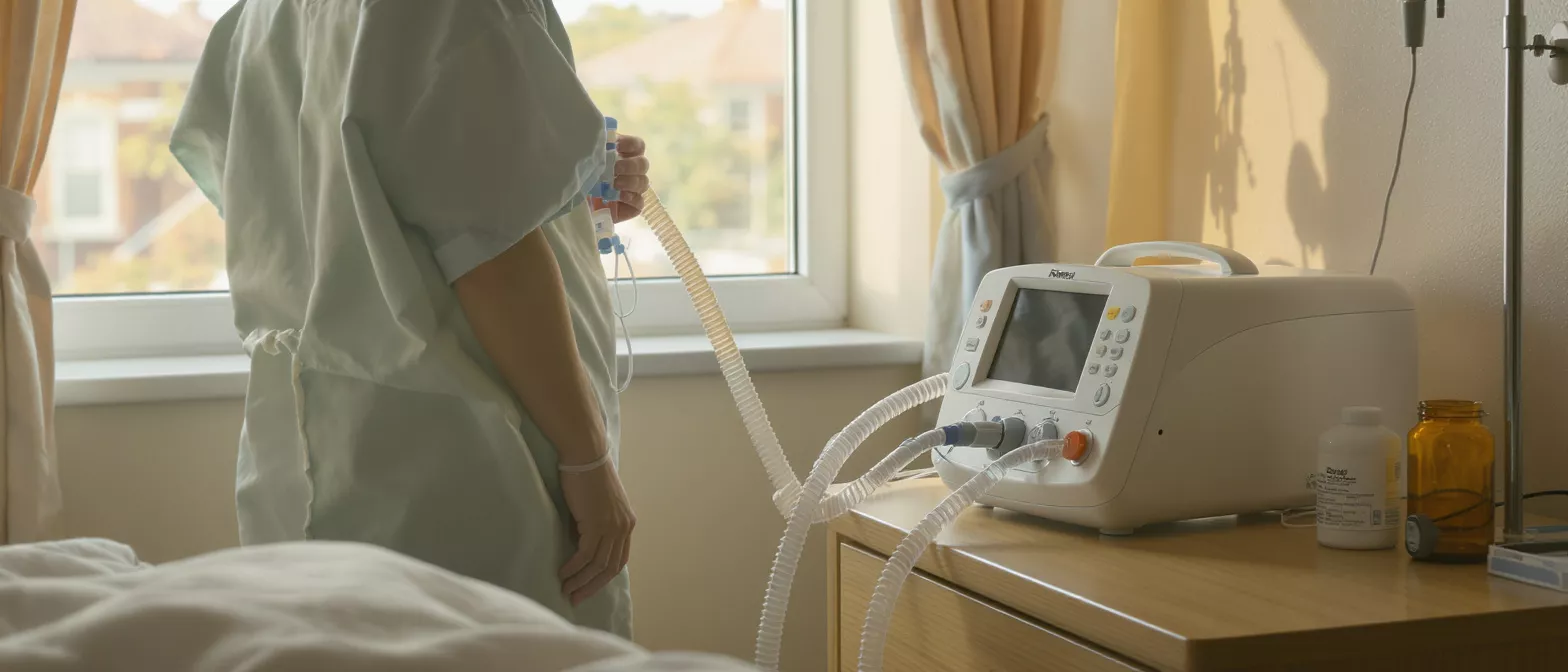
Awake ECMO
Discover awake ECMO, a cardiac support technique that keeps patients conscious during treatment.
What is Awake ECMO?
Awake ECMO represents a profound shift in how we approach severe heart and lung support, prioritizing patient consciousness and comfort. When facing severe cardiac failure, the prospect of being connected to a complex heart lung machine can be deeply frightening. Awake ECMO offers a different path. Instead of relying on heavy sedation and a breathing tube, this advanced form of ecmo therapy allows you to remain alert, breathe spontaneously, and communicate with your care team and family.
The purpose of avoiding sedation: Traditional extracorporeal membrane oxygenation often requires induced coma to tolerate invasive mechanical ventilation. By contrast, an awake patient on ECMO avoids the profound muscle weakness, delirium, and psychological trauma associated with prolonged sedation. Remaining conscious helps preserve your physical conditioning and cognitive function, which are critical for a successful recovery after cardiac surgery.
Why this matters for your surgical journey: For a patient preparing for or recovering from heart surgery, maintaining lucidity is empowering. Being awake allows you to participate actively in your care, understand your treatment progress, and maintain a sense of normalcy. It transforms the experience from a passive, isolated event into a collaborative medical journey, easing the immense anxiety that families feel when a loved one is critically ill.
How Extracorporeal Membrane Oxygenation Works
To understand how extracorporeal membrane oxygenation works, imagine an external circuit acting as a temporary, artificial heart and lung. A specialized cannula is carefully placed into your venous system, drawing dark, oxygen-depleted blood away from your body. This blood travels through a pump that maintains steady circulation, pushing it into a membrane oxygenator.
Inside the membrane oxygenator: This component is the core of the heart lung machine. Here, your blood passes across a specialized membrane that mimics the lung's alveoli. Oxygen diffuses into the blood while carbon dioxide is removed. The blood is gently warmed to body temperature and returned to your arterial system, delivering vital, oxygen-rich blood to your vital organs and tissues.
The role of the pump in cardiac support: The pump ensures continuous, non-pulsatile blood flow, effectively resting the heart and lungs. In the context of cardiac support ECMO, this rest is invaluable. It unloads the struggling ventricles, reducing their workload completely while ensuring the rest of your body receives the oxygen it needs to heal and sustain life.
ECMO vs Ventilator Differences
Understanding the ecmo vs ventilator differences helps clarify why this advanced therapy is chosen for severe heart failure. A mechanical ventilator pushes oxygen-rich air into your lungs through a tube in your windpipe. It supports your breathing but relies on your lungs to actually transfer that oxygen into your bloodstream, and it provides no direct support to a failing heart.
ECMO bypasses the heart and lungs entirely. When lung function is severely compromised or the heart cannot pump effectively, a ventilator may no longer be sufficient. ECMO takes over the workload of both organs, oxygenating the blood outside the body. This is particularly relevant if your lungs are too damaged or your heart is too weak to respond to conventional ventilation.
- Ventilator Focus: Supports breathing by inflating the lungs with pressurized oxygen, requiring the native lungs to function.
- ECMO Focus: Directly oxygenates blood and circulates it, completely bypassing the heart and lungs to provide total rest.
Types of ECMO Therapy
There are two primary types of ECMO therapy, tailored to the specific nature of your organ failure. The first is venoarterial ECMO, which provides both cardiac and respiratory support. Blood is drawn from the venous system and returned to the arterial system, meaning the machine actively pumps blood throughout your body. This is the configuration most often used for severe heart failure or cardiogenic shock.
Veno-venous ECMO for lung support: The second type is veno-venous ECMO, which provides solely respiratory support. Blood is drawn from and returned to the venous system, relying on your own heart to pump the newly oxygenated blood. This is utilized when the heart is strong but the lungs require time to heal from severe infections or acute respiratory distress.
Choosing between venoarterial and veno-venous ECMO depends on a thorough assessment by your cardiology team. They will determine if your primary need is heart recovery, lung recovery, or both, ensuring the circuit is configured to provide the exact cardiac support ECMO your condition demands.
Awake ECMO Benefits for Cardiac Patients
The awake ECMO benefits for cardiac patients are substantial and directly impact the healing process. Because you are not heavily sedated, you avoid the severe muscle atrophy that typically accompanies prolonged bed rest on a traditional heart lung machine. You can sit up, eat normally, interact with your family, and even participate in light physical therapy while receiving life-saving ecmo therapy.
Psychological and emotional well-being: Being alert during critical care dramatically reduces the risk of ICU delirium. You remain oriented to time and place, which protects your mental health. The ability to communicate verbally with your surgeons and loved ones provides immense emotional comfort and reduces the fear associated with severe heart failure.
Better preparation for cardiac surgery: Staying physically active while on mobile ECMO therapy means you enter the operating room stronger. This "prehabilitation" is crucial. A patient who maintains their muscle mass and mental acuity is significantly better prepared to withstand the rigors of major heart surgery and navigate the subsequent recovery time.
Who Are the Best ECMO Candidates?
Determining who are the best ECMO candidates requires careful evaluation by a specialized cardiology team. Candidates typically suffer from severe, reversible heart or lung failure that has not responded to conventional treatments like mechanical ventilation or inotropic medications. The underlying condition must be one that can recover with time, or one that requires a bridge to a definitive solution like a transplant or surgical repair.
Conditions qualifying for ECMO: Common reasons for initiating ecmo treatment options include massive heart attacks, acute myocarditis, cardiogenic shock, or acute respiratory distress syndrome. It is also used as a bridge to recovery for patients awaiting a ventricular assist device or heart transplantation.
Importantly, a patient must be assessed for bleeding risks. Because ECMO requires blood thinners to prevent clotting in the machine, individuals with active bleeding or high stroke risk may not be ideal candidates. The medical team balances the immense benefits against these risks to make the safest recommendation.
Understanding ECMO Complications
Understanding ecmo complications is a necessary part of preparing for this therapy. The most common risk is bleeding. The continuous administration of anticoagulants, necessary to keep the circuit clear, means your blood is thinner than normal. This requires meticulous monitoring to prevent internal bleeding at the cannulation sites or in the brain.
Infection and clotting risks: Because the circuit is external and involves large cannulas entering the bloodstream, there is a risk of infection. The team uses strict sterile protocols to minimize this. Additionally, small clots can form in the circuit despite anticoagulation, which requires constant vigilance and immediate response from your perfusionist and critical care nurses.
Neurological considerations: Strokes remain a potential risk due to the manipulation of blood flow and the use of blood thinners. Your care team will perform regular neurological assessments, which is much easier when you are awake. Being conscious allows clinicians to detect any changes in your cognitive or motor function immediately.
ECMO Recovery Time and Patient Outcomes
When considering ecmo recovery time, it is important to understand that the duration on the machine varies widely based on the underlying condition. Some patients require support for only a few days to allow the heart to rest after an acute event, while others may need it for weeks while awaiting a transplant. The goal is always to use the therapy for the shortest time necessary.
Factors influencing ecmo patient outcomes: Outcomes depend heavily on the severity of the original illness and the patient's overall health prior to the event. Awake ECMO generally leads to better outcomes because the patient avoids the physical and cognitive decline associated with prolonged sedation. Entering surgery in a stronger physical state directly correlates with faster postoperative recovery.
Recovery involves gradually weaning off the ECMO circuit as your heart or lungs regain function. The team reduces the flow from the machine incrementally, observing your vital signs to ensure your native organs can sustain the workload. This careful transition is vital for long-term ecmo success rates and a positive return to daily life.
Is ECMO Without Sedation Safe?
Families often ask: is ECMO without sedation safe? The answer is yes, for carefully selected patients. The safety of this approach relies on precise cannula placement, adequate pain control, and a cooperative patient. If you are alert and oriented, and your respiratory and cardiac status allows for spontaneous breathing, the medical team will prioritize this gentler approach.
Monitoring safety parameters: Safety is ensured through continuous, intensive monitoring. Your heart rate, blood pressure, oxygen levels, and the circuit's flow are observed around the clock. The team is prepared to adjust sedation or convert to traditional mechanical ventilation if your condition changes or if you become too agitated to safely remain on the awake patient ecmo circuit.
This approach is a testament to advancements in critical care. It reflects a shift towards humanizing the ICU experience. For a frightened family, knowing their loved one is receiving maximum cardiac support while still being able to hold their hand and speak to them is incredibly reassuring.
Conclusion on Mobile ECMO Therapy
In summary, awake ECMO is a remarkable evolution in cardiac and respiratory support, offering a lifeline without the cost of prolonged unconsciousness. By utilizing an external circuit to oxygenate and circulate blood, it allows a failing heart to rest. It bypasses the limitations of a mechanical ventilator, directly supporting organ function while keeping you alert and engaged.
Empowerment through awareness: The primary advantage of this technique is the preservation of physical strength and mental clarity. Being awake allows you to participate in your care, maintain muscle tone, and face cardiac surgery in the best possible condition. This translates to fewer complications and a smoother path to recovery.
Partnering with your care team: While understanding ecmo complications is necessary, the overall benefit for suitable candidates is profound. If you or a loved one is facing severe heart failure, discussing ecmo treatment options with your cardiology team can provide clarity. It is a powerful tool that bridges the gap between critical illness and a successful surgical outcome, offering hope when it is needed most.






