

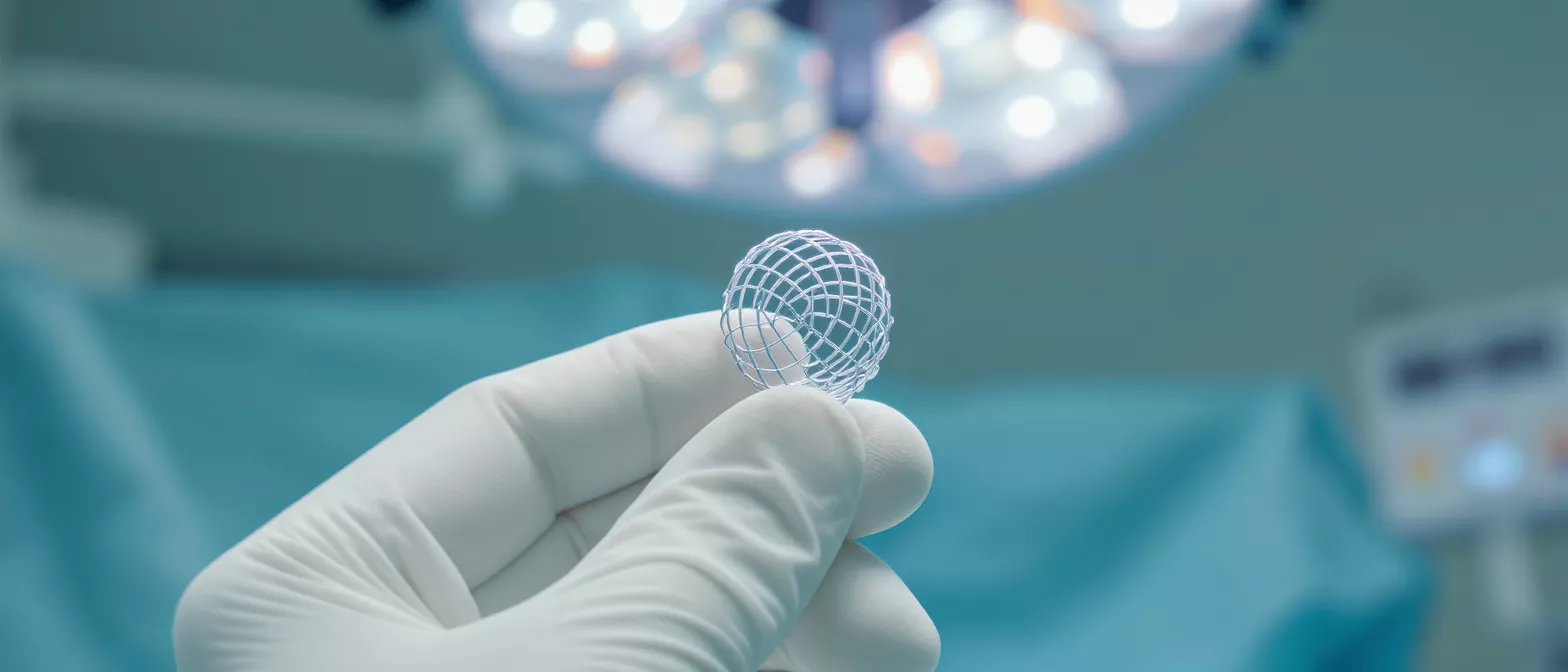
Balloon-expandable Valve
Learn how a balloon-expandable valve replaces diseased valves in minimally invasive TAVR.
What is a balloon-expandable valve?
A balloon-expandable valve is a specialized prosthetic heart valve used in minimally invasive cardiac procedures. Unlike traditional surgical valves that require open-heart surgery to implant, this device is designed to be delivered through a catheter. It is tightly crimped onto a balloon at the tip of the catheter, guided to the diseased heart valve, and expanded into place. This innovation has transformed how we treat severe heart conditions.
Why this matters for heart surgery patients: If you or a loved one has been diagnosed with aortic stenosis, the heart's main valve has become stiff and narrowed, forcing the heart to work dangerously hard to pump blood. The balloon-expandable valve offers a way to replace that failing valve without the trauma, pain, and extended recovery of opening the chest.
The technology relies on a metal frame, typically made of a shape-memory alloy like cobalt-chromium, which provides exceptional radial strength once deployed. The frame is covered with animal tissue, usually bovine or porcine pericardium, treated to prevent rejection and calcification. This combination of a sturdy frame and biological tissue creates a durable, functional valve that mimics the heart's natural blood flow. Patients often explore options like minimally invasive aortic valve replacement when discussing these devices with their cardiologist.
How does balloon-expandable valve deployment work in TAVR?
The deployment of a balloon-expandable valve is a marvel of modern interventional cardiology. The process begins with a small incision, usually in the femoral artery in the groin. The delivery catheter is threaded through the blood vessels directly to the heart, entirely avoiding the need to open the chest or stop the heartbeat.
Positioning and expansion: Once the catheter reaches the diseased aortic valve, the surgeon uses advanced imaging to position the new valve precisely within the old one. The balloon inside the catheter is then inflated with fluid. This inflation physically pushes the metal frame outward, wedging the new valve firmly against the hardened tissue of the old valve.
Because the frame is expanded by force rather than relying on its own memory to spring open, the surgeon has precise control over the final placement. Once the balloon is deflated and the catheter removed, the new valve is left securely in place, immediately restoring normal blood flow. The precision of this delivery is a reason patients often seek out transcatheter heart valve placement at specialized cardiac centers.
Balloon-expandable vs self-expanding valve differences
When evaluating heart valve replacement options, patients often encounter two main types of transcatheter valves: balloon-expandable and self-expanding. The primary difference lies in the frame material and how the valve opens inside the heart. Balloon-expandable valves use a stainless-steel or cobalt-chromium frame that requires balloon inflation to open. Self-expanding valves use a nitinol frame that naturally unfolds when released from the catheter.
- Radial strength: Balloon-expandable frames are typically stiffer, offering high radial force to push heavily calcified tissue out of the way.
- Precision: Balloon-expandable valves allow the surgeon to control the exact expansion point, minimizing the risk of the valve migrating after placement.
- Deployment time: Self-expanding valves release slowly, which can sometimes mean less trauma to the heart during deployment but requires careful pacing.
The choice between these valves depends heavily on the patient's unique anatomy, the amount of calcium in the original valve, and the surgeon's expertise. A self-expanding valve might be preferred for very large vessels, while a balloon-expandable valve is often chosen for its predictable, forceful expansion.
Why might a surgeon choose a balloon-expandable heart valve?
Surgeons often prefer a balloon-expandable heart valve when dealing with heavily calcified aortic stenosis. The condition causes severe calcium buildup on the valve leaflets, making the valve rigid. The high radial force of a balloon-expandable frame is exceptionally effective at pushing this stubborn calcium outward, creating a secure circular opening for the new prosthetic valve to function.
Predictable outcomes and secure anchoring: Another major advantage is the secure anchoring provided by the rigid metal frame. Once expanded, the valve is less likely to shift or move. This stability is crucial in preventing complications like paravalvular leaks, where blood flows around the outside of the new valve. The precise control over expansion allows the surgeon to perfectly size the valve to the patient's anatomy.
Furthermore, balloon-expandable transcatheter valves have a long track record of clinical use. Surgeons rely on this established efficacy when treating frail patients who need predictable, immediate results to restore their heart's pumping ability.
Who is a candidate for a balloon-expandable valve?
Candidates for a balloon-expandable valve are typically patients suffering from severe, symptomatic aortic stenosis. The heart cannot pump blood effectively through the narrowed valve, leading to chest pain, shortness of breath, and extreme fatigue. Cardiologists usually recommend this procedure for older adults, generally over 75, who are at intermediate or high risk for traditional open-heart surgery.
Pre-operative evaluation: Before approval, patients undergo a rigorous evaluation. This includes CT scans to assess the size of the aortic annulus, the health of the surrounding blood vessels, and the amount of calcium present. The heart team must confirm that the femoral arteries are large enough to accept the catheter, ensuring a safe delivery path.
Younger, low-risk patients with straightforward anatomy might still be directed toward traditional surgical valves, as the long-term durability of transcatheter valves is still being studied. However, for those who qualify, this procedure offers a life-saving alternative with a significantly faster recovery time.
What to expect during the TAVR procedure
The transcatheter aortic valve replacement procedure is usually performed in a specialized cardiac catheterization lab. Patients are given local anesthesia and sedation, meaning they are asleep or heavily relaxed but not fully under general anesthesia. The surgical team makes a small needle puncture in the groin, through which the catheter is inserted and guided to the heart.
The role of imaging: Throughout the procedure, continuous real-time X-ray imaging guides the surgical team. This allows the surgeon to watch the catheter travel through the blood vessels and accurately position the new valve. Once the valve is deployed and blood flow is restored, the catheter is removed, and pressure is applied to the insertion site to stop bleeding.
The entire process usually takes one to two hours. Many patients are awake and breathing on their own shortly after the procedure ends. The speed of the operation is a stark contrast to open-heart surgery, which involves splitting the sternum and relying on a heart-lung bypass machine.
Balloon-expandable valve complications and risks
While generally safe, any cardiac procedure carries some risk. The most common complication associated with a balloon-expandable valve is the need for a permanent pacemaker after surgery. The stiff frame can sometimes press against the heart's electrical pathways, causing rhythm disturbances that require pacing.
Minimizing paravalvular leaks: Paravalvular leakage is a concern where blood flows backward around the edges of the new valve. Balloon-expandable valves, due to their high radial force, are generally very effective at sealing against calcium, making this complication relatively rare when properly sized. However, a patient's anatomy must be carefully assessed to ensure a perfect fit.
Other rare risks include vascular complications at the insertion site, bleeding, or in very rare cases, a stroke during the deployment phase. The heart team takes extensive precautions, including filters to catch calcium debris, making this procedure remarkably safe even for elderly or frail patients.
Recovery and life after valve replacement
Recovery from a balloon-expandable valve procedure is typically rapid. Most patients spend only two to three days in the hospital. The small puncture in the groin heals quickly, and patients are usually walking within 24 hours of the procedure. The immediate improvement in blood flow means many patients feel relief from their symptoms before they even leave the hospital.
Cardiac rehabilitation: Once home, patients will gradually resume normal activities. Light walking is encouraged immediately, but strenuous lifting is avoided for a few weeks to allow the puncture site to fully heal. Cardiac rehabilitation is often recommended to help patients safely rebuild strength and stamina under professional supervision.
Patients will need to take medications, such as blood thinners, to prevent clots from forming on the new valve. Regular check-ups with a cardiologist are essential to monitor the valve's function over time.
Are balloon-expandable valves safe for older patients?
The safety profile for older, frail patients is a primary reason this technology was developed. For patients who cannot tolerate the stress of open-heart surgery and the heart-lung bypass machine, a balloon-expandable valve provides a viable, life-saving alternative. The procedure avoids major surgical trauma, preserving the patient's strength and reducing the risk of infection.
Quality of life improvements: The benefits for older adults are profound. Beyond survival, patients experience a significant improvement in their quality of life. The relief of aortic stenosis symptoms allows them to return to daily activities, exercise, and independence that the disease had stolen. The procedure turns a progressive, fatal condition into a manageable one.
While age brings higher surgical risks, the minimally invasive nature of this deployment offsets much of that danger. Clinical studies consistently show that elderly patients tolerate this procedure well, with rapid recovery times that allow them to return home within days rather than weeks.
Choosing the right heart valve replacement options
Navigating the choices between surgical and transcatheter valves requires expert consultation. The decision is never one-size-fits-all. It depends on a complex interplay of the patient's age, overall health, the severity of their valve disease, and their specific heart anatomy. A multidisciplinary heart team will review these factors to recommend the safest and most effective path.
Personalized cardiac care: The goal is to match the technology to the patient. For some, a traditional mechanical valve might still be the best long-term choice. For others, the immediate relief and rapid recovery of a balloon-expandable valve are paramount. Understanding these options empowers patients and families to make informed decisions about their care.
Ultimately, the balloon-expandable valve represents a pinnacle of medical engineering. It offers hope and healing to those who need it most, providing a robust, reliable solution for failing heart valves without the burden of invasive surgery. Consult with your cardiology team to determine if this is the right path for your heart health.






