

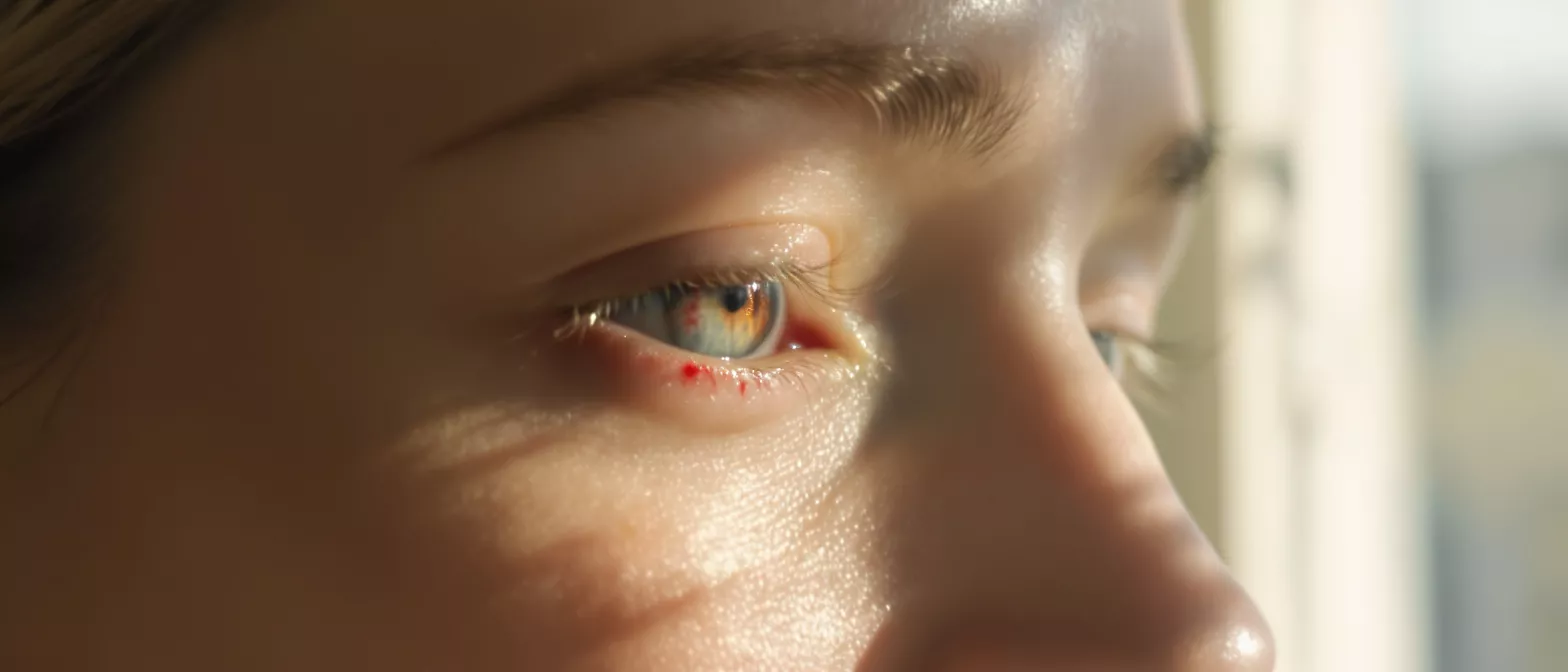
Conjunctival Haemorrhage
Learn about conjunctival haemorrhage causes, symptoms, treatment, recovery time, and when cardiac patients should seek care.
What Is a Conjunctival Haemorrhage?
A conjunctival haemorrhage occurs when tiny blood vessels break and leak blood into the clear membrane covering the white part of the eye. This condition is highly visible, often presenting as a bright red or dark patch against the normally white sclera. For patients preparing for or recovering from cardiac procedures, noticing this sudden redness can be alarming, but it is typically a benign and painless occurrence.
Anatomy of the eye surface: The conjunctiva is a thin, transparent tissue that lines the inside of the eyelids and covers the sclera. It contains numerous microscopic blood vessels that can rupture under minor pressure. When a vessel breaks, the trapped blood spreads flat beneath the transparent tissue, creating the appearance of a localized red spot.
Why it matters to cardiac patients: Heart surgery often requires the use of medications that thin the blood, alongside physiological stresses that can temporarily elevate blood pressure. These factors make cardiac patients slightly more susceptible to minor bleeding events like a conjunctival haemorrhage. Understanding that this is a common and manageable side effect helps reduce anxiety during an already stressful time.
How Does a Conjunctival Haemorrhage Affect Heart Surgery Patients?
During complex heart surgeries, the body undergoes significant physiological changes. Patients are often placed on cardiopulmonary bypass machines, which can alter blood flow dynamics and affect tiny capillaries throughout the body. When combined with the routine use of anticoagulant medications, the delicate vessels in the eyes can easily rupture, leading to a localized bleed.
It is vital for patients and their families to recognize that this eye bleeding does not mean the surgery was unsuccessful or that the heart is failing. The cardiovascular system and the ocular surface operate on entirely different scales of pressure and circulation. While the heart is the body's central pump, a burst vessel in the eye is a peripheral event.
Reassurance for families: Seeing a bright red eye on a loved one waking up in the intensive care unit can be distressing. Medical teams are fully aware of this phenomenon and monitor it alongside other vital signs. The appearance is strictly cosmetic and does not impair the patient's ability to see or recover from the cardiac operation.
What Are Common Conjunctival Haemorrhage Causes?
Understanding conjunctival haemorrhage causes requires looking at both physical trauma and internal systemic factors. In the context of cardiac care, the primary culprits are usually related to medical interventions rather than direct injury. High blood pressure spikes, transient coughing fits during intubation, or the insertion of breathing tubes can all create momentary pressure that bursts a fragile capillary.
Medication-induced bleeding: Patients recovering from heart surgery frequently take anticoagulants or antiplatelet drugs to prevent dangerous clots. While these medications are essential for protecting new heart valves or bypass grafts, they naturally increase the likelihood of minor bleeding events throughout the body, including the eyes.
- Medical interventions: Intubation or prolonged facial positioning during surgery.
- Systemic factors: Anticoagulant therapy and temporary hypertensive spikes.
- Physical strain: Heavy coughing, sneezing, or vomiting during recovery.
What Are Conjunctival Haemorrhage Symptoms?
Unlike other eye conditions that cause discomfort or vision loss, conjunctival haemorrhage symptoms are primarily visual. The most obvious sign is the sudden appearance of a red patch on the sclera, which usually develops without pain or warning. Patients often do not realize they have a bleed until they look in a mirror or are informed by a nurse.
The affected area may look startlingly bright red initially, resembling a drop of ink spreading on a wet surface. Over the course of the recovery period, the edges of the blood spot will gradually fade, taking on yellowish or greenish hues similar to a healing bruise on the skin.
What you will not feel: It is crucial to distinguish this condition from infections or acute trauma. There should be no sharp pain, no discharge, and no alteration in visual acuity. If pain or vision changes accompany the red spot, a different ocular issue must be investigated.
Conjunctival Haemorrhage vs Subconjunctival Haemorrhage: What Is the Difference?
Patients often hear the terms conjunctival haemorrhage and subconjunctival haemorrhage used interchangeably by medical staff. In clinical practice, the distinction is largely anatomical but minor. A subconjunctival bleed occurs specifically beneath the conjunctiva, meaning the blood is trapped under the clear membrane but above the sclera.
When healthcare providers refer to a conjunctival haemorrhage, they are typically describing the exact same phenomenon. The blood remains superficial and does not penetrate the deeper layers of the eye. Both terms describe the same harmless leakage from the tiny vessels supporting the eye's surface.
Diagnostic clarity: An ophthalmologist or attending physician can easily diagnose this condition with a simple visual inspection using a slit lamp. No invasive testing is required to confirm that the bleed is strictly localized to the surface layers, providing immediate peace of mind.
What Is the Typical Conjunctival Haemorrhage Recovery Time?
The body has a remarkable ability to reabsorb trapped blood, but it does so at a measured pace. The standard conjunctival haemorrhage recovery time ranges from one to two weeks. The blood must slowly break down and clear through the lymphatic system, much like a deep bruise fades on an arm or leg.
Stages of healing: During the first few days, the red patch may actually appear to spread slightly as gravity pulls the trapped blood downward across the sclera. This is not a sign of renewed bleeding, but rather the natural migration of existing blood under the thin tissue.
By the end of the second week, the spot should be entirely gone. For patients on blood thinners, the reabsorption process might take slightly longer, but the clinical outcome remains excellent. No permanent scarring or discoloration is left behind once the blood clears.
What Is the Standard Eye Haemorrhage Treatment?
Because the condition is self-limiting, eye haemorrhage treatment is highly conservative. Medical teams focus on observation and ensuring the patient remains comfortable. Artificial tears may be recommended if the eye feels slightly dry or irritated, though the bleed itself does not require medicated drops to resolve.
Managing underlying conditions: The most effective treatment for a cardiac patient experiencing this issue is to ensure their blood pressure is well-controlled and their anticoagulant levels remain in the target therapeutic range. Stabilizing these systemic factors prevents future occurrences without directly interfering with the eye's natural healing process.
It is crucial that patients never stop taking their prescribed heart medications without explicit instructions from their cardiologist. The risks of discontinuing blood thinners after surgery far outweigh the cosmetic inconvenience of a temporary red spot on the eye.
Eye Haemorrhage: When to See a Doctor?
While a simple surface bleed is harmless, patients must remain vigilant for signs of deeper ocular complications. Knowing exactly when to escalate care ensures that serious issues are caught early. A painless red spot is expected, but specific changes in sensation or vision warrant immediate evaluation by a healthcare professional.
Red flag warning signs: If the redness is accompanied by significant eye pain, a feeling of pressure behind the eye, or sudden blurred vision, it could indicate a more serious problem. Additionally, if the bleeding is extensive enough to push the conjunctiva forward into a visible bulge, medical imaging may be required.
- Visual changes: Blurry, double, or lost vision alongside the red spot.
- Physical pain: Deep aching, throbbing, or light sensitivity.
- Uncontrolled bleeding: The spot expands rapidly without stopping.
For cardiac patients, staying proactive is vital. A reliable digital blood pressure monitor for home use can help ensure systemic hypertension is not contributing to recurrent eye bleeds. Knowing eye haemorrhage when to see a doctor guidelines provides deep peace of mind.
How Can You Prevent a Burst Blood Vessel in the Eye?
Complete prevention is challenging, especially for cardiac patients who require specific medications, but certain lifestyle adjustments can minimize the risk. The goal is to reduce sudden spikes in venous pressure that stress the fragile capillaries of the eye. Gentle management of daily activities plays a significant role in ocular health.
Protective habits during recovery: Patients should avoid heavy lifting, straining during bowel movements, and forceful coughing whenever possible. Using prescribed stool softeners and practicing gentle breathing techniques can mitigate the intra-abdominal pressure that travels upward to the head and eyes.
Consistent blood pressure management is the most effective preventative measure. Taking cardiac medications exactly as prescribed, monitoring sodium intake, and resting adequately allow the cardiovascular system to heal without stressing peripheral vessels. These systemic efforts protect both the newly repaired heart and the delicate structures of the eye.
Key Takeaways on Managing a Red Spot on the Eye
Experiencing a conjunctival haemorrhage after heart surgery is understandably concerning, but it is overwhelmingly a benign condition. The visible redness is strictly cosmetic and does not threaten a patient's vision or the success of their cardiac procedure. Recognizing the difference between expected surface bleeding and serious ocular trauma is the most important skill for patients and families to develop.
Patience is the primary treatment, as the body will naturally reabsorb the trapped blood over a couple of weeks. By focusing on systemic stability, adhering to prescribed cardiac therapies, and avoiding unnecessary physical strain, patients can support both their heart and their eyes through a successful recovery.
Always communicate openly with your medical team about any new symptoms. Knowing the red spot on eye causes and understanding when to seek help empowers patients to navigate their recovery with confidence and peace of mind.






