

Sternal Wires
Learn how sternal wires stabilize the sternum after open-heart surgery, recovery timelines, complications, and removal options.
What are sternal wires in heart surgery?
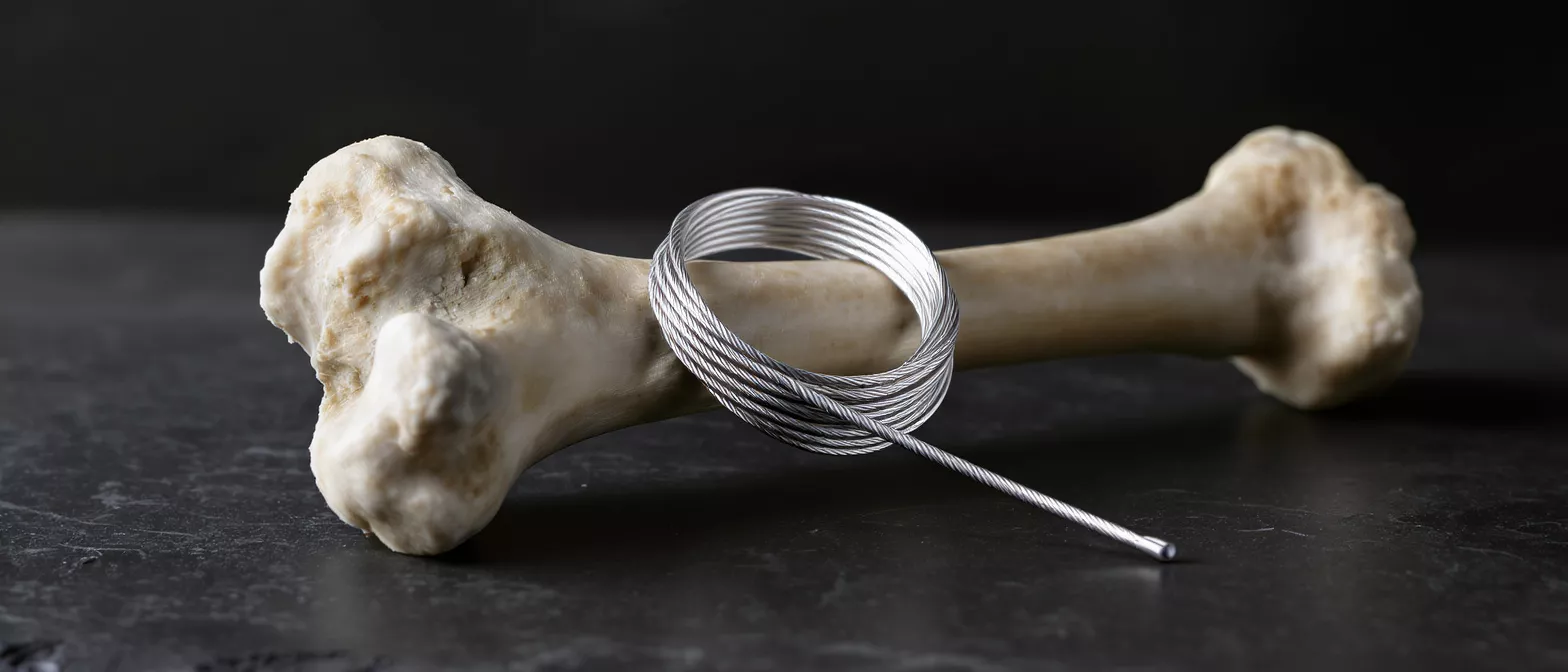
When a patient undergoes a median sternotomy for open-heart surgery, the breastbone, or sternum, must be cut lengthwise to allow the surgeon access to the heart. Once the cardiac procedure is complete, the surgeon must securely close this bone to promote proper healing. Sternal wires are specialized surgical threads, typically made of stainless steel or titanium, used to bind the two halves of the sternum back together. They act much like sutures, but because they are closing bone rather than soft tissue, they are constructed from highly durable metal.
Why stainless steel sternal wires are the standard: These wires are chosen for their exceptional tensile strength and biocompatibility. The human chest cavity undergoes constant motion with every breath, and the metal must withstand these repetitive forces without snapping. The wire is designed to remain inert inside the body, meaning it will not corrode or react with surrounding tissues under normal conditions.
For patients and families preparing for cardiac surgery, understanding these mechanical details can alleviate much of the fear associated with the procedure. Knowing that the chest is secured with robust, purpose-built materials helps build confidence in the surgical recovery process.
How do sternal wires work to stabilize the sternum?
The application of sternal closure wires is a precise process performed by the cardiac surgeon just before closing the overlying muscle and skin. The surgeon carefully drills or threads the stainless steel wire through small holes made in the bone on either side of the incision. Once threaded, the wire ends are pulled together and twisted tightly, pulling the bone halves into firm approximation.
The sternotomy wire closure technique explained: The twisting mechanism is crucial because it creates a rigid, interlocking hold that prevents the bone from shifting. Depending on the patient's bone density and the surgeon's preference, multiple wires, usually between six and eight, are placed at varying intervals along the sternum. This distributes tension evenly and provides maximum stability.
How sternal wires support respiratory mechanics: Beyond merely holding bone together, this closure method is vital for breathing. An unstable sternum will shift during coughing or deep breathing, causing sharp pain and preventing adequate lung expansion. By firmly locking the chest, the wires allow patients to perform necessary respiratory therapy without fear of bone movement.
How long do sternal wires stay in after cardiac surgery?
One of the most common questions asked by post-operative cardiac patients is how long these metal closures remain in the body. In the vast majority of cases, sternal wires are permanent. They are left in place indefinitely to provide lifelong structural support to the chest wall. The bone eventually heals around and incorporates the wires, making them a permanent part of the patient's anatomy.
Because the wires are biocompatible, they generally do not trigger immune responses or require later extraction. The body recognizes the metal as an inert object and simply grows tissue around it. While some patients may feel the wires under the skin initially, this awareness usually fades as the subcutaneous tissue heals and swelling subsides.
In certain situations, such as when a patient requires a second cardiac operation or if a wire causes localized pain, a surgeon may opt to remove them. This is always an elective, case-by-case decision rather than a standard follow-up procedure. For routine recovery, leaving the wires undisturbed is the safest approach.
What does sternal wire pain feel like during recovery?
During the initial weeks of recovery, it is entirely normal to experience discomfort around the surgical site. Sternal wire pain often presents as a sharp, pinching sensation or a localized ache near the incision line. This is particularly noticeable when twisting the torso, taking deep breaths, or performing upper body movements. The pain originates from the tension of the metal holding moving bone, as well as the surrounding soft tissue healing.
Differentiating normal pain from surgical complications: While aching is expected, patients should be aware of changes in their pain profile. If a dull ache suddenly becomes a sharp, catching pain, or if there is increasing pain months after the surgery, it could indicate that a wire has loosened or shifted. It is vital to monitor these changes and report them to the cardiologist or surgeon.
Managing this pain typically involves standard post-operative medications and careful activity modification. Patients are advised to avoid lifting anything heavy or pushing up with their arms when getting out of a chair. By protecting the chest during the critical first few months, the bone heals securely around the wires, reducing long-term discomfort.
What causes sternal wire protrusion and how is it managed?
Sternal wire protrusion occurs when the twisted end of the metal pushes against the skin from the inside out. This happens because the wire end, despite being tucked down during surgery, may gradually migrate as the swelling decreases and tissues settle. Patients might feel a sharp, pencil-tip like bump under their skin, which can become tender when pressed by clothing.
While a protruding wire can be uncomfortable, it is not typically a medical emergency unless it breaks the skin barrier. When the wire is simply palpable but the skin remains intact, surgeons often take a conservative approach, allowing time to see if the tissue adapts.
If the sharp tip eventually pierces the skin, there is a risk of localized infection. In these instances, a surgeon will usually remove the offending wire to allow the area to heal properly. This is a relatively straightforward, minor procedure that provides immediate relief from the physical irritation.
Are sternal wires safe and what are the common complications?
The use of metal closures in cardiac procedures has a long, well-documented history of safety and efficacy. The vast majority of patients heal without any issues related to their surgical hardware. However, like any medical intervention, there are potential complications that patients should understand to better navigate their recovery journey.
- Loosening: The wire may untwist or pull through thin bone, causing clicking sensations and localized pain.
- Infection: Bacteria can track along the wire from the skin surface, requiring antibiotics or removal.
- Allergic reactions: Rare sensitivities to nickel in stainless steel can cause chronic inflammation.
- Nerve irritation: The wires can press against nerves in the chest wall, causing numbness or sharp twinges.
Recognizing these possibilities early allows patients to seek timely medical evaluation. While complications are uncommon, proactive monitoring ensures that any minor issue is addressed before it can escalate into a more serious threat to the healing process.
Understanding sternal wire infection and dehiscence risks
A sternal wire infection is a serious complication that requires immediate medical attention. Because the wires reside deep within the chest, an infection tracking down the metal can reach the bone, leading to osteomyelitis. Symptoms of an infection include increased redness around the incision, purulent drainage, fever, and worsening chest pain.
The relationship between wires and sternal dehiscence: Sternal wire dehiscence refers to the partial or complete separation of the sternum due to wire failure. If the wires break or pull out entirely, the bone halves will separate, causing severe pain and a clicking, unstable chest wall. This is a catastrophic failure that necessitates emergency surgical revision to restabilize the chest and prevent damage to the underlying heart.
To mitigate these risks, strict adherence to post-operative wound care is essential. Keeping the incision clean and dry, avoiding heavy lifting, and monitoring for early signs of infection are the best defenses. Patients with diabetes or compromised immune systems must be particularly vigilant, as they face a higher baseline risk of wound complications.
Can sternal wire removal alleviate chest discomfort?
Removing sternal wires after bypass surgery is only performed when the metal is definitively identified as the source of chronic pain, irritation, or infection. The procedure involves making small incisions over the twisted wire ends, carefully unwinding them, and extracting the metal from the healed bone. This surgery is usually delayed until the sternum is fully fused, often a year or more after the original operation.
Who is a candidate for removal? Ideal candidates are those with localized, reproducible pain directly over the wire sites, or those who have experienced a wire protruding through the skin. Patients experiencing vague, diffuse chest pain are rarely good candidates, as the discomfort is usually neurological or muscular rather than hardware-related. Imaging like CT scans or X-rays help guide this decision.
When successful, wire extraction provides significant relief. Because the bone is already solidly healed, removing the supportive hardware does not destabilize the chest. Many patients report an immediate resolution of their catching, sharp pain upon waking from the extraction procedure. Using post-surgical recovery vests can offer additional peace of mind during the immediate healing phase after extraction.
Recognizing sternal wire allergy and breaking symptoms
Though exceptionally rare due to the high quality of surgical steel used, sternal wire allergy can occur in patients with severe metal sensitivities, particularly to nickel. An allergic reaction does not present like a typical infection; instead, it manifests as chronic, unrelenting inflammation, localized eczema, or granuloma formation directly over the wire sites. If a patient has a known history of metal allergies, alternative materials like pure titanium can be used proactively.
What happens when a sternal wire is breaking: Sternal wire breaking is a mechanical failure often caused by repetitive stress, severe coughing fits, or trauma. When a wire snaps, patients usually feel a sudden, sharp pop or tearing sensation within the chest. While a single broken wire does not immediately cause the chest to collapse, it creates a focal point of instability that can be quite painful.
If a patient suspects a wire has broken, they should seek urgent medical imaging. A broken wire may need to be retrieved if it migrates, though often it can be left in place if it is securely embedded and asymptomatic. Surgeons must evaluate the integrity of the entire closure to ensure no further hardware is at risk of failing.
Healing and living with sternal wires after bypass surgery
Living with sternal wires after bypass surgery is a lifelong reality for most cardiac patients, but it rarely interferes with daily life. The metal is securely encased within the breastbone, and over time, patients simply forget the hardware is there. The chest regains its natural strength, and normal activities, including exercise and gentle sports, are gradually resumed following the surgeon's clearance.
A common concern is how the wires interact with modern medical technology. Rest assured, stainless steel closures are generally safe for MRIs, though they may cause minor image artifacts. Furthermore, they do not set off standard airport metal detectors in the vast majority of cases. Patients can travel freely, though carrying a medical card detailing the surgery can be reassuring.
In conclusion, sternal wires are a fundamental, highly effective tool in cardiac surgery, bridging the critical gap between procedure and recovery. By firmly securing the sternum, they allow the bone to heal, protect the heart, and enable patients to breathe and move safely. While complications like pain or infection are possible, they are rare and highly treatable. Understanding these closures empowers patients to focus on their cardiac rehabilitation with confidence and peace of mind.






