

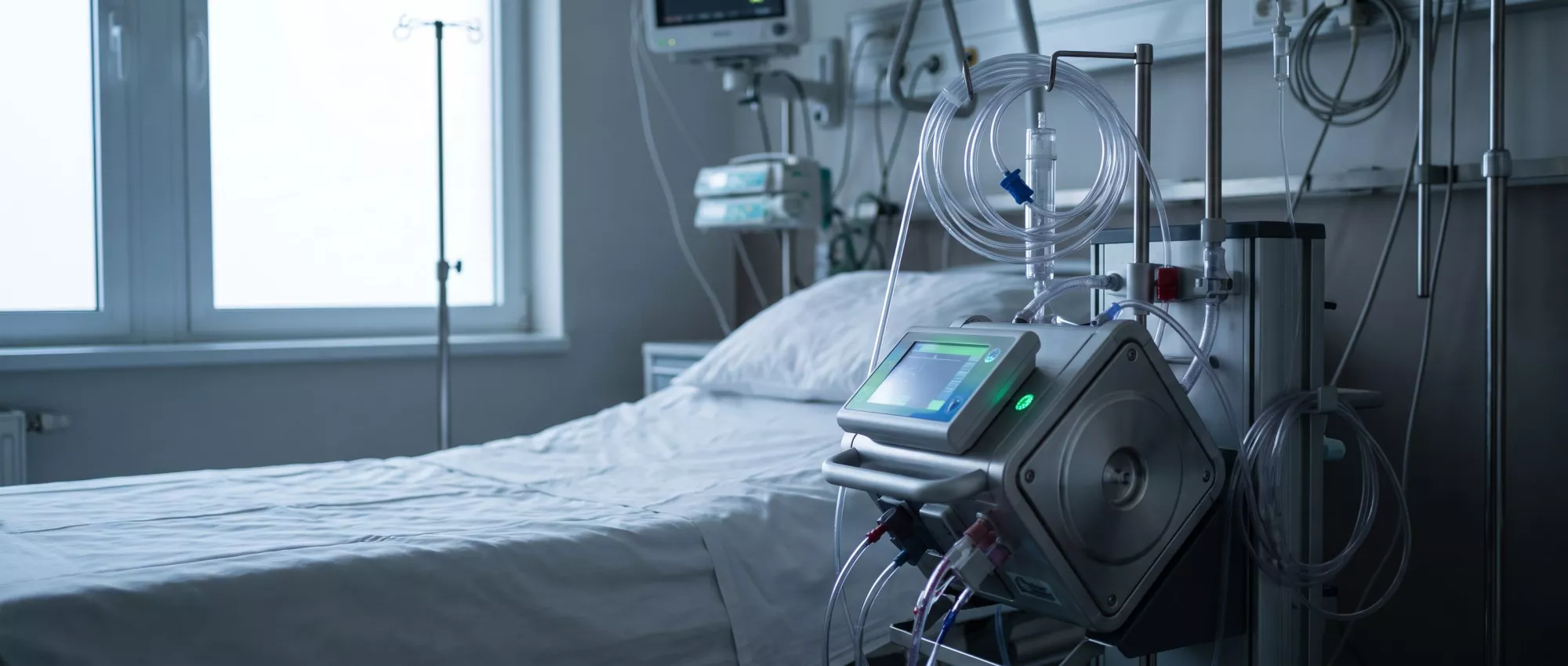
Veno-arterial ECMO
Veno-arterial ECMO supports patients with cardiac failure.
What is veno-arterial ECMO?
Veno-arterial ECMO is a advanced form of life support used when both the heart and lungs are failing. The term stands for veno-arterial extracorporeal membrane oxygenation. It is a temporary treatment that takes over the workload of the heart and lungs, allowing them to rest and heal. For families hearing this term for the first time in an intensive care setting, it can sound overwhelming, but understanding the basics can bring clarity to a frightening situation.
What extracorporeal membrane oxygenation means: "Extracorporeal" simply means outside the body. "Membrane oxygenation" refers to the artificial lung that adds oxygen to the blood and removes carbon dioxide. Together, the system acts as a mechanical cardiopulmonary bypass that can sustain life for days or weeks.
Why it matters for cardiac patients: When a heart is too weak to pump effectively after surgery or during a massive heart attack, medications alone may not be enough. Veno-arterial ECMO provides immediate circulatory support, maintaining blood flow to vital organs like the brain and kidneys while the underlying cardiac issue is evaluated and treated.
How does VA-ECMO support the heart and lungs?
The mechanics of VA-ECMO involve a specialized pump and oxygenator that work together to replace the natural cardiopulmonary cycle. Dark, oxygen-depleted blood is drained from the patient's venous system, passed through a machine that cleanses and oxygenates it, and then returned as bright red, oxygen-rich blood directly into the arterial system. This process bypasses the heart and lungs entirely, providing immediate relief to failing organs.
How the heart lung machine works: The core circuit consists of durable plastic tubes called cannulas, a centrifugal pump that gently moves the blood, and a membrane oxygenator that functions as an artificial lung. As blood passes through this oxygenator, oxygen is forced across a fine membrane and into the red blood cells, while carbon dioxide is simultaneously filtered out and removed.
Resting the failing heart: By assuming the pumping duties of the heart, the machine drastically reduces the physical stress on the cardiac muscle. This resting period is critical. It allows the myocardium to recover from trauma, severe infection, or surgical shock, offering a vital bridge to either recovery, a ventricular assist device, or transplantation.
Why would a cardiac surgery patient need ECMO?
Cardiac surgery is highly complex, and occasionally the heart needs more time to recover than standard post-operative care can provide. If the heart struggles to generate enough pressure to circulate blood immediately after an operation, veno-arterial ECMO can be initiated. It acts as a temporary bridge, maintaining vital organ perfusion until the myocardium regains its intrinsic strength and pumping function.
In emergencies like a sudden postoperative cardiac arrest, the rapid deployment of ECMO can prevent irreversible organ damage. This immediate intervention ensures that critical blood flow is never completely lost. To support this high-level critical care environment, specialized intensive care units must be equipped with a durable cardiac surgery recovery equipment setup to maintain continuous circulatory assistance.
Experiencing a complication that requires extracorporeal life support is frightening for both the patient and their loved ones. However, it is helpful to remember that this technology is utilized precisely because the medical team is committed to giving the heart every possible chance to heal and recover its normal function in a controlled, safe environment.
VA-ECMO vs VV-ECMO: what is the difference?
Extracorporeal membrane oxygenation comes in two primary configurations, and understanding the distinction helps clarify the treatment plan. The choice between them depends entirely on whether the patient's heart, their lungs, or both are failing. This medical distinction guides the cannulation strategy and determines how the artificial circuit is wired into the body.
Understanding veno-arterial vs veno-venous support: VA-ECMO drains blood from the veins and returns it to the arteries, effectively bypassing both the heart and the lungs. VV-ECMO, or veno-venous ECMO, drains and returns blood to the venous system, providing lung support only while relying entirely on the patient's own heart to pump that newly oxygenated blood throughout the body.
- VA-ECMO: Used for severe cardiac failure, cardiac arrest, or combined heart and lung failure.
- VV-ECMO: Used strictly for severe respiratory failure when the heart is still pumping effectively.
Because VA-ECMO provides comprehensive circulatory support, it is the configuration most commonly discussed in the context of cardiac surgery and acute heart failure management. The medical team will select the appropriate configuration based on precise echocardiogram and hemodynamic assessments.
What are the indications for veno-arterial ECMO?
Doctors recommend veno-arterial ECMO when a patient is facing a life-threatening crisis that conventional medical therapies cannot overcome. The decision to initiate this support is made rapidly by a specialized team to prevent irreversible damage to the brain and other vital organs. It is utilized as a rescue therapy when all other standard interventions have been exhausted.
For patients in profound cardiogenic shock, the heart cannot pump enough blood to meet the body's metabolic demands. VA-ECMO indications include severe heart failure, massive pulmonary embolism, or failure to wean from the standard bypass machine after a complex cardiac operation. Utilizing a VA-ECMO emergency heart support system allows the critical care team to stabilize the patient.
It is important for families to understand that ECMO is not a cure for the underlying disease. Rather, it is a temporary life-support measure that buys precious time. It keeps the patient alive while the underlying cause of the cardiac failure—whether a blocked artery, an infection, or post-surgical inflammation—is aggressively diagnosed and treated.
How is the ECMO cannulation procedure performed?
The process of connecting a patient to the ECMO circuit is called cannulation. This involves placing large-bore tubes, or cannulas, into the patient's blood vessels. The procedure is typically performed by a cardiothoracic surgeon or a specialized intensive care physician in a sterile environment, often right at the bedside in the ICU or in the operating room.
Where the tubes are placed: For veno-arterial ECMO, one cannula is usually inserted into a large vein, such as the femoral vein in the groin, to drain deoxygenated blood. A second cannula is placed into a large artery, like the femoral artery, to return the oxygenated blood back to the body. This creates a continuous, external loop of blood flow.
The placement requires precision and careful imaging guidance to ensure the tubes are securely positioned in the correct anatomical locations. Once the cannulas are secured, they are connected to the ECMO circuit, and the pump is gradually turned on to begin supporting the patient's circulation immediately.
What to expect during extracorporeal life support
Seeing a loved one on VA-ECMO for the first time can be an unsettling experience due to the sheer volume of equipment and the complexity of the intensive care environment. The patient will be heavily sedated to ensure they do not accidentally disrupt the tubes. The ECMO machine stands prominently at the bedside, continuously humming as its centrifugal pump circulates the blood.
A dedicated team of specialized nurses, perfusionists, and physicians monitor the patient around the clock. They watch the machine's flow rates, check blood pressure, and ensure the oxygenator is functioning perfectly. The patient will also receive blood thinners to prevent clots from forming inside the artificial tubing, which requires frequent blood tests for close monitoring.
- Continuous monitoring: Vital signs and pump flow are checked hourly by specialized staff.
- Blood thinners: Anticoagulants are administered to prevent clots in the external circuit.
- Sedation: The patient remains asleep to protect the delicate cannula sites.
Even though the patient is sedated, family members are often encouraged to speak to their loved one. The medical team will explain the daily goals and keep the family informed about the heart's progress, providing updates on how much support the machine is providing versus what the heart is doing on its own.
What are the risks and complications of VA-ECMO?
While veno-arterial ECMO is a life-saving therapy, it is highly invasive and carries significant risks. The care team weighs these risks heavily against the fact that the patient would not survive without the machine. Understanding these potential complications helps families grasp the severity of the situation and the intense monitoring required to keep the patient safe.
Bleeding and blood clots: Because blood is flowing through artificial surfaces, the body naturally wants to clot. To prevent this, strong blood thinners are administered. However, this significantly increases the risk of bleeding, which can occur at the surgical site, in the brain, or in the gastrointestinal tract. Managing the delicate balance between clotting and bleeding is a daily challenge for the ECMO team.
Infection and vascular concerns: The large cannulas in the blood vessels create a direct pathway for bacteria, making infections a constant threat. Additionally, the cannulas can sometimes restrict blood flow to the leg where they are placed, requiring an additional small tube to ensure the limb receives adequate circulation.
How long can a patient stay on ECMO cardiac support?
The duration of ECMO cardiac support varies greatly depending on the patient's underlying condition and how quickly their heart heals. There is no fixed time limit, but the goal is always to use the machine for the shortest time necessary. Most patients remain on support for a few days to two weeks, though some complex cases may require longer periods of extracorporeal life support.
The medical team performs daily assessments to evaluate the heart's native function. As the heart begins to recover, the team will gradually reduce the flow of the ECMO machine, allowing the heart to take over more of the workload. This slow weaning process is carefully monitored with echocardiograms to ensure the heart can sustain the body independently. Some critical care protocols utilize a VA-ECMO hemodynamic monitoring device to track this gradual return of cardiac function.
If the heart does not recover as hoped, the medical team will hold candid discussions with the family about the next steps. This may involve transitioning the patient to a long-term ventricular assist device or evaluating them for a heart transplant, as ECMO is not designed to be a permanent solution.
Veno-arterial ECMO outcomes and recovery
The primary goal of veno-arterial ECMO is to provide a bridge to recovery, decision, or further definitive therapy. For many patients experiencing acute, reversible conditions like post-cardiotomy shock, the heart heals sufficiently to allow the removal of the machine. Outcomes depend heavily on the patient's age, the severity of the underlying illness, and how quickly the treatment was initiated.
What happens after ECMO is removed: Once the heart is strong enough, the cannulas are surgically removed. The patient is then carefully transitioned to standard intensive care therapies. Recovery is often a long journey that involves physical therapy to rebuild muscle strength lost during bed rest, as well as ongoing cardiac rehabilitation to restore overall cardiovascular health.
In summary, veno-arterial ECMO is one of the most advanced tools in modern cardiac critical care. It offers a vital lifeline when the heart is failing, providing the critical time needed for the body to heal. While the journey is complex, this technology represents the pinnacle of surgical expertise and dedication to patient survival.






