Robotic, Minimally Invasive or Open-Chest Heart Surgery: How to Choose
Robotic, minimally invasive or open-chest heart surgery?
There are three ways to reach the heart during surgery. In experienced hands, all three can give excellent results. The real question is not which is “best”, but which one is best for your heart.
Patients often arrive having read that robotic surgery is the most advanced option, or that open-chest surgery is old-fashioned. Neither is quite right. Each approach has real strengths and real limits, and an honest recommendation depends on your anatomy, your heart problem and your general health.
The three approaches
Conventional (open-chest) surgery
The surgeon opens the sternum — the bone in the centre of the chest — to reach the heart directly. It gives the widest access, allows almost any operation and several procedures at once, and remains the standard against which every other approach is measured. The cost is the recovery: the sternum takes six to twelve weeks to heal, and during that time you cannot drive or lift anything heavy.
Minimally invasive surgery
The heart is reached through a small incision between the ribs, usually on the right side of the chest, or through a partial opening of the sternum. The surgeon works with long instruments, with direct vision or a camera. The sternum is left intact or only partly opened, and recovery is usually faster.
Robotic surgery
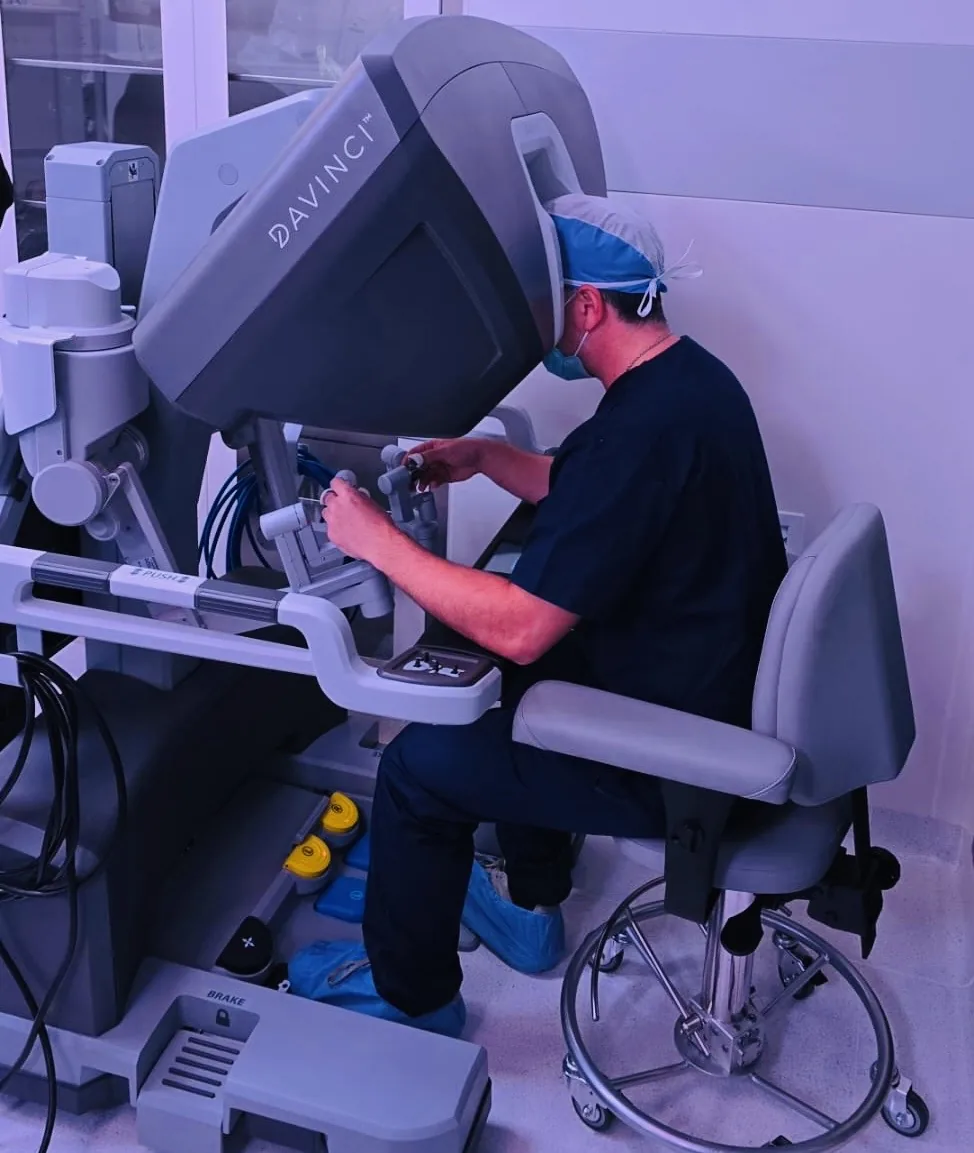
The operation is done through several small incisions between the ribs, using the Da Vinci surgical system. The surgeon controls the robotic arms from a console, with a magnified three-dimensional view of the inside of the chest. The robot does not move on its own: every movement is the surgeon’s, made more precise in a very confined space.
Side by side
| Open-chest | Minimally invasive | Robotic | |
|---|---|---|---|
| Sternum | Fully opened | Intact, or partly opened | Intact |
| Incisions | One, down the centre of the chest | One small incision | Several very small incisions |
| Suits | Almost every operation, including several combined | Most single-valve operations and some others | Selected mitral, tricuspid, coronary and tumour operations |
| Operating time | Shortest | Longer | Longer |
| Early recovery | Slowest | Faster | Faster |
What the evidence says
Minimally invasive versus open-chest. The best evidence comes from the UK Mini Mitral trial, published in 2023, in which 329 patients needing mitral valve repair were randomly assigned to one approach or the other by experienced surgeons. Twelve weeks after surgery, physical recovery was similar in both groups. But patients who had the minimally invasive operation left hospital sooner — a median of five days instead of six — and about twice as many went home within four days. Safety was similar, and results at one year were the same.
Robotic versus open-chest. A 2022 analysis of 14 studies including more than 6,300 patients found that robotic mitral surgery was associated with shorter stays in intensive care and in hospital, with no difference in the rate of stroke. The operation itself took longer. One study from the Mayo Clinic found that patients returned to work after about 33 days following robotic repair, compared with 54 days after open surgery.
Robotic versus other minimally invasive surgery. The early results of the two are comparable. There are no large studies comparing their long-term results directly.
The pattern is consistent: the less invasive approaches mainly change the early recovery — less time in hospital, a faster return to normal life. What decides the long-term result is the quality of the operation on the heart itself, whatever the incision.
The honest trade-offs
- Longer operations. Robotic and minimally invasive surgery take longer, including the time the heart is stopped. In experienced hands this does not change safety, but it is one reason they are not offered to every patient.
- Not every heart, not every body. These approaches usually connect the heart-lung machine through the blood vessels of the groin and need one lung to be deflated during part of the operation. Disease of those vessels or of the aorta, some lung conditions, previous right-chest surgery or the need for several procedures at once can make them unsuitable.
- Experience matters. The results in published studies come from surgeons and teams who do these operations regularly. It is a fair question to ask any surgeon how often they perform the approach they are recommending.
How we decide
The decision starts with your heart, not with the technique. We review your echocardiogram, your coronary studies and, when a less invasive approach is being considered, a CT scan of the aorta and the blood vessels. In a Heart Team, cardiologists and cardiac surgeons look at your case together.
I trained in all three approaches — open, minimally invasive and robotic — as well as transcatheter procedures, precisely so that the recommendation is made for the patient, not for the technique. Sometimes the right answer is robotic surgery. Sometimes it is an open-chest operation. I will always explain why.
You can read more about robotic heart surgery, minimally invasive cardiac surgery and open-heart surgery, or about the first robotic heart surgery in Guadalajara.
The next step
If you have been told you need heart surgery, bring your studies to a consultation — in person in Guadalajara, Querétaro or Hermosillo, or by video from anywhere. We will look at them together and I will tell you honestly which approaches make sense for you.
About the author
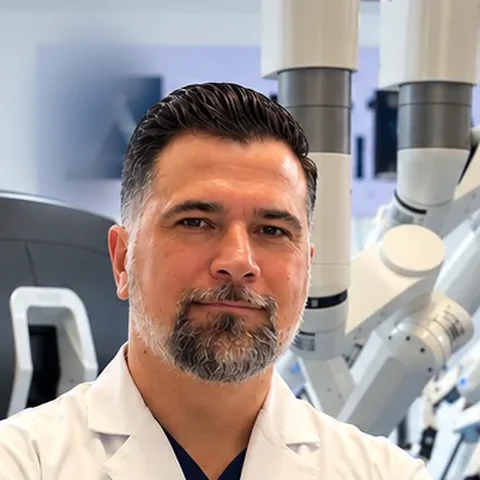
Dr. Alejandro Molina Romo is a cardiovascular surgeon practising in Guadalajara, Querétaro and Hermosillo. He trained in cardiothoracic surgery at the Universidad de Guadalajara, completed advanced training in cardiac surgery, minimally invasive surgery, robotic surgery and structural interventions at the University of Montreal, and a fellowship in structural cardiology and TAVI at CHU Bordeaux, France. He performed the first robotic mitral valve repair in the Ángeles Health System and the first robotic heart surgery in Guadalajara.
Medical degree: Universidad Autónoma de Guadalajara, Cédula Profesional 5757260 · Cardiothoracic surgery: Universidad de Guadalajara, Cédula de Especialidad 10768871 · Current certification, Consejo Nacional de Cirugía del Tórax, no. 447
This content is educational and does not constitute personal medical advice. Every cardiac case is unique and requires individual assessment by a specialist medical team. The results described come from published studies and do not guarantee outcomes in any individual case. Always consult the doctor treating you before making decisions about your treatment.
Book a video consultation
Come with your questions. We review your studies together and give you an honest recommendation for your case.