

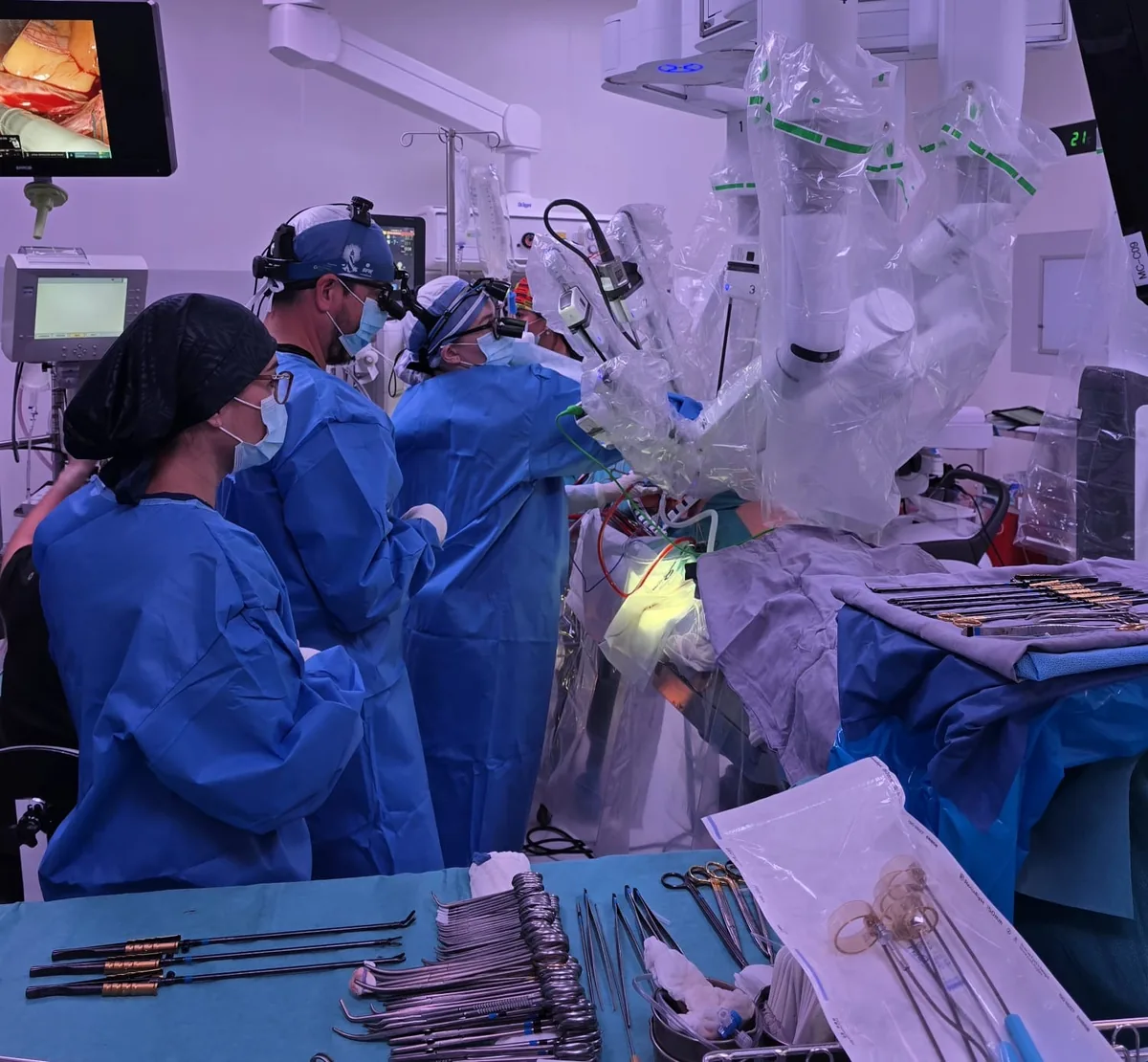
For the First Time in Guadalajara, a Robot Operated on a Heart — Without Opening the Chest
Robotic heart surgery Guadalajara is now available for the first time.
Guadalajara has performed its first robotic heart surgery. It took place at Hospital Ángeles Andares, led by Dr. Alejandro Molina in collaboration with ICMI — and it means that a patient in Jalisco no longer has to leave the region to have this kind of operation.
For most of the history of cardiac surgery, operating on the heart meant one thing: opening the sternum, the bone in the centre of the chest. It is an operation that works extraordinarily well, and it remains the right choice for many patients. But it is also one of the hardest things we ask a body to recover from.
Robotic surgery offers a different route for selected patients. The operation is done through small incisions between the ribs. The sternum is not cut. And until now, nobody had done it on a heart in Guadalajara.
What happened
On Monday, 21 September 2026, at Hospital Ángeles Andares in Zapopan, we replaced a patient’s mitral valve using the Da Vinci surgical system. It is the first robotic heart operation in the history of Guadalajara.
Her week
- Monday: robotic mitral valve replacement
- Breathing tube removed in the operating room
- Tuesday morning: walking and eating
- Less than 36 hours in intensive care
- Friday morning: home
The patient is a 67-year-old woman with rheumatic mitral valve disease — damage to the valve left by rheumatic fever, often decades earlier. She had been told she would need conventional open-heart surgery. After our team reviewed her case, she was offered the robotic approach, and she chose it.
Rheumatic disease often leaves the valve too thickened and scarred to be repaired, and that was the case here. We replaced it with a biological (tissue) valve — through small incisions between the ribs, without opening the sternum.
She was operated on on the Monday. Her breathing tube was removed in the operating room, before she left it. She spent less than 36 hours in intensive care, had no major cardiac or neurological complications, and went home on the Friday morning.
The morning after surgery she was already walking and eating. She told us she felt great — and that she could hardly believe she had just had heart surgery with a robot.
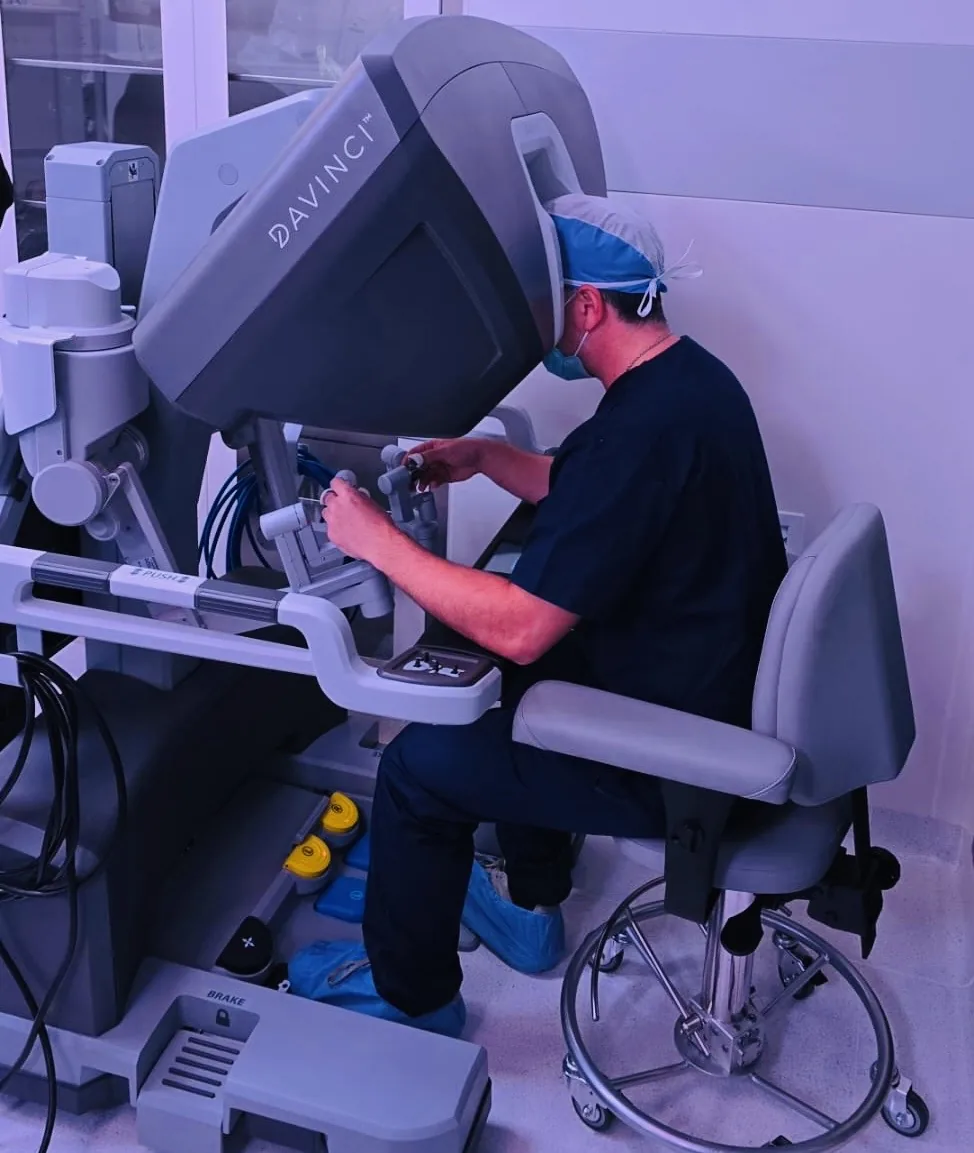
That is her story, and every patient's recovery is different. But it shows what this approach can offer the right patient: an operation on the heart without opening the chest, and a return home within the same week.
I sat at the console. Heart surgery with the Da Vinci system is still extremely rare in Mexico — very few surgeons in the country are trained and certified to perform it. In experienced hands, and for the right patient, it can change what recovery from heart surgery looks like. Guadalajara’s first was not my first: in January 2026, at Hospital Ángeles Centro Sur in Querétaro, I performed the first robotic mitral valve repair in the whole Ángeles Health System. But no heart operation is one person's work, and a robotic one even less so. The anaesthesiologist, the perfusionist, the surgeon at the patient's side and the nursing team trained for robotic surgery are just as essential as the surgeon at the controls. This case was performed by Dr. Alejandro Molina in collaboration with ICMI, whose team made it possible.
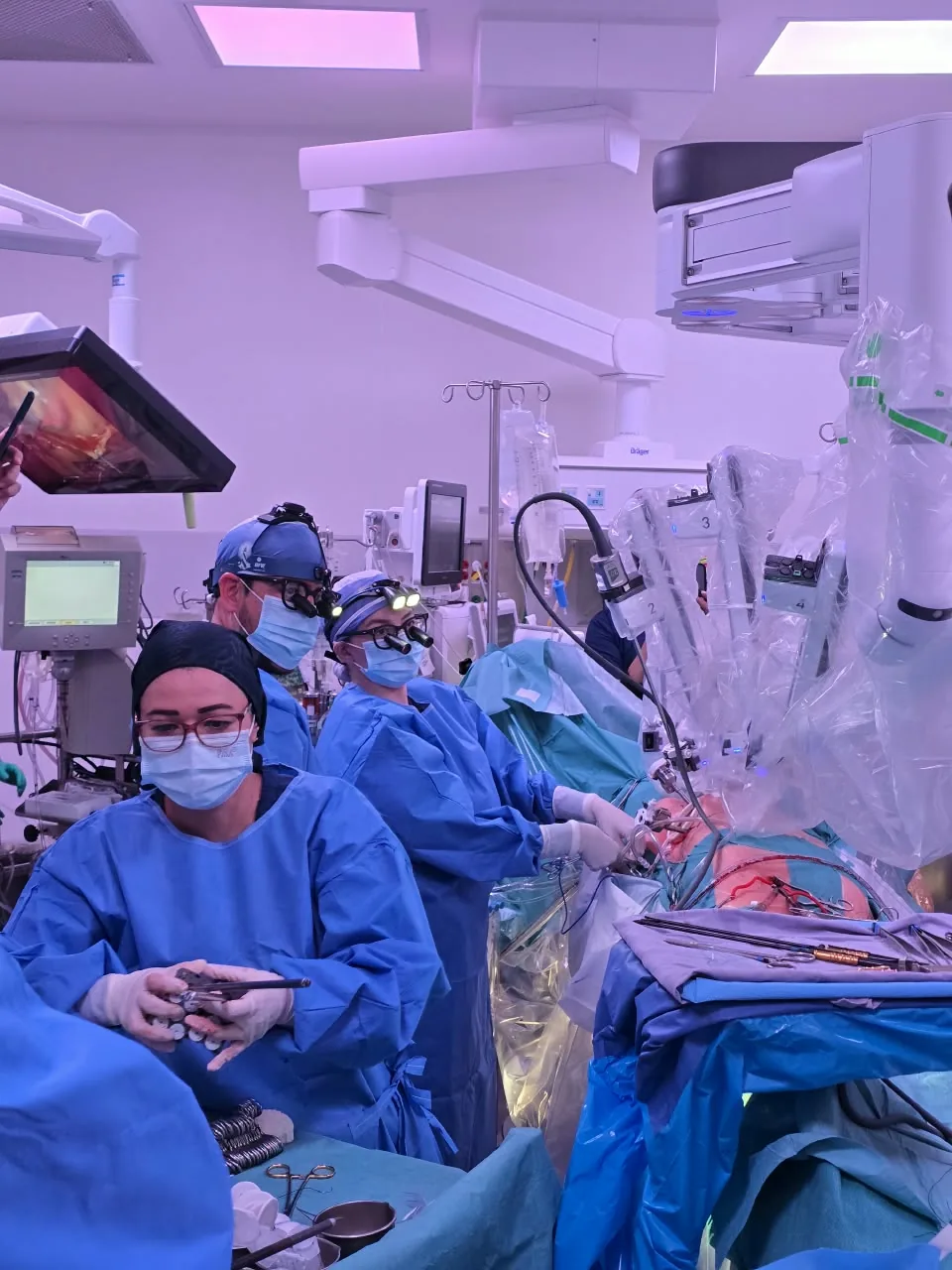
Why it matters for patients in western Mexico
Until this operation, a patient in Jalisco or the surrounding states who was a candidate for robotic heart surgery had to leave the region for it — often to another state, or abroad. That means time away from family, extra expense, and recovering far from home and from the doctors who know you.
Having the option here does not mean every patient should have robotic surgery. It means that when it is the right choice, distance is no longer the reason not to have it.
How robotic heart surgery works
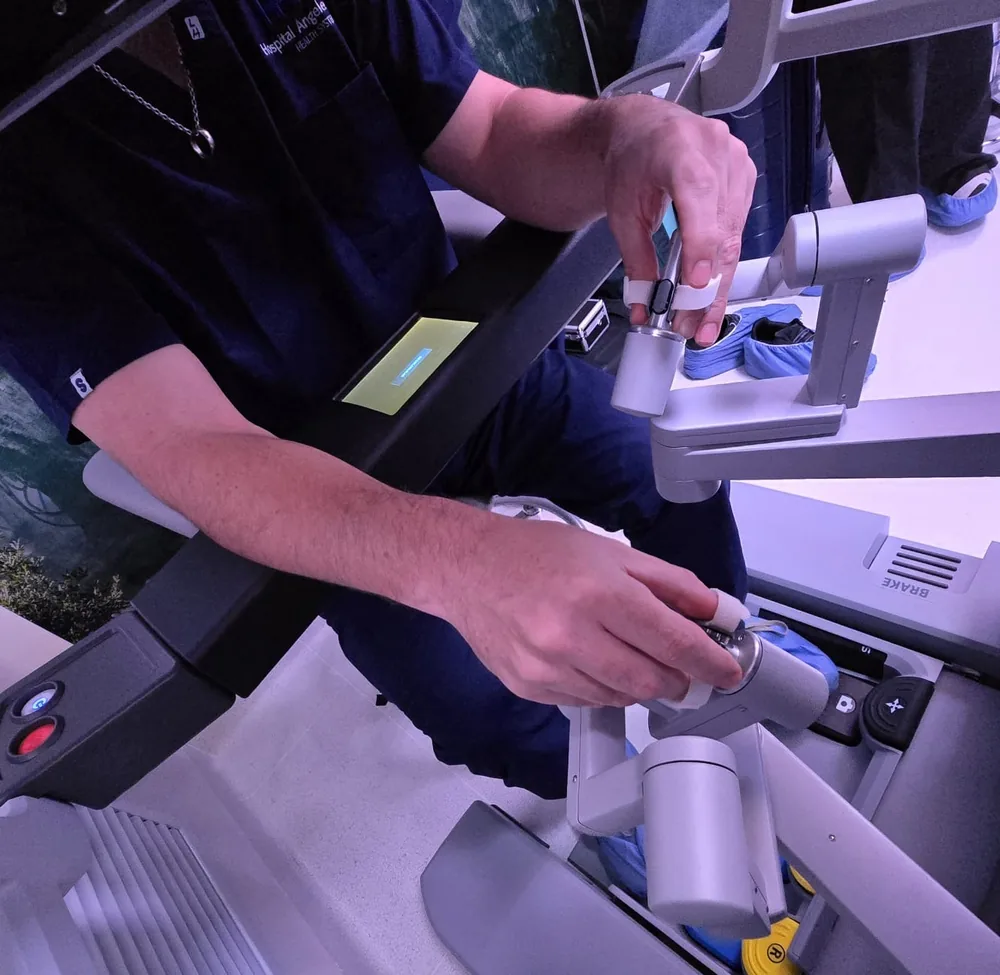
The surgeon operates from a console a few metres from the patient, looking at a magnified, three-dimensional view of the inside of the chest. The robot's arms reproduce the surgeon's hand movements through small incisions, filtering out tremor and reaching angles that are very hard to reach by hand in such a confined space.
One point I always make clear: the robot does not operate on its own. Every movement is controlled by the surgeon. It is an extremely precise tool, but it is guided at every moment by clinical judgement.
If you want to understand the technique in more depth — which operations can be done this way and what recovery looks like — read our guide to robotic heart surgery and which heart operations can be done with a robot.
What the international evidence shows
Robotic heart surgery is not experimental: it has been performed at leading centres around the world for more than 25 years. The results that matter come from those centres, and they are encouraging. In one of the largest single-centre experiences, a US team reported 944 robotic mitral operations between 2000 and 2014:
- In-hospital mortality of 0.15% for isolated robotic mitral repair.
- 97% of patients left the operating room with no or only trivial residual leakage of the valve.
- Three out of four patients with an isolated repair went home within five days.
A US analysis of more than 50,000 mitral repairs found that robotic repair had similar overall cost and complication rates to conventional surgery, with shorter hospital stays.
These are results from highly experienced international teams, not a promise for any individual case. Every patient is different, and the decision is always made on the basis of your anatomy, your health and your studies.
The right operation, decided by a team
The most important decision is not how to operate, but which treatment is right for you — conventional surgery, minimally invasive surgery, robotic surgery or a transcatheter procedure. That decision belongs to a Heart Team, where cardiologists and cardiac surgeons review your case together.
I trained in conventional, minimally invasive, robotic and transcatheter techniques in Mexico, France and Canada precisely so that I would not have to fit every patient into the one technique I happen to prefer. Robotic surgery is a powerful option. It is not the answer for everyone, and I will tell you honestly whether it is the answer for you.
Could you be a candidate?
Whether robotic surgery is possible depends on several things: the type of heart problem, the anatomy of your heart and chest, your lungs, your blood vessels, and any previous chest surgery. The only way to know is to review your studies.
If you already have an echocardiogram, a CT scan or a catheterisation, bring them. They are the starting point of our conversation.
The next step
You do not need to arrive with all the answers. A consultation — in person in Guadalajara, Querétaro or Hermosillo, or by video from anywhere — is enough to review your case, explain clearly what is happening in your heart, and tell you which options make sense for you.
For cardiologists: if you have a patient who might be a candidate for robotic or minimally invasive heart surgery, I am happy to review the case with you — send me the studies and we can discuss it together.
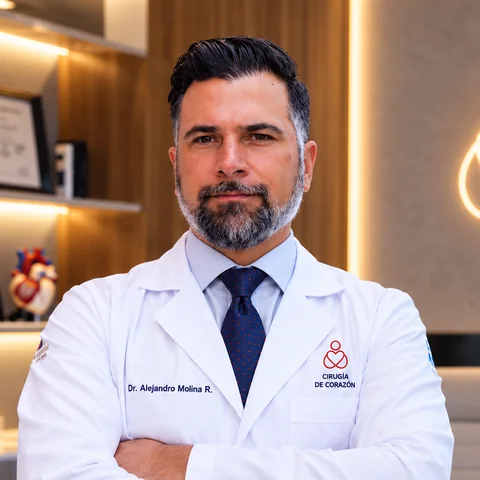
About the author
Dr. Alejandro Molina Romo is a cardiovascular surgeon practising in Guadalajara, Querétaro and Hermosillo. He trained in cardiothoracic surgery at the Universidad de Guadalajara, completed advanced training in cardiac surgery, minimally invasive surgery, robotic surgery and structural interventions at the University of Montreal, and a fellowship in structural cardiology and TAVI at CHU Bordeaux, France. He performed the first robotic mitral valve repair in the Ángeles Health System and the first robotic heart surgery in Guadalajara.
Medical degree: Universidad Autónoma de Guadalajara, Cédula Profesional 5757260 · Cardiothoracic surgery: Universidad de Guadalajara, Cédula de Especialidad 10768871 · Current certification, Consejo Nacional de Cirugía del Tórax, no. 447
This content is educational and does not constitute personal medical advice. Every cardiac case is unique and requires individual assessment by a specialist medical team. The international results described come from published series and do not guarantee outcomes in any individual case. Always consult the doctor treating you before making decisions about your treatment.
Book a video consultation
Come with your questions. We review your studies together and give you an honest recommendation for your case.





