


Heparinisation During Heart Surgery and Bypass
Heparinisation heart surgery protocols explained—learn how anticoagulation protects you during bypass, what the ACT test measures.
What Does Heparinisation Mean in Heart Surgery?
Heparinisation in heart surgery is the process of giving a patient a carefully measured dose of heparin, a fast-acting blood thinner, before blood is allowed to circulate through the heart-lung machine. Without it, blood touching the plastic surfaces of the bypass circuit would begin to clot within seconds. Heparinisation is therefore one of the first and most important steps of any operation that uses a cardiopulmonary bypass, the machine that temporarily takes over the work of the heart and lungs.
What does heparinization mean in plain words? It simply means the blood has been made temporarily less able to clot. Heparin works by supercharging a natural protein in your blood called antithrombin, which then inactivates several clotting factors — most importantly thrombin and factor Xa, the two key engines of clot formation. The effect begins within minutes of injection and is fully reversible, which is what makes heparin so well suited to surgery.
Why is it standard practice? Heparin has been the anticoagulant of choice for open-heart operations since the earliest days of cardiac surgery because it acts quickly, can be monitored at the bedside, and can be neutralised with an antidote before the surgeon closes the chest. The Centers for Disease Control and Prevention recognises thromboembolism — dangerous clots that travel in the bloodstream — as a preventable complication when proper anticoagulation is used. In the operating room, that prevention begins with heparin.
Why Is Heparin Needed During Cardiopulmonary Bypass?
During an on-pump bypass, your blood is drained through tubes into a machine, oxygenated, and pumped back into your aorta. This journey exposes blood to artificial surfaces — tubing, filters, reservoirs, the oxygenator — that the body reads as injury. The clotting system responds instantly, and without heparin anticoagulation in cardiac surgery, the entire circuit could clot solid within minutes, a life-threatening emergency.
The clotting problem is only half the story. Interestingly, the bypass machine also destroys platelets and clotting factors through mechanical stress, so patients are at risk of bleeding and clotting at the same time. Heparin prevents the catastrophic clotting in the circuit, while careful dosing and monitoring keep bleeding to a minimum. Managing this balance is one of the core skills of the perfusion team — the specialists who run the heart-lung machine.
What does heparin actually protect? It protects the circuit, the oxygenator, and ultimately the patient from micro-clots that could travel to the brain, kidneys, or limbs. Blood clot prevention during heart surgery depends on this step being done correctly, with the right dose at the right moment. A clear anticoagulation plan made calmly before the patient reaches the operating room beats a rushed decision on the day.
How Does the ACT Test Guide Heparin During Heart Surgery?
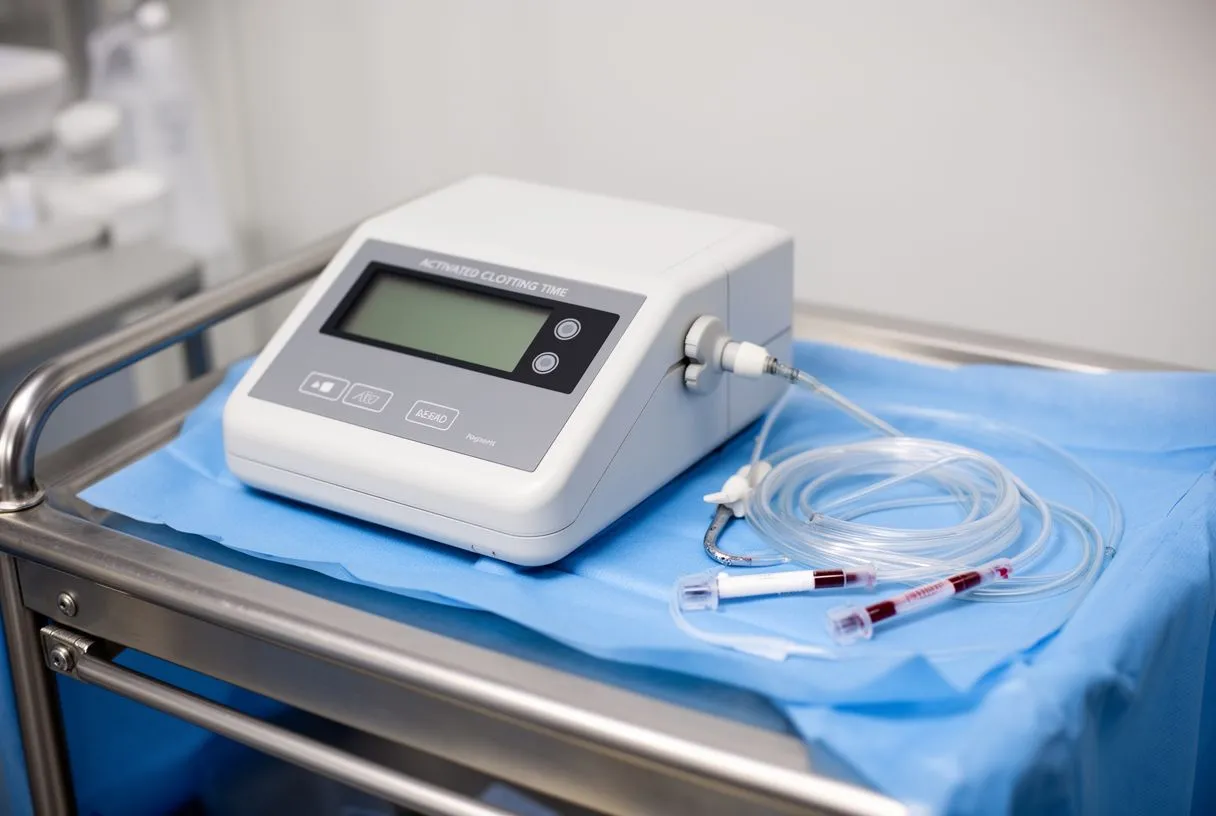
Cardiac surgery heparin monitoring relies on a bedside test called the activated clotting time, or ACT. A small blood sample is placed in a special tube containing a substance that triggers clotting, and a machine measures how many seconds it takes the blood to clot. A normal ACT is roughly 90 to 130 seconds. After heparinisation, the target during bypass is usually above 400 to 480 seconds — a level at which clotting is safely suspended.
ACT-guided heparin dosing is standard, but it has limits. The ACT measures overall clotting tendency rather than heparin concentration directly, and results can be influenced by body temperature, haemodilution, and platelet function. For this reason many centres supplement the ACT with other tests, such as anti-Xa levels or heparin concentration assays, especially in longer or more complex operations. It is a picture built from several brushstrokes, not a single number.
How often is it checked? Typically, the ACT is measured after the initial heparin dose, again a few minutes later to confirm the effect, periodically throughout the bypass run, and after any additional heparin is given. Heparin timing in a heart procedure matters because heparin wears off gradually even during surgery, so the team watches for drift and tops up as needed. When I review a patient's chart before surgery, I look at how the anticoagulation was managed last time, because the body often behaves consistently from one operation to the next.
What Does a Heart Surgery Blood Thinner Protocol Look Like?
Most heparinisation protocols for cardiac surgery follow a familiar rhythm. The usual heparin dose for heart bypass starts at around 300 to 400 units per kilogram of body weight, given into a central vein just before the bypass circuit is connected. The exact dose is then adjusted to the ACT result, because people vary widely in how they respond — a slim elderly patient and a muscular young adult may need very different amounts to reach the same target.
Timeline of a typical anticoagulant management in open heart surgery:
- Before incision: baseline blood tests, including platelet count and clotting screen, plus a review of any blood thinners the patient already takes.
- Before bypass: the initial heparin dose is given through a central line, and the ACT is confirmed above target before the heart-lung machine is started.
- During bypass: additional heparin is added to the circuit as needed to keep the ACT in range, with checks every 30 minutes or so.
- After bypass: heparin is reversed with protamine, and clotting is confirmed to be returning to normal before chest closure.
How long does one shot of heparin last? A single intravenous dose keeps working for roughly three to six hours, depending on the dose and the patient, which is why continuous attention is needed during a long operation. Heparin is also broken down partly by the kidneys, so patients with kidney disease may need adjusted dosing. The anaesthesia and perfusion team adjust this timing case by case, because heparinisation during bypass surgery is a moving target rather than a fixed schedule.
What Cancels Out Heparin? Protamine and Heparin Reversal Surgery
The answer is protamine, a protein originally derived from fish sperm that binds tightly to heparin and switches off its effect within minutes. Once the bypass run is finished and the heart is working again, protamine is infused slowly through a vein, and the ACT falls back toward normal over the next 10 to 20 minutes. This heparin reversal surgery step is what allows the surgeon to close the chest on blood that clots properly again.
Protamine reactions deserve honest mention. A small number of patients have an adverse reaction to protamine — ranging from a drop in blood pressure to, rarely, a serious allergic response. Patients who have previously received protamine, those allergic to fish, and some men who have taken certain long-acting insulin preparations carry a somewhat higher risk. Teams are prepared for this: if a reaction occurs, treatment focuses on supporting the blood pressure while the heparin's natural wear-off is allowed to take its course.
How much protamine is given? The usual dose is roughly 1 milligram of protamine for every 100 units of heparin remaining in the body, calculated from the total heparin given and the time elapsed. Giving too much protamine is its own problem, because excess protamine can itself interfere with clotting. The team at our consulting rooms takes the time to explain these details to patients beforehand, in plain words, so that nothing that happens in the operating room comes as a surprise.
Is Heparin a High-Risk Drug in Cardiac Surgery?
Heparin is classified as a high-alert medication in hospitals, meaning that errors in dosing can cause serious harm — but this label reflects how powerful and fast-acting it is, not that it is unsafe when managed properly. In cardiac surgery, heparinisation complications are uncommon precisely because the drug is monitored continuously and reversed deliberately at the end of the operation. The danger lies not in the medicine itself but in getting the dose or timing wrong.
The main risks to understand:
- Bleeding: too much heparin, or heparin left uncorrected at the end of surgery, leads to bleeding; this is why protamine and post-operative clotting checks are standard.
- Heparin-induced thrombocytopenia (HIT): a rare immune reaction in which heparin paradoxically causes clotting along with a falling platelet count, usually appearing 5 to 10 days after exposure.
- Under-dosing: too little heparin risks clotting in the bypass circuit or micro-clots travelling to the brain or kidneys.
HIT deserves a moment of explanation. It is one of the few conditions that changes the plan for a future operation: patients with a history of HIT cannot receive heparin again, and alternative anticoagulants are used instead. That is why we always ask about previous hospital stays and any blood thinner problems before proposing a surgical plan — a question that seems small but can reshape the entire anticoagulant strategy. Every case in our practice is reviewed by the multidisciplinary team against international practice guidelines before a recommendation is given, and anticoagulation history is always part of that review.
What Is Heparin Resistance in Cardiac Surgery?
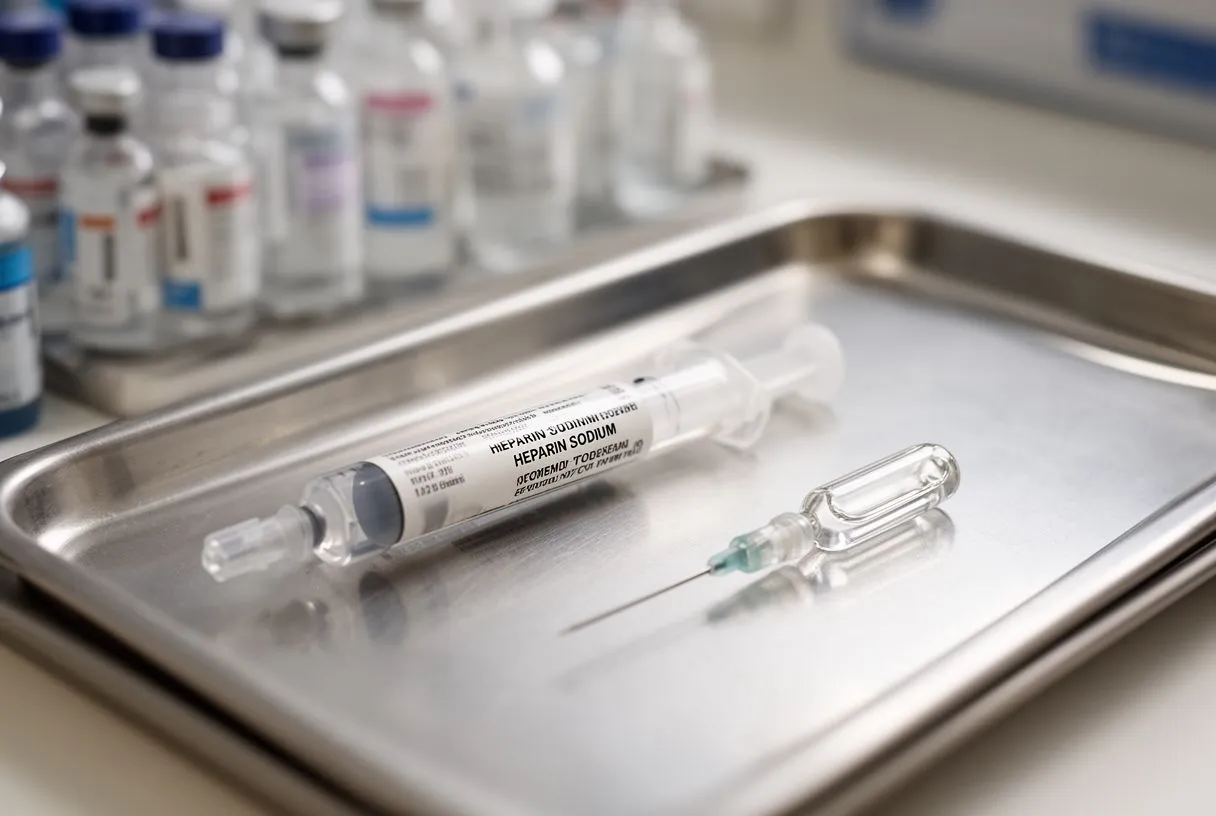
Heparin resistance in cardiac surgery describes the situation where a patient receives a full, weight-based dose of heparin but the ACT fails to reach the target range. It is more common than many patients expect, particularly in people taking certain clotting-factor medications, in patients with low levels of antithrombin, in infection or inflammatory states, and in women in the days around childbirth. Age, weight, and low platelet counts all play a role.
How is it managed? The first step is usually giving more heparin, since some patients simply need a higher dose. If the ACT still does not respond, the team can give purified antithrombin — the protein heparin depends on — either as a concentrate or as fresh frozen plasma. With antithrombin restored, heparin almost always begins to work normally, and the operation proceeds with safe anticoagulation.
Who is at greatest risk? Patients on prolonged pre-operative heparin infusions, such as those waiting in hospital after an acute coronary syndrome, often show relative resistance because their antithrombin levels have been depleted. Identifying these patients before the operation means the anaesthesia team can have antithrombin ready rather than discovering the problem mid-surgery. Finding this out in advance and preparing for it removes most of the drama from the operating room.
How Does Off-Pump Heparinisation and Pediatric Heart Surgery Heparin Differ?
Not every coronary operation uses the heart-lung machine. In an off-pump bypass, the surgeon sews the new grafts onto the beating heart without a circuit, and heparin is still given — but at a fraction of the dose, often around 100 to 150 units per kilogram, because there is no artificial circuit to protect. Off-pump heparinisation is deliberately lighter, and it is usually not reversed with protamine at all, letting the low dose wear off naturally.
On-pump and off-pump are different physiological states, not just different techniques. Research comparing them has found meaningful differences in the body's response, including differences in how blood sugar behaves during the two approaches; one study using continuous glucose monitoring during on-pump or off-pump coronary artery bypass grafting documented distinct glycaemic dynamics between the two methods. At our practice, we recommend the less invasive route only where the evidence supports it for that patient — the decision between on-pump and off-pump is made on the anatomy, not on preference.
Pediatric heart surgery heparin follows its own rules. Children are not small adults: infants have lower natural antithrombin levels, a larger proportional blood volume relative to the circuit, and different heparin elimination. Paediatric bypass circuits are smaller and primed with different fluids, and dosing is calculated and monitored far more granularly. This is one of the reasons paediatric cardiac surgery is its own subspecialty, with dedicated teams and dedicated protocols.
What Happens Step by Step in a Heparinisation Protocol for Coronary Artery Bypass?
A heparinisation protocol for coronary artery bypass grafting — the operation in which blocked coronary arteries are bypassed with healthy vessel grafts, usually taken from the leg, arm, or chest wall — follows a well-established sequence. Understanding it can make the day of surgery feel far less mysterious. The anticoagulation runs alongside the operation like a second, invisible thread from start to finish.
The typical sequence looks like this: after the anaesthesia team has the patient stable and monitoring in place, the surgeon opens the chest and prepares the heart. Just before the aortic cannula is inserted, the full heparin dose is given through a central line. Three minutes later, an ACT is drawn; the bypass machine is connected only once the result confirms the blood will not clot. Throughout the bypass time — the period the machine supports the circulation — the perfusionist keeps the ACT in range and adds heparin to the circuit as needed. When the grafts are complete and the heart is taking over again, the patient is weaned from bypass, protamine is given, and normal clotting is confirmed before the chest is closed.
What else can happen along the way? Open-heart operations occasionally reveal surprises. Surgeons have described, for example, thymomas — harmless-seeming tumours of the thymus gland — discovered incidentally during coronary artery bypass graft surgery and removed or biopsied during the same operation. Good teams anticipate these possibilities and are prepared to act on them. Our multidisciplinary reviews exist precisely so that these judgment calls are made with the whole team's experience behind them, and the patient always receives a clear proposal with the alternatives before anything is decided.

Heparinisation Cost in Mexico for Heart Surgery: Choosing Your Team
Patients travelling to Mexico for cardiac surgery frequently ask how anticoagulation affects the overall cost of the procedure. The honest answer is that heparin and protamine are standard, inexpensive medications that are included in the surgical package of any reputable cardiac programme — the meaningful differences in cost between centres lie in the surgical technique, the technology used, hospital stay length, and the expertise of the team. Anticoagulation management should never be a line item you shop for; it should be assumed.
What should you actually ask a cardiac team? When you are comparing options, the questions that matter are less about the drug and more about the system around it:
- Who monitors anticoagulation? Ask whether a dedicated perfusion team and anaesthesia team manage the ACT during your operation.
- Is the plan reviewed in advance? Ask whether your case is discussed by a multidisciplinary team before surgery, including your medication history and any previous reactions.
- Will you get a second opinion if you want one? A confident team encourages second opinions and treats them as a normal part of deciding about heart surgery.
How do we work with international patients? Our team is a multidisciplinary group of cardiac surgeons led by Dr Alejandro Molina, with consulting rooms in Guadalajara, Querétaro and Hermosillo. The first contact is a free video consultation: we get to know the patient, talk through the condition, and say which studies are still needed so no unnecessary ones are ordered. Dr Molina trained in cardiothoracic surgery at the Universidad de Guadalajara, in cardiac, minimally invasive, robotic and structural surgery at the University of Montreal, and in structural cardiology and TAVR at CHU Bordeaux, and he performed the first robotic mitral valve repair in the Ángeles Health System and the first robotic heart surgery in Guadalajara.
In summary, heparinisation in heart surgery is the quiet, disciplined process that makes operations on the open heart possible: a calculated dose of heparin before bypass, continuous ACT monitoring throughout the operation, and a clean reversal with protamine at the end. Its risks — bleeding, protamine reactions, heparin resistance, and the rare heparin-induced thrombocytopenia — are real but well understood, and they are managed by systems rather than luck. If you or a family member are facing heart surgery, the most valuable step you can take is to discuss your own situation, your medications, and your anticoagulation questions with a qualified cardiac team. We invite you to book a consultation with our practice rather than trying to self-diagnose — a clear conversation about your specific anatomy and history is worth more than any general article, this one included.






