

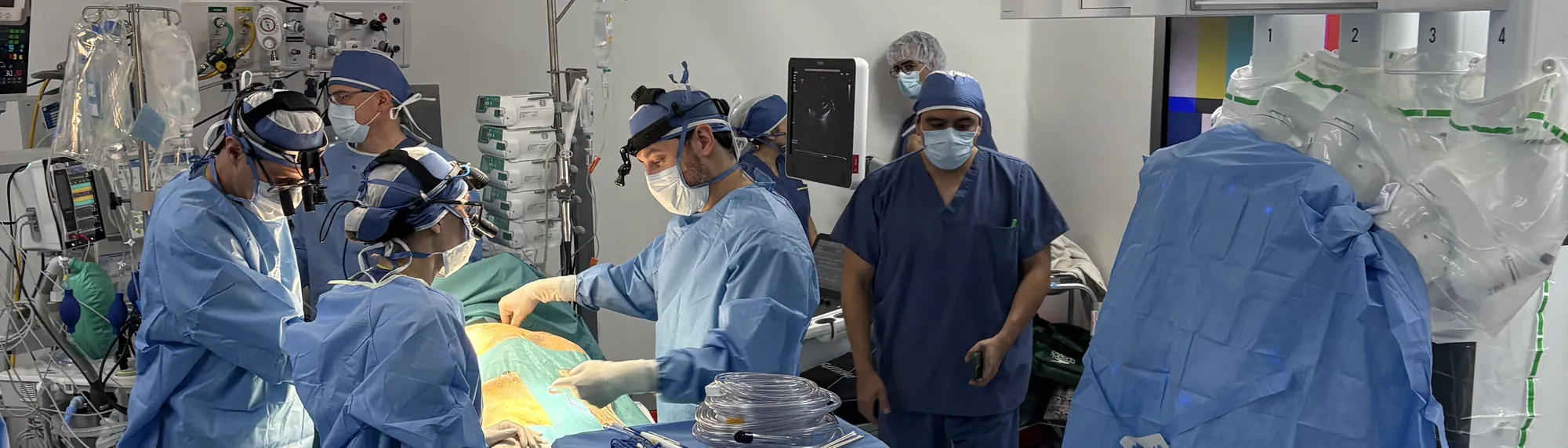
Which heart operations can be done with a robot?
Which heart operations can be done with a robot?
Robotic surgery is not one operation. It is a way of reaching the heart — through small incisions between the ribs, without opening the sternum — that can be used for several different procedures. This guide goes through them one by one.
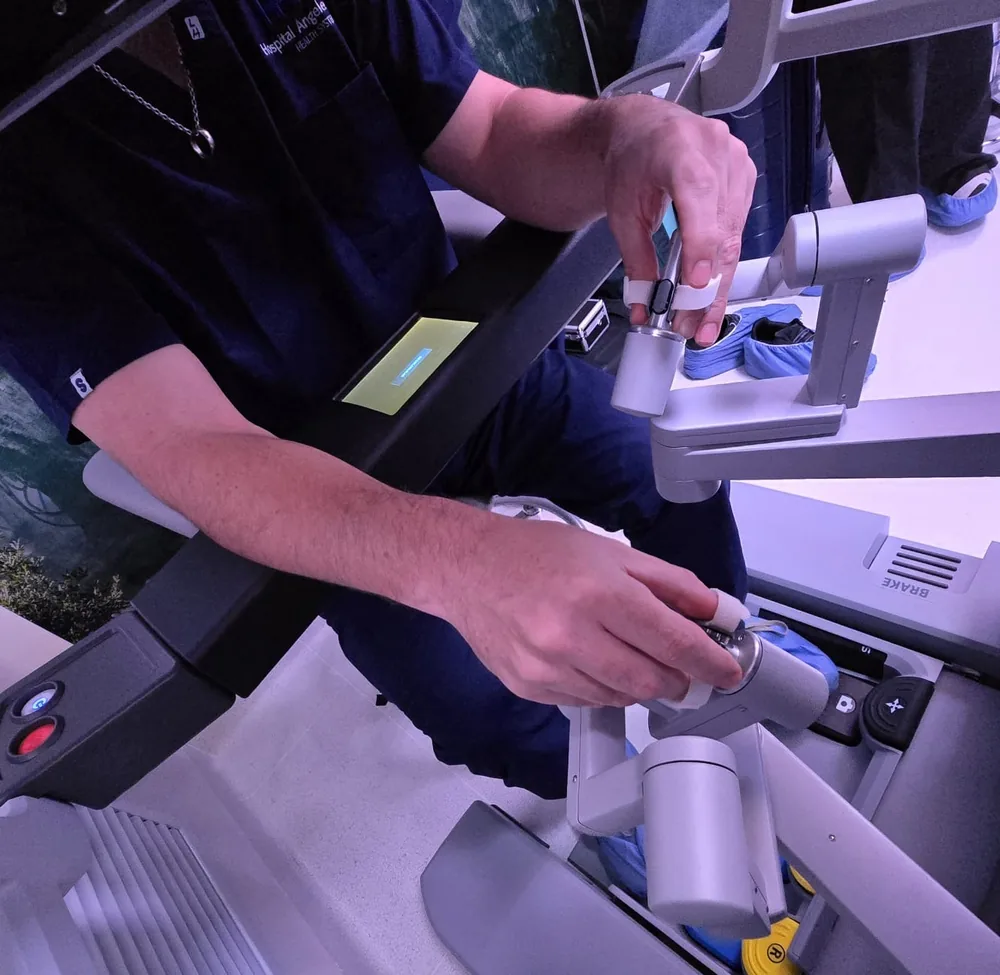
It sounds like science fiction, but it is a reality in Mexico today: the surgeon seated at a console, controlling with millimetric precision the arms of a robot through small incisions in the side of the chest, with a magnified three-dimensional view of the heart.
Don’t worry — this does not mean a robot operates on you by itself. Every movement and every decision is the surgeon’s. The robot is an instrument, an extraordinarily precise one, in the hands of a trained team.
Robotic operations covered in this guide
Mitral valve repair
What it treats: mitral regurgitation — a mitral valve that no longer closes properly, so blood flows backwards with each heartbeat. The most common cause is degenerative disease, in which the valve tissue becomes floppy and prolapses, sometimes with ruptured chords.
Why the robot helps: the mitral valve sits deep in the chest, and the robot gives an exceptionally clear, magnified view of it. This is the most established robotic heart operation in the world.
Why repair matters: when the valve can be repaired well, the patient keeps their own valve for life. Repair should always be considered before replacement.
Read the case of a 77-year-old patient who had the first robotic mitral valve repair in the Ángeles Health System.
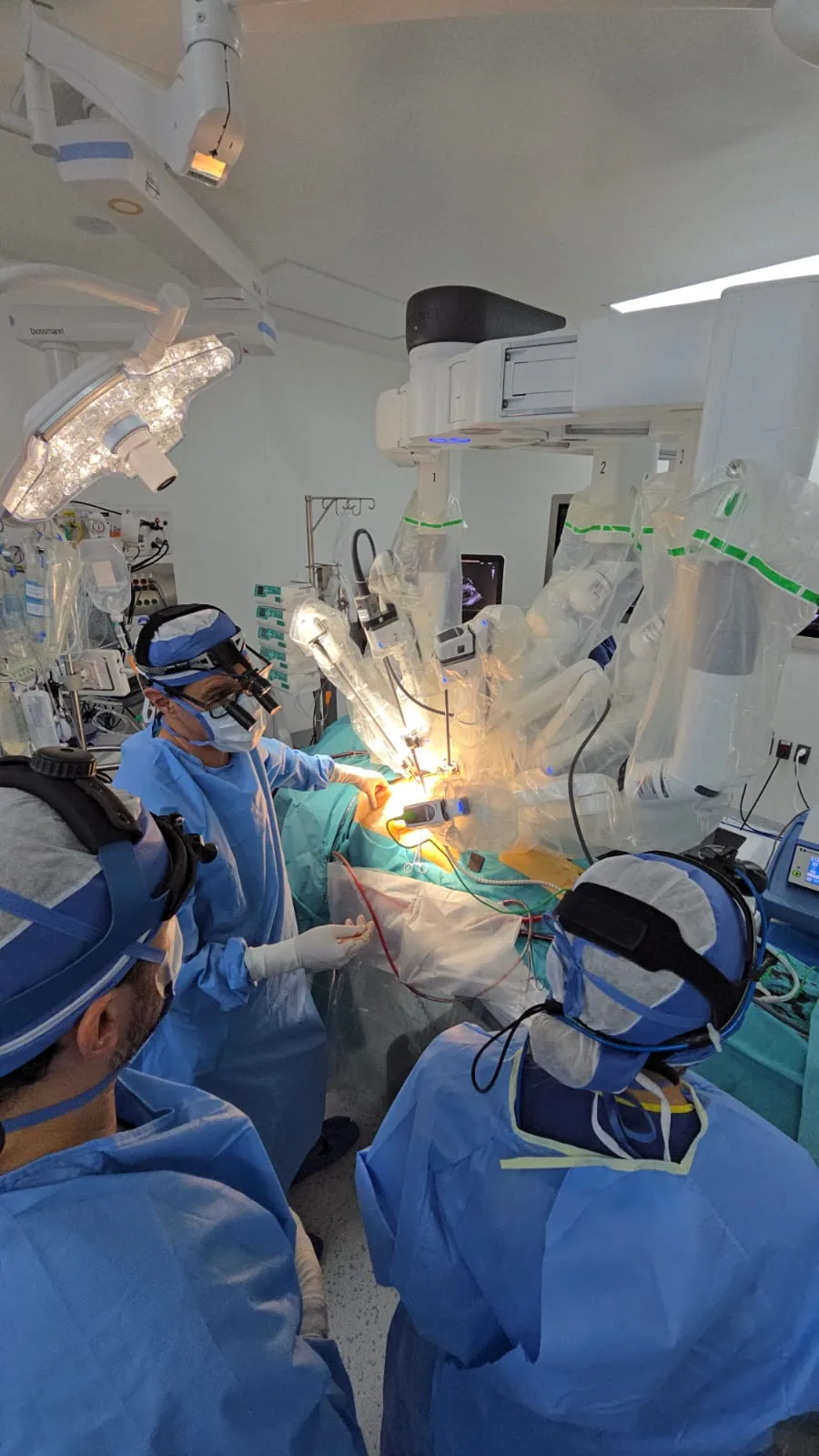
Mitral valve replacement
What it treats: mitral valve disease in which the valve is too damaged to be repaired — for example, when rheumatic disease has left it thickened and scarred.
How it is done: the diseased valve is replaced with a prosthesis, biological (tissue) or mechanical, through the same small incisions. The choice of prosthesis depends on your age, your other conditions and whether you can take long-term anticoagulants.
Read about the first robotic heart surgery in Guadalajara, a mitral valve replacement.
Tricuspid valve surgery
What it treats: a leaking tricuspid valve, on the right side of the heart. It is often treated at the same time as the mitral valve, but can also be operated on alone.
How it is done: most often the valve is repaired, usually with a ring that restores its shape. When repair is not possible, it can be replaced.
Closure of an atrial septal defect (ASD)
What it treats: a hole in the wall between the two upper chambers of the heart, present from birth. Many are discovered in adulthood.
When surgery is needed: many atrial septal defects can be closed with a device placed through a catheter. Surgery is needed when the defect is too large, or its type or position makes a device unsuitable. In those cases, the robotic approach allows the hole to be closed with a patch without opening the sternum.
Removal of cardiac tumours
What it treats: tumours inside the heart, such as myxoma — the most common primary tumour of the heart, which can obstruct blood flow or shed fragments into the circulation — and fibroelastoma, as well as some tumours of the pericardium, the membrane around the heart.
How it is done: the tumour is removed completely through small incisions, with the robot’s magnified view helping to identify its attachment precisely.
Hybrid coronary revascularisation
What it treats: coronary artery disease affecting more than one artery.
How it is done: it combines two treatments. With the robot, a bypass is made to the most important artery of the heart, the left anterior descending artery, generally using the internal mammary artery. The other narrowed arteries are treated with stents by interventional cardiology. It joins the proven durability of a bypass to the most important artery with the lower invasiveness of catheterisation for the rest. Read more about bypass versus stents.
What these operations have in common
- The sternum is not cut. There are no infections or complications linked to that bone, and no six to twelve weeks waiting for it to heal.
- Small, lateral incisions. Less pain, and breathing and moving more easily from the first days.
- Less bleeding, and usually fewer blood transfusions. Transfusions carry their own risks; needing fewer of them is a real clinical benefit, not only a cosmetic one.
- A shorter stay. Most patients spend less time in intensive care and in hospital than after conventional surgery, and return to normal life much sooner.
Who can operate on you with a robot?
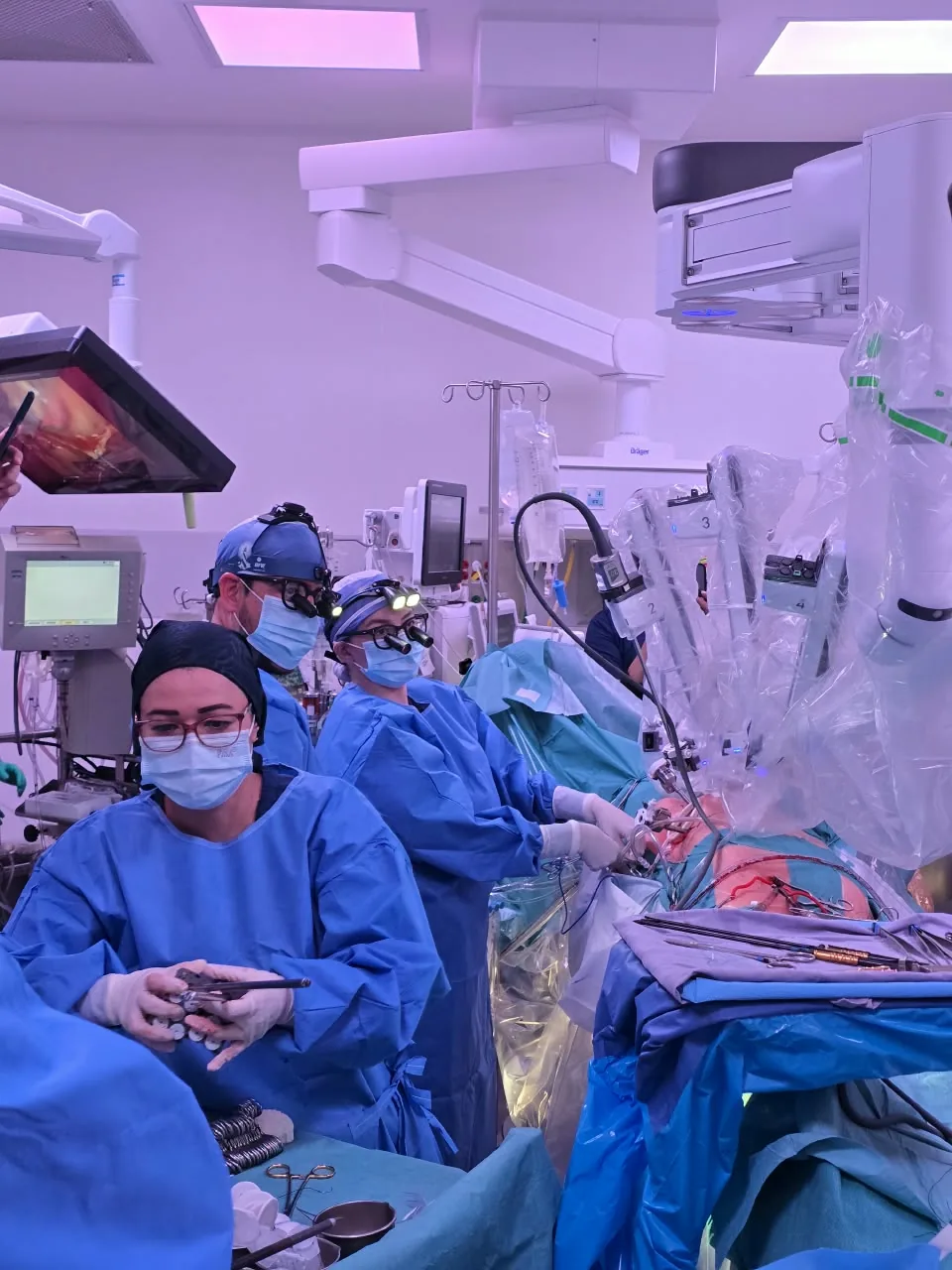
Heart surgery with the Da Vinci system is still extremely rare in Mexico; very few surgeons in the country are trained and certified to perform it. It requires specialised training on simulators, in laboratories and in operations supervised by international experts.
It also depends on the whole team: anaesthesiologists expert in minimally invasive surgery, perfusionists trained in connecting the heart-lung machine through the groin, and nurses trained to prepare the robot. Robotic heart surgery is the work of a highly coordinated team.
My own training was at the Montreal Heart Institute, part of the University of Montreal, in advanced cardiac surgery, minimally invasive surgery, robotic surgery and structural interventions; then at the University Hospital of Bordeaux in France; and in training workshops in Atlanta, in the United States.
Cost
Robotic surgery usually costs more than conventional surgery, because of the robot, its single-use instruments and the specialised team it requires. We discuss the costs for your case openly at the consultation.
Not every patient, not every operation
Not everyone is a candidate for robotic surgery, and an honest recommendation sometimes means a different approach: conventional surgery, minimally invasive surgery without the robot, or a transcatheter procedure. Medicine is not black or white; it has to be adapted to each person.
Our guide to robotic, minimally invasive or open-chest surgery explains how we choose, and our main guide to robotic heart surgery in Mexico covers who is a candidate and which studies to bring.
Beyond the technology, trust
Facing heart surgery generates anxiety and fear, even with the most impressive advances in robotics. That is normal. No technology replaces the essential thing: trust in your medical team. It is fundamental that you feel heard, understood and accompanied. In the sum of science, innovation and humanity lies the key to facing heart surgery with calm and hope.
For cardiologists: if you have a patient who might be a candidate for one of these operations, see how to refer a patient.
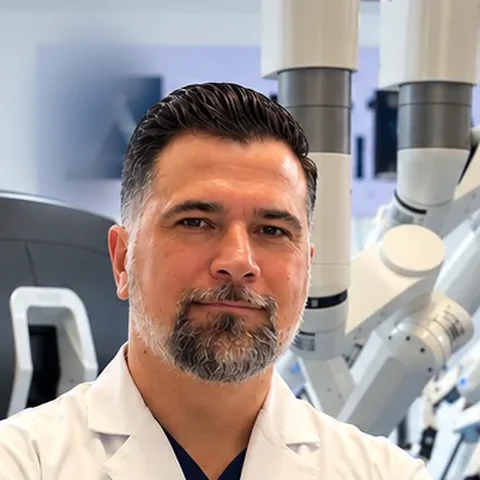
About the author
Dr. Alejandro Molina Romo is a cardiovascular surgeon practising in Guadalajara, Querétaro and Hermosillo. He trained in cardiothoracic surgery at the Universidad de Guadalajara, completed advanced training in cardiac surgery, minimally invasive surgery, robotic surgery and structural interventions at the University of Montreal, and a fellowship in structural cardiology and TAVI at CHU Bordeaux, France. He performed the first robotic mitral valve repair in the Ángeles Health System and the first robotic heart surgery in Guadalajara.
Medical degree: Universidad Autónoma de Guadalajara, Cédula Profesional 5757260 · Cardiothoracic surgery: Universidad de Guadalajara, Cédula de Especialidad 10768871 · Current certification, Consejo Nacional de Cirugía del Tórax, no. 447
This content is educational and does not constitute personal medical advice. Every cardiac case is unique and requires individual assessment by a specialist medical team. Always consult the doctor treating you before making decisions about your treatment.
Talk to a specialist
Request a free initial video consultation, or an appointment at one of our practices across Mexico.





