

Bypass vs stent: coronary bypass (CABG) or a stent?
Bypass vs stent explained by our Heart Team in Guadalajara.
Both work. They are not interchangeable. Which is right for you, when each is the better choice, and why the decision should be taken by a Heart Team. Here is how we weigh bypass vs stent for each patient.
Have you been told you need a stent or heart surgery? We help you understand the difference and which is the better option for your case — with the joint perspective of our interventional cardiologists and cardiothoracic surgeons.
If you have been told you have coronary disease — that one or several of the arteries feeding your heart are narrowed or blocked — you have probably already heard two options: a stent or bypass surgery.
Both work. Both have decades of clinical evidence behind them. But they are not interchangeable — and which is right for you depends on factors that go well beyond which is less invasive.
What concerns us most is that many patients make that decision without having all the information. Sometimes because time in the consultation is short. Sometimes because the specialist seeing them only does one of the two things. And sometimes simply because nobody sat down to explain the underlying difference.
That is exactly what we want to do here.
Our team at Cirugía de Corazón includes interventional cardiologists — experts in catheter procedures such as stenting — and cardiothoracic surgeons, among them Dr Alejandro Molina, who specialises in coronary revascularisation surgery (CABG). That combination puts us in an unusual position: no specialist on the team has any incentive to recommend one technique over the other beyond what is best for your specific case. The decision is taken jointly, not from a single specialty.

First the basics: what is coronary disease?
The heart is a muscle that works without stopping — more than 100,000 beats a day. Like any muscle it needs a constant supply of blood and oxygen. That supply arrives through the coronary arteries — three main arteries that encircle the heart like a crown.
When those arteries gradually narrow through the build-up of plaque — fat, calcium, inflammatory tissue — blood flow to the heart muscle is reduced. That is what we call coronary disease, or ischaemic heart disease.
If the narrowing is gradual it can cause angina — pain or pressure in the chest on exertion. If a plaque ruptures abruptly and blocks the artery completely, a heart attack occurs.
The aim of treatment — whether with a stent or with surgery — is to restore that blood flow to the heart muscle.
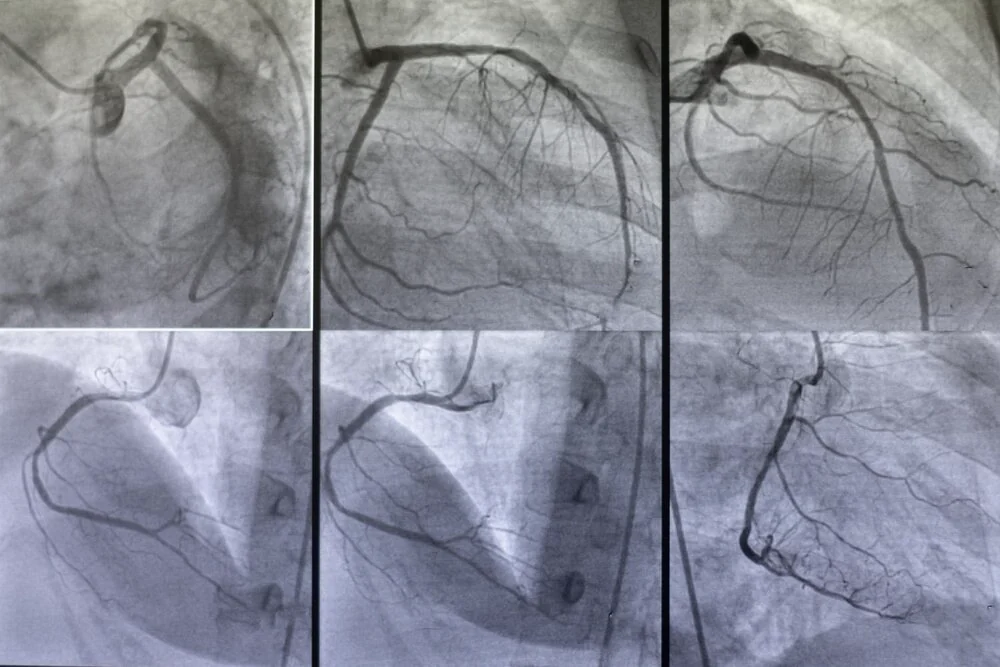

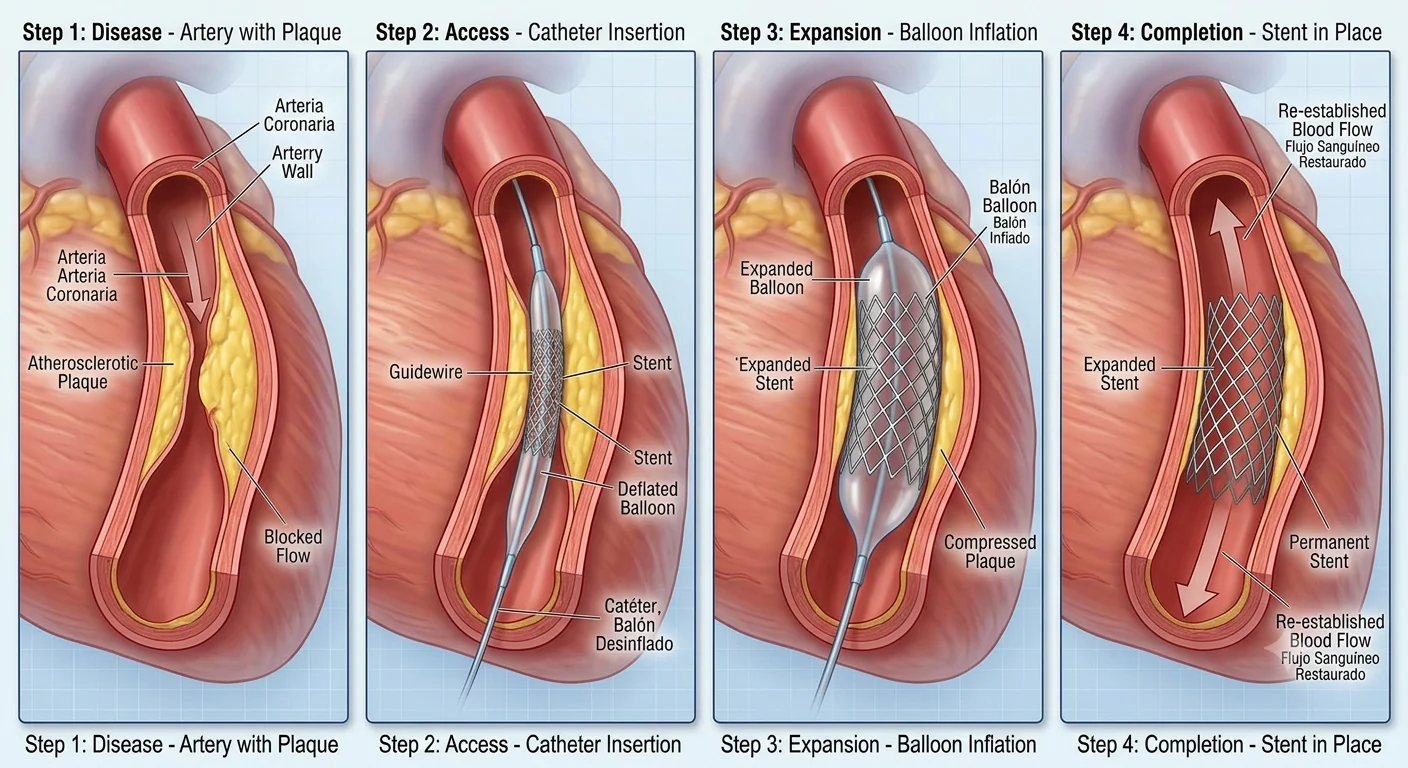
What is a stent (PCI)?
The stent — also called angioplasty, or PCI — is a procedure performed by catheter, without open surgery.
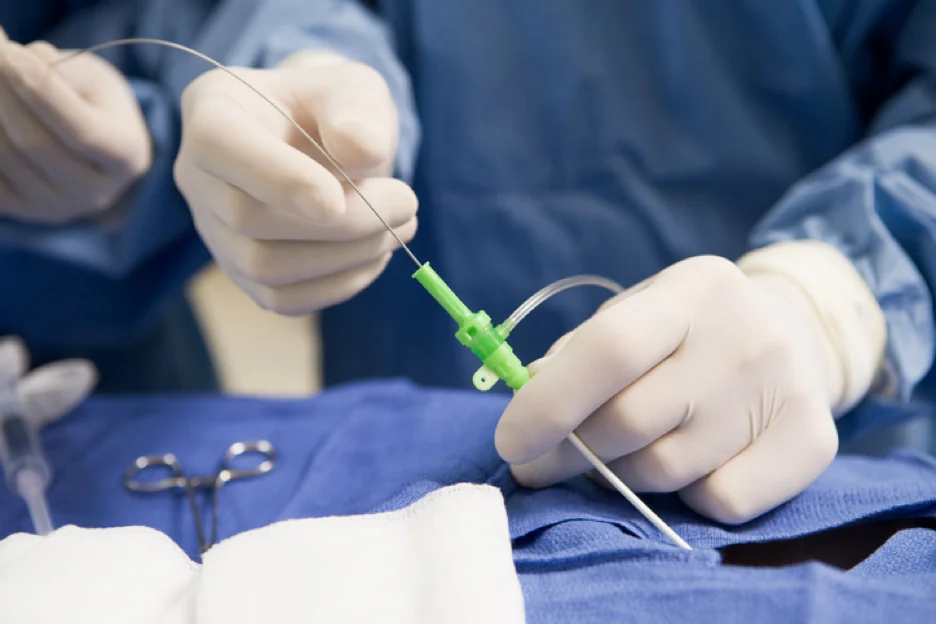
Through a small puncture in the artery at the wrist or the groin, we introduce a very fine catheter up to the narrowed coronary artery. There we inflate a small balloon to open the obstruction and leave a metal tube called a stent in place, which holds the artery open.
It is a very effective procedure, generally done as a day case or with one night in hospital. In the right context — particularly during an acute heart attack, or in simple single-artery lesions — it is extraordinarily valuable and saves lives.
The problem is when it is used in situations where it is not the best long-term option.
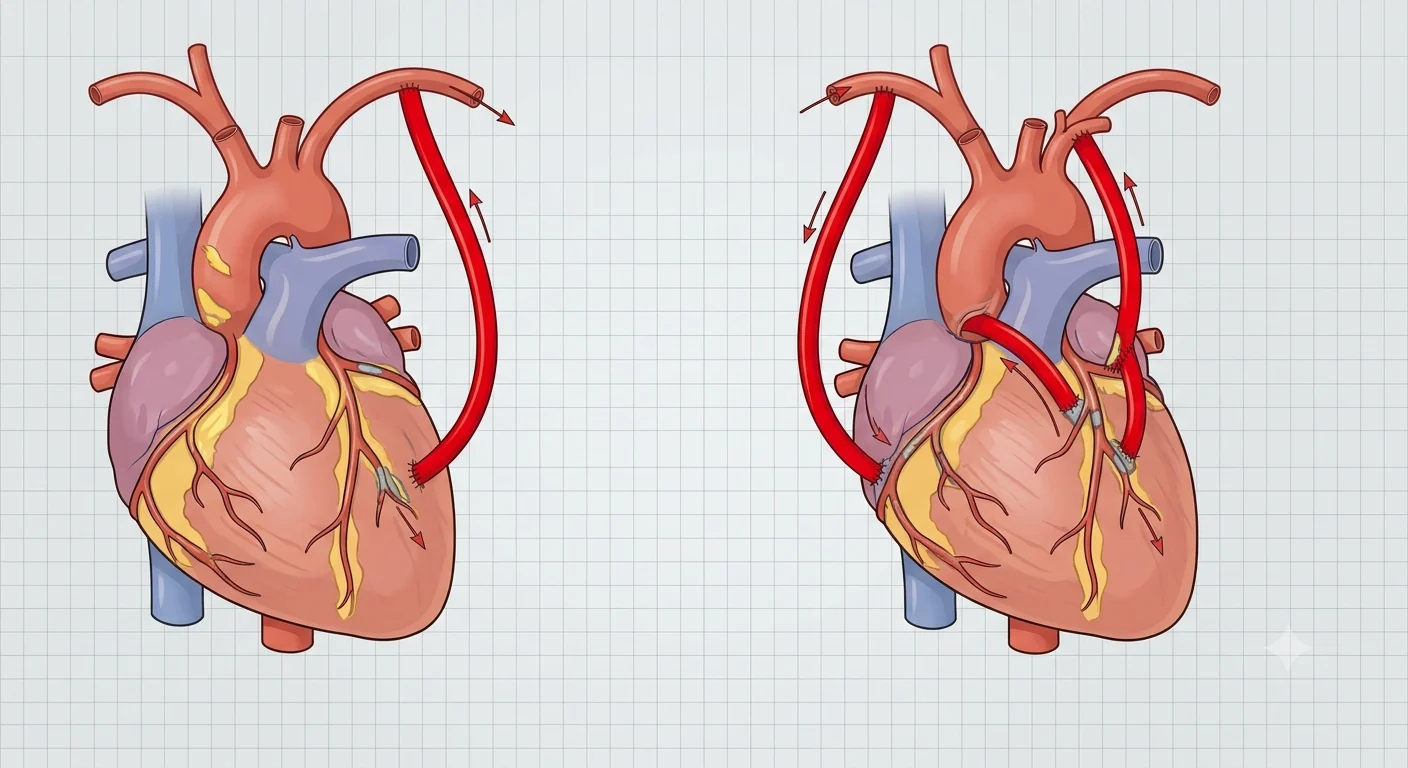
What is CABG (coronary bypass)?
CABG — Coronary Artery Bypass Grafting — is coronary revascularisation surgery. Instead of opening the blocked artery, we create an alternative route around it.
We take a conduit — generally an artery from the chest or the arm, or in some cases a vein from the leg — and connect it above and below the narrowing, creating a bypass that carries blood directly to the heart muscle.
The artery we use most, and the most valuable, is the left internal mammary artery, which is connected to the left anterior descending artery, the most important in the heart. A well-performed mammary graft has a patency of over 95% at 10 years — that is, it is still working in 9 out of 10 patients a decade later.
That durability is the central argument for CABG.
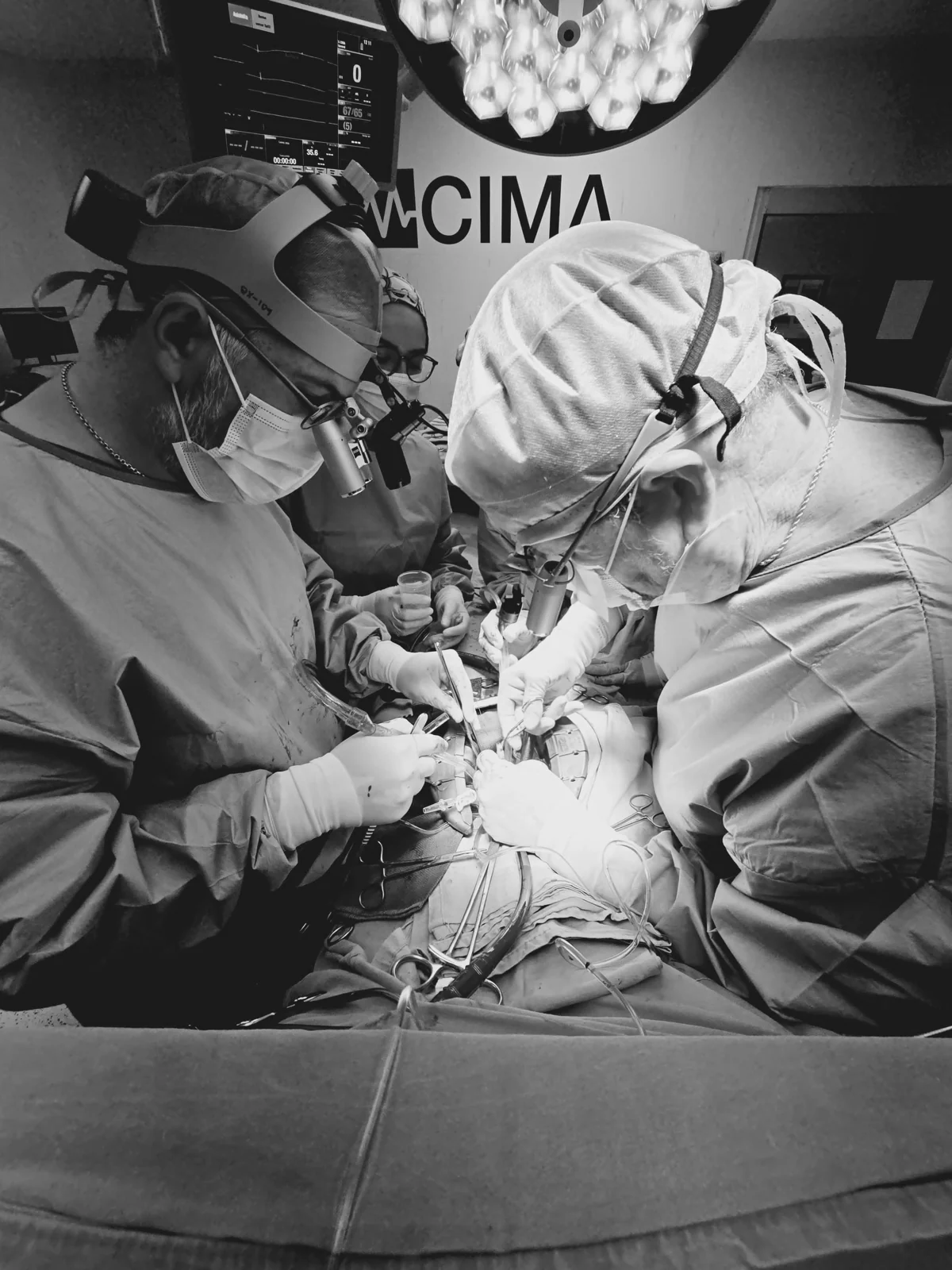
How is the surgery performed?
CABG is performed under general anaesthetic. The classic approach is through a median sternotomy (opening the sternum), although as we have seen, hybrid and minimally invasive variants now exist for selected cases.
The general steps are:
- Harvesting the conduit (graft) — the internal mammary artery, the radial artery from the forearm and/or the saphenous vein from the leg are taken, according to the anatomy and the arteries to be treated.
- Cardiopulmonary bypass — in the conventional technique a heart–lung machine temporarily takes over the pumping function while the heart is stopped so we can operate precisely. There is also an off-pump or "beating heart" technique, without using this machine, reserved for specific cases and anatomies.
- Anastomosis — each graft is connected above and below the obstruction, creating the new route for the blood.
- Closure — support from cardiopulmonary bypass is withdrawn, the function of the grafts is verified, and the sternum is closed with steel wires, which stay permanently.
The complete operation takes on average between 3 and 6 hours, depending on the number of arteries to be treated and the technique used. Hybrid or robot-assisted variants can take less time in the minimally invasive component.
Recovery and long-term results
In hospital. After surgery it is normal to spend between one and two days in intensive care for close monitoring, and the rest of the admission — usually 5 to 7 days in total — on the ward, with pain management, early mobilisation and respiratory physiotherapy.
At home. Full recovery of the sternum and of the body generally takes 6 to 12 weeks. Most patients resume everyday activities and can drive or return to work at around 4 to 6 weeks, always depending on individual progress and the type of activity. Cardiac rehabilitation — a supervised programme of exercise and education — speeds up and consolidates that recovery, and we recommend it to practically every patient.
Anticoagulation and medication. Depending on the type of graft and whether you have other risk factors, you will probably leave surgery on antiplatelet drugs or anticoagulants.
Long-term results. CABG relieves angina in roughly 8 out of 10 patients. With well-chosen arterial grafts, many patients do well for 15, 20 years or more. As with any major surgery there are risks, which are discussed individually before the operation.
Bypass vs stent: which lasts longer?
Here is the conversation many patients never have with their doctor.
A stent opens the artery there and then. It works well. But it has a real limitation: over time the artery can narrow again — a phenomenon called restenosis — or a clot can form inside the stent. Modern stents are far better than the first generation, but the probability of needing a repeat intervention within 5 to 10 years remains significant, particularly in multivessel disease.
CABG with arterial grafts — especially when we use both mammary arteries plus the radial artery, what we call complete arterial revascularisation — offers a durability that stents simply cannot match. Decades of patency. A significant reduction in future heart attacks, in repeat interventions, and in long-term mortality in the right patients.
For a 55-year-old patient with disease in three coronary vessels, that difference matters a great deal. It is the difference between a solution that lasts 5 or 10 years and one that can last the rest of their life.
When is a stent better?
The stent is the right option in several situations:
- An acute heart attack in progress — when an artery blocks suddenly and has to be opened as an emergency, the catheter is unbeatable. Every minute counts and the stent saves heart muscle.
- Single-vessel disease with a simple lesion — when only one artery is affected with a technically favourable lesion, a stent gives very good results with far less impact on the patient.
- Patients at high surgical risk — advanced age, multiple conditions, a general state that makes surgery too risky. In these cases the catheter may be the only viable option.
- As part of hybrid CABG — within a combined strategy where surgery treats the most important arteries and stents complete the rest.
When is CABG better?
The clinical evidence is clear in several scenarios where surgery outperforms stenting in the long term:
Multivessel disease
When there are significant narrowings in two or three coronary arteries, the major clinical trials — SYNTAX, EXCEL, NOBLE — consistently show that CABG offers better survival, fewer heart attacks and fewer repeat interventions in the long term compared with multiple stents.
Diabetic patients with multivessel disease
Diabetes affects the arteries diffusely and stents have higher restenosis rates in these patients. CABG is clearly superior in this group.
Left main coronary disease
The artery that gives rise to the two main coronaries on the left side of the heart. When this structure is affected, surgery remains the gold standard in most cases.
Younger patients with extensive disease
If you are 45, 50 or 55 with disease in multiple vessels, a well-performed complete arterial CABG can protect you for 20, 30 or even 40 years. A stent in that same situation will probably require repeat intervention within a decade — with greater complexity each time.
When combined surgery is needed
If as well as coronary disease you have a valve requiring treatment, or an aortic aneurysm, or an arrhythmia needing surgery, CABG allows all of it to be addressed in a single operation.
The CABG options we offer
There is no single type of coronary bypass. The decision about which conduits to use and how to perform it is as important as the decision to operate.
Complete arterial CABG
We use both internal mammary arteries plus the radial artery — no leg veins. It is the most durable revascularisation there is. Studies show that patients with total arterial CABG have fewer cardiac events and better survival at 10 and 20 years compared with those receiving vein grafts.
It is technically more demanding and not every patient is a candidate, but where age and condition allow, it is the option that offers the best long-term results.
Hybrid CABG
We combine the best of surgery and catheterisation: the left mammary artery — the most valuable graft — is connected to the left anterior descending artery minimally invasively, in some cases with the support of robotic surgery. The other affected arteries are treated with stents by catheter.
The result is the durability of surgery where it matters most, with the minimal invasion of the catheter where that is enough. It is an excellent option for selected patients who prefer to avoid a fully open operation.
Conventional CABG
The standard open-heart technique, with full opening of the sternum. It remains the most versatile option and the one that allows the greatest anatomical complexity to be addressed. With well-chosen arterial grafts, its long-term results are extraordinary.
Minimally invasive CABG
We are working actively to offer complete coronary revascularisation minimally invasively in selected cases before long — a small incision, without opening the sternum, with the same benefits as conventional bypass and a significantly faster recovery.
Bypass vs stent: when is bypass better than a stent?
If you have read this far, you will have noticed that the bypass vs stent question has no single answer. Here is the short version, as we explain it in the consultation.
- Bypass is usually better when the disease affects several arteries, involves the left main coronary artery, comes with diabetes, or occurs in a younger patient who needs a durable solution. It is also the logical choice when a valve or the aorta needs surgery at the same time.
- A stent is usually better during an acute heart attack, for simple disease in one artery, and when the risk of surgery is too high.
When comparing a heart stent vs bypass surgery, it helps to separate the short term from the long term. A stent is less invasive, and recovery takes days rather than weeks. Bypass asks more of you at the start, but in complex disease it offers more protection over the years that follow. Which matters more depends on your anatomy, your age and your priorities.
This is also what the major CABG versus stent trials mentioned above show: the more complex the disease, the greater the long-term advantage of surgery. In our practice, we go through the bypass vs stent options with every patient, using their own angiogram.
Life after a stent or a bypass
Whatever the outcome of the bypass vs stent decision, one thing does not change. Both treatments deal with the narrowed arteries, but neither cures the underlying disease. Atherosclerosis can continue in other segments of the arteries, and in the grafts or stents themselves.
That is why the treatment continues after you leave hospital:
- Medicines. Most patients take antiplatelet drugs and a statin long term, along with medicines for blood pressure or diabetes where needed. Take them exactly as prescribed, and never stop them without speaking to your cardiologist.
- No smoking. Stopping smoking is one of the most powerful things you can do to protect your arteries and your grafts.
- A heart-healthy diet. Vegetables, fruit, legumes, whole grains, fish and olive oil, with less salt, sugar, processed meat and fried food.
- Regular activity and cardiac rehabilitation, which we recommend after either treatment.
- Regular follow-up, to keep blood pressure, cholesterol and blood sugar on target.
Patients who look after these factors give their stent or their bypass the best chance of lasting. In the end, the bypass vs stent choice is only the first step. What you do afterwards shapes the years that follow.
The Heart Team: who should take this decision
We want to be direct with you about something few people will tell you.
In Mexico — and in many countries — coronary disease is treated mainly by interventional cardiologists, the specialists in stents and catheters. They are extraordinarily well-trained doctors. But their training is centred on the catheter.
The international cardiology guidelines establish that in cases of complex coronary disease — multivessel, left main, diabetic patients — the decision between stent and surgery should be taken by a Heart Team: a team that includes both the interventional cardiologist and the cardiothoracic surgeon.
Why? Because the surgeon brings a different perspective: they know how viable surgical revascularisation is in that specific anatomy, which conduits are available, and what results can be offered in the long term.
If you have complex coronary disease and have seen only one specialist, consider seeking that team assessment. You have a right to hear both perspectives before making a decision this important.
Am I a candidate for CABG?
What we assess:
- Your coronary anatomy — the number of vessels affected, the complexity of the lesions and the viability of the available conduits.
- Your cardiac function — the ejection fraction of the left ventricle and whether there is previous damage from a heart attack.
- Other cardiac conditions — are there valves that also need treatment? Arrhythmias? An aortic aneurysm?
- Your age and general state — lung function, kidney function, diabetes, and other factors that influence recovery.
- Your preferences and way of life — how compatible the recovery is with your life, and how much you value avoiding future repeat interventions.
What studies do I need to bring?
- Coronary catheterisation (coronary angiogram). The fundamental study. It shows exactly which arteries are affected, where the lesions are and how severe they are. If you have only one study, make it this one.
- Transthoracic echocardiogram, to assess the function of the heart, particularly the ejection fraction and the movement of the ventricular walls.
- Coronary CT angiography, in some cases a less invasive alternative to catheterisation for assessing the coronary anatomy.
- Routine laboratory tests — full blood count, blood chemistry, kidney function, clotting, and glycated haemoglobin in diabetic patients.
Don't worry if you don't have everything. We start the conversation with whatever you have.
An honest word
Coronary surgery is not the answer for everyone. There are patients for whom a stent is perfectly sufficient and surgery would be excessive. There are also those whose general condition does not allow surgery and for whom the catheter is the only viable option.
That is why we work as a team. Our interventional cardiologists and cardiothoracic surgeons assess each case together, with neither specialty having an incentive to recommend one technique over the other. That is the essence of the Heart Team: the combined perspective of people who can offer you both options and have seen the long-term results of both.
The recommendation we give you will be the one we consider best for you — for your age, your anatomy, your particular heart, and the years you have ahead of you.
Where do we perform these procedures?
We operate at several hospitals in Mexico. Our main bases are Guadalajara, Hermosillo and Querétaro, but if you live in another city, contact us before ruling out the options.
The next step
If you have a diagnosis of coronary disease and want to understand clearly which is the best option for your case — or if you want a second opinion on what has already been proposed — the first step is a consultation.
Bring your coronary angiogram if you have it, and your questions. From there we build the most suitable path together.
If you want to know about the other procedures we perform, see our guide to common procedures and conditions.
This content is educational and does not constitute personal medical advice. Every cardiac case is unique and requires individual assessment by a specialist medical team. Always consult the doctor treating you before making decisions about your treatment, particularly if you take anticoagulants, antiplatelet drugs or other cardiac medicines.

About the author
Dr Alejandro Molina is a cardiovascular surgeon practising in Guadalajara, Querétaro and Hermosillo. He trained in cardiothoracic surgery at the Universidad de Guadalajara, completed advanced training in cardiac surgery, minimally invasive surgery, robotic surgery and structural interventions at the University of Montreal, and a fellowship in structural cardiology and TAVR at CHU Bordeaux, France. He performed the first robotic mitral valve repair in the Ángeles Health System and the first robotic heart surgery in Guadalajara.
Medical degree: Universidad Autónoma de Guadalajara, Cédula Profesional 5757260 · Cardiothoracic surgery: Universidad de Guadalajara, Cédula de Especialidad 10768871 · Current certification, Consejo Nacional de Cirugía del Tórax, no. 447
Talk to a specialist
Request a free video consultation to clear up your questions and make a better-informed decision.





