Stent Thrombosis: Warning Signs and Prevention
Stent thrombosis prevention starts with knowing warning signs after heart surgery.
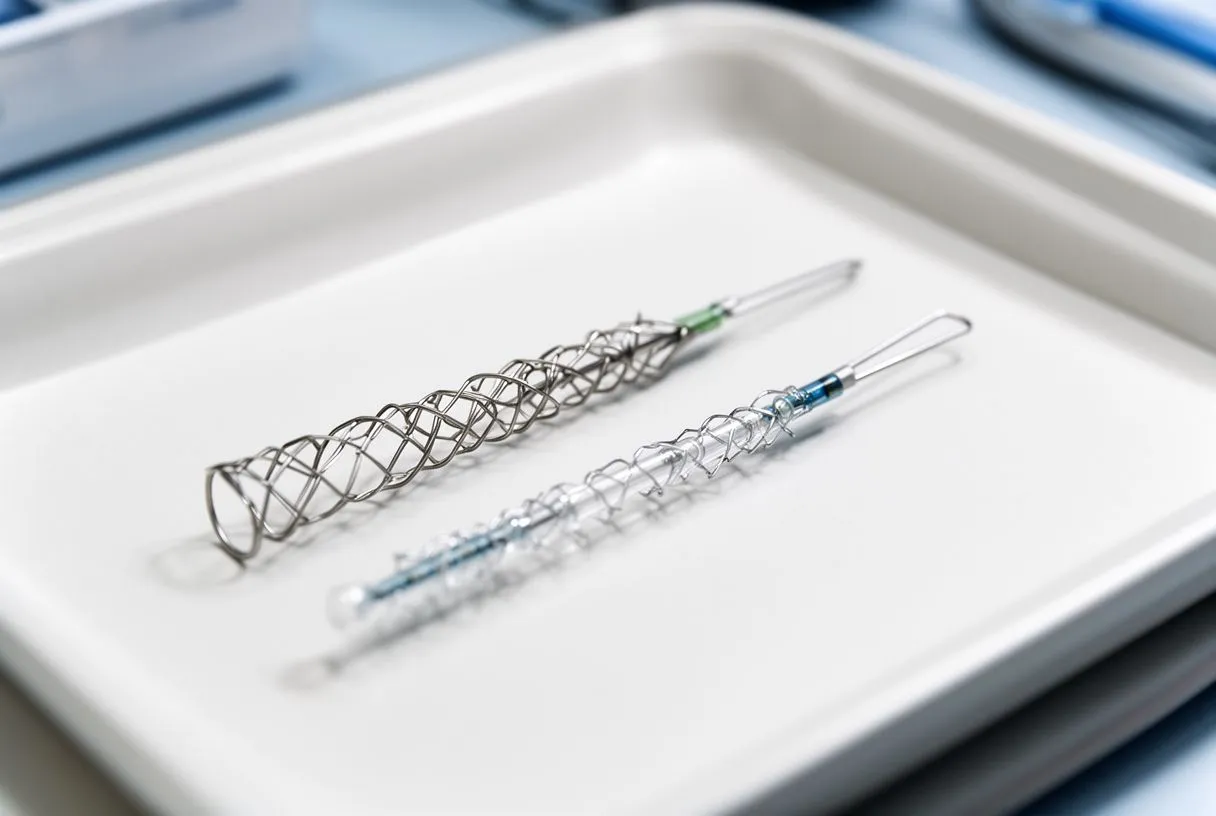
A coronary stent — a small metal mesh tube that holds a narrowed heart artery open — fails in only a small number of patients, but when it does, the cause is usually stent thrombosis, a sudden clot forming inside the stent. Understanding stent thrombosis prevention is one of the most useful things you can do after an angioplasty, because the measures that protect a stent are simple, well-proven, and largely in your hands. This guide walks through what stent thrombosis actually is, the warning signs to recognise, the real risk factors, and the daily habits and medications that keep a stent working for years.
What Is Stent Thrombosis?
Stent thrombosis is a blood clot that forms inside a coronary stent and blocks the artery it was placed to open. When the clot fully or nearly fully obstructs flow, the heart muscle downstream stops receiving blood, which can cause a heart attack. It is uncommon — most stents stay open indefinitely — but it is one of the most serious coronary stent complications because it arrives suddenly and without the gradual warning that natural artery narrowing often gives.
How fast can it happen? Doctors classify stent thrombosis by timing. Acute cases occur within 24 hours of the procedure, subacute within 30 days, late between 30 days and one year, and very late beyond a year. The question of how long it takes for stent thrombosis to develop has no single answer — the highest risk sits in the first weeks, while the stent surface is still uncovered by the body's own tissue, but the risk never fully reaches zero.
Why timing matters for you. The reason the early weeks are riskiest is biological: until the inner wall of the artery grows a smooth lining over the stent's struts, blood contacts raw metal and is more likely to clot. Once that lining forms, usually over months, the stent behaves much like the rest of the artery. The stent type and medication plan are normally chosen by the treating cardiologist to match each patient's clotting risk.
What Are the Warning Signs of Stent Thrombosis?
Because a clot in a stent behaves like a fresh heart attack, the stent blood clot symptoms are the same ones you were taught before your procedure. Knowing them — and acting on them immediately — is the single most important safety step a stent patient can take.
Chest symptoms that demand attention. Call emergency services right away for pressure, squeezing, or heaviness in the centre of the chest lasting more than a few minutes, especially if it spreads to the arm, jaw, neck, or back. Unlike stable angina, which eases with rest, stent thrombosis pain typically persists and often comes with sweating, nausea, or a sense of impending doom. Never drive yourself to hospital with these symptoms.
Less obvious presentations. Not everyone gets dramatic chest pain. Some patients — particularly women, older adults, and people with diabetes — feel only sudden breathlessness, unusual fatigue, cold sweat, lightheadedness, or pain in the upper stomach. If your stented artery was in a smaller branch, the signs may be milder but the emergency is just as real. Fatigue alone is common after any angioplasty and usually reflects recovery, not a failing stent; what matters is fatigue that appears abruptly and out of proportion to your activity.
Is fatigue a common side effect of angioplasty? Yes, in the weeks after the procedure many patients feel more tired than expected, and this generally settles as fitness returns. But a sudden, marked drop in energy within days or hours, especially with chest discomfort or breathlessness, is a warning to be checked urgently. In our consultations we take the time to explain what the studies actually show, in plain words, so patients know exactly which symptoms are normal recovery and which should send them to an emergency room.
What Causes Blood Clots in Stents?
A stent is a foreign object in the bloodstream, and blood naturally responds to foreign surfaces by clotting. Several mechanisms can tip that balance toward a thrombus.
Stopping antiplatelet medication. The leading cause by far is discontinuing the dual antiplatelet therapy — usually aspirin plus a second drug such as clopidogrel, ticagrelor, or prasugrel — that prevents platelets from sticking to the stent. This happens when patients stop pills because of side effects, surgery, dental work, cost, or simply forgetting. Premature discontinuation is so dangerous that every stent patient must know exactly how long they are committed to both drugs, and never stop without medical guidance.
Problems with the stent itself. Mechanical factors contribute: under-expanded stents, edge dissections (small tears in the artery wall), malapposition (a strut not touching the vessel wall), and fractures. In drug-eluting stents — devices coated with medication that slowly releases to prevent tissue overgrowth — the same coating can delay the artery's natural lining from covering the struts, leaving a longer window of vulnerability. Very late thrombosis, years after implantation, is often linked to this delayed healing or to the body's inflammatory response.
Patient biology and medical events. Diabetes, kidney disease, active cancer, infection, and inherited clotting tendencies all raise risk, as does undergoing surgery while on inadequate antiplatelet cover. Even a heavy alcohol binge or severe dehydration can shift clotting balance. The message is not that these risks are unavoidable — it is that they should be disclosed to your cardiac team so your medication plan can be adjusted around them.
Which Stent Thrombosis Risk Factors Matter Most?
Stent thrombosis risk factors divide into things you cannot change and things you can. Sorting them honestly helps you focus effort where it counts.
Factors fixed at the time of the procedure. These include the complexity of the blockage treated (long lesions, multiple vessels, calcified arteries), the location of the stent in small or branching vessels, the stent type and size, and how well it was expanded. They are the interventional cardiologist's domain — which is why the choice of stent and technique should be made by a team that reviews each case carefully.
- Medication gaps: stopping or missing doses of antiplatelet drugs — the strongest modifiable risk of all.
- Smoking: directly injures the artery lining and dramatically raises clotting tendency; quitting is non-negotiable for stent patients.
- Uncontrolled diabetes and kidney disease: both accelerate clotting and impair stent healing.
- Interruptions for surgery or procedures: any operation, dental extraction, or endoscopy while antiplatelet cover is reduced needs advance planning with both your cardiac and surgical teams.
What this means in practice. Most of the controllable risk sits in adherence and follow-up. Modern European guidelines on cardiovascular disease prevention place smoking cessation, blood pressure control, cholesterol lowering, and structured follow-up after stenting at the core of preventing both thrombosis and new blockages 2016 European Guidelines on cardiovascular disease prevention in clinical practice. Ask for a written medication and follow-up plan at discharge, so nothing is left to memory.
How Does Antiplatelet Therapy Protect a Stent?
Antiplatelet therapy is the backbone of stent thrombosis prevention. These medications stop platelets — the tiny cell fragments that form clots — from clumping on the stent's metal surface.
Dual antiplatelet therapy explained. After a drug-eluting stent, patients typically take aspirin plus a P2Y12 inhibitor (clopidogrel, ticagrelor, or prasugrel) together. Aspirin works on one clotting pathway; the second drug blocks another. The combination is far more effective than either alone, which is why it is standard. The recommended duration depends on bleeding risk and stent type — commonly six to twelve months — and only your cardiologist should decide when one drug can be safely dropped. MedlinePlus emphasises that patients must never stop antiplatelet medication without medical direction, precisely because of the clotting risk that follows.
Practical adherence tips. Keep a single, clearly labelled pill organiser. Set phone alarms. Tell every dentist, surgeon, and specialist you see that you carry a stent and take dual therapy. If a medication causes stomach upset, easy bruising, or bleeding gums, call your cardiologist — do not quietly stop the drug. There are strategies to manage side effects while keeping protection intact.
Before any procedure or operation. Plan months ahead where possible. Elective surgery on dual antiplatelet therapy requires coordination: sometimes the second drug is paused for a short window with aspirin continued, sometimes the timing of the stent itself is chosen to avoid a clash. In our practice we encourage second opinions and treat seeking one as a normal part of deciding about heart surgery — the same openness applies to your other doctors: everyone involved should know your stent timeline.
Bare-Metal Stent or Drug-Eluting Stent: Which Clots More?
Modern stenting offers two main device families, and understanding their trade-offs helps you ask informed questions.
Bare-metal stents. A bare-metal stent is uncoated metal mesh. Its advantage is fast healing: the artery lining covers the struts quickly, so early thrombosis risk falls away sooner and only short antiplatelet therapy is needed. The trade-off is a higher rate of in-stent restenosis — tissue overgrowth that re-narrows the artery over months. Bare-metal stents are used mainly where a patient cannot tolerate prolonged dual therapy, for example before urgent non-cardiac surgery.
Drug-eluting stents. A drug-eluting stent releases an anti-proliferative medication from a polymer coating, sharply reducing restenosis and repeat procedures — which is why they dominate modern practice. The costs: a longer commitment to dual antiplatelet therapy and a small risk of very late thrombosis due to delayed healing or polymer reactions. Second-generation devices have reduced both risks substantially compared with first-generation ones.
Choosing between them. The decision balances your bleeding risk, the need for future surgery, the vessel treated, and adherence ability. When a drug-eluting stent fails with a complication, the consequences can be severe — published case reports describe ischemic cardiomyopathy following stent complications after acute myocardial infarction, underscoring why device choice and follow-up are never routine decisions Revista Brasileira de Cirurgia Cardiovascular. We perform conventional, minimally invasive, robotic and transcatheter procedures, and we recommend the less invasive route only where the evidence supports it for that specific patient.
Stent Restenosis vs Thrombosis: How Do They Differ?
Patients often use "the stent closed up" to describe two very different problems, and the difference changes both symptoms and treatment.
In-stent restenosis is gradual. Restenosis is the slow overgrowth of scar-like tissue inside the stent over weeks to months. Because the artery narrows progressively, the heart has time to adapt, and symptoms typically resemble the angina you had before the stent: exertional chest tightness that builds gradually. It is uncomfortable and needs attention, but it rarely presents as a sudden catastrophe.
Thrombosis is sudden. Stent thrombosis is a clot forming acutely, often on a ruptured surface or in an uncovered stent, and it produces the abrupt, severe symptoms of a heart attack. The distinction matters for urgency: gradual return of exertional symptoms usually means an outpatient visit and imaging, while sudden chest pain means an ambulance. Diagnostic evaluation for both often starts with cardiac catheterization — a thin catheter threaded to the heart to inject contrast and visualise the arteries directly.
Why the confusion matters. Mixing them up cuts both ways. Fear that every twinge means a clot is exhausting and unnecessary; dismissing sudden symptoms as "probably just restenosis" can be fatal. If you are ever unsure, treat new chest pain as urgent until a medical team says otherwise. Patients who understand this one distinction tend to be calmer and safer for years afterwards.
How Long Is Heart Stent Recovery?
Recovery after a stent is usually faster than patients expect, but it follows a real physiological timeline.
The first days. The puncture site — wrist (radial) or groin (femoral) — heals within days; bruising is normal. Most people go home the same day or the next. Expect mild fatigue. The answer to "does a stent procedure hurt?" is that the procedure itself is done under local anaesthetic with light sedation, and post-procedure discomfort is typically modest and short-lived.
The first weeks. Most patients return to desk work within roughly a week and to driving within days, subject to local rules and how they feel. Gradual walking is encouraged almost immediately. Strenuous lifting and exercise rebuild over four to six weeks. The broader question — how long after a stent can you get back to normal? — for most uncomplicated cases the honest answer is one to three months to feel genuinely "normal," with cardiac rehabilitation accelerating that journey.
The first year. The real work of recovery is metabolic, not muscular: arteries stabilise, cholesterol targets are reached, and fitness returns through cardiac rehab. Many patients find this period transforms their health more than the stent itself did. In our team's video consultations we get to know each patient, talk through the condition, and say which studies are still needed so no unnecessary ones are ordered — recovery plans are built the same way, one honest conversation at a time.

What Are the Steps to Take After Stent Placement?
Cardiac stent aftercare is a checklist, not a mystery. The patients who do well follow the same core steps.
- Take your antiplatelet medications exactly as prescribed and never stop either drug without your cardiologist's approval.
- Stop smoking completely — it is the most powerful reversible driver of both clot and new-blockage risk.
- Attend every follow-up appointment, including cardiac catheterization follow-up reviews when scheduled, so problems are caught while they are still manageable.
- Manage blood pressure, cholesterol, and diabetes to the targets your team sets, usually with medications that have proven outcome benefits.
- Complete cardiac rehabilitation — supervised exercise and education programmes measurably improve outcomes after stenting.
- Carry a stent card listing your device type, implantation date, and medications, and show it to every clinician who treats you.
Lifestyle changes that genuinely count. Beyond the checklist, daily habits compound: a Mediterranean-style eating pattern, regular walking or cycling, weight management, limited alcohol, and good sleep. None of these replaces medication, but together they lower the risk of new blockages forming elsewhere in your coronary arteries — which, over years, becomes the main threat to heart health rather than the stent itself.
Mental recovery matters too. Anxiety after a stent is common and often unspoken. Patients check every heartbeat and dread travel. Structured follow-up, clear written instructions, and honest answers reduce that burden enormously. Our multidisciplinary team — covering valve disease, coronary disease, the aorta and structural heart conditions — gives every patient a clear proposal with the alternatives, and the final decision is always theirs.
When Should a Stent Patient Seek Urgent Care?
Every stent patient should leave hospital with a one-sentence rule: sudden chest pressure, breathlessness, or collapse is an emergency — call for an ambulance, do not wait, and do not drive yourself.
Emergency red flags. Chest pain lasting more than a few minutes at rest, pain radiating to the arm or jaw with sweating or nausea, sudden severe breathlessness, fainting, or a pounding irregular heartbeat with dizziness all warrant immediate emergency evaluation. These are the same symptoms that likely brought you for your first procedure, and they mean the same thing now.
Urgent-but-not-911 situations. Some findings should reach your cardiologist within days: unexplained bruises or blood in stool while on dual antiplatelet therapy (bleeding risk), a scheduled surgery approaching, chest discomfort with exertion that is new or worsening, or a fever with illness that could interrupt your medication. These are conversations, not alarms — but they are conversations you should not postpone.
Living confidently with a stent. The aim of everything in this article is confidence, not fear. A properly chosen stent, correct medication adherence, and sensible follow-up mean the great majority of patients return to full, active lives. If you are deciding about treatment, planning surgery, or unsure about your stent plan, discuss your own situation with a qualified cardiac team rather than self-diagnosing — and if you are in Guadalajara, Querétaro or Hermosillo, our team led by Dr Alejandro Molina offers a first video consultation to talk it through before anything else.