In-Stent Restenosis: When a Stent Narrows Again
In-stent restenosis treatment explained by Guadalajara heart specialists.
When a coronary stent was placed to open a blocked heart artery, the expectation was straightforward: the artery stays open, blood flows normally, and chest pain fades. For most people, that is exactly what happens. But in some patients, the artery narrows again inside or around the stent — a condition called in-stent restenosis — and the old symptoms can return. If you have been told your stent has re-narrowed, or you are worried about it, understanding what in-stent restenosis treatment involves will help you make calmer, better-informed decisions. This guide walks through why it happens, how it is detected, and what your options are.
What Is In-Stent Restenosis?
A coronary stent is a small metal mesh tube that holds a heart artery open after a blockage has been cleared. Over time, the artery wall can respond to the stent by growing new tissue inside it — the same healing process that closes a cut on your skin, happening in the wrong place. When that tissue build-up narrows the channel inside the stent, doctors call it in-stent restenosis.
Why the name matters. Restenosis simply means "narrowing again." The term is precise: the problem is not a new blockage elsewhere, but re-narrowing at the exact site where the stent sits. That distinction shapes the treatment, because the therapy has to address tissue growth inside an already-lined artery, not a fresh plaque deposit.
How common is it. With modern drug-eluting stents — stents coated with medication that limits tissue growth — restenosis has become much less frequent than it was a decade ago, but it has not disappeared. MedlinePlus notes that stents can re-narrow and that patients should report returning chest symptoms promptly. The risk is higher in certain situations, such as long blockages, small vessels, diabetes, or a stent that was under-expanded at the time of placement.
What Causes In-Stent Restenosis?
Neointimal growth, the main driver. The artery wall treats the stent as an injury and grows smooth muscle tissue over it. This layer, called neointima, is the body's natural scar response. In a bare-metal stent — a stent with no medication coating — this growth was the leading cause of re-narrowing, which is why bare-metal stents are now used far less often.
Factors that raise the risk. Not everyone faces the same likelihood of re-narrowing. Several patient and procedure factors are consistently associated with a higher risk of stent restenosis:
- Diabetes: high blood sugar accelerates tissue growth inside the stent.
- Stent size and length: smaller vessels and longer stents leave less room for tissue before symptoms appear.
- Stopping antiplatelet medication early: blood-thinning medicines protect the stent surface during healing.
- Under-expansion: a stent that did not fully open at placement is more prone to re-narrowing.
Restenosis versus stent thrombosis. It helps to separate two different stent problems. Restenosis is gradual tissue growth that narrows the artery over weeks or months. Stent thrombosis is a sudden clot forming inside the stent, which typically causes a heart attack and requires emergency care. Restenosis announces itself slowly; thrombosis does not. Both are reasons to keep follow-up appointments, but they are managed very differently.
What Are the Symptoms of Stent Re-Narrowing?
Return of angina. The most common sign of stent reblockage is the return of the symptoms you had before the stent was placed: chest pressure or tightness, often during exertion, that eases with rest. Some people feel it in the jaw, arm, shoulder, or upper stomach rather than the chest itself. If your angina had disappeared after the procedure and has crept back, that pattern deserves investigation.
Shortness of breath and reduced exercise tolerance. Not everyone gets classic chest pain. Women and people with diabetes in particular may notice only breathlessness on stairs, unusual fatigue, or needing to stop activities that were easy a few months ago. Because these changes are gradual, it is easy to attribute them to age or fitness — but a comparison with how you felt right after the stent is the more useful yardstick.
Symptoms that need urgent attention. Chest pain at rest, pain that lasts more than a few minutes, or pain with sweating and nausea should be treated as an emergency, not a follow-up issue. A narrowed stent can occasionally trigger a sudden blockage, and minutes matter in that situation.

How Do Doctors Diagnose Stent Re-Narrowing?
Starting with the history and stress testing. Your cardiologist will first compare your current symptoms with how you felt after the original procedure. Non-invasive tests such as a stress echocardiogram, nuclear perfusion study, or CT angiogram can show whether part of the heart muscle is not receiving enough blood and point to the stented segment as the culprit.
Cardiac catheterization confirms the diagnosis. The definitive test is coronary angiography — a cardiac catheterization in which dye is injected into the heart arteries under X-ray to show blood flow directly. When a stented segment looks narrowed, cardiologists often measure the pressure drop across it with a thin wire (a technique called FFR, fractional flow reserve) to confirm the narrowing is genuinely limiting blood flow before recommending another procedure.
Intravascular imaging inside the stent. Many centers now use intravascular ultrasound or optical coherence tomography — tiny imaging catheters passed inside the artery — to see exactly what has grown inside the stent and whether the stent is well apposed to the wall. In our consultation we take the time to explain what these studies actually show, in plain words, so you understand what is happening inside your artery before any decision is made. The images also guide which restenosis pattern is present, which in turn shapes the treatment choice.
How Does Balloon Angioplasty for Restenosis Work?
Re-opening the stent from the inside. The most established approach for coronary stent re-narrowing treatment is balloon angioplasty performed through the stent itself. A thin catheter carrying a small balloon is threaded into the stented segment, and the balloon is inflated to compress the excess tissue against the stent and widen the channel again. This is the same access route as your original procedure — usually through the wrist or groin artery — and most patients go home the same day or the next day.
Why plain balloon angioplasty alone often falls short. Simply squashing the tissue tends to lead to recurrence, because the tissue regrows. That is why balloon angioplasty for restenosis is usually combined with a drug-coated balloon: a balloon coated with an anti-growth medication that transfers the drug into the artery wall as it inflates. The drug limits the tissue response during healing, reducing the chance the narrowing returns.
What recovery looks like. The procedure itself typically takes under an hour. You will be given mild sedation but remain conscious. Afterwards, the catheter site is closed with pressure or a small closure device, and most people are walking within hours. Your antiplatelet medication plan will be reviewed, since the re-treated segment needs protection during healing. Before we recommend any repeat intervention, our multidisciplinary team reviews the case against international practice guidelines, and the patient receives a clear proposal with the alternatives — the final decision is always theirs.
What Is Drug-Eluting Stent Restenosis Treatment?
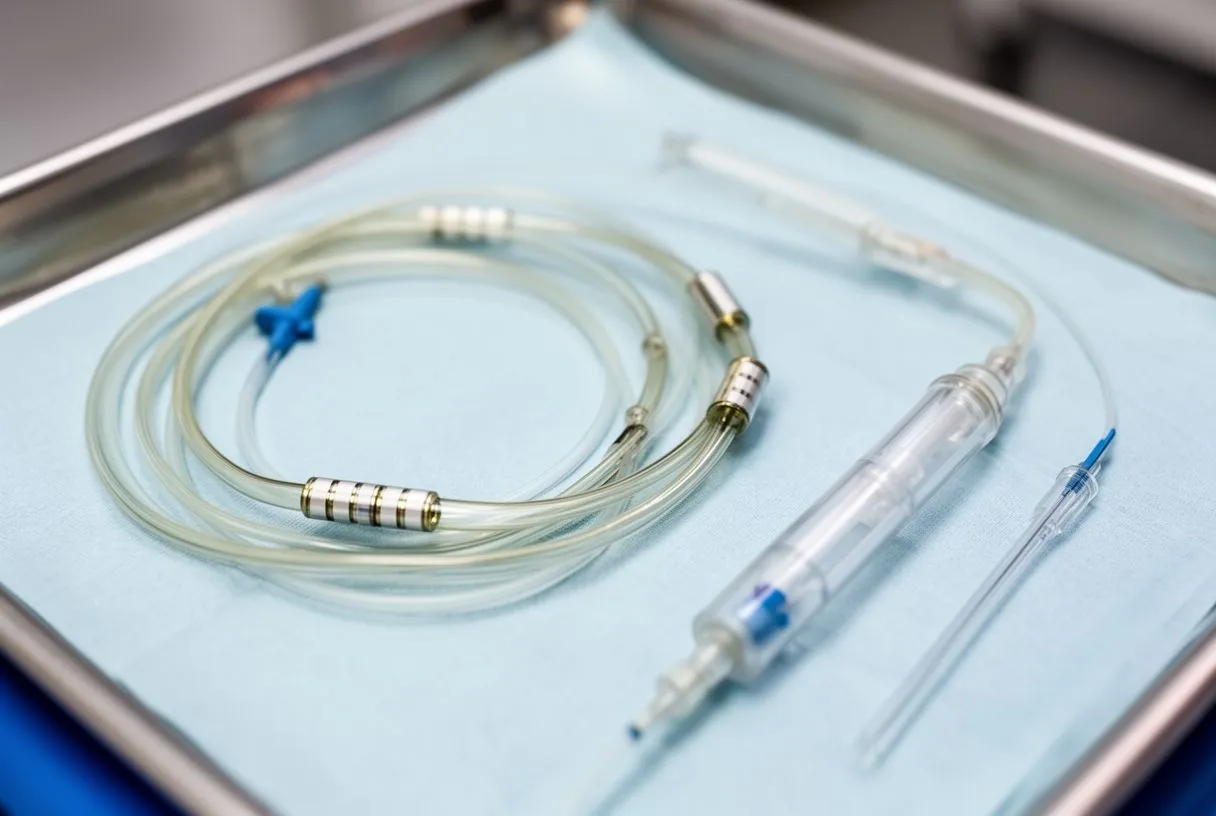
Drug-coated balloons as a first choice. For drug-eluting stent restenosis treatment, many interventional cardiology teams now prefer a drug-coated balloon rather than implanting another layer of metal inside the original stent. This approach, sometimes called "stent-lite" therapy, opens the narrowing and delivers medication without adding a new permanent scaffold — leaving more options open if the problem ever returns.
Repeat drug-eluting stents when needed. In some patterns of restenosis — particularly when the original stent was under-expanded or the vessel needs more structural support — placing a second drug-eluting stent inside the first remains the appropriate option. Modern drug-eluting stents release medication that suppresses tissue growth, and a second-generation stent often provides a durable result in these situations.
Treating the underlying pattern. Good stent restenosis management is not one-size-fits-all. Focal tissue growth responds well to a drug-coated balloon; an under-expanded stent is first opened fully with a non-compliant balloon or cutting balloon; extensive or recurrent narrowing may prompt the team to consider bypass surgery instead. The imaging studies done during catheterization determine which pattern you have.
What Are the Repeat Stent Procedure Options Beyond Angioplasty?
When repeat percutaneous procedures are enough. Most patients with restenosis are successfully treated with one of the catheter-based options above. The available repeat stent procedure options generally fall into a short list:
- Drug-coated balloon angioplasty: opens the stent without adding metal; often the first choice for restenosis.
- Repeat drug-eluting stent: adds a new medicated scaffold inside the old one when extra support is needed.
- Coronary artery bypass grafting (CABG): surgery that routes blood around the diseased segment using your own vessels.
When bypass surgery becomes the better answer. If the stented artery has restenosed more than once, if multiple vessels are involved, or if the anatomy is complex, coronary artery bypass surgery may offer a more durable solution than another catheter procedure. Bypass grafts — frequently the artery running inside the chest wall, called the internal mammary artery — are not affected by the tissue-growth problem that causes restenosis, which is why they can last decades.
How the decision is made. Choosing between a third catheter procedure and surgery depends on your anatomy, how many times the stent has failed, your other conditions, and your own priorities. Our team, led by Dr Alejandro Molina, performs conventional, minimally invasive, robotic and transcatheter procedures, and we recommend the less invasive route only where the evidence supports it for that specific patient — we encourage a second opinion, and we treat seeking one as a normal part of deciding about heart surgery.
What Are the Risks of Coronary Artery Re-Narrowing After a Stent?
Living with a narrowed stent untreated. Coronary artery re-narrowing after a stent, if left unaddressed, means ongoing reduced blood supply to part of the heart muscle. Over time this can limit daily activity, worsen heart function, and in some cases contribute to heart failure. One published case report documented terminal ischemic cardiomyopathy — severe, irreversible weakening of the heart muscle from insufficient blood supply — associated with complications after stenting for a heart attack, underscoring that restenosis deserves active follow-up rather than watchful waiting alone.
Procedural risks of re-treatment. Repeat procedures inside an already-stented artery carry their own considerations: the wire and balloon must pass through existing struts, and dissection (a tear in the artery wall) is a recognized possibility. These risks are generally low in experienced hands, and the imaging techniques described earlier are specifically used to reduce them. Research on percutaneous intervention for in-stent restenosis chronic total occlusion — a completely blocked stent — shows that while these procedures are more demanding than treating a fresh blockage, experienced centers achieve favorable procedural and long-term outcomes.
Being honest about uncertainty. No treatment eliminates the possibility of recurrence entirely. Drug-coated balloons and repeat drug-eluting stents substantially reduce, but do not abolish, the chance of another re-narrowing. That is why follow-up after any re-treatment matters as much as the procedure itself.
Can You Lower the Risk of In-Stent Restenosis?
Medication adherence comes first. In-stent restenosis prevention starts with taking your antiplatelet medicines — usually aspirin plus a second blood thinner such as clopidogrel or ticagrelor — exactly as prescribed for as long as your cardiologist directs. Stopping these early is one of the few risk factors fully within your control.
Managing the conditions that drive tissue growth. Diabetes control, blood pressure management, and stopping smoking all reduce the biological drive for tissue to grow inside the stent. Statins, which most stent patients take, stabilize plaque elsewhere in the arteries and support the long-term health of the treated vessel.
Keeping follow-up appointments. Restenosis is far easier to address when it is caught during a scheduled evaluation than when it announces itself as an emergency. If you notice a change — more breathlessness, less exercise tolerance, any return of chest discomfort — report it early rather than waiting for your next appointment. Early reporting turns a potential emergency into a planned procedure.

When Should You Seek Help for Stent Failure?
Warning signs that warrant prompt evaluation. Contact your cardiac team — or seek emergency care if severe — when any of the following occur:
- Chest pressure or pain that returns after having resolved following your stent, especially with activity.
- New breathlessness or fatigue during activities you could previously do comfortably.
- Chest pain at rest, lasting more than a few minutes, or with sweating, nausea, or pain radiating to the arm or jaw — this is an emergency; call emergency services immediately.
Getting a clear answer about your own stent. If you have questions about your stent, your symptoms, or the options for stent failure treatment, the most valuable next step is a conversation with a qualified cardiac team that can review your actual studies. Our first contact is a free video consultation: we get to know the patient, talk through the condition, and say which studies are still needed so no unnecessary ones are ordered; a face-to-face visit at our consulting rooms in Guadalajara, Querétaro or Hermosillo follows when the patient decides to go ahead.
The bottom line. A re-narrowed stent is a common, well-understood problem with several proven solutions — drug-coated balloons, repeat drug-eluting stents, or bypass surgery in selected cases. In-stent restenosis treatment today is planned, image-guided, and far more durable than in earlier generations of stents. The worst approach is ignoring returning symptoms or assuming nothing can be done. Discuss your specific situation with a cardiac team you trust, bring your questions, and make the decision together — never self-diagnose, and never wait out symptoms that could be evaluated and treated.