

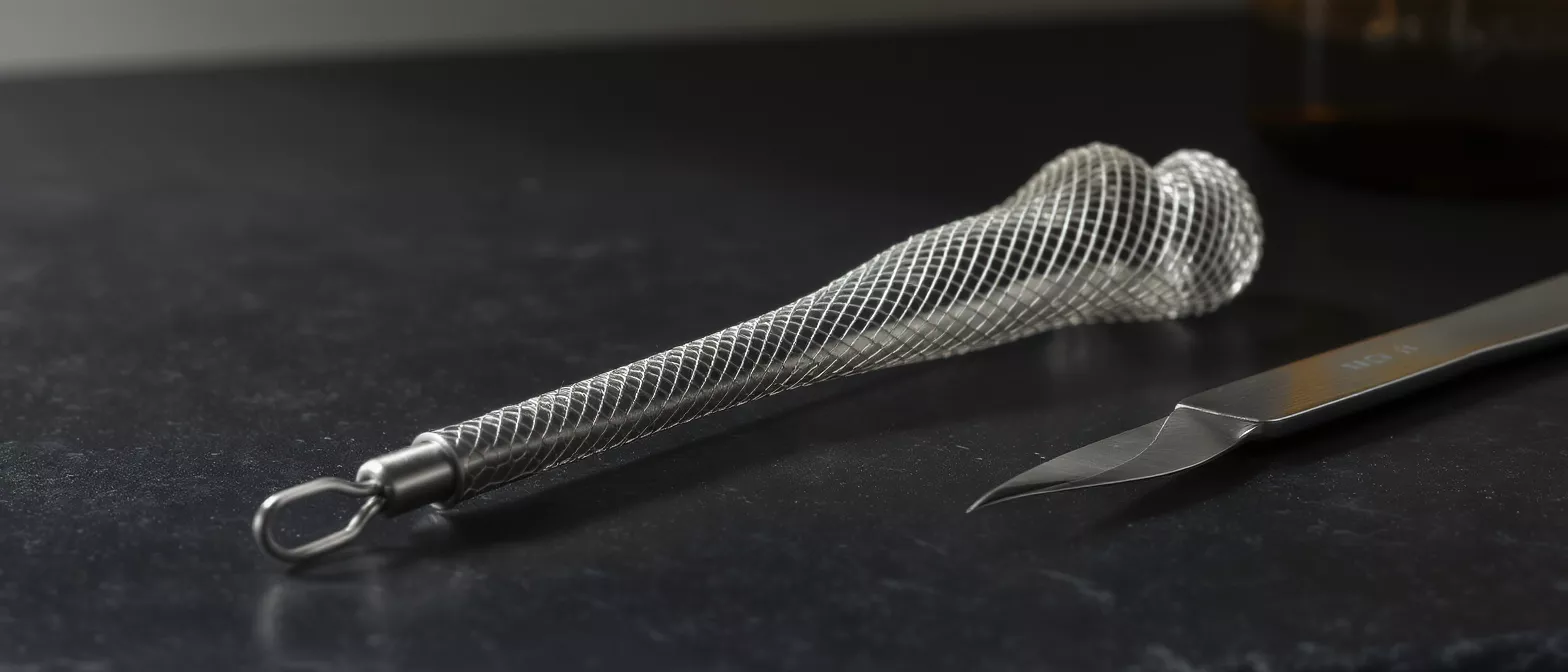
Bare-metal Stent
Learn how a bare-metal stent keeps coronary arteries open, its risks, recovery, and restenosis.
What is a bare-metal stent?
A bare-metal stent is a tiny, expandable wire mesh tube made of metal alloys—most commonly stainless steel or cobalt-chromium. Cardiologists use it to prop open a narrowed or blocked artery in the heart. When plaque builds up inside the coronary arteries, blood flow to the heart muscle is reduced, which can cause chest pain (angina) or a heart attack. The stent acts as a permanent scaffold, pushing the artery walls outward and restoring healthy circulation. It is a remarkable piece of engineering: collapsed to the size of a matchstick for delivery, then expanded to exactly the diameter needed to support the vessel.
For a patient facing heart surgery or an interventional cardiology procedure, the concept of a metal tube in the heart can sound intimidating. The reality is far more reassuring. These devices have been used safely for decades, and they are designed to be completely compatible with the human body. The metal is non-reactive, meaning it will not rust, degrade, or trigger an allergic response. Once placed, the stent becomes a permanent part of the artery wall. The body’s own cells will gradually grow over and around the mesh, integrating it into the natural tissue of the blood vessel.
Understanding what a bare-metal stent is helps demystify the entire coronary intervention stent process. It is not a complex machine with moving parts, but rather a simple, sturdy scaffold. Its sole purpose is mechanical support—to keep the highway open so blood can deliver oxygen to the heart. This straightforward mechanism is what makes stenting such a powerful and reliable tool in modern cardiac care.
How coronary bare-metal stent placement works
The placement of a bare-metal stent is performed during a procedure called an angioplasty, which is typically minimally invasive. The cardiologist makes a small needle puncture in the wrist or groin to access a major artery, then threads a thin, flexible tube called a catheter up to the heart. Because the patient is mildly sedated and the inside of the blood vessels has no nerve endings, the procedure is generally painless. The patient remains awake and can often watch the entire process on a live X-ray screen, seeing the narrowed artery open up in real time.
Step-by-step stent delivery: The stent is pre-mounted on a deflated balloon at the tip of the catheter. When the cardiologist positions the balloon directly across the cholesterol plaque that is blocking the artery, they inflate it. The balloon pushes the plaque flat against the artery wall and expands the stent simultaneously. Once the stent is fully expanded and the artery is open, the balloon is deflated and carefully withdrawn. The newly deployed stent remains in place, instantly restoring blood flow to the heart muscle.
Immediate results and monitoring: The cardiologist uses a special contrast dye and continuous X-ray imaging (fluoroscopy) to confirm that the stent is perfectly positioned and that blood is flowing freely. The entire procedure often takes less than an hour. Patients are usually monitored for a few hours in a recovery room before being sent home the same day or kept overnight for observation. The rapid recovery time is one of the greatest advantages of this technique compared to traditional open-heart surgery.
Bare-metal stent vs drug-eluting: what is the difference?
When discussing heart stent options, the most common comparison is the bare-metal stent vs drug-eluting stents (DES). A bare-metal stent is simply a mesh tube. A drug-eluting stent is structurally identical, but its surface is coated with a special polymer that slowly releases a medication over several weeks or months. This medication is designed to prevent the artery from scarring and narrowing again, a process known as restenosis. Both devices perform the exact same mechanical function of holding the artery open, but the drug-eluting stent adds a pharmacological layer of protection.
The primary reason a doctor might choose a bare-metal stent over a drug-eluting stent relates to how quickly the artery heals. With a bare-metal stent, the body's cells naturally grow over the metal mesh within a few weeks, covering it completely. This rapid healing means the patient only needs to take blood-thinning medications for a relatively short period. In contrast, the medication on a drug-eluting stent intentionally slows down this healing process, which requires the patient to take blood thinners for a much longer duration—often a year or more.
Choosing between these options is a highly individualized medical decision. Cardiologists weigh factors such as the size of the artery, the complexity of the blockage, and the patient's ability to tolerate long-term blood thinners. For patients with a higher risk of bleeding or those who may need urgent non-cardiac surgery in the near future, a bare-metal stent is often the safer and more practical choice. For smaller arteries where the risk of scar tissue returning is higher, a drug-eluting stent may be preferred.
When do doctors choose a bare-metal stent?
Doctors choose a bare-metal stent in specific clinical scenarios where the benefits of rapid healing outweigh the slight statistical advantage of drug-eluting coatings. The decision is never made lightly; it is the result of careful evaluation of the patient's anatomy and overall health. One major factor is the patient's bleeding risk. If a patient has a history of gastrointestinal bleeding, or if they are unable to adhere to a strict regimen of dual antiplatelet therapy (blood thinners) for a year, a bare-metal stent allows for a shorter, safer duration of these powerful medications.
Large artery anatomy: In heart arteries with a larger diameter (generally 3.5 millimeters or wider), the rate of scar tissue regrowth is naturally much lower. In these large vessels, a bare-metal stent provides excellent long-term results without the need for the drug coatings required to keep smaller arteries open. The mechanical strength of the metal alone is sufficient to maintain unobstructed blood flow, making it an excellent, straightforward solution for certain blockages.
Another important consideration is the potential for future surgeries. If a patient is likely to need another operation—such as a hip replacement or dental surgery—within the next year, being on heavy blood thinners can complicate those procedures. A bare-metal stent heals quickly, allowing the dual antiplatelet therapy to be discontinued sooner. This gives the patient and their surgical team much more flexibility to schedule necessary operations without dangerous bleeding complications.
Bare-metal stent risks and complications
While coronary stenting is a highly refined and safe procedure, it is important to understand the potential bare-metal stent risks and complications. The most immediate risk is related to the angioplasty procedure itself, which includes bleeding or bruising at the catheter insertion site in the wrist or groin. In very rare cases, the artery can be damaged during the catheter's journey to the heart, or a piece of plaque can break off. However, the use of advanced imaging and modern catheterization techniques has made these complications exceptionally rare.
Blood clot formation (stent thrombosis): The most serious risk associated with any stent is the formation of a blood clot inside the mesh. If a clot forms, it can abruptly block the artery and cause a heart attack. This is precisely why cardiologists prescribe blood-thinning medications after placement. The risk of clotting is highest in the first few weeks after the procedure, while the metal mesh is still exposed to the bloodstream. Once the body's natural cells grow over the metal and cover it, this risk drops significantly.
Restenosis: The primary drawback of a bare-metal stent is the risk of restenosis, which is the re-narrowing of the artery. Unlike a blood clot, restenosis is caused by the body's own healing response. Sometimes the body heals too aggressively, creating an overgrowth of scar tissue inside the stent that once again restricts blood flow. If a patient experiences recurrent chest pain months after the procedure, their cardiologist will evaluate them for restenosis and discuss potential treatments.
Understanding bare-metal stent restenosis
Bare-metal stent restenosis occurs when the artery slowly begins to narrow again months after the initial procedure. When the stent is deployed, it pushes against the artery wall, which the body recognizes as an injury. In an effort to heal the area, the body triggers cell division. For reasons that are not entirely predictable, this healing process can occasionally overreact. Instead of simply forming a thin layer of cells over the metal mesh, a thicker layer of scar tissue grows inward, gradually shrinking the space available for blood to flow.
The symptoms of restenosis are usually very familiar to the patient. It typically presents as a return of the same chest pain or tightness (angina) that was experienced before the stent was placed. This is the body's way of signaling that the heart muscle is not getting enough oxygen during physical exertion. Importantly, restenosis is a gradual process, not a sudden event like a heart attack. It develops over weeks or months, giving the patient and doctor time to recognize the symptoms and take action before a true emergency occurs.
If restenosis is diagnosed, there are several effective stent restenosis treatment options available. The cardiologist may use a specialized balloon to reopen the narrowed area, or they may place a drug-eluting stent inside the existing bare-metal stent to deliver scar-tissue-inhibiting medication directly to the site. In some cases, plaque removal devices or bypass surgery might be considered. The key to avoiding serious complications from restenosis is attending all follow-up appointments and reporting any returning chest symptoms to your cardiologist immediately.
Bare-metal stent recovery and medications
The bare-metal stent recovery process is remarkably fast, especially when compared to traditional open-heart surgery. Most patients are back on their feet within 24 hours and return to normal daily activities within a week. The tiny puncture site in the wrist or groin heals quickly. However, the physical recovery is only half the battle; the most critical component of recovery is medication adherence. To prevent blood clots from forming on the newly placed metal mesh, patients must take a specific combination of blood thinners.
Aspirin and antiplatelet therapy: Patients are typically prescribed aspirin to take daily for the rest of their lives, along with a second, stronger antiplatelet medication (such as clopidogrel) for a specific duration. With a bare-metal stent, this dual antiplatelet therapy usually lasts for at least one month. This contrasts with drug-eluting stents, which require a full year of dual therapy.
Cardiac rehabilitation: Many patients are enrolled in a structured cardiac rehabilitation program. This involves supervised exercise, heart-healthy nutrition counseling, and emotional support. Because the stent restores blood flow so effectively, patients often find they can exercise more comfortably than before the procedure, since the angina pain is gone. Embracing these lifestyle changes is essential.
How long does a bare-metal stent last?
One of the most common questions frightened patients ask is, "How long will this stent last?" The reassuring answer is that a bare-metal stent is designed to last a lifetime. The metal itself is incredibly durable and will not wear out, break, or rust inside the body. Once the stent is placed and expanded, it provides a permanent structural support system for the artery. It becomes a permanent part of the patient's cardiovascular anatomy, working silently in the background every single day.
The true question of longevity is not about the stent failing, but about the artery staying open. As discussed, the main threat to the stent's effectiveness is restenosis (re-narrowing) or the progression of plaque in other areas of the artery. If the artery heals properly and the patient maintains a healthy lifestyle, the stent will function perfectly indefinitely. The metal mesh simply holds the walls apart; it is up to the patient's overall health management to ensure the plumbing remains clear.
Patients do not need to worry about the stent moving out of place or migrating to another part of the body. Within a few weeks, the cells of the artery wall grow over and embed the metal, anchoring it permanently. You cannot feel the stent, and it will not set off metal detectors at the airport. It is a silent, permanent partner in heart health, providing peace of mind that the specific blockage which caused concern has been structurally resolved.
Coronary artery stenting vs bypass surgery
When evaluating heart disease, the comparison of coronary artery stenting vs bypass surgery is a crucial topic. Stenting is a minimally invasive procedure performed through a small needle puncture, whereas coronary artery bypass grafting (CABG) is a major open-heart surgery. Bypass surgery involves opening the chest, stopping the heart, and using a healthy blood vessel from another part of the body to create a new route around the blocked artery. It requires a lengthy hospital stay and months of physical recovery.
Stenting is generally chosen for patients who have one or two isolated blockages, or for those who are too frail to withstand the physical trauma of open-heart surgery. The angioplasty bare metal stent procedure allows patients to be discharged the next day and resume normal life within a week. Bypass surgery, however, is often recommended for patients with severe, multi-vessel disease where the left main artery is involved, or when diabetes is present, as bypass grafts tend to last longer in these complex cases.
- Recovery Speed: Stenting allows patients to return to daily activities in days, while bypass surgery requires 6 to 12 weeks of healing.
- Invasiveness: Stenting uses a small wrist puncture, avoiding the need to open the chest or stop the heart.
- Long-term Durability: Bypass surgery offers superior long-term outcomes for complex, multi-vessel blockages.
- Complexity: Stents require strict adherence to blood thinners, whereas bypass grafts focus on long-term medication management.
Living well after a coronary intervention stent
Receiving a stent is not a cure for heart disease; it is a highly effective mechanical fix for a specific plumbing problem. The underlying process of plaque build-up (atherosclerosis) is still present in the body. Therefore, living well after a coronary intervention stent requires a lifelong commitment to managing risk factors. This means controlling blood pressure, managing cholesterol levels, and keeping blood sugar in check if diabetes is a factor. The stent does the heavy lifting of keeping the artery open, but the patient must do the work of keeping the blood vessels healthy.
Diet and exercise: A heart-healthy lifestyle is the best defense against future blockages. Patients should adopt a diet low in saturated fats and rich in vegetables, fruits, and whole grains. Regular, moderate aerobic exercise—like walking or swimming—strengthens the heart muscle and improves overall circulation. Because the stent has restored blood flow, patients usually find they have more energy and less chest pain, making exercise more enjoyable than before the procedure.
Regular follow-up with a cardiologist is essential to ensure the stent is functioning correctly and no new blockages are forming. By combining the mechanical success of the stent with healthy daily habits, patients can expect to return to a full, active, and vibrant life. The journey through heart disease can be frightening, but understanding how these incredible devices work empowers patients to take control of their health and face the future with confidence and clarity.






