Your Discharge Summary After Heart Surgery
Your discharge summary heart surgery guide explains recovery steps, medications, and warning signs.
What Is a Discharge Summary After Heart Surgery?
Leaving the hospital after a major cardiac procedure is a momentous milestone, but it often comes with a mix of relief and underlying anxiety. Your discharge summary heart surgery paperwork is the comprehensive document that bridges your inpatient care with your recovery at home. It serves as a personalized medical roadmap, translating the complex interventions performed by your surgical team into a clear set of instructions for you, your family, and your local healthcare providers.
Anatomy of your medical record: This summary details exactly what occurred in the operating room, whether your surgeon repaired your Ascending Aorta or bypassed blocked vessels. It notes your time in the intensive care unit, where an Arterial Line was likely used to continuously monitor your blood pressure. The document also records the findings from your final physical assessment, including Auscultation (listening to your heart and lungs with a stethoscope) before you left the ward. Clinical data compiled by the National Center for Biotechnology Information consistently shows that patients who understand their discharge documents experience fewer postoperative complications and smoother transitions to home care.
At Cirugía de Corazón, Dr Alejandro Molina and the medical team ensure this document is not just a formality. It is a vital communication tool designed to protect your health once you are outside the hospital walls. We provide it in clear, accessible language so that you can refer back to it whenever you have a question about your recovery milestones or surgical limitations. It is your proof of the care you received and your guide for the weeks ahead.
Understanding Your Heart Surgery Recovery Guide
The recovery process after cardiac surgery is rarely linear, and understanding the typical timeline helps manage expectations. Your discharge instructions will outline a phased approach to regaining your strength. The first few weeks are heavily focused on healing the surgical incisions and allowing your breastbone to knit back together securely. During this time, your body is using a massive amount of energy to repair tissues, which explains the profound fatigue many patients experience.
Managing unexpected discomforts: It is completely normal to experience aches in areas you did not expect. If your surgical team harvested an Arterial Graft from your chest or wrist for a bypass, you may notice localized swelling or Arm Pain on that side. Your instructions will also detail how your body replenished its volume, noting whether you received an Autologous Blood transfusion (your own previously donated blood) during the procedure, which generally lowers the risk of allergic reactions. Understanding these physiological details helps demystify the healing process.
Following the guidelines strictly minimizes the risk of setbacks like wound dehiscence or internal bleeding. You must balance gentle movement to prevent blood clots with adequate rest to promote tissue repair. Your heart is adjusting to its new physiological state, whether that means improved blood flow from a bypass or a newly functioning valve. Patience is not just a virtue during this phase; it is a medical necessity.

Key Elements of Discharge Instructions After Heart Surgery
A robust set of discharge instructions covers every aspect of your daily routine, breaking down complex medical protocols into actionable steps. You will find explicit guidance on lifting restrictions, usually prohibiting you from lifting anything heavier than ten pounds for several weeks. The document also provides driving restrictions, advising against getting behind the wheel until your reflexes and physical strength are sufficiently restored to handle sudden movements safely.
Procedure-specific guidelines for valves: If you underwent a transcatheter aortic valve replacement (often called TAVR), your guidelines will differ slightly from those who had open surgery. You might have received a Balloon-expandable Valve deployed through a catheter, or perhaps a prior Balloon Aortic Valvuloplasty was performed to open a narrowed valve temporarily. In some cases, a Balloon Angioplasty is performed concurrently to address other narrowed vessels. These specifics are crucial, as noted in studies like Transcatheter Aortic-Valve Implantation for Aortic Stenosis in Patients Who Cannot Undergo Surgery, which highlight the unique recovery trajectories of less invasive valve interventions.
Dietary modifications also feature prominently in your discharge papers. You will be advised to maintain a heart-healthy diet that is low in sodium to prevent fluid retention and subsequent strain on your heart. The instructions will detail how to monitor your fluid intake and what signs of edema (swelling) to watch for in your legs and ankles. Adhering to these daily instructions is the foundation of a successful recovery.
Post-Operative Care Cardiac Surgery: Medications
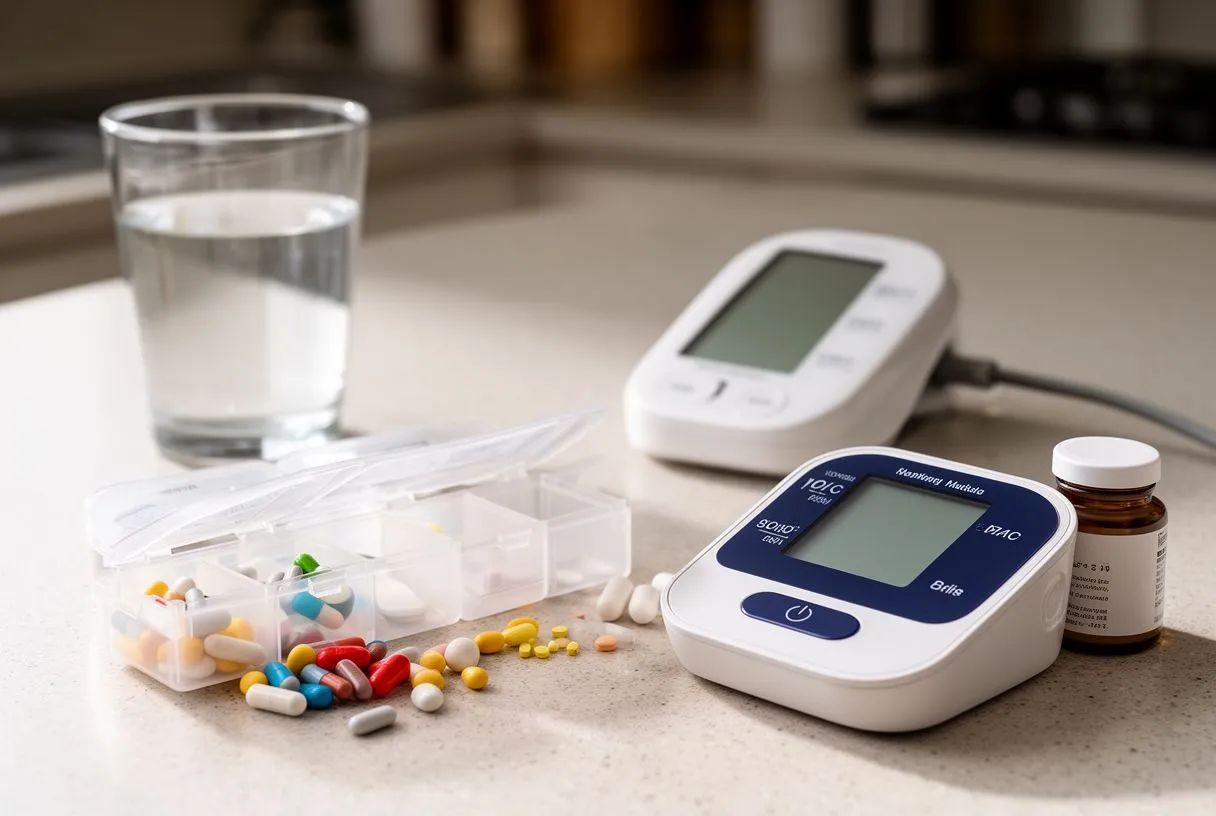
Medications are the cornerstone of your post-operative care cardiac surgery plan. Your discharge summary will include a detailed list of every drug you must take, including the dosage, frequency, and specific purpose. You will likely be prescribed a combination of pain relievers, anti-inflammatory drugs, and medications to support your cardiovascular system as it heals and adapts to its new mechanics.
Preventing clots and managing rhythm: Blood thinners are frequently prescribed to prevent dangerous clots from forming. You may be instructed to take daily Aspirin, while those with a higher risk profile might be placed on specific anticoagulants, a regimen studied extensively in the Heart Disease and Stroke Statistics—2013 Update and subsequent trials like the ARISTOTLE study, which evaluated apixaban for preventing strokes. If you experience an irregular heartbeat, such as Atrial Flutter, originating in the upper chambers of the heart known as the Atrium, you may be given anti-arrhythmic drugs. Furthermore, cholesterol management is paramount; medications targeting Apolipoprotein B (a protein involved in carrying bad cholesterol) are often started or adjusted to prevent future plaque buildup.
It is vital to understand that you should never stop taking these medications abruptly without consulting your surgical team or local cardiologist. Some drugs require a gradual tapering to prevent rebound effects or dangerous physiological shifts. Always keep a copy of your medication list with you, especially when traveling back to your home country, to present to customs or emergency medical personnel if necessary.
Wound Care After Cardiac Surgery
Proper incision care is one of the most critical components of your recovery at home after heart surgery. Your discharge instructions will specify how to clean the site, what soaps are safe to use, and how to keep the area dry. For chest incisions, you must avoid soaking in bathtubs or swimming pools until the wound is entirely healed and cleared by your surgeon to prevent bacterial infection.
Monitoring the surgical site: The document will detail how to inspect your incisions daily for signs of infection. If an Arterial Cannula was placed in your groin or neck during surgery, or if an Autograft (tissue taken from one part of your body to use in another) was utilized, you will have multiple sites to monitor. Watch for increased redness, excessive warmth, purulent drainage, or opening of the wound edges. Your instructions should also define what constitutes an Atypical Infarction or unusual systemic signs of infection, such as a sudden, unexplained fever, which requires immediate medical attention.
When showering, you may be instructed to let soapy water run gently over the incision without directly scrubbing it. Pat the area dry with a clean towel rather than rubbing. If Steri-Strips were applied, leave them in place until they begin to curl and fall off naturally, unless your surgeon instructs otherwise. Maintaining strict hygiene standards is your best defense against postoperative wound complications.
What to Expect After Heart Surgery at Home
Returning to your own bed is a comforting milestone, but the first few nights at home can be challenging. Sleep disturbances are incredibly common; you may find it difficult to get comfortable, or you might wake up frequently due to medications or generalized discomfort. Many patients find that sleeping in a recliner or propped up on multiple pillows helps alleviate chest pressure during the initial weeks of healing.
Daily activity limitations to respect: While gentle walking is encouraged to promote circulation, you must strictly avoid strenuous activities. Pushing, pulling, or twisting motions can stress your healing breastbone. If you have an Atheromatous Plaque history or severe vascular disease, managing your exertion is even more critical to avoid stressing fragile vessels. Your team will advise against vacuuming, lifting groceries, or mowing the lawn. Here is a quick summary of daily tasks to avoid during the first few weeks:
- Heavy Lifting: Do not lift anything heavier than a small bag of groceries.
- Driving: Wait until your doctor clears you, usually four to six weeks, to ensure your reflexes are sharp.
- Strenuous Chores: Avoid activities that require pushing or pulling, like heavy yard work.
It is also normal to experience emotional fluctuations during this period. Depression and anxiety are not uncommon after major surgery, partly due to the physical trauma and partly due to the prolonged recovery time. Acknowledging these feelings and communicating them with your support system or healthcare provider is an essential part of the holistic healing process.

Recognizing Complications During Recovery
While most recoveries proceed smoothly, knowing how to identify potential complications is crucial for your safety. Your discharge summary will provide a clear list of red flags that necessitate immediate medical intervention. These are not minor grievances; they are specific physiological warning signs that your body is struggling to adapt or heal properly after the surgical insult.
Cardiac red flags to never ignore: If you develop shortness of breath that suddenly worsens, palpitations that do not resolve with rest, or chest pain that differs from your incisional pain, you must seek help immediately. In extreme emergencies at home, a family member might need to use an Automated External Defibrillator if you lose consciousness and stop breathing. In the hospital setting, critical care options like Awake ECMO (Extracorporeal Membrane Oxygenation) might be used for severe respiratory or cardiac failure, but at home, rapid response is your only defense. Do not hesitate to call emergency services if you suspect a serious cardiac event.
Other warning signs include sudden swelling in one leg, which could indicate a deep vein thrombosis, or a sudden weight gain of two or more pounds in a single day, which suggests fluid retention. Keeping a daily log of your weight and symptoms, as directed in your discharge papers, helps you and your medical team spot these trends before they become emergencies. Always err on the side of caution when it comes to chest symptoms.
Cardiac Surgery Discharge Checklist for International Patients
For patients traveling to Mexico for cardiac surgery, the discharge process involves additional logistical considerations. Your discharge planning begins well before you leave the operating room, ensuring your transition back home is as seamless as possible.
Travel and documentation preparation: You will be provided with a comprehensive medical packet that includes your operative reports, imaging studies, and a detailed medication list. This documentation is vital for airport security and for handing over to your local cardiologist. Before booking your flight, ensure you have clearance for air travel from your surgical team, as cabin pressure changes can affect your healing heart. Follow this essential checklist for your journey home:
- Medical Records: Carry all physical and digital copies of your discharge summary and surgical notes in your carry-on bag.
- Medication Supply: Ensure you have enough prescribed medication to last until you can see your local doctor, plus a few extra days for delays.
- Mobility Aids: Arrange for a wheelchair or assistance at the airport to prevent exhaustion during transit.
Coordinate with your local primary care physician before you leave Mexico, scheduling an appointment for shortly after your arrival. This ensures continuity of care and provides a local safety net should you need immediate medical attention once you are back on home soil. Clear communication between the surgical team in Mexico and your local providers is the hallmark of successful international medical care.

Heart Surgery Follow-Up Care and Appointments
Discharge does not mean the end of your relationship with your surgical team; it is simply a transition to outpatient care. Your discharge summary will outline a schedule for follow-up appointments, which are critical for monitoring your progress. These check-ins allow your surgeon to assess your wound healing, adjust your medications, and evaluate your overall cardiac function.
Coordinating with your local cardiologist: For international patients, follow-up care is often split between virtual consultations with your surgical team in Mexico and in-person visits with your local cardiologist. Ask for detailed clinical notes from each visit, which become a permanent part of your ongoing medical record.
During these follow-up appointments, expect to undergo non-invasive tests such as echocardiograms or electrocardiograms to visualize your heart's function. These tests are compared against your pre-operative baselines to measure the success of the intervention. Never skip these appointments, even if you are feeling remarkably well; some complications are asymptomatic in their early stages and can only be detected through clinical evaluation.
Adjusting to Life and Long-Term Health After Surgery
The ultimate goal of your cardiac surgery and the subsequent discharge planning is to give you back a high quality of life. As you move past the initial six to eight weeks of strict recovery, your focus will shift to long-term health maintenance. Your discharge instructions serve as the foundation for the lifestyle modifications required to protect your investment in your health.
Long-term cardiac monitoring: Cardiac surgery is a mechanical fix, but it does not cure the underlying disease process that necessitated the surgery. To prevent the progression of arterial disease, you must adhere to dietary changes, smoking cessation, and a regular exercise regimen. Your medical team will help you transition from postoperative rehabilitation to an independent fitness routine. Long-term monitoring of your blood pressure, cholesterol, and heart rhythm will become a permanent aspect of your preventative healthcare routine.
Navigating recovery after heart surgery requires patience, diligence, and a clear understanding of your discharge instructions. By following your customized plan, you give your heart the best possible environment to heal and thrive. We encourage you to discuss your specific situation, concerns, and recovery goals with a qualified cardiac team. To explore your surgical options or to clarify your recovery pathway, book a consultation with Dr Alejandro Molina and the team at Cirugía de Corazón rather than self-diagnosing from home. Your heart health is a lifelong journey, and expert guidance is the key to walking it safely.