Faster Recovery Heart Surgery: Minimally Invasive Options
Faster recovery heart surgery gets you home in weeks, not months.
When a heart surgeon tells you that you need a valve repair or a bypass, one of the first questions families ask is how long recovery will take. For decades, the honest answer was measured in months, because traditional heart surgery required a long incision down the breastbone and weeks of careful healing. Today, faster recovery heart surgery is a real and well-established option for many patients, using smaller incisions, robotic instruments and catheter-based techniques to reach the heart with far less disruption to the body. This guide walks you through what those options are, how they differ, what recovery actually looks like week by week, and how to prepare so you can make the decision that best fits your situation.
What Is Faster Recovery Heart Surgery?
Faster recovery heart surgery is an umbrella term for approaches that treat the same heart conditions as traditional surgery but with less trauma to the chest wall, muscles and bone. The goal is not simply a smaller scar — it is to get you back to your normal life in weeks rather than months, with less pain and a lower risk of wound complications.
Why the traditional approach takes longer. In conventional open-heart surgery, the surgeon divides the breastbone (the sternum) to reach the heart. That bone is load-bearing, like a splint across your chest, and it typically takes six to eight weeks to knit back together. Patients are told not to lift, push or pull anything heavy during that whole period, which is why the recovery feels long even when the heart itself is healing well.
What makes the newer approaches faster. Techniques such as small incision heart surgery recovery, robotic-assisted repair and transcatheter procedures avoid dividing the breastbone, so the structures that take longest to heal are never touched. The heart is reached through a small incision between the ribs, through the side of the chest, or through a catheter in the groin. Studies of minimally invasive cardiac surgery have shown that patients in this early period tend to have less blood loss and shorter hospital stays, which is a large part of the speed advantage.
The same conditions, different routes. Minimally invasive techniques are used for valve disease, coronary disease, and some structural heart conditions — the same problems that once always required a full sternotomy. What changes is the route to the target, not the medical goal.
What Are the Minimally Invasive Heart Surgery Options?
If you have been told you need heart surgery, it helps to know the full menu of less invasive heart surgery techniques before agreeing to any one of them. The main options are small-incision surgery, robotic-assisted surgery, and transcatheter procedures such as TAVR.
Small-incision (mini-thoracotomy) surgery. The surgeon works through a small opening between the ribs on the right side of the chest, usually 5 to 8 centimeters long. This is often used for mitral valve repair and some aortic valve operations. The heart-lung machine is still used, but the chest is not opened down the middle.
Robotic-assisted surgery. The surgeon sits at a console controlling precision instruments attached to robotic arms. The arms work through several tiny incisions, each a few millimeters wide. This is the route used for many robotic heart surgery recovery cases, especially mitral valve repairs.
Transcatheter procedures (TAVR). Instead of an incision, a new aortic valve is delivered through a tube-like catheter, usually from the femoral artery in the groin. TAVR is the standard term for this technique.
- Mini-thoracotomy: small chest incision, direct surgical view, good for valve repairs and some bypass operations.
- Robotic surgery: tiny incisions, maximum precision, most common for mitral valve repair.
- TAVR: catheter-based, no chest incision at all, typically for aortic valve narrowing.
How Does Keyhole Heart Surgery Work?
"Keyhole heart surgery recovery" is a phrase patients use a lot, and it describes exactly what happens: the surgeon accesses the heart through a small opening, much like keyhole surgery in other parts of the body. The heart is still stopped and the heart-lung machine still circulates your blood, but the route to the heart is radically different.
The incision. A port-access or mini-thoracotomy incision is made in the right side of the chest, between the ribs. Special instruments and a camera are inserted, and the surgeon can see the heart on a high-definition video monitor. There is no need to cut the breastbone.
What it means for healing. Because the sternum stays intact, there is no bone to protect while it heals. Small incision heart surgery recovery tends to involve less pain, less blood loss, and a hospital stay of only a few days in many cases.
Who it suits best. Keyhole surgery works well for isolated valve disease in patients without complex coronary problems. It is less suitable when multiple bypasses are needed or when lung disease makes working on the right chest difficult.
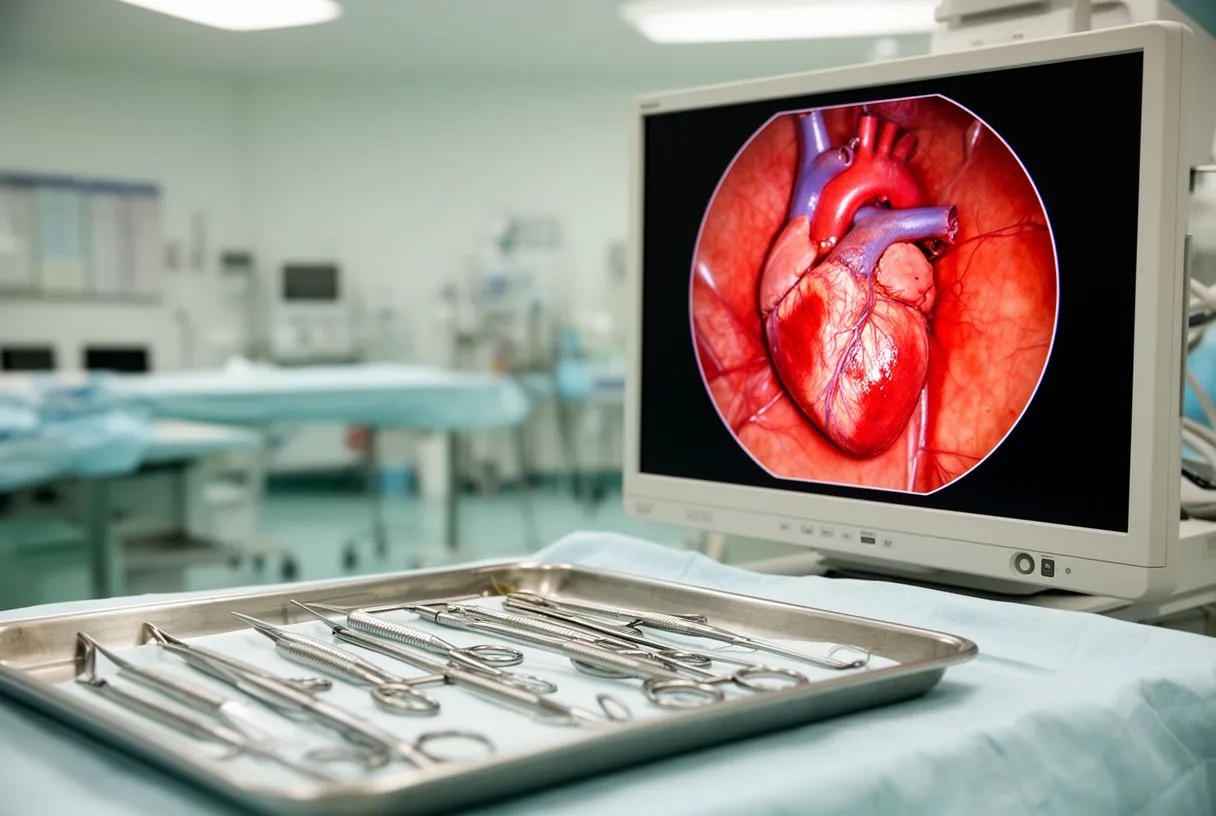
Published center experience with minimally invasive aortic valve replacement has described it as a safe technique, with comparable outcomes to conventional surgery in properly selected patients. The key phrase is "properly selected" — the choice of technique is a medical judgment, not a preference.
How Long Is Robotic Heart Surgery Recovery?
Robotic heart surgery recovery is often the fastest of the surgical options, because the incisions are the smallest and the chest wall suffers the least trauma. Patients are frequently walking within a day, discharged within a few days, and back to office work in two to three weeks — versus the six to eight weeks typical after a sternotomy.
How robotic surgery actually works. The surgeon does not operate with their hands directly. Instead, they control articulated instruments from a console a few feet away. The system translates hand movements into smaller, steadier motions inside your chest, often with magnified 3D vision of the surgical field.
The recovery timeline. In the first days after robotic mitral repair, patients usually move from the intensive care area to a regular room, walk short distances, and manage pain with modest medication. By two weeks, most can drive and resume light daily activities. Strenuous activity still needs your surgeon's clearance, typically around four to six weeks.
What we see in practice. Dr Molina performed the first robotic mitral valve repair in the Ángeles Health System and the first robotic heart surgery in Guadalajara. Patients who walk early and keep to their breathing exercises tend to return to normal routines sooner. Training matters here: robotic surgery has a learning curve, and outcomes improve with an experienced team.
Is TAVR Recovery Time Faster Than Open Surgery?
TAVR — transcatheter aortic valve replacement — is often the clearest example of faster recovery after heart valve surgery. Instead of opening the chest at all, the new valve is delivered on a catheter through an artery, guided to the diseased aortic valve, and expanded in place.
Why the recovery is so short. There is no chest incision and no need to stop the heart. The main access point is a small puncture in the groin, which is closed with a suture or closure device. TAVR recovery time faster outcomes mean many patients go home within one to two days and resume normal activities soon after.
Who qualifies. TAVR was first used for patients too frail for open surgery, and guidelines have progressively expanded eligibility based on age and surgical risk. Severe aortic stenosis — a narrowed aortic valve — is the usual indication. Your team will weigh your surgical risk, valve anatomy, and artery health before recommending it.
What the first days are like. Most patients are surprised by how little pain there is. The main restrictions concern the groin access site: keep it clean, avoid heavy lifting, and watch for bleeding or swelling there. The heart itself usually adapts to the new valve quickly, and symptoms such as breathlessness and fainting improve within days.

There are trade-offs to discuss honestly: TAVR valves may have a shorter lifespan than surgically implanted valves in younger patients, and pacemaker rates after TAVR can be higher than after surgical aortic valve replacement. This is exactly why a multidisciplinary review matters.
What Does Heart Surgery Without Cracking the Chest Recovery Look Like?
When people search for "heart surgery without cracking chest recovery," they are really asking: what does life look like afterward, day by day? Here is the general rhythm across the minimally invasive options.
Days 1 to 3. You are in hospital, sitting up, walking the corridor with help, and managing pain with tablets rather than heavy intravenous medication. A sore throat or neck ache from the breathing tube is common and fades quickly.
Weeks 1 to 3. At home, you will feel tired — that is normal and does not mean something is wrong. Sleep more than usual, walk a little further each day, and avoid lifting anything heavier than a kettle. The wound is checked, and stitches or clips may be removed.
Weeks 4 to 6. Most patients return to desk work, drive with their surgeon's approval, and gradually raise activity. Cardiac rehabilitation — a supervised program of exercise and education — is strongly recommended and accelerates confidence as much as fitness.
Weeks 6 to 12. With a minimally invasive approach, many patients are essentially back to normal life by this point. With a traditional sternotomy, this is often when the bone is finally strong enough for unrestricted activity — which is a large part of why the minimally invasive route is described as faster recovery heart surgery.
How to Prep for Surgery?
Good preparation measurably shortens recovery. The weeks before surgery are not waiting time — they are training time.
- Stop smoking now: every smoke-free week improves wound healing and lung function.
- Move daily: even gentle walking before surgery builds the reserve you will rely on afterward.
- Review your medications: some blood thinners and diabetes drugs need adjusting before surgery.
- Sort your home: prepare easy meals, place frequently used items at waist height, and arrange help for the first week.
- Prepare your mind: ask every question now, so you walk in with certainty rather than dread.
Getting your questions answered first. In our consultation we take the time to explain what the studies actually show, in plain words, and to answer every question before any decision is made. Our first contact is a free video consultation: we get to know the patient, talk through the condition, and say which studies are still needed so no unnecessary ones are ordered. A face-to-face visit follows when you decide to go ahead.
What Is Considered Strenuous Activity After Surgery?
After heart surgery, "strenuous activity" means anything that makes you strain, hold your breath, or lift heavy loads — because those motions put pressure on healing tissue. Even after minimally invasive surgery, the rules are similar, just shorter.
The main categories to avoid. Lifting anything more than roughly 5 kilograms, pushing or pulling heavy objects, shoveling, digging, and holding your breath during exertion are the classic examples. Contact sports, swimming, and heavy gym work come later and only with your surgeon's approval.
What you can usually do. Walking is almost always encouraged from day one and is the single best recovery activity. Climbing stairs is fine. Driving is typically allowed once you can brake hard without pain — usually around two weeks after minimally invasive surgery, longer after a sternotomy.
The timeline that matters. For faster recovery heart surgery to actually be faster, you have to respect the early phase. Patients who push heavy weights in week two sometimes set their healing back. If something causes sharp pain at the incision site, stop and ask your team.
How to Help Someone in Pain After Surgery?
Family members often ask how they can help a loved one who has just come home from heart surgery. Pain after minimally invasive heart surgery is usually moderate — more like a deep bruise than a sharp wound — but it is still real, and help makes a genuine difference.
Keep the pain medication schedule. The most common mistake is waiting until the pain is severe before taking the prescribed medication. Help your loved one take it on schedule, especially in the first week, and they will move better and sleep better.
Support the walking, not the lifting. Encourage them to walk each day, and offer to carry the groceries, the laundry basket, and everything else. Your job is to remove the temptation to lift, not to keep them in bed.
Watch for warning signs. Fever over 38°C, increasing redness or discharge at the wound, new breathlessness, or pain that suddenly worsens rather than improves — these are reasons to call the surgical team. Our team reviews every case against international guidelines before a recommendation is given. We are a multidisciplinary team of cardiac surgeons led by Dr Alejandro Molina, with consulting rooms in Guadalajara, Querétaro and Hermosillo.
Is It Okay to Cancel Surgery Due to Anxiety?
Anxiety before heart surgery is extremely common, and patients frequently wonder whether feeling this way means surgery is wrong for them. The short answer: anxiety is normal, but do not cancel on it alone — talk it through with your team first.
Anxiety versus genuine doubt. Feeling afraid is not a reason to cancel; it is a reason to ask more questions. If, after honest discussion, you still doubt the plan, that is a legitimate signal to seek a second opinion — not an emergency cancellation.
The right to a second opinion. We encourage second opinions and treat seeking one as a normal part of deciding about heart surgery. Every case is reviewed by our multidisciplinary team against international practice guidelines before a recommendation is given; the patient receives a clear proposal with the alternatives, and the final decision is always theirs.
What helps the anxiety itself. Knowing exactly what will happen on the day reduces fear more than anything else. Ask about the sequence: arrival, anesthesia, the operation, the recovery room, and the days after. Understanding that the Recovery Room and the Bridge to Recovery phases are planned and staffed precisely to care for you through them makes the unknown far less frightening. Modern anesthesia and minimally invasive techniques also mean less pain and shorter hospital time than most patients expect.
Choosing the Best Heart Surgeon for Fast Recovery in Mexico
Patients searching for the best heart surgeon for fast recovery in Mexico are usually really asking two things: who has the training to offer the less invasive options, and who will give an honest recommendation rather than defaulting to one approach.
Training that spans the techniques. A surgeon who only performs open surgery will recommend open surgery. Look for a team whose training covers conventional, minimally invasive, robotic and transcatheter approaches — so the recommendation starts from your condition, not from their comfort zone.
Transparency about outcomes. Ask how many of these procedures the team performs per year, what their complication rates are, and what their standard recovery protocol looks like. A confident, experienced team answers these plainly.
Practical support for international patients. For patients traveling to Guadalajara or elsewhere in Mexico, ask how the process is coordinated: how studies are reviewed remotely, how long you should plan to stay, and what follow-up looks like once you are home. Dr Molina trained in cardiothoracic surgery at the Universidad de Guadalajara, in cardiac, minimally invasive, robotic and structural surgery at the University of Montreal, and in structural cardiology and TAVR at CHU Bordeaux, with the team also trained at Jena, Bad Berka and Buffalo.

Heart surgery decisions should also account for realistic costs: the shorter hospital stay of minimally invasive and catheter-based procedures often means lower total costs than open surgery, even when the technology itself is more advanced. Ask for a full, itemized estimate before you commit.
When to Seek Help During Recovery
Most recoveries are uneventful, but knowing the warning signs is part of a safe faster recovery heart surgery plan. Contact your surgical team promptly if any of the following appear.
- Fever above 38°C: especially with chills or sweating.
- Wound problems: spreading redness, pus, opening edges, or new swelling.
- Breathlessness or chest pain: new or worsening, at rest or with light activity.
- Irregular or racing heartbeat: especially with dizziness or fainting.
- Groin puncture bleeding: after TAVR, any expanding swelling or bleeding needs immediate attention.
International guidelines from the European Society of Cardiology emphasize structured follow-up after any cardiac intervention, and minimally invasive patients should expect the same regularity of review as open-surgery patients — the technique is less invasive, but the heart condition is not less serious.
Your Next Step Toward a Faster Recovery
Faster recovery heart surgery is not a single technique — it is a family of options, from small-incision and robotic procedures to TAVR, each suited to different patients and different conditions. The consistent message from the research and from everyday practice is that avoiding a sternotomy, when it is safe to do so, means less pain, a shorter hospital stay, and a return to normal life measured in weeks rather than months. The other consistent message is that technique choice must follow a careful, multidisciplinary assessment of your specific heart, not a general preference for anything "new."
Talk to a team before you decide. If you or a family member have been told heart surgery is needed — or if you have valve disease, coronary disease or a structural heart condition and want to understand all your options — the most useful thing you can do is book a consultation. Bring your studies, bring your questions, and ask specifically whether a less invasive route is appropriate for you. The final decision is always yours, and it should be made with a team that takes the time to explain it fully. Do not self-diagnose or delay symptoms out of fear: modern heart surgery, done for the right patient for the right reason, is safer and faster to recover from than at any time in history.