Point-of-Care INR Testing at Home: Self-Monitoring Warfarin
Point-of-care INR testing home guide: learn how to self-monitor warfarin safely, choose a device, hit your target range, and when to call your heart team.
If you take warfarin after a mechanical valve replacement or for atrial fibrillation, you know the routine: a trip to a lab, a needle in the arm, a wait for the result, and a phone call about your dose. Point-of-care INR testing at home changes that routine. Instead of travelling to a clinic, you check your own INR — the number that shows how quickly your blood clots — with a small device at your kitchen table, and your care team adjusts your warfarin dose based on the reading. This guide explains how home INR testing works, who it suits, what it costs in effort and attention, and where its limits are, so you can discuss it with your own team with clear questions in hand.
What Is Point-of-Care INR Testing at Home?
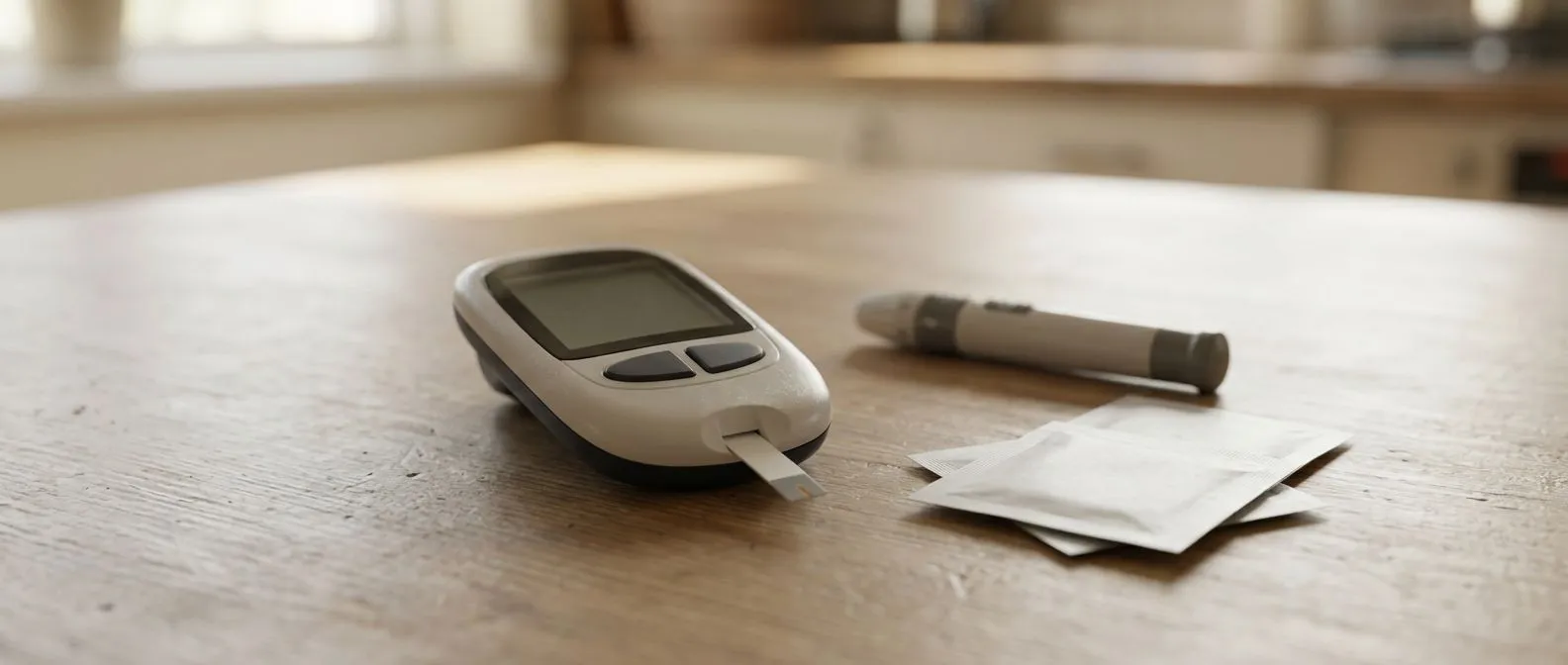
The basic idea. Point-of-care coagulation testing means the test happens where the patient is, not in a central laboratory. INR stands for International Normalised Ratio. It is a standardised measure of how long your blood takes to clot while you are on anticoagulant medicine such as Warfarin. A lab measures this from a vein draw; a point-of-care device measures it from a single small drop of blood from your fingertip, and gives a result in about a minute.
What the device actually does. A portable INR testing device looks like a large glucose meter. You insert a single-use test strip, apply a drop of blood, and the device reads how the blood interacts with chemicals on the strip. It then converts that clotting time into an INR value using the same international scale your laboratory uses, so the number is comparable across settings.
Why it matters for heart patients. Warfarin has a narrow window: too little and clots can form, too much and bleeding becomes a risk. Frequent, convenient measurement lets your team keep you inside that window more reliably. In hospitals and the Intensive Care Unit, the same principle of testing at the bedside is well established — a task force of the European Society of Intensive Care Medicine has described how coagulation and other measurements are increasingly taken at the point of care rather than waiting for central laboratory turnaround (Consensus on circulatory shock and hemodynamic monitoring, European Society of Intensive Care Medicine). Bringing that same principle home is the step this article focuses on.
How Does a Home INR Monitor for Warfarin Work?
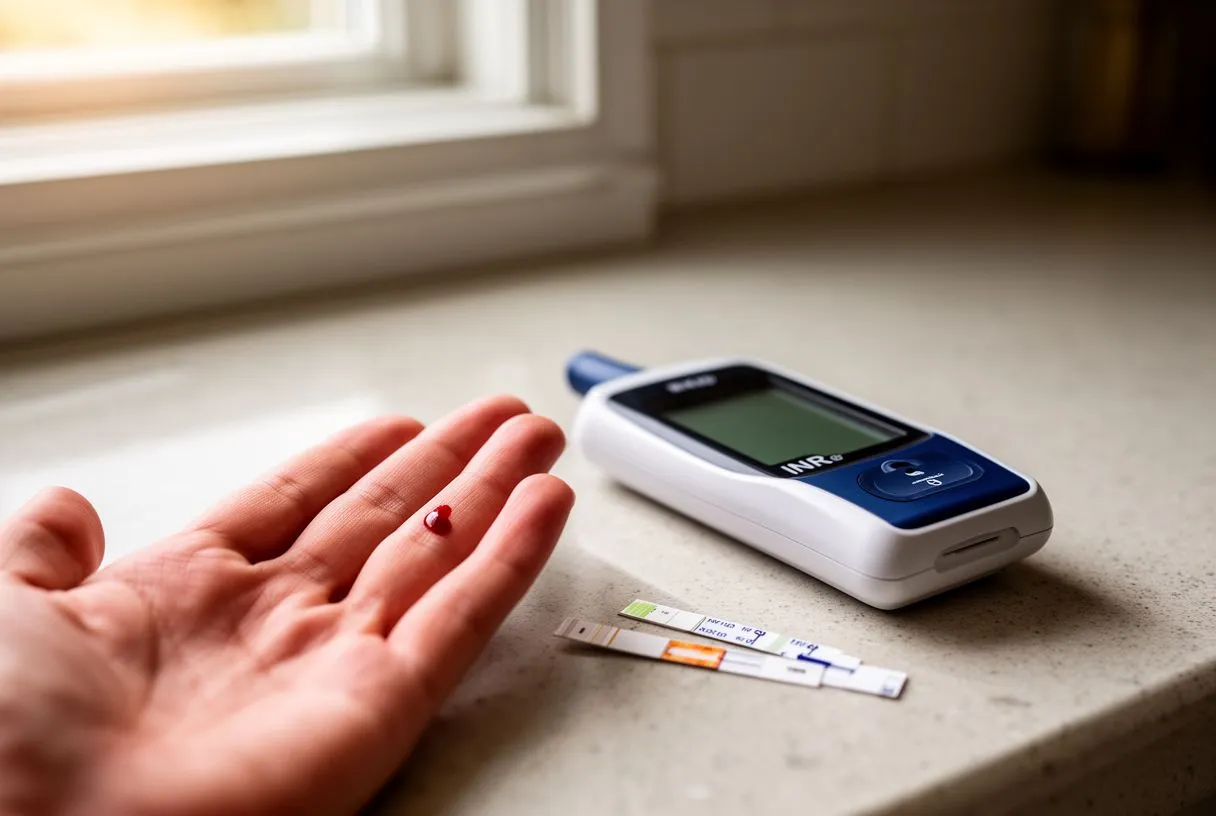
From fingertip to number. A home INR monitor for warfarin works through a test strip coated with a reagent that starts the clotting cascade. When your blood touches the strip, the device tracks how many seconds the sample takes to clot, then converts that time into an INR using a calibration specific to the strip lot. The meter displays the result on screen, and most modern models can transmit it to your clinic through a phone line, a mobile app, or a secure portal.
The data loop. The real value is not the meter itself but the loop it closes. You test, the result reaches your anticoagulation team, and a nurse or doctor confirms whether your current warfarin dose stands or needs a small change. That loop can run weekly instead of monthly, which is why patient self testing INR device programmes have become part of standard anticoagulation care in many countries.
What it is not. A home meter does not replace your clinic. It replaces the trip. Quality control, calibration checks, and dose decisions still belong to a supervised programme. MedlinePlus, the patient-information service of the US National Library of Medicine, describes prothrombin time and INR as standard monitoring tests for people on blood-thinning medicine — home testing simply moves where that measurement happens (MedlinePlus).
Who Should Consider Self Testing INR Levels at Home?
Patients on long-term warfarin. Self testing INR levels at home generally suits people who need anticoagulation for the long term: mechanical heart valves, recurrent atrial fibrillation, or previous clotting events. If your treatment will last months or years, the arithmetic favours home testing — dozens of clinic visits become short sessions at home.
Patients with stable dosing. The best candidates are people whose INR has been reasonably steady and whose dose changes rarely. If your INR swings unpredictably, your team will usually want lab-based testing until things settle. Home testing works best on top of stability, not as a fix for instability.
People who can follow a routine. You need the dexterity to prick a fingertip, the eyesight to read a small screen (or a helper who can), and the discipline to test on schedule and report results. Age is not a barrier by itself; organised patients in their eighties manage it well with support.
How to Test INR at Home: Step by Step
Preparation. Before your first test, your clinic trains you — usually in one or two sessions — on how to test INR at home correctly. The steps are simple once learned:
- Warm your hands: a warm hand produces a better drop of blood; wash with warm water and dry thoroughly.
- Prick the fingertip: use the lancing device on the side of a fingertip, not the centre pad.
- Apply the drop: touch the blood drop to the test strip window; the meter draws it in and starts counting.
- Read and report: note the INR, log it, and send it through your meter's transmission system or your clinic's portal.
Common beginner errors. Most failed tests come from a blood drop that is too small or too slow, from squeezing the finger hard (which dilutes the sample with tissue fluid), or from an expired strip. None of these are dangerous; the meter simply rejects the strip and you repeat the test with a fresh one.
Frequency. After a dose change, testing is usually weekly until the result stabilises. Once stable, many programmes move to every two or four weeks. Your anticoagulation team sets the schedule — never change your testing rhythm or your dose on your own.
What Warfarin INR Target Should Home Testing Aim For?
Standard targets. For most indications — atrial fibrillation, venous clots — the warfarin INR target for home testing is the same as for clinic testing: an INR between 2.0 and 3.0. The target does not change because the setting changes; home testing simply lets you verify you are inside the range more often.
Mechanical valves. Some mechanical valves, particularly older-generation valves in the mitral position, call for a higher target range, commonly 2.5 to 3.5. Your surgeon or cardiologist sets this range when your valve is implanted, and it should be written down clearly in your records. If you are not sure which range applies to you, ask — this is one detail worth having on paper.
Out-of-range results. A reading slightly outside range does not usually trigger a dramatic response; small dose adjustments are the norm. A reading far outside range, or a reading combined with bleeding or clotting symptoms, means you contact your team the same day. Home testing gives you the information early, which is precisely its advantage.
Is Point-of-Care INR Testing Accurate Enough?
The evidence question. This is the most reasonable doubt to raise, and it has been studied. Modern point-of-care coagulometers used in supervised home programmes are required to meet international accuracy standards, and major clinical studies have compared patient self testing against standard laboratory monitoring in people on long-term warfarin. These studies have generally found that self testing with quality devices, inside a structured programme, is reliable for clinical management.
Where error creeps in. When home readings and lab readings disagree, the cause is usually technique rather than the device: a compromised blood sample, an expired strip, extreme temperatures during storage, or hand lotion on the finger. Good training and a simple routine remove most of these. If a home result ever surprises you or disagrees with symptoms, a confirmatory lab draw settles it.
Quality control. Reputable programmes ask you to run a control check periodically and to have your device checked against a lab sample at set intervals. This is not bureaucracy for its own sake; it is what keeps a home reading trustworthy over years.
What Does INR Self Management for Cardiac Patients Go Beyond Testing?
Self testing versus self management. The two terms are often mixed up. INR self management for cardiac patients means you not only test but also adjust your own warfarin dose according to a dosing algorithm your team has agreed, within set limits. Self testing means you measure and report; the team adjusts. Most people start with self testing, and some progress to fuller self management once their results are consistently stable.
What self management requires. Full self management involves a longer training period, a written algorithm, and clear rules for when you must stop and call the team instead of adjusting yourself. It suits patients with very stable disease and strong routines. It is a genuine option, not an obligation — many patients prefer to keep dose decisions with their team, and that is a perfectly good choice.
The psychological shift. Both versions change your relationship with your condition. Instead of being a passenger, you hold the steering wheel, with your team navigating beside you. Many patients describe feeling less anxious once they can check a number the same day they feel uncertain about it.
What Are the Risks and Limits of Cardiac Anticoagulation Home Monitoring?
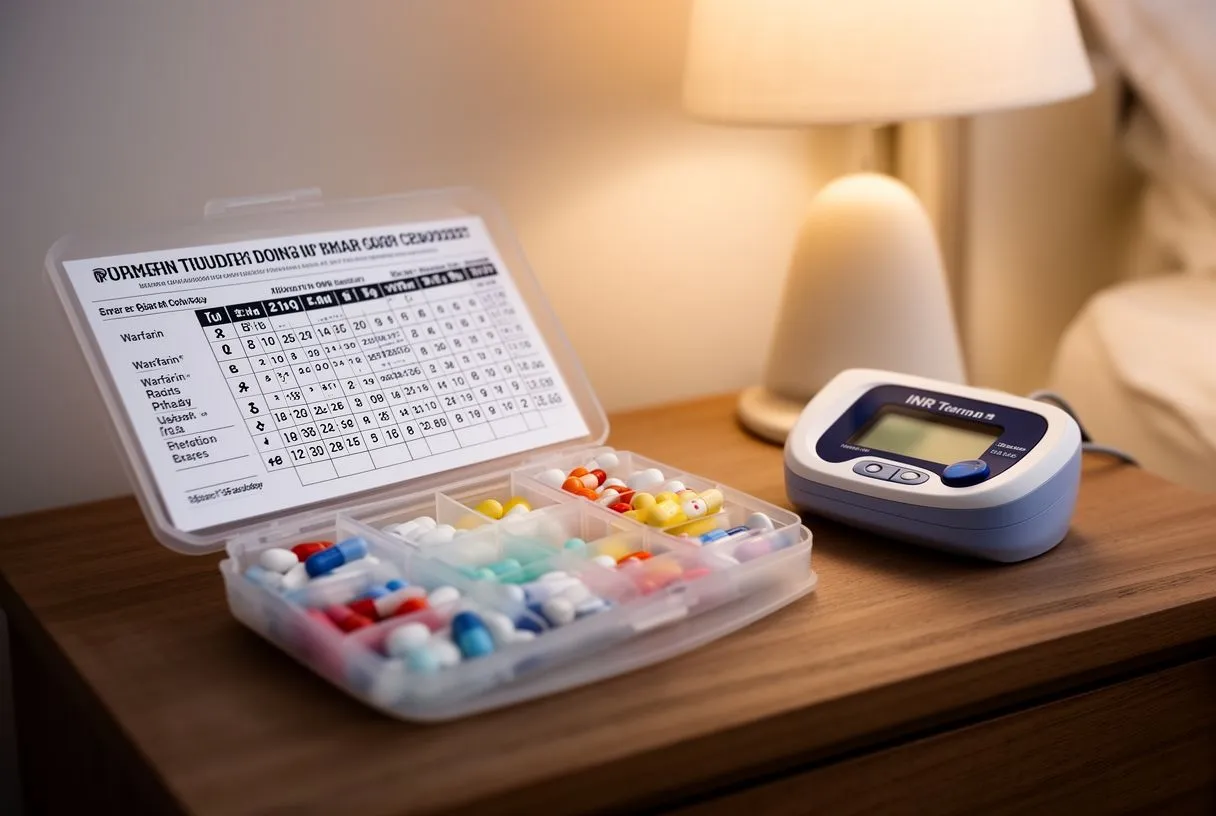
The main risks are procedural. Cardiac anticoagulation home monitoring carries few physical risks: a small fingertip nick that may sting, and rarely a little bruising. The real risks are behavioural — a missed test, an unreported result, or a dose change made without your team. A structured programme, with the team confirming every result, keeps these in check.
When home testing is not appropriate. Home testing is generally not recommended during the first weeks after starting warfarin, when doses are still being established, or during periods of rapidly changing health — a new illness, a new medication, planned surgery. New drugs interact with warfarin constantly; even common antibiotics can shift your INR. In those windows, lab testing or more frequent contact with your team is the safer route.
Warning signs that need a call, not a meter reading. If you notice unusual bleeding — gums, nose, dark stools, easy bruising — or signs of a clot such as sudden leg swelling or chest symptoms, contact your team immediately. The meter can wait; these symptoms cannot. Before going home on anticoagulation, it helps to have a short written list of these warning signs, and to call your care team early rather than too late.
How Do You Choose a Patient Self Testing INR Device?
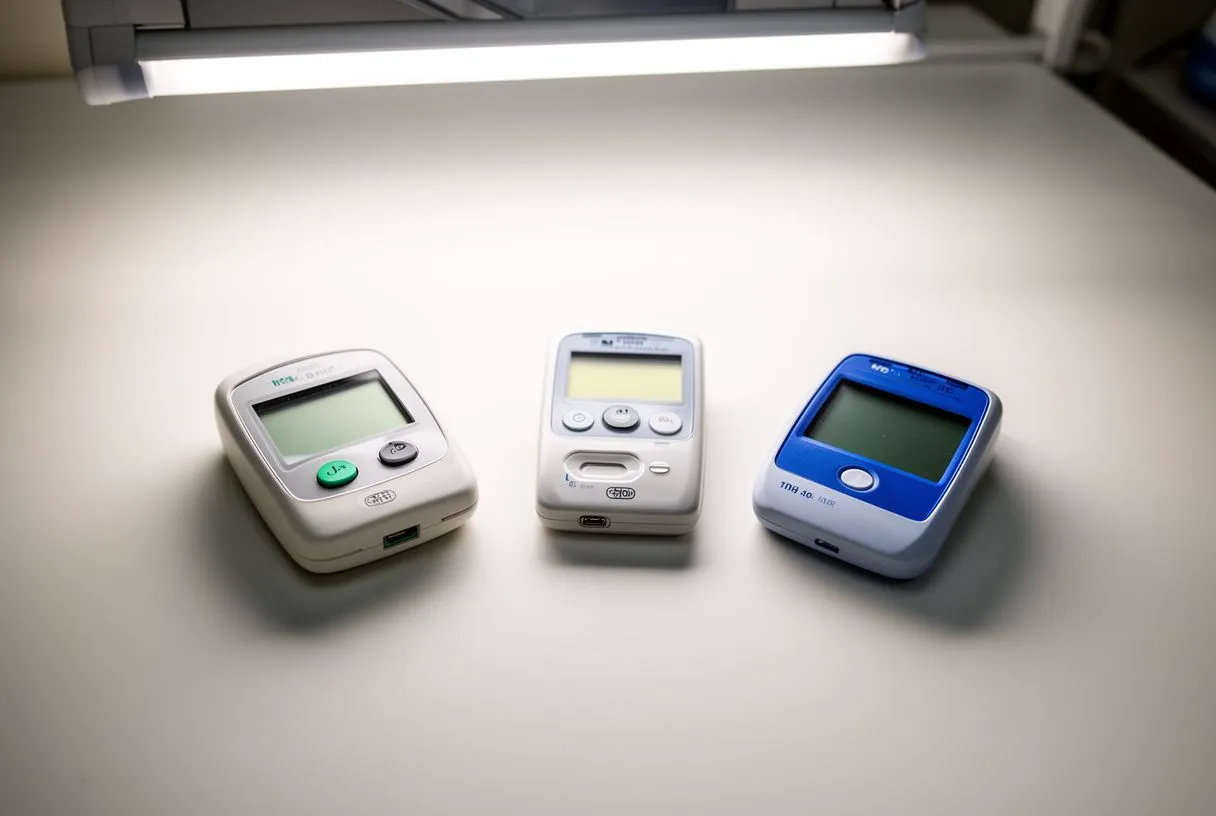
Let the programme lead. In practice, you rarely choose a meter alone — the anticoagulation programme or clinic selects the device family it supports, trains you on it, and supplies the strips. If you are comparing options yourself, these are the points that matter in a warfarin monitoring home kit:
- Clinical validation: the device should be validated against laboratory INR measurement in published studies.
- Result transmission: automatic sending to your clinic beats manual logging — it closes the loop faster.
- Strip supply: check that strips are reliably available in your country and what the ongoing cost per test is.
- Usability: a large screen, simple buttons and a small blood sample requirement matter more than extra features.
Strips and maintenance. Strips are the recurring cost, so the price per test matters more than the price of the meter itself. Strips have expiry dates and temperature limits; store them as instructed. A machine that suits your hands and your home — a simple home PT INR testing machine kept in one fixed place with your supplies — gets used more consistently than a technically superior one that lives in a drawer.
Involve your team before buying. An INR meter for home use only helps if your clinic can receive and act on its results. Confirm with your anticoagulation team that the device you are considering integrates with their system before you spend anything. If you are considering home testing, confirm which systems your local anticoagulation service supports, so the meter and the clinic speak the same language.
When Should You Talk to Your Heart Team About Home INR Testing?
Good moments to raise it. Bring up home testing when your warfarin dose has been stable for a few months, when travel or distance makes clinic visits a burden, or when you simply want more visibility over a number that affects your daily life. Any of these is a legitimate reason, and a good team will take the question seriously rather than dismissing it.
Questions worth asking. Come to the conversation with specifics: Am I a suitable candidate? What target range applies to my valve or condition? Which device does your programme support? Who reviews my results and how quickly? What happens if a home reading disagrees with my symptoms? The answers will tell you whether the programme in front of you is organised and safe.
Our own approach. Our team, led by Dr Alejandro Molina, reviews every case against international practice guidelines before recommending any monitoring or treatment plan, and the final decision always rests with the patient. If you are deciding about a heart valve procedure and anticoagulation will follow, that decision and your long-term monitoring plan belong together — discussing them with the same team gives you a coherent picture rather than two separate ones.
Point-of-care INR testing at home is a mature, well-supported option for people on long-term warfarin: a fingertip test, a result in about a minute, and a team that adjusts your dose with far better information than monthly lab visits allow. It demands consistency, training, and honest limits — it is not a licence to self-medicate, and it is not right for every patient at every stage. If you take warfarin after heart valve surgery or for another cardiac reason, the sensible next step is not to buy a meter but to ask your cardiac team whether home monitoring fits your situation. We are glad to talk it through: your first consultation is a free video call, with no obligation and no unnecessary tests ordered.