
Prothrombin Time on Blood Thinners: Reading the Test
Prothrombin time blood thinners guide: learn to read your PT INR results, understand therapeutic ranges, and know when to call your cardiac specialist.
What Is Prothrombin Time on Blood Thinners?
Prothrombin time is a laboratory blood test that measures how many seconds it takes for your blood to form a clot. If you take warfarin or another vitamin K antagonist, this test becomes one of the most important numbers in your cardiac care. The result tells your doctor whether your blood is clotting too quickly, too slowly, or within the range that is safest for your particular heart condition. Without this measurement, adjusting a blood thinner dose would be guesswork, and both clotting and bleeding risks would rise sharply.
The test works by examining the coagulation pathway that depends on several clotting factors produced by your liver, most of which require vitamin K to function. Warfarin blocks the recycling of vitamin K, so your liver produces fewer of these factors, and the prothrombin time lengthens. A healthy person not taking anticoagulants typically has a prothrombin time of about 11 to 13 seconds, though each laboratory sets its own reference range. According to NCBI, the sensitivity of the test reagent used by the lab influences the raw seconds value, which is why the International Normalized Ratio was developed to standardize results across different laboratories worldwide.
For heart patients, this test matters because many cardiac conditions carry a real risk of dangerous blood clots. Atrial flutter, for example, can cause blood to pool in the left atrium and form clots that travel to the brain. Mechanical heart valves create turbulent blood flow that also promotes clot formation. Your prothrombin time result, expressed as an INR value, gives your cardiologist a concrete number to confirm that your dose is protecting you without tipping the balance toward excessive bleeding.
How the PT INR Blood Test Works
When you arrive at the laboratory or anticoagulation clinic, a technician draws a small sample of blood, usually from a vein in your arm. The sample is placed in a tube containing a chemical called sodium citrate, which prevents the blood from clotting before the test begins. In the lab, a reagent called thromboplastin is added along with calcium, and a timer measures exactly how long it takes for a fibrin clot to form. This elapsed time, in seconds, is your raw prothrombin time.
How INR is calculated from your PT result: The International Normalized Ratio is a mathematical conversion that compares your prothrombin time to the prothrombin time of a healthy reference population. The formula divides your PT by the lab's normal mean PT and raises the result to the power of the International Sensitivity Index, a number assigned to each batch of thromboplastin reagent. This calculation ensures that a result from a lab in Mexico City means the same thing as a result from a lab in Toronto or London.
In practical terms, most patients never need to understand the math. What matters is the single number the lab reports: your INR. If your INR is 2.3 and your target range is 2.0 to 3.0, your dose is well adjusted. If your INR is 1.5, your blood is clotting too quickly relative to your target, and your cardiologist may increase your warfarin dose. If your INR is 4.5, your blood is too thin, and your dose may need to be reduced or held temporarily. Understanding what the number represents helps you participate meaningfully in decisions about your own treatment.
Why Heart Patients Need Regular INR Monitoring
Heart patients are among the largest groups of people who take long-term anticoagulants. Several common cardiac conditions create a risk that clots will form inside the heart and then travel through the bloodstream to the brain, lungs, or peripheral arteries. Atrial flutter and atrial fibrillation can both cause sluggish blood flow in the left atrium, where clots can silently develop. Mechanical valve replacements, particularly in the mitral position, expose the artificial surface of the valve to circulating blood, and without anticoagulation, clots can form on the valve itself. Even patients with atheromatous plaque in the ascending aorta or those who have undergone balloon angioplasty may need temporary or long-term anticoagulation depending on their overall risk profile.
The challenge with warfarin is that its effect on your blood changes over time. Many factors shift your INR: illness, fever, new medications, dietary changes, alcohol intake, and even stress. According to the Heart Disease and Stroke Statistics—2013 Update, cardiovascular conditions that require anticoagulation affect millions of patients worldwide, and the margin between too little protection and too much bleeding is narrow. Regular monitoring closes that gap by catching shifts early, before they become clinical events. A patient whose INR drifts from 2.5 to 1.4 over two weeks may feel perfectly fine, but their clot risk has risen substantially without any warning symptoms.
Beyond safety, consistent monitoring supports quality of life. When your INR stays within range, you can travel, exercise, work, and enjoy family life with confidence. Many patients worry that being on warfarin means living in a state of constant restriction, but in practice, well-managed anticoagulation allows a full and active life. The key is a monitoring schedule that matches your stability, a relationship with a cardiac team that communicates clearly, and an understanding of what your own INR trends look like over time.
What Is a Therapeutic INR Range on Warfarin?
A therapeutic INR range is the window of values where your blood is thin enough to prevent dangerous clots but not so thin that everyday activities cause serious bleeding. Your cardiologist sets this range based on your specific diagnosis, the type of valve or cardiac condition you have, and your individual bleeding risk. For most patients taking warfarin, the standard therapeutic range is 2.0 to 3.0, with a target midpoint of about 2.5. This range applies to conditions like atrial flutter, venous thromboembolism, and certain postsurgical situations.
What happens when your INR falls outside range: If your INR drops below 2.0, your blood is clotting more readily than your cardiologist intends, and your risk of stroke or valve thrombosis increases. If your INR rises above 3.0, your risk of bleeding, including gastrointestinal bleeding and intracranial bleeding, begins to climb. An INR above 4.0 carries a substantially higher bleeding risk, and values above 5.0 are considered a medical situation that requires prompt attention, sometimes including a dose of vitamin K to reverse the anticoagulant effect.
It is worth noting that the therapeutic range is not a hard boundary where risk suddenly appears or disappears. An INR of 1.9 does not mean you will definitely have a stroke, just as an INR of 3.1 does not mean you will definitely bleed. The range represents the zone where evidence shows the best balance between clot prevention and bleeding avoidance for large populations of patients with your condition. Your individual circumstances, including your age, kidney function, and other medications, may influence where within that range your cardiologist wants you to sit.
Target INR for Mechanical Valve and Other Cardiac Conditions
Not all heart conditions share the same INR target. The most important distinction involves mechanical heart valves. If you have a mechanical valve replacement, your cardiologist typically targets an INR of 2.0 to 3.0 for an aortic valve without additional risk factors, and a higher range of 2.5 to 3.5 for a mitral valve or higher-risk cases, because the artificial surface of a mechanical valve is more thrombogenic than biological tissue. The position of the valve matters too: mechanical mitral valves generally carry a higher clot risk than mechanical aortic valves, and some cardiologists may target the upper end of the range for mitral positions. This higher target means these patients need especially careful and frequent monitoring, since the window between adequate protection and bleeding is narrower.
For patients who have undergone transcatheter aortic valve replacement, anticoagulation strategies may differ from those used for surgical mechanical valves. As noted in the study Transcatheter Aortic-Valve Implantation for Aortic Stenosis in Patients Who Cannot Undergo Surgery, patients undergoing less invasive valve procedures often have complex anticoagulation needs that depend on their broader cardiac history. Some may receive aspirin alone, others may need a combination of antiplatelet and anticoagulant therapy, and the prothrombin time test remains a critical tool for guiding warfarin dosing in these patients. Your cardiac team determines the right strategy based on your valve type, your other medications, and your individual risk factors.
Patients with bioprosthetic tissue valves, coronary stents, or a history of venous thromboembolism may also have tailored targets. In some cases, your cardiologist may combine warfarin with aspirin, particularly in the months following a procedure, which increases bleeding risk and makes INR monitoring even more important. Always confirm your specific target range with your cardiac team, and ask whether that target changes at different points in your recovery or as your condition evolves.
How Often to Check INR After Cardiac Surgery
The frequency of INR testing changes dramatically depending on where you are in your recovery timeline. In the first few days after cardiac surgery, your INR may be checked daily, because the body is recovering from major trauma, liver function may be shifting, and your warfarin dose is being established from scratch. During this period, your blood is transitioning from the intravenous heparin used during and immediately after surgery to oral warfarin, and the two medications overlap until your INR reaches the therapeutic range for two consecutive days.
Typical INR testing schedule after surgery: In the first one to two weeks after discharge, most patients test every two to three days. Over the next month, if your INR is stable, the interval extends to once weekly. By two to three months postoperatively, many stable patients move to testing every two weeks. After six months of consistent results, your cardiologist may extend testing to once every four weeks. However, any change in your health, medications, or diet should prompt earlier testing, even if you are on a monthly schedule.
Patients often ask whether the monitoring schedule ever becomes truly infrequent. The honest answer is that warfarin requires lifelong monitoring for as long as you take it. Even the most stable patients need at least monthly testing, because factors as common as a winter viral illness or a course of antibiotics can shift the INR unexpectedly. Some patients transition to newer direct oral anticoagulants that do not require regular blood testing, but these medications are not appropriate for everyone, particularly patients with mechanical valves, and your cardiac team will advise you on whether a switch is appropriate for your situation.
What Makes Your INR Too High or Too Low
Many variables can push your INR out of range, and understanding the most common culprits helps you anticipate problems before they become urgent. When your INR rises too high, it means your blood is taking longer to clot than your target range allows. Common causes include a new medication that interacts with warfarin, a dose error where you took more tablets than prescribed, reduced food intake, liver dysfunction, alcohol consumption, or an acute illness with fever. Antibiotics, particularly certain classes that affect gut bacteria responsible for vitamin K production, are among the most frequent culprits behind a sudden INR spike.
When your INR falls too low, your blood is clotting more quickly than intended, which reduces your protection against stroke and valve thrombosis. The most common cause is a change in dietary vitamin K intake, particularly from leafy green vegetables. Other contributors include missing doses of warfarin, an increase in vitamin K consumption through supplements or nutritional shakes, diarrhea or vomiting that alters absorption, and medications that speed up the liver enzymes responsible for metabolizing warfarin, such as some anticonvulsants and tuberculosis medications.
Some factors are harder to control. Travel across time zones can disrupt your dosing schedule. Seasonal changes in diet, such as eating more salads in summer, can lower your INR. Stress and sleep disruption may also play a role through poorly understood mechanisms. The practical approach is not to eliminate all variables but to maintain a consistent lifestyle and test your INR whenever something meaningful changes. If you start a new prescription medication, experience a gastrointestinal illness, or significantly alter your diet, contacting your anticoagulation clinic for an earlier test is a reasonable and proactive step.

Foods That Affect INR Levels on Warfarin
Vitamin K is the single most important dietary factor affecting your INR on warfarin, because the medication works by interfering with vitamin K-dependent clotting factor production in the liver. Foods rich in vitamin K, primarily dark green leafy vegetables, can lower your INR and reduce the anticoagulant effect. The goal is not to avoid these foods entirely, since they are nutritious and part of a heart-healthy diet, but to keep your intake consistent from week to week so your warfarin dose can be calibrated to your typical vitamin K consumption.
Beyond vitamin K, other foods and supplements can interact with warfarin metabolism. Cranberry juice and cranberry products have been associated with increased INR in some patients. Large amounts of garlic, ginger, turmeric, and ginseng may also have mild anticoagulant effects that add to warfarin's action. Alcohol, particularly binge drinking, can acutely raise your INR and increase bleeding risk, while chronic heavy drinking may have the opposite effect through liver enzyme changes. Grapefruit juice can affect the metabolism of many medications, and while its effect on warfarin is less dramatic than on some other drugs, many cardiologists recommend moderation.
Here is a practical reference list of common dietary considerations for patients on warfarin:
- High vitamin K foods: Spinach, kale, Swiss chard, collard greens, Brussels sprouts, broccoli, and parsley contain significant vitamin K. Eat consistent amounts rather than eliminating them.
- Alcohol: Limit to no more than one drink occasionally, and avoid binge drinking entirely, as it can sharply raise INR.
- Cranberry and grapefruit: Consume in moderation and report any significant dietary change to your anticoagulation clinic.
- Supplements: Vitamin K supplements, multivitamins containing vitamin K, and herbal supplements can all interfere with warfarin. Discuss any supplement with your cardiologist before starting it.
PT INR Self-Monitoring at Home: Is It Right for You?
Home INR monitoring devices allow patients to test their prothrombin time using a small finger-prick blood sample, similar to how people with diabetes check blood glucose. A portable meter analyzes the drop of blood and displays an INR value within minutes. For motivated patients who understand their target range and know when to contact their medical team, home monitoring can reduce the number of clinic visits, provide more timely results, and improve overall time spent in the therapeutic range. The technology has been available for years and is considered reliable when used correctly.
Who benefits most from home INR monitoring: Patients who travel frequently or live far from an anticoagulation clinic often find home testing particularly valuable. Those with mechanical valves who require lifelong, frequent testing may also appreciate the convenience. However, home monitoring requires a commitment to proper technique, because poor sample handling or device maintenance can produce inaccurate results. Training typically involves one or two sessions with a nurse or pharmacist who teaches you how to operate the meter, apply the blood drop, and interpret the reading. Some programs require you to demonstrate competency before you begin unsupervised testing.
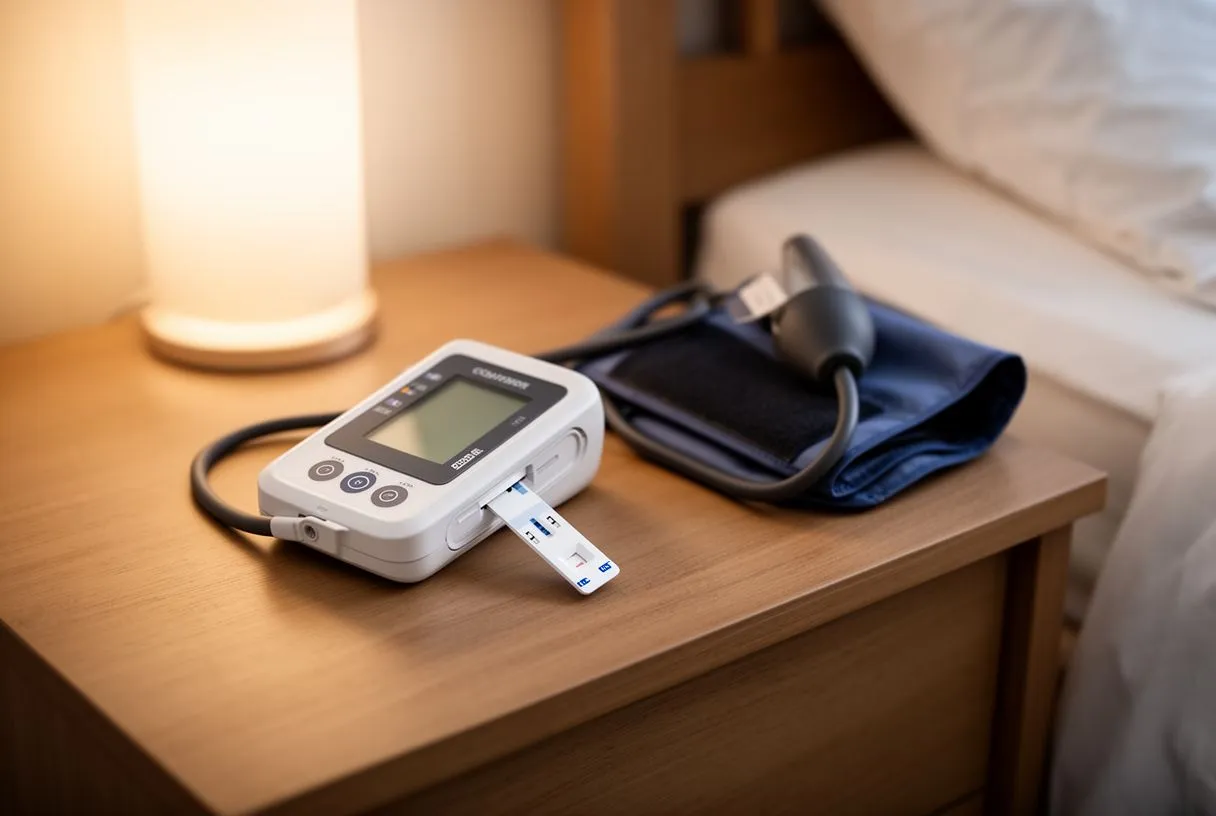
It is important to understand that a home meter gives you a number, but your cardiac team still guides dose adjustments. Many programs ask patients to call or log results through a secure portal, and a pharmacist or nurse reviews trends and recommends changes. If your INR reads unexpectedly high or low on a home device, most clinics recommend a confirmatory lab draw before making a significant dose change, because home meters can have slightly more variability than hospital laboratory equipment. Home monitoring is a tool that enhances care, not a replacement for the clinical judgment of your cardiac team.
When to Contact Your Cardiac Team About INR Results
Certain INR results and symptoms warrant immediate communication with your cardiac team, regardless of where you are in your monitoring schedule. An INR above 4.5 is generally considered urgent, particularly if you have risk factors for bleeding such as kidney disease, age over 75, or concurrent use of aspirin or other antiplatelet medications. An INR above 5.0 typically requires intervention, which may include holding warfarin, administering oral vitamin K, or in more severe cases, seeking emergency evaluation. These thresholds are guideline-based, and your cardiologist may set specific instructions for your individual situation.
Bleeding symptoms are the most important warning signs to recognize. Unexplained bruising, nosebleeds that do not stop with pressure, blood in your urine or stool, prolonged bleeding from minor cuts, or a severe headache unlike any you have had before all warrant prompt medical attention. On the other side of the equation, signs that your blood may be clotting too readily include new swelling or pain in a leg, sudden shortness of breath, or sudden changes in vision, speech, or strength on one side of the body. These symptoms may indicate a blood clot and require emergency care, not a routine phone call.
Here is a summary of key contact thresholds for patients on warfarin:
- INR above 5.0: Contact your cardiac team or anticoagulation clinic the same day for guidance on dose adjustment and possible vitamin K administration.
- INR below 1.5 with a mechanical valve: Contact your team promptly, as clot risk on mechanical valves is significant even with modestly subtherapeutic INR.
- Any bleeding that does not stop: Seek emergency medical evaluation, especially if accompanied by dizziness, weakness, or a large volume of blood loss.
- New leg swelling, chest pain, or neurological symptoms: These may signal a clot and require immediate emergency evaluation regardless of your most recent INR.
Understanding your prothrombin time results empowers you to participate actively in your own cardiac care. The INR is a powerful number when used correctly, and your consistency in monitoring, awareness of dietary and medication interactions, and willingness to communicate promptly with your team are the foundations of safe long-term anticoagulation. If you have questions about your INR targets, your monitoring schedule, or whether your current blood thinner regimen is the right fit for your situation, we encourage you to discuss these concerns with a qualified cardiac team. Booking a consultation allows your cardiologist to review your full history, current medications, and individual risk factors, and to tailor a monitoring plan that keeps you safe and informed.