Therapeutic INR Range for Valves and AFib
Learn the therapeutic INR range valves patients need for safe anticoagulation.
If you or a family member has been told you need a mechanical heart valve, or you live with atrial fibrillation (an irregular rhythm in the heart's upper chambers), you have probably heard the term "INR" at every appointment. Understanding the therapeutic INR range valves patients must stay within is one of the most important parts of protecting your new valve or your rhythm — and one of the easiest to get wrong. This guide explains, in plain language, what INR means, what targets apply to different situations, and how to keep your blood thinning exactly where it should be.
What Is the Therapeutic INR Range?
What is the therapeutic INR range for most patients on warfarin? For the majority of people taking warfarin — the most widely used blood thinner in this setting — the target sits between 2.0 and 3.0. This window is called the therapeutic INR range because below it, blood clots too easily; above it, bleeding becomes more likely. The idea is simple: you want the blood thin enough to prevent clots, but not so thin that a minor bump causes serious bleeding.
The range is not a suggestion. Decades of clinical use have shown that staying inside it is what actually prevents strokes and valve clots. The NCBI provides detailed guidance on how the International Normalised Ratio is assessed and monitored over time, and why consistency matters more than any single reading. A single good number matters less than the overall pattern of readings across weeks and months — a measure doctors call time in therapeutic range.
Every patient who leaves surgery on warfarin should also leave with a written plan for how often their INR will be checked and who to call if the numbers drift. We never leave a patient guessing.
What Does INR Actually Measure?
INR stands for International Normalised Ratio. It is a lab measurement of how long your blood takes to clot, compared with a standard sample. Warfarin works by blocking vitamin K, which your liver needs to make several clotting factors. When warfarin is working, your clotting time lengthens, and the INR rises.
Why the number matters. A normal INR for someone not on blood thinners is about 1.0. On warfarin, doctors deliberately push that number up into your prescribed window. If your INR is 1.5, your blood is only mildly thinned. If it is 4.9, it is thinned well beyond most targets, and bleeding risk climbs.
How the test is done. Most patients start with a simple blood draw at a lab or clinic. Results usually come back the same day. Some patients later move to point-of-care INR testing, where a finger-prick device gives a reading in minutes — more on that below.
What Is the Therapeutic INR Range for Mechanical Valves?
Mechanical valves are artificial valves made of man-made materials. Blood clots form on them more easily than on natural tissue, so anticoagulation is not optional — it is lifelong. But the target INR depends on which valve was replaced and what other risk factors you carry.
- Aortic mechanical valve, no extra risk factors: target INR 2.0–3.0, the standard window for most patients.
- Mitral mechanical valve or added risk factors: target INR 2.5–3.5, a tighter and higher window, because clots on the mitral valve (the valve between the left upper and lower chambers) carry a higher stroke risk.
These differences sound small, but they change daily decisions about dose. In our consultations, we take the time to explain in plain words what your specific target is and why it applies to you — because a patient who understands the "why" keeps their INR in range far more reliably.
We perform conventional, minimally invasive, robotic and transcatheter valve procedures, and we recommend the less invasive route only where the evidence supports it for that patient. Whatever the approach, the anticoagulation plan that follows is reviewed by the whole multidisciplinary team against international practice guidelines.
What INR Target Applies After Heart Valve Replacement?
Immediately after surgery. In the first days and weeks, your care team watches the INR closely — often daily while you are in hospital. Warfarin doses are adjusted gradually, because the drug builds up and wears off slowly. You will not leave hospital until your INR is stable and your team is confident you understand your own dosing.
Bridge therapy. Some patients need temporary injections of a faster-acting blood thinner (usually a heparin-based drug) while warfarin takes effect, or when warfarin must be paused before another procedure. This is called bridging, and it is decided case by case, depending on your clot risk and bleeding risk.
Long-term monitoring schedule. Once stable, most valve patients check INR every two to four weeks. Some check weekly at first. If your readings are consistently stable, your team may stretch the interval; if they swing, checks become more frequent. Studies on patients taking warfarin consistently show that more time spent inside the target window directly lowers the risk of clot-related events.
AFib INR Range vs Valve INR: What Is the Difference?
Atrial fibrillation raises stroke risk because blood can pool and clot in the upper heart chambers. For AFib patients on warfarin, the target is usually 2.0–3.0 — the same window as a standard mechanical aortic valve. So what is different?
Why the medication may differ. Many AFib patients today are treated with newer direct oral anticoagulants rather than warfarin, and for them no INR monitoring is needed at all. But mechanical valve patients must stay on warfarin — the newer drugs have not proven safe for mechanical valves. This is a crucial distinction families often misunderstand.
Why the stakes differ. A clot on a mechanical valve can jam the valve itself, not just travel to the brain. That is why valve patients face both stroke risk and valve failure risk, and why their monitoring tends to be more rigorous. Dr Molina trained in cardiac, minimally invasive, robotic and structural surgery at the University of Montreal, and in structural cardiology and TAVR at CHU Bordeaux — a training background that shapes how carefully our team tailors each patient's anticoagulation plan.
Is an INR of 1.9 Too Thick or Too Thin?
An INR of 1.9 is just below the standard 2.0–3.0 window — your blood is a touch "too thick," meaning slightly more clot-prone than intended. One reading of 1.9 is rarely an emergency. Your doctor will typically adjust the dose slightly or recheck in a few days.
What does an INR of 1.5 mean? At 1.5, your blood is only modestly thinned. For most warfarin patients this is under-treated. However, context matters: some patients with certain heart conditions or low clot risk are deliberately kept at lower targets. Never adjust your own dose — the direction and size of any change belongs to your medical team.
Is an INR of 1.6 considered therapeutic for warfarin? For the standard 2.0–3.0 target, no — 1.6 is subtherapeutic. If your prescribed window is 2.0–3.0 and you consistently read 1.6, tell your team, because persistent under-anticoagulation in a valve patient raises the risk of clot formation on the Heart Valves themselves.
What Is an Alarming INR Level?
When is an INR of 4.9 considered high? Yes — an INR of 4.9 is well above the usual 2.0–3.0 ceiling and is considered significantly elevated, even without symptoms. At that level, your team will usually hold or reduce a dose and recheck quickly. Above roughly 5.0, bleeding risk rises sharply and doctors often intervene more actively.
When to seek urgent help. Go to emergency care immediately if you have a high INR together with any of the following:
- Bleeding that will not stop — from gums, nose, urine, or a cut
- Unusual bruising that spreads quickly or appears without injury
- Sudden severe headache, confusion, vision changes, or weakness on one side — these can signal bleeding in the brain or a clot-related stroke
Before you leave, make sure every warning sign has been explained and that you know exactly whom to call. No one should have to interpret an alarming reading alone.
How Does INR Self-Testing Work for Valve Patients?
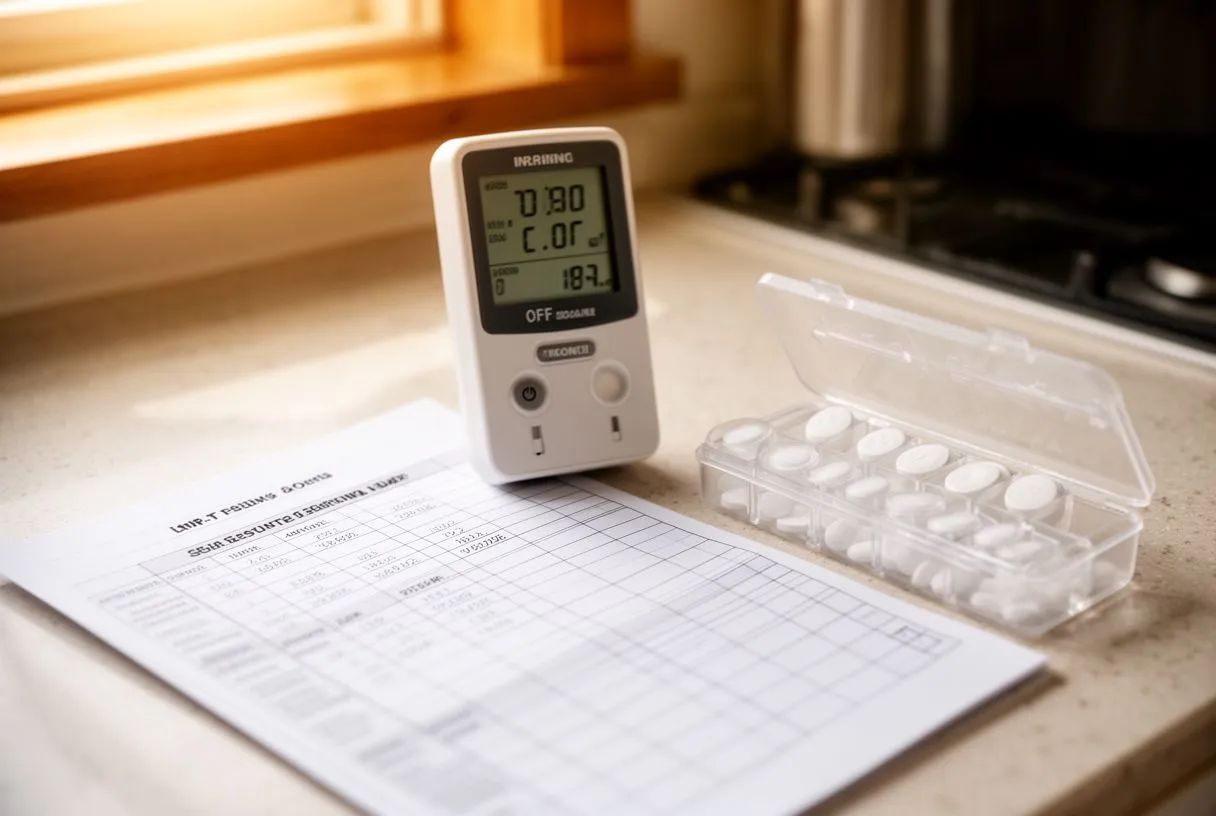
INR self-testing valve patients can do at home. Point-of-care INR testing uses a small finger-stick device similar to a glucose meter. A drop of blood gives a reading in about a minute. For mechanical valve patients on long-term warfarin, home testing has been shown in multiple trials to increase the proportion of time spent in the therapeutic window — largely because patients can test more often and respond to changes sooner.
Who is a good candidate? Self-testing suits patients who are comfortable with small devices, have stable vision and dexterity, and have a care team willing to guide dose adjustments remotely. It is not mandatory — many patients do perfectly well with clinic testing, and travel and lifestyle can shape the choice.
Research on time in the therapeutic range for patients taking warfarin consistently shows that more frequent monitoring translates into fewer clot and bleeding complications. The Signal Transduction and Targeted Therapy review covers the wider biology of how clotting and healing pathways interact — a reminder that anticoagulation sits within a much larger physiological picture. For practical guidance, see our guide to anticoagulation after heart surgery.
What About Dental Procedures and Travel on Warfarin?
Dental procedure INR decisions for valve patients. Most dental cleanings and even simple extractions can be done without stopping warfarin, provided your INR is within your window. The general rule: never stop anticoagulation on your own. Always tell your dentist you have a mechanical valve, and let your cardiologist and dentist coordinate. Stopping warfarin without a plan risks clot formation on the valve — a far more dangerous event than most dental bleeding.
Travel with a mechanical valve. Long flights, time-zone changes and different food can all nudge your INR. Plan ahead:
- Test your INR shortly before departure and within a few days of arrival
- Carry your medication, testing device and a letter from your doctor in your hand luggage
- Keep your vitamin K intake (leafy greens, etc.) consistent — the goal is not to avoid them, but to eat the same amount week to week
Before extended travel, a review of your INR pattern and dosing with your doctor means you leave with a plan rather than uncertainty.
How Do You Live Well Within Your Therapeutic INR Range?
Consistency beats perfection. The patients who do best are not the ones with a perfect reading every time — they are the ones whose readings stay inside their window most of the time. Time in therapeutic range is the single best predictor of how well warfarin protects you.
Build habits around your window. Take warfarin at the same time daily. Keep your diet steady rather than cutting foods out. Log every INR reading in a simple notebook or app. Tell every new doctor, dentist and pharmacist that you are on warfarin and why. Small habits compound into safety.
Why the TAPSE measurement matters in follow-up. After mitral valve surgery, right-heart function matters for long-term survival. One measure your team may track is TAPSE — Tricuspid Annular Plane Systolic Excursion, an ultrasound measure of how well the right side of the heart pumps. Research on TAPSE after mitral valve surgery has linked lower values to worse long-term mortality, which is one reason follow-up imaging matters even when your INR is perfect. Your follow-up plan covers more than just anticoagulation — it watches the whole heart.
Every case in our practice is reviewed by the multidisciplinary team against international practice guidelines before a recommendation is made, and the final decision is always the patient's. We actively encourage second opinions — seeking one is a normal, healthy part of deciding about heart surgery, not a betrayal of your surgeon.
Understanding the therapeutic INR range valves and AFib patients need is empowering, but it is not a substitute for a personalised plan. Your target may differ from your neighbour's for reasons that only your full medical picture can explain. If you have a mechanical valve or atrial fibrillation and want clarity on your anticoagulation strategy, we offer a free video consultation as a first step: we get to know you, talk through your condition, and identify exactly which studies are still needed — so nothing unnecessary is ordered. A face-to-face visit follows only when you decide to go ahead. Reach out to a qualified cardiac team, including ours, and make decisions with expert guidance rather than guesswork.