

Anticoagulation after heart surgery: a guide for patients
Learn how anticoagulation works after heart surgery: warfarin dosing, INR monitoring, diet tips, and warning signs.
How the warfarin dose is set, what to watch in diet and medicines, the warning signs, and when a biological valve needs anticoagulation at all.
If you have had open-heart surgery and are taking warfarin, here is what to watch, how the dose is set, the warning signs, and when biological valves need anticoagulation at all.
Warfarin is an essential medicine for many patients in preventing blood clots, but managing it properly is crucial.
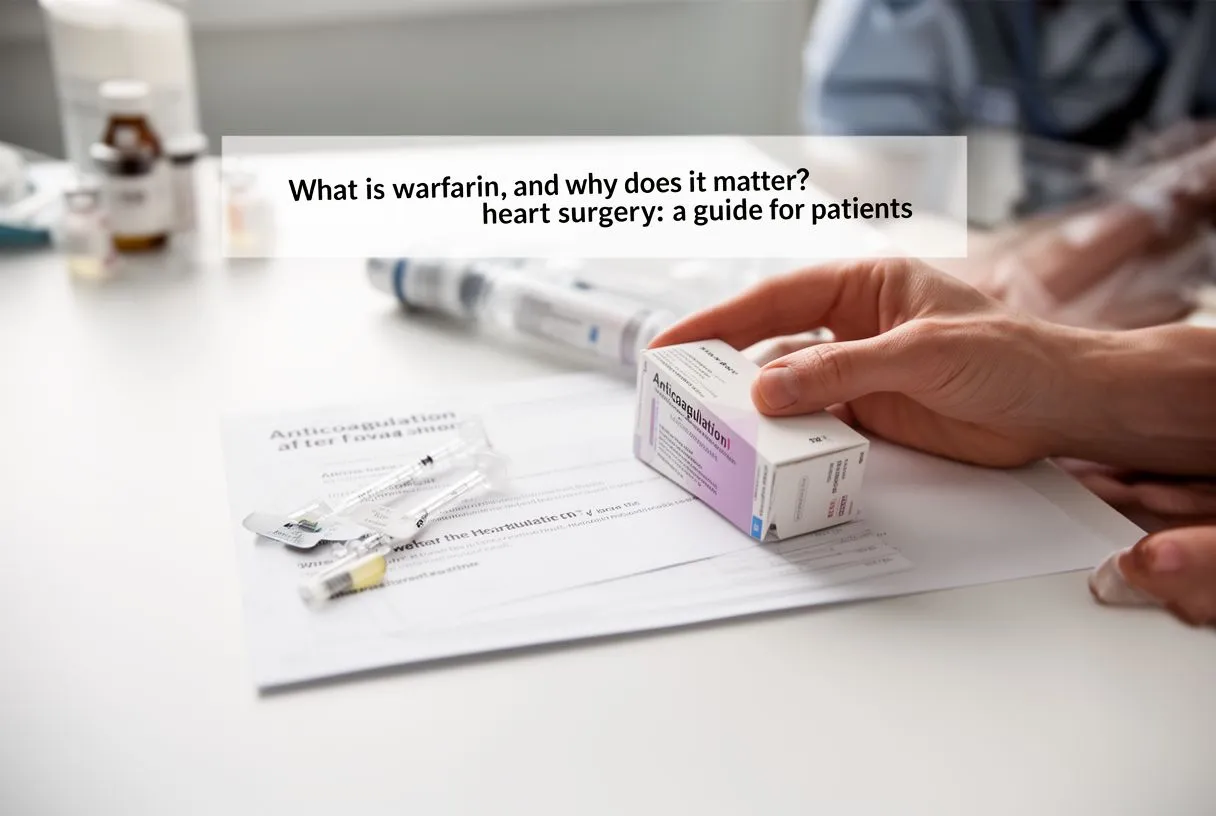
What is warfarin, and why does it matter?
Warfarin is an oral anticoagulant used to reduce the risk of blood clots. This is especially important in people who have had open-heart surgery, a valve replacement, or who have conditions such as atrial fibrillation. By preventing clots forming, warfarin reduces the risk of a stroke or an embolism.
How is the ideal dose determined?
The ideal dose varies from person to person, since factors such as weight, age, diet and other health conditions all influence how effective it is. There is no standard dose. Instead, doctors adjust it based on a test called the prothrombin time (PT), or the International Normalized Ratio (INR).
The INR measures how long your blood takes to clot, and it is fundamental to keep it within a safe therapeutic range. That is usually between 2.0 and 3.0 for most patients with a mechanical valve in the aortic position, or those with an arrhythmia such as atrial fibrillation. Your doctor will adjust the dose according to your INR results.
In the case of a mitral valve replacement, or replacement of several valves, the INR range should usually be between 2.5 and 3.5.
Every person will have doses and treatment schedules adjusted personally.
Regular INR monitoring
It is vital to keep up with regular INR tests, especially during the first weeks after surgery or when starting treatment. These can be done in hospital, in a clinic, or with portable devices at home — always under your doctor's supervision.
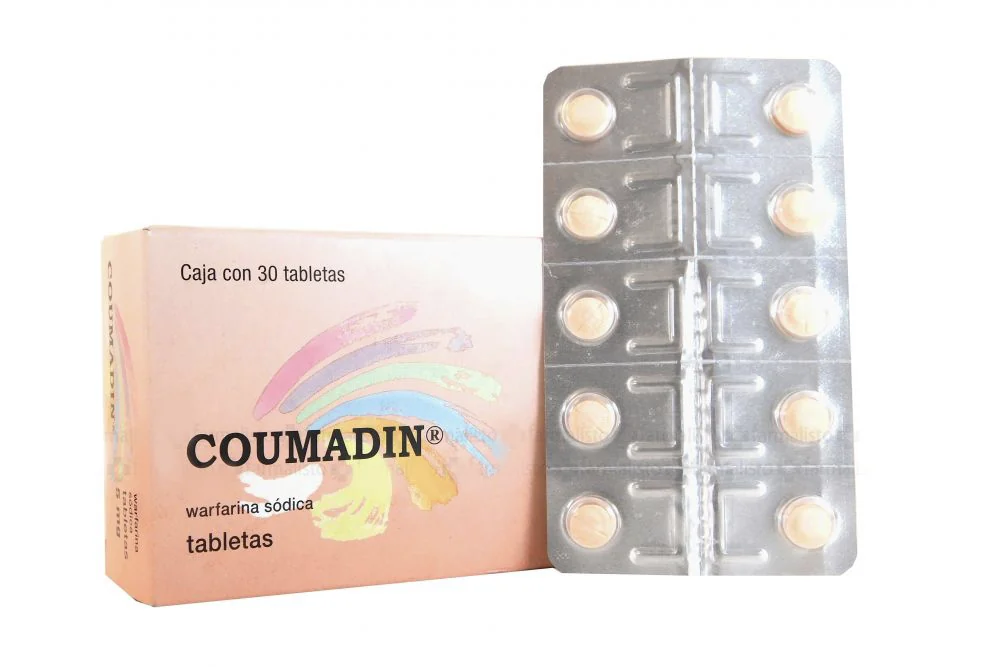
Brand names for warfarin
These vary by country:
- Coumadin — common in Mexico and the United States
- Jantoven — common in the United States
- Aldocumar — common in Spain
- Dagonal
How to look after yourself while taking warfarin
Diet
Some foods rich in vitamin K can interfere with the action of warfarin, since this vitamin takes part in blood clotting. Foods to consume in moderation include:
- Green leafy vegetables (spinach, broccoli, kale, lettuce)
- Liver and other foods high in vitamin K
- Green tea and certain supplements
It is not a matter of avoiding these foods, but of keeping your intake consistent, so that doctors can adjust the warfarin dose to your eating habits.

Supplements
Supplements such as ginkgo biloba, garlic, ginger or vitamin E can increase the risk of bleeding. Always check with your doctor before taking them.
Other medicines
Some antibiotics, anti-inflammatories such as ibuprofen, and other medicines can interact with warfarin. It is fundamental to tell your doctor about any new medicine you start.
Physical activity
Although physical activity is important for your cardiac health, you should be careful with high-impact activities that could cause knocks or falls, since the risk of bleeding is greater when you are anticoagulated.
The risks of anticoagulation
Using warfarin, while vital, is not free of risk. The most important:
- Bleeding. This is the most common risk. You may notice bleeding from the gums, unusual bruising, dark-coloured urine or blood in the stools. If severe bleeding occurs, go to the emergency department immediately.
- Thrombosis. If the INR is too low, the medicine may not be working adequately and there is a risk of clots forming.
Warning signs
Seek medical attention immediately if you have any of the following:
- Nosebleed or bleeding from the gums that does not stop.
- Blood in the urine, or black stools.
- Difficulty breathing, chest pain or breathlessness — these can be signs of a clot in the lungs.
- A severe, sudden headache or blurred vision — these can be signs of a stroke.
- Falls or severe knocks, even if there is no apparent bleeding.
Are there alternatives to warfarin?
In some cases there are alternatives in the direct oral anticoagulants: rivaroxaban, dabigatran and apixaban.
These do not require INR monitoring as strict as warfarin, but they are not always suitable for patients with a mechanical valve replacement. Talk to your doctor about whether any of these options is appropriate for you.
Relevant clinical trials
- ROCKET AF assessed the effectiveness of rivaroxaban compared with warfarin in patients with atrial fibrillation. The results showed rivaroxaban was equally effective in preventing stroke with a lower risk of bleeding.
- RE-LY compared dabigatran with warfarin in preventing stroke in patients with atrial fibrillation. Dabigatran proved more effective in preventing embolic events with a favourable safety profile.
- ARISTOTLE demonstrated that apixaban was superior to warfarin in preventing thromboembolic events and showed a lower risk of haemorrhage.
Anticoagulation with a biological valve replacement
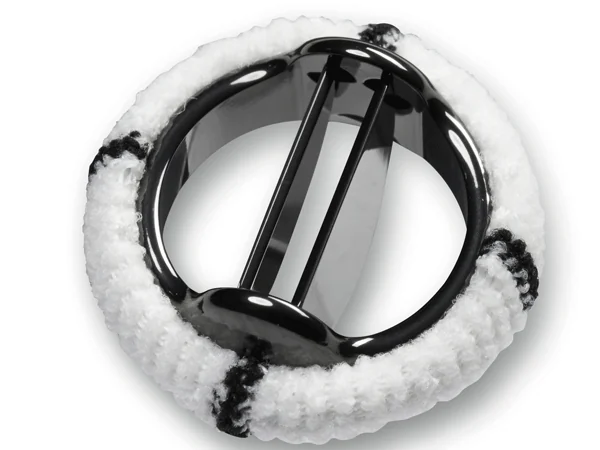
There are two main types of artificial valve: mechanical and biological. While patients with mechanical valves almost always need long-term anticoagulation, those with biological valves may require a different approach depending on their specific clinical situation.
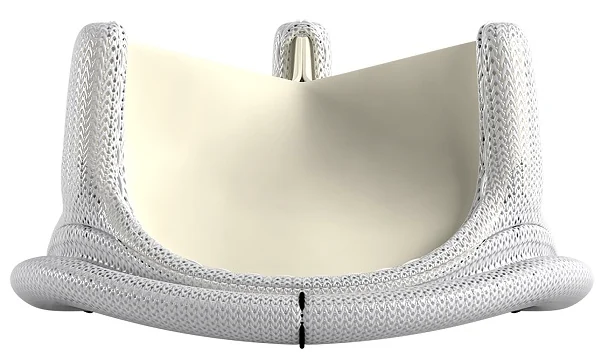
What are biological valves?
Biological valves, also known as tissue valves, are made from animal tissue — usually porcine or bovine — or occasionally from human tissue (homografts). Unlike mechanical valves, they do not require long-term use of anticoagulants such as warfarin, since they carry a lower risk of clot formation. We cover the full comparison in our guide to heart valve replacement options.
Anticoagulation in the first postoperative weeks
In general, patients with a biological valve replacement receive temporary anticoagulation with warfarin for the first 6 to 12 weeks after surgery. This reduces the risk of clots forming while the body adapts to the new valve. Anticoagulation can then be stopped, particularly if there are no other risk factors for thrombosis.
The exact duration can depend on several factors:
- The type of biological valve used.
- Whether the patient has atrial fibrillation or a history of thromboembolism.
- The position of the valve — aortic or mitral.
Aspirin and antiplatelet therapy
Instead of long-term oral anticoagulants, many patients with biological valves receive treatment with low-dose aspirin. Aspirin acts as an antiplatelet agent, helping prevent small clots forming without the bleeding risks associated with oral anticoagulants. The decision is based on the patient's individual risk profile and adjusted as needed.
When prolonged anticoagulation is recommended
Although most patients with biological valves do not need long-term anticoagulation, there are situations where doctors may recommend continuing warfarin or an alternative beyond the first postoperative weeks:
- Atrial fibrillation. If the patient develops atrial fibrillation after surgery, chronic anticoagulation may be necessary to reduce the risk of stroke.
- Previous history of thrombosis. Patients with a history of blood clots may need long-term anticoagulation regardless of the type of valve.
- Impaired ventricular function. If the heart has difficulty pumping blood effectively, as in some patients with heart failure, the risk of clots increases, which can justify prolonged use.
Rest easy
These anticoagulants have been used for decades with a great deal of safety. They have been the mainstay of treatment in people who have had a mechanical valve replacement or an arrhythmia. While there is a small percentage of risk, it is important to know that most people can live a long and practically normal life while taking anticoagulants.
It is also important to know that not every patient will be anticoagulated after heart surgery. For those who do require it, following the doses properly, monitoring the INR consistently and taking care with diet and way of living are essential to avoiding complications.
Your health depends on careful and responsible management. Look after your heart — you are not alone.

About the author
Dr Alejandro Molina is a cardiovascular surgeon practising in Guadalajara, Querétaro and Hermosillo. He trained in cardiothoracic surgery at the Universidad de Guadalajara, completed advanced training in cardiac surgery, minimally invasive surgery, robotic surgery and structural interventions at the University of Montreal, and a fellowship in structural cardiology and TAVR at CHU Bordeaux, France. He performed the first robotic mitral valve repair in the Ángeles Health System and the first robotic heart surgery in Guadalajara.
Medical degree: Universidad Autónoma de Guadalajara, Cédula Profesional 5757260 · Cardiothoracic surgery: Universidad de Guadalajara, Cédula de Especialidad 10768871 · Current certification, Consejo Nacional de Cirugía del Tórax, no. 447
Talk to a specialist
Request a free video consultation to clear up your questions and make a better-informed decision.





