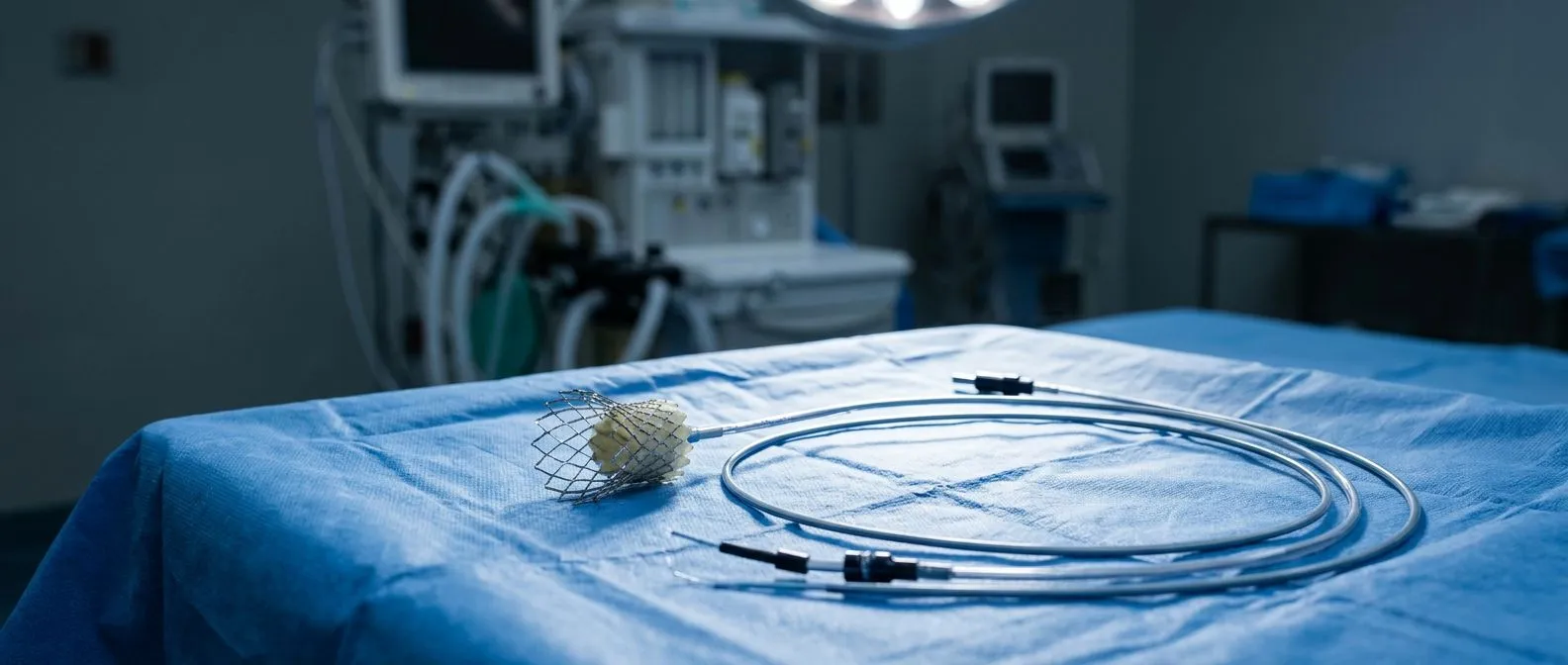
Reintervention After Aortic or Valve Surgery
Reintervention after valve surgery: learn when redo heart valve surgery is needed, what modern options exist today, and how to plan your cardiac reoperation.
Heart valve surgery is usually a long-term solution, but no valve — natural or artificial — lasts forever. When a repaired or replaced valve starts to fail years later, the follow-up operation is called a reintervention after valve surgery. If you or a family member has been told your valve is deteriorating again, it is normal to feel anxious about going through surgery a second time. This guide explains, in plain language, why reinterventions are needed, what the options are today, and what recovery and risk really look like.
What Does Reintervention Mean in Heart Surgery?
The everyday definition. In medicine, an intervention is any procedure a doctor performs to treat a problem inside the body — an operation, a catheter-based repair, or a device implant. A reintervention simply means a second or later intervention on the same problem. In heart care, it usually refers to operating again on a valve that was repaired or replaced in a previous surgery.
You may also hear the terms reoperation or redo surgery. These mean essentially the same thing: the surgeon opens the chest (or approaches the heart another way) in a patient who has already had heart surgery. So a "second open heart surgery" and a "redo heart valve surgery" are everyday ways of describing the same event. The word reintervention is broader, because it also covers less invasive catheter procedures, not just open operations.
Why it matters to know the word. Understanding the terminology helps you ask better questions. When a cardiologist says "we need to discuss reintervention after aortic valve surgery," they are not necessarily saying you need another full open-heart operation. They are saying your valve needs attention again, and the team will weigh every option — including catheter-based ones — before recommending anything.
When Is Heart Valve Reoperation Needed?
The valve itself wears out. Tissue (bioprosthetic) valves made from animal or human tissue gradually degenerate over ten to twenty years. Mechanical valves rarely wear out, but they can develop clots, leaks around the stitching ring, or infections. Structural heart conditions can also progress: an aortic aneurysm can grow, or a repair done years ago can loosen. When any of these happen, the question of when is heart valve reoperation needed becomes real.
Guidelines drive the timing. Cardiology societies publish thresholds that help teams decide. For example, a dilated aorta generally warrants surgery at a diameter of 5.5 cm in most patients, and earlier in some genetic conditions. For failing valves, the trigger is usually a combination of valve function on echocardiography and the symptoms you report — not a single number.
It is a shared decision. Every case we review is discussed by the full multidisciplinary team against international practice guidelines before a recommendation is made, and the final decision is always the patient's. In our consultations in Guadalajara, Querétaro and Hermosillo, we take the time to explain what the studies actually show, in plain words, and to answer every question before any decision.
What Symptoms Suggest a Valve Is Failing Again?
Returning familiar symptoms. The symptoms needing valve reintervention often look like the ones that led to your first operation: shortness of breath on activity you used to manage easily, swelling in the ankles, fatigue, chest discomfort, or dizziness. Because the heart adapts slowly, these signs can creep up so gradually that many people attribute them to age or fitness.
Signs that need prompt attention. Some warning signs should never wait for a routine appointment:
- New or worsening breathlessness lying flat or waking at night gasping
- Fainting or near-fainting episodes, especially on exertion
- Fever, night sweats and unexplained weight loss — possible infection of the prosthetic valve
- New irregular or racing heartbeat, such as atrial fibrillation
Many failures are found before symptoms. This is why lifelong follow-up after valve surgery matters. Routine echocardiograms often detect a narrowing or leaking valve months or years before you feel anything, which opens the door to planned, unhurried treatment instead of emergency care. Scheduled imaging after surgery helps catch a failing valve early, not in an emergency room.
What Are the Types of Reintervention After Valve Surgery?
Catheter-based versus surgical. Today there are two broad families of reintervention. The first is a catheter procedure — a thin tube threaded from an artery in the groin to the heart, with no chest incision. The second is a conventional surgical reoperation, where the surgeon works directly on the heart. The right choice depends on which valve is failing, how it failed, your age, and the findings on your imaging.
Matching the approach to the problem. A brief overview:
- Catheter valve-in-valve: a new valve is placed inside the old one through an artery — mainly for failing tissue valves
- Surgical redo valve replacement: the old valve is removed and a new one sewn in — for most mitral failures, infections, and leaks around the valve
- Repair or revision of a previous repair: for patients whose original valve repair has loosened or failed
- Aortic procedures: surgery for a growing aneurysm or a dissection seen on surveillance imaging
The distinction between "reintervention versus revision cardiac surgery" is mostly about words: reintervention is the umbrella term, and revision usually refers to correcting a specific surgical problem from before. In practice, your team will describe the exact procedure planned, not just the label. Because we perform conventional, minimally invasive, robotic and transcatheter procedures, we recommend the less invasive route only where the evidence supports it for that specific patient.
What Happens When a Tissue Valve Wears Out?
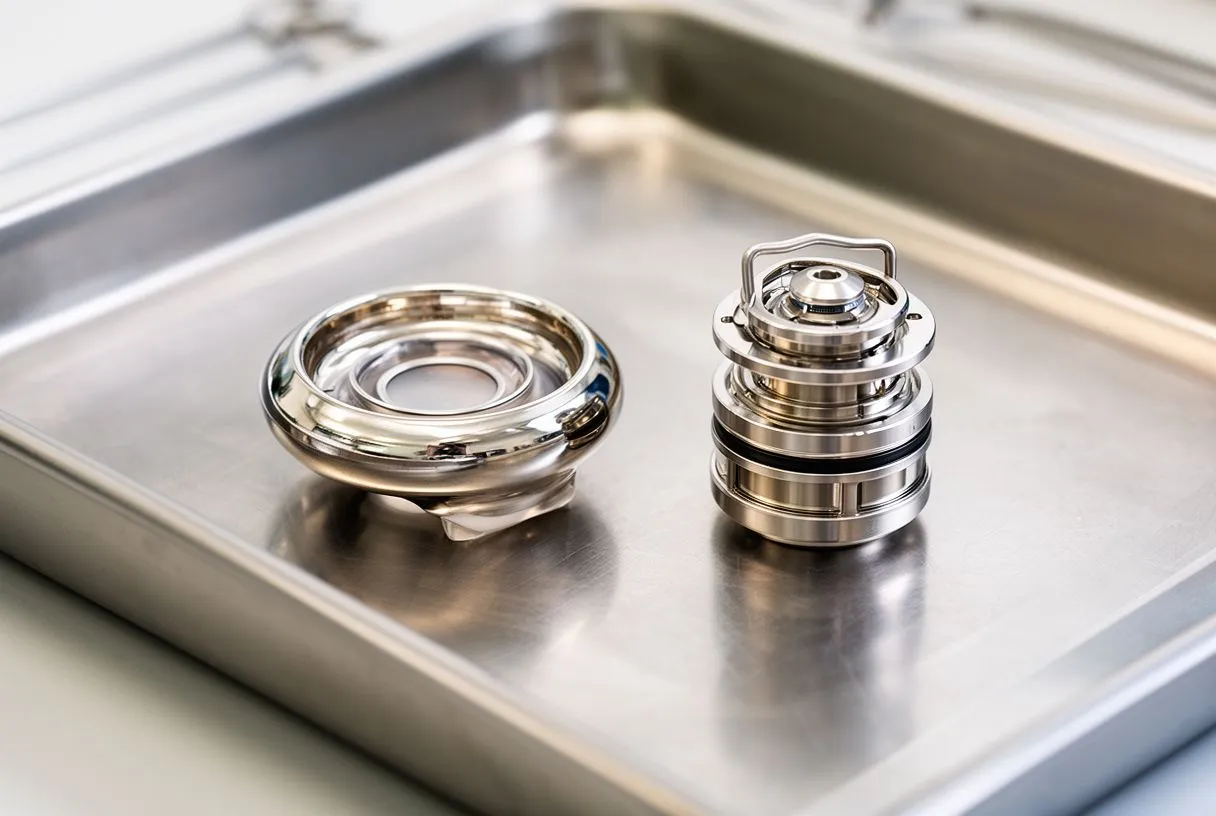
Tissue valves have a built-in lifespan. A tissue valve — also called a bioprosthetic or porcine valve, when made from pig tissue — is chosen for many patients because it avoids lifelong blood thinners. The trade-off is gradual calcification and stiffening. Failing bioprosthetic valve reoperation is one of the most common reasons for a cardiac reoperation after valve replacement, typically a decade or more after the original surgery.
Degeneration is predictable, not random. Valve surveillance with echocardiography shows a slow pattern: the leaflets thicken, the valve opens less well, or it starts to leak. Doctors can usually project this trend and plan ahead. Springer publishes extensive peer-reviewed literature on bioprosthetic valve durability, which is how surgical teams know the typical patterns and timelines of tissue valve failure.
Not every degenerating valve needs urgent surgery. The key question is whether the valve failure is causing symptoms or stressing the heart. If the heart muscle is still coping well and you feel fine, your team may simply monitor more closely. If the heart is beginning to suffer — the pumping chamber enlarges or the pressure in the lungs rises — then treating the valve is the right step, and the sooner the better once that threshold is crossed.
How Does Transcatheter Valve-in-Valve Reintervention Work?
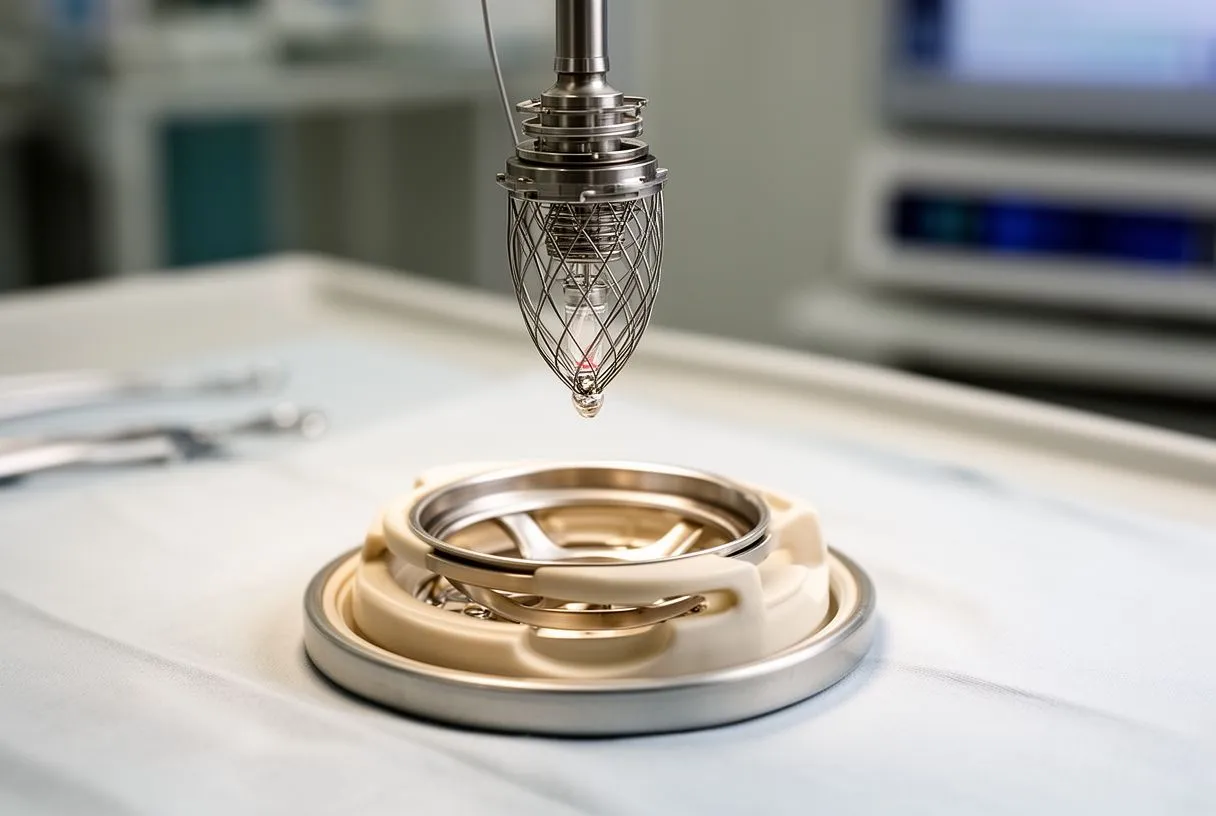
What the procedure actually is. A valve-in-valve procedure means a new catheter-mounted valve is delivered inside the failing tissue valve, expanded there, and left in place. The old valve acts as a frame that holds the new one. Because the chest is never opened, this transcatheter valve-in-valve reintervention usually means a shorter hospital stay, no incision in the sternum, and no need to divide scar tissue from the first operation.
It builds on well-studied technology. Catheter valve replacement was first established for aortic stenosis as Transcatheter Aortic Valve Implantation — known in North America as TAVR — and has been refined over more than a decade. The REPRISE II study of the Lotus valve system is one of the clinical trials that helped establish how repositionable catheter valves perform in the aortic position, which underpins today's confidence in these devices (ClinicalTrials.gov). Valve-in-valve techniques apply that same technology to a valve that is already there.
Limits and trade-offs. Valve-in-valve works best for tissue valves that have narrowed or leaked without infection. It is generally not suitable for most mechanical valves, and it can slightly reduce the effective opening of the new valve in some anatomy. Dr Molina, who trained in structural cardiology and TAVR at CHU Bordeaux, and our group review each patient's valve type, size and imaging to say honestly whether a catheter valve-in-valve is genuinely the lowest-risk option for them.
What Does Redo Aortic Valve Replacement Involve?
Reentering the chest safely. The defining challenge of redo aortic valve replacement is scar tissue. After any sternotomy, the heart and the grafts or vessels behind the breastbone adhere to its inner surface. A redo operation therefore begins with careful dissection of these adhesions before the heart-lung machine can be connected. Surgeons who do this regularly use specific strategies — including preparing for emergency support before touching the heart — which is why experience matters so much in complex redo valve surgery.
Choosing the new valve. The options mirror a first aortic valve replacement: another tissue valve, a mechanical valve, or — where the aortic root is also diseased — a more extended reconstruction of the aortic root. If the aorta above the valve has dilated, the surgeon may replace part of the ascending aorta in the same sitting, so a third operation is not needed later. Dr Molina's training in cardiac, minimally invasive and robotic surgery at the University of Montreal, and in structural cardiology and TAVR at CHU Bordeaux, informs how these decisions are weighed.
Where minimally invasive approaches fit. Not every redo needs a full sternotomy. In selected patients, a smaller right-sided incision or a less invasive approach can avoid re-dividing the whole breastbone. In our practice, every candidate for redo surgery is reviewed by the whole multidisciplinary team to decide which access and which valve technology give the best balance of durability and recovery for that individual.
What Is Recovery Like After a Second Heart Valve Surgery?
The shape of recovery. Recovery after redo surgery broadly follows the same milestones as a first operation: a stay in intensive care, then a ward, then weeks of gradually increasing activity at home. What changes is the pace. Adhesion dissection and a longer operation usually mean a somewhat slower start, and wound care around the previous scar needs attention.
Practical milestones. Most patients can expect:
- Walking in the corridor within a day or two of the operation
- Discharge home typically within the first week, depending on the procedure
- Driving and most office work again over the following several weeks
- Cardiac rehabilitation — a supervised exercise program — as the backbone of regaining strength
Catheter recovery is different. If your reintervention was a valve-in-valve catheter procedure, recovery is much shorter: usually a night or two in hospital and restrictions on groin movement briefly, rather than weeks of sternal precautions. Your heart valve reoperation recovery plan should be written down before you go home, so you and your family know exactly what to expect at each stage.
Are Reinterventions After Valve Surgery Safe?
Being honest about the risk. A second operation on the heart carries more risk than a first one, mainly because of the scar tissue that must be cleared and the longer, more complex procedure. This is a fact patients deserve to hear plainly. However, valve surgery reintervention risk has fallen steadily over the years, and outcomes from experienced centers are good for appropriately selected patients. The risk also depends strongly on why the reoperation is needed — an elective operation for a slowly failing valve is very different from emergency surgery for infection or a Type A aortic dissection, which is a true cardiovascular emergency.
What lowers the risk. The factors that matter most are timing (before the heart is exhausted), the surgical team's redo experience, and planning. Detailed pre-operative imaging — CT scanning of the chest to map the adhesions and the position of the heart under the breastbone — has made reentry far safer than in earlier decades.
Emergency versus planned makes all the difference. Elective redo surgery, chosen at the right time, is a controlled operation with a thorough plan. Our team reviews every proposed redo case together against international guidelines before recommending it, precisely because careful selection is what keeps risk as low as possible for each patient.

How Do You Plan a Cardiac Reoperation After Valve Replacement?
The heart valve reoperation timeline, step by step. Planning a cardiac reoperation after valve replacement usually follows a clear sequence. First comes the evaluation: echocardiography, a CT scan of the chest and aorta, and blood tests. Second, the multidisciplinary discussion, where surgeons and cardiologists agree on the best approach. Third, the consultation where the proposal, the alternatives, and the risks are explained to you in plain words. Fourth, scheduling and preparation — optimizing blood pressure, medications, dental health and any other conditions. Fifth, the operation and its recovery.
Mitral failures deserve special attention. Mitral valve reintervention surgery — operating again on the valve between the left atrium and left ventricle — is technically more demanding than redo aortic surgery, because of the valve's position deep in the heart. Surgeons with specific mitral reoperation experience, and in selected cases robotic or minimally invasive approaches, can offer options that were not available a generation ago. Dr Molina performed the first robotic mitral valve repair in the Ángeles Health System and the first robotic heart surgery in Guadalajara, and that experience shapes how we assess complex mitral redo candidates.
Do not let the search for the best hospital delay the decision. Patients often spend months comparing facilities online, worried about finding the best hospital for redo valve surgery, while a failing valve quietly strains the heart. The better question is which experienced team will explain your options honestly and support you through the decision. We encourage second opinions and treat seeking one as a normal part of deciding about heart surgery — a good team will welcome it.
Getting started is simple. Our first contact is a free video consultation: we get to know you, talk through your condition, and tell you which studies are genuinely needed so no unnecessary ones are ordered; a face-to-face visit at the consulting rooms follows when you decide to go ahead.
Reintervention after valve surgery is not a failure of your first operation — it is an expected possibility, and one that modern medicine can address in more ways than ever before. A tissue valve may wear out; a catheter valve-in-valve may solve it without opening the chest. An aneurysm may grow; planned surgery can address it before it becomes an emergency. The common thread in every good outcome is early detection through follow-up, an experienced multidisciplinary team, and a patient who understands the plan. If your valve has been flagged as failing, or your symptoms have returned, bring your questions to a qualified cardiac team and book a consultation — a careful conversation is always the first intervention, and it costs nothing to start there.