

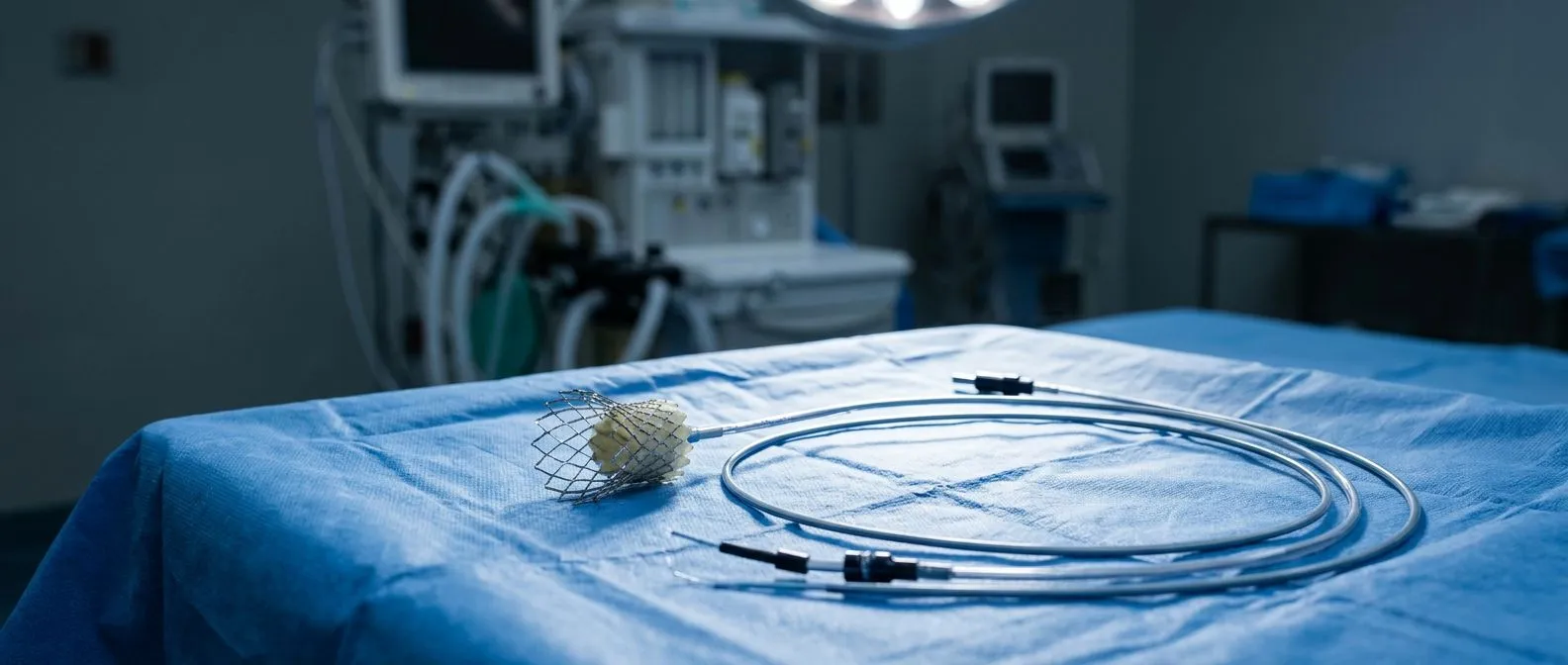
Transfemoral Access: TAVR Through the Groin
Transfemoral access TAVR replaces a heart valve through the groin without open surgery.
What Is a Transfemoral Approach?
Transfemoral access TAVR means replacing a narrowed aortic valve by reaching the heart through the femoral artery in the groin, without opening the chest. The word "transfemoral" simply means "across the femoral artery." Because this artery is large, close to the skin, and connects directly to the aorta, it offers the smoothest highway for the catheter to travel to the valve.
What does transfemoral mean in everyday terms? Imagine the aorta — the body's main artery — as a highway running from the heart down to the pelvis, where it splits into two branches that feed each leg. Those branches are the femoral arteries. A doctor can enter one of them with a small puncture near the groin crease, thread a thin tube called a catheter upward against the flow of blood, and deliver a folded replacement valve to exactly the right spot. No incision in the chest is needed at any point.
Why has this route become the default? It avoids the pain, healing time, and risks of a full sternotomy — the breastbone incision used in traditional surgery. Transfemoral approach TAVR is now the most common way the procedure is performed worldwide, and most patients are discharged sooner and return to normal life faster than after open surgery. For patients in Guadalajara, Querétaro and Hermosillo, it has made valve treatment possible for people who were once considered too frail to operate on.
What Is the TAVR Procedure?
TAVR stands for transcatheter aortic valve replacement. It is a minimally invasive aortic valve replacement in which a new valve — built inside a metal frame and mounted on a balloon-tipped or self-expanding catheter — is guided to the diseased aortic valve and opened in place. The old valve is not removed; the new valve pushes it aside and takes over the work of controlling blood flow out of the heart.
Why does the aortic valve need replacing in the first place? Over the years, the aortic valve can become stiff and narrowed — a condition called aortic stenosis — or leaky, known as regurgitation. When the valve narrows badly, the heart must push harder against a smaller opening, which causes breathlessness, dizziness, chest discomfort, fainting spells, and eventually heart failure. Once severe symptoms appear, replacing the valve is usually the most effective way to relieve them and protect the heart muscle.
The Cleveland Clinic and other major heart centers describe TAVR as a standard option for patients at intermediate to high surgical risk, and increasingly for lower-risk patients too, depending on valve anatomy. In our practice, every TAVR case is reviewed by the full multidisciplinary team against international practice guidelines before we recommend anything, and we present the alternatives alongside the proposal so the final decision is always the patient's.
Transfemoral TAVR Procedure Steps: Do They Go Through the Groin?
Yes — in the great majority of cases, the groin is the entry point. TAVR through the groin follows a well-established sequence that most patients find far less intimidating once it is explained step by step.
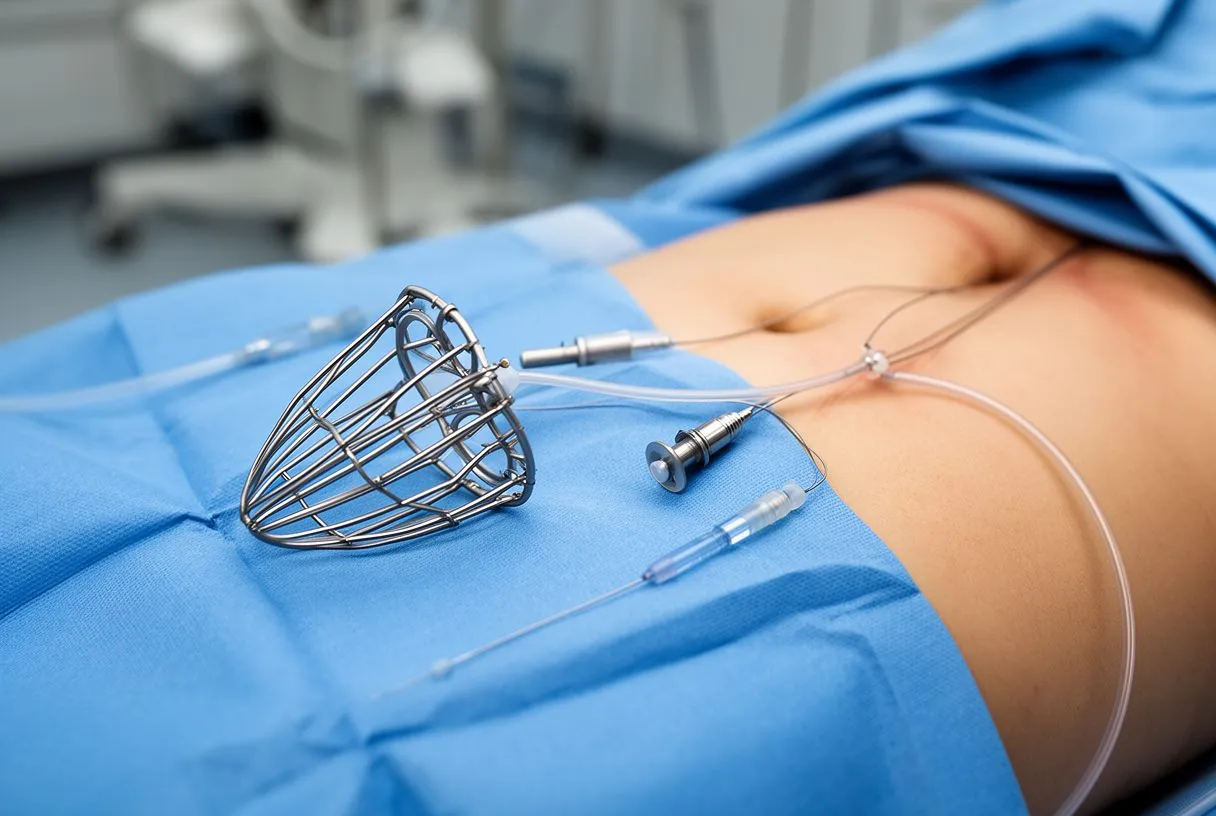
How is femoral access performed in the cath lab? The typical steps are:
- Preparation: You receive sedation or light general anesthesia, and the groin area is cleaned and draped. Ultrasound imaging maps the femoral artery before any needle goes in.
- Puncture: A needle enters the femoral artery, a short sheath — a small hollow tube — is placed, and wires and catheters are advanced up the aorta under X-ray guidance.
- Valve delivery: A temporary pacing wire may be positioned to slow the heart briefly. The folded new valve is crossed into position inside the old one and expanded, either by balloon inflation or by self-expansion of its frame.
- Closure: The sheath is removed and the puncture site is sealed with a closure device or sutures, leaving little more than a nick in the skin.
How long does the procedure take? A straightforward transfemoral TAVR usually takes one to two hours. Many patients are awake or lightly sedated and can talk to the team. We take the time in the consultation to explain what the studies actually show, in plain words, so that on the day of the procedure nothing about the steps feels like a surprise.
Transfemoral TAVR Candidacy: Who Qualifies for Groin Access Valve Replacement?
Candidacy for groin access heart valve replacement depends on three things: the anatomy of your arteries, the anatomy of your valve, and your overall surgical risk. The heart team weighs all three before recommending the route.
What do they look for in the arteries? The iliac and femoral arteries — the vessels between the groin and the aorta — must be large enough and free of severe calcium or blockage to allow the sheath and catheter to pass. A CT scan of the chest, abdomen, and pelvis measures the artery diameters and maps any calcification. Patients with severely diseased or very small arteries may still be candidates for TAVR, but through a different access route.
What about age and frailty? TAVR eligibility has widened considerably over the past decade. It was first reserved for patients too high-risk for open surgery, then extended to intermediate-risk patients, and guidelines now allow it for many lower-risk patients as well — particularly older adults, for whom avoiding a sternotomy is a meaningful advantage. Johns Hopkins Medicine notes that TAVR is widely used in patients who cannot tolerate conventional surgery. The question is never simply whether TAVR is possible, but whether the less invasive route is genuinely the safest one for that particular patient — and we say so plainly when it is not.
When Transfemoral Access Isn't Feasible: Alternative Routes to the Heart
When the femoral arteries cannot safely carry the catheter, the heart team turns to alternative approaches, each with its own trade-offs. Choosing among them is exactly what a multidisciplinary heart team is for.
What is Transapical Access? In Transapical Access, a small incision is made between the ribs on the left side of the chest and the catheter is introduced directly through the tip of the left ventricle — the heart's main pumping chamber. This route bypasses the leg arteries entirely and suits patients whose iliac vessels are too small or too calcified.
What are the other options? Transsubclavian Access uses the artery below the collarbone, reached through a small incision near the shoulder. Transaortic Access enters the aorta directly through a short upper-chest incision between the ribs. Transcaval access, a newer technique, reaches the aorta from a vein. When comparing transfemoral vs transapical TAVR, the key trade-off is that the alternative routes require a small chest incision and a longer recovery, but they make TAVR possible for patients who would otherwise be limited to high-risk surgery or no treatment at all.
Transfemoral TAVR vs Open Heart Surgery: Which Is Right for You?
Open heart surgery — surgical aortic valve replacement — involves opening the chest, stopping the heart, and sewing a new valve into place. It remains the gold standard for many patients, especially younger ones. Understanding the trade-offs helps you see why the recommendation differs from person to person.
What does TAVR offer over open surgery? The published comparison of transfemoral TAVR vs open heart surgery consistently shows shorter hospital stays, faster recovery, and no need for a breastbone incision with the transfemoral route. Open surgery, however, allows direct visualization of the valve, removal of the diseased valve, and repair of other problems at the same time. For a patient in their fifties or sixties who needs a mitral or coronary procedure too, conventional surgery may still be the better plan.
How do the teams decide? The heart team considers age, valve anatomy, calcium distribution, other conditions, and the patient's own priorities. We perform conventional, minimally invasive, robotic and transcatheter procedures, so we recommend the less invasive route only where the evidence supports it for that specific patient — and we actively encourage second opinions, treating them as a normal part of deciding about heart surgery.
What Are the Big Five Complications After TAVR?
Every heart procedure carries risks, and honest information is the foundation of a good decision. Specialists commonly track five major complications after TAVR, and knowing them helps you understand what the team monitors closely.
- Stroke: Debris can dislodge during valve crossing and travel to the brain. Modern techniques and cerebral protection devices reduce this risk.
- Pacemaker requirement: The new valve sits close to the heart's electrical conduction system, and some patients need a permanent pacemaker afterward.
- Vascular complications: Bleeding or injury at the groin access site is the most common site-specific complication of the transfemoral route.
- Valve performance issues: The valve may leak around its edges or sit imperfectly, which the team checks with an echocardiogram before discharge.
- Kidney injury and bleeding: Contrast dye and peri-procedural bleeding can affect the kidneys; both are screened for with blood tests.
What about vascular access complications specifically? The femoral artery is the main weak point of the transfemoral approach. Careful pre-procedure CT measurement, ultrasound-guided puncture, and closure devices have dramatically reduced major vascular complications, but they remain the complication most specific to this route. Our team reviews every access-site plan against the CT measurements before the procedure, because a well-chosen puncture is the simplest way to avoid the most common problem.
Transfemoral TAVR Recovery: How Long Does It Take?
Recovery from a heart valve replacement through the groin artery is much faster than recovery from open surgery, but it still follows real milestones. Patients who know what to expect worry less and heal more confidently.
What is the typical hospital stay? A typical transfemoral TAVR hospital stay is one to three days. Many patients who receive only light sedation sit up within hours, and some walk the same day with supervision. The groin puncture is checked for swelling or bleeding before discharge, and an echocardiogram confirms the new valve is working well.
What does the first week look like? Most patients go home with instructions to keep the groin site dry, avoid heavy lifting for several days, and gradually build up walking. Before discharge, make sure you know which warning signs — a growing groin swelling, sudden breathlessness, a new irregular heartbeat — should bring you back immediately.
How long until full recovery? Most people resume normal daily activities within a week or two and return to fuller activity over the following month. A structured follow-up — echocardiogram, wound check, and symptom review — happens within the first weeks after the procedure. Comparing this with transfemoral TAVR recovery after alternative routes: transapical or transsubclavian access adds a small chest incision, which usually means a few more days in hospital and a slower return to full activity.
Life Expectancy After TAVR: What Results Can You Expect?
Patients and families understandably ask what the valve means for longevity. The honest answer is encouraging, but it depends on factors the team can only estimate, not promise.
What does the evidence show? Large randomized trials — including the landmark studies that led to TAVR approval for low-risk patients — have shown that in appropriately selected patients, TAVR outcomes match or exceed surgical valve replacement in terms of survival and quality of life. Survival after TAVR depends heavily on age, other medical conditions, and how advanced the heart disease was before treatment. Patients often have felt breathless for years, and many describe a return of energy within weeks of the procedure.
How durable is the new valve? Transcatheter valves have now been followed for more than a decade, and modern designs show good durability for the typical age range of TAVR patients. Younger patients who may outlive their valve should discuss the long-term plan with their team, since a transcatheter valve can be replaced with another transcatheter procedure if needed. The review of self-expanding and balloon-expandable valves in small aortic annuli — published in the Journal of Cardiovascular and Thoracic Research — is one of the references our team draws on when valve anatomy is unusual and valve choice matters.
Choosing Your TAVR Team and Planning Costs in Guadalajara
The quality of the team around you is as important as the technology itself. Patients looking for the best doctors for TAVR should look for volume, multidisciplinary review, and clear communication — and should ask about costs and travel early.
What should you look for in a team? A strong program offers a true heart team — interventional cardiologists, cardiac surgeons, and imaging specialists — and the ability to offer every access route, not just one. Dr Molina trained in cardiothoracic surgery at the Universidad de Guadalajara, in cardiac, minimally invasive, robotic and structural surgery at the University of Montreal, and in structural cardiology and TAVR at CHU Bordeaux, and our consulting rooms in Guadalajara, Querétaro and Hermosillo exist so patients can be assessed close to home before any decision.
How do costs and travel work? Transfemoral TAVR cost varies widely by hospital, valve type, and country, and includes pre-procedure imaging, the valve itself, the hospital stay, and follow-up. International patients should ask for a written breakdown and confirm which studies are genuinely required. The first contact with us is a free video consultation: we get to know the patient, talk through the condition, and say which studies are still needed so no unnecessary ones are ordered, and a face-to-face visit at the consulting rooms follows when the patient decides to go ahead.
If you or a family member has been told you have aortic stenosis or another valve problem, transfemoral access TAVR may be the least invasive route for you — or it may not, and a proper heart team evaluation is the only way to know. The most useful next step is not to self-diagnose from articles, but to sit with a qualified cardiac team, hear the options explained in plain words, and decide with the evidence in front of you. Book a consultation with a multidisciplinary heart team, ask every question you have, and make the decision that is right for your own situation.






