


Total Arterial Revascularisation: All-Artery Bypass
Total arterial revascularisation bypass uses only arteries for longer-lasting heart grafts.
If you or a family member has been told you need Coronary Artery Bypass Grafting — the operation that reroutes blood around blocked heart arteries — you may have heard the phrase total arterial revascularisation bypass. In simple terms, it means every graft the surgeon uses to bypass the blockages is an artery rather than a vein taken from the leg. For decades the standard bypass used one artery (the Left Internal Mammary Artery, a vessel that runs inside the chest) combined with vein segments. Today, growing evidence shows that using arteries wherever possible can extend the life of the grafts and reduce the chance of needing a repeat operation. This guide walks through what the technique involves, who it suits, how recovery works, and what to weigh when deciding — all in plain language, so you can ask your cardiac team the right questions.
What Is Total Arterial Revascularisation?
Total arterial revascularisation is a form of Myocardial Revascularisation — the medical term for restoring blood flow to the heart muscle — in which only arteries are used as bypass conduits. A conduit is simply the "new pipe" that carries blood around a blockage. In a conventional bypass, surgeons typically use one chest artery plus sections of the saphenous vein from the leg. In the total arterial approach, the second, third and any further grafts come from other arteries: the other chest artery, the radial artery in the forearm, or occasionally the Gastroepiploic Artery along the stomach.
The goal is to reconstruct blood flow to the whole heart — including the Left Anterior Descending Artery, the Right Coronary Artery and the Circumflex Artery — using vessels that behave like the arteries nature designed for this job. Surgeons describe the result as "complete" when every blocked territory with suitable target vessels receives a graft. This is the sense in which the word "total" is used.
In our practice, every candidate for bypass is reviewed by the multidisciplinary team against international practice guidelines before we recommend an approach, and we present the patient with a clear proposal plus the alternatives — the final decision is always theirs. That matters here, because total arterial grafting is a choice with real trade-offs, not an automatic default.
Total Arterial Revascularisation vs Vein Graft: What's the Difference?
The core difference is how each conduit ages. A vein graft, placed under arterial pressure for the first time in its life, gradually thickens and can develop blockages — a process called intimal hyperplasia, which affects the innermost of the Arterial Wall Layers' counterparts in veins. Arterial grafts, already built for arterial pressure, resist this change far better.
Why the comparison matters for patients. A bypass operation is a long-term investment. If vein grafts narrow after ten or fifteen years, some patients face a repeat bypass — a bigger, riskier operation. Total arterial revascularisation vs vein graft, then, is really a question about how long the repair lasts and whether you can avoid a second operation decades later.
That said, veins are not "bad." They are easy to harvest, available in quantity, and remain entirely appropriate for many patients — particularly older patients or those whose anatomy or other health conditions make arterial grafting less suitable. Evidence published in The Lancet has shaped how surgeons think about multiple arterial grafting and its prognostic value, but the right answer is always individual.
Which Arteries Are Used in All-Artery Bypass Surgery?
Surgeons draw from a small set of arteries the body can spare. Each has strengths and drawbacks:
- Left Internal Mammary Artery (LIMA): the workhorse graft to the front-of-heart artery; it has the best long-term patency of any conduit and is used in nearly all bypass operations.
- Right Internal Mammary Artery (RIMA): the twin vessel on the other side of the chest; using both is called bilateral mammary artery bypass, and it is a cornerstone of total arterial revascularisation.
- Radial artery: taken from the forearm, between the two main wrist arteries; versatile and easy to reach any target, though it is more prone to spasm and needs careful handling and medication.
- Gastroepiploic artery: an artery along the stomach, used less often, mainly for arteries on the underside of the heart.
How the surgeon plans the grafting strategy. Before the operation, a coronary angiogram maps every blockage. The surgeon then matches each target artery with the best conduit — often the second mammary artery to a major vessel on the front or side of the heart, and radial artery segments for the remainder. The planning also accounts for any disease in the Subclavian Artery, which supplies the mammary grafts, and in the Carotid Artery vessels in the neck, since these affect both safety and graft choice.
We study each patient's angiogram as a team and explain, in plain words, which grafts we propose and why — we take the time to answer every question before any decision is made.

Why Does Arterial Bypass Graft Longevity Matter? Key Benefits
Grafts that stay open longer. The single biggest benefit of arterial bypass graft longevity is durability. Mammary artery grafts to the front-of-heart artery are still working well in many patients twenty years after surgery, while a meaningful share of vein grafts develop narrowing within a decade. Multiple arterial grafts extend that durability advantage to more of the heart's territories.
Possible survival advantage. Observational studies comparing multiple arterial grafts with conventional single-arterial-plus-vein bypass suggest better long-term outcomes, including All-cause Mortality over follow-up periods of ten years or more. The evidence is strongest for younger patients and those with good targets. It is not a guarantee — it is a statistical tendency, and your own results depend on your anatomy, other conditions, and how well risk factors are managed afterwards.
Fewer repeat operations. Because arterial grafts resist narrowing, patients who receive them are less likely to need repeat bypass prevention surgery in later life. For someone facing bypass at fifty or sixty, that matters a great deal — a re-operation carries substantially higher risk than the first one.
No leg incisions when radial or both mammary arteries are used. A no-vein coronary bypass avoids harvesting the saphenous vein from the leg, which for many patients means less wound discomfort, fewer leg wound infections — particularly relevant in diabetic artery bypass outcomes, where leg wounds are a known problem — and a faster return to walking comfortably.
Who Is a Candidate for a Heart Bypass Without Leg Veins?
Total arterial revascularisation suits some patients better than others. Surgeons weigh several factors before proposing it:
- Age and expected longevity: the durability benefit is most valuable for younger patients — typically those under about seventy in good general health.
- Suitable target arteries: the blockages must be in vessels of appropriate size and quality for arterial grafts to attach to.
- Good arm circulation: if the radial artery is planned, the hand must be confirmed to have adequate blood supply through the other forearm artery before it is taken.
- Factors that steer toward conventional grafting: emergency surgery, severely reduced heart function, kidney disease, lung disease, or urgent need to shorten the operation may favour the standard approach.
Diabetes is not a barrier — but it shapes the plan. Diabetic patients were once told arterial grafting was riskier because of chest wound concerns with both mammary arteries. Surgical technique has improved, and today many diabetic patients are good candidates, though the team may adapt the plan. The key is individual assessment, not a blanket rule.
Patients often arrive convinced they need one specific technique; in the consultation the team explains what the studies actually show for their particular anatomy and which studies are still needed.
How Is Total Arterial Revascularisation Surgery Performed?
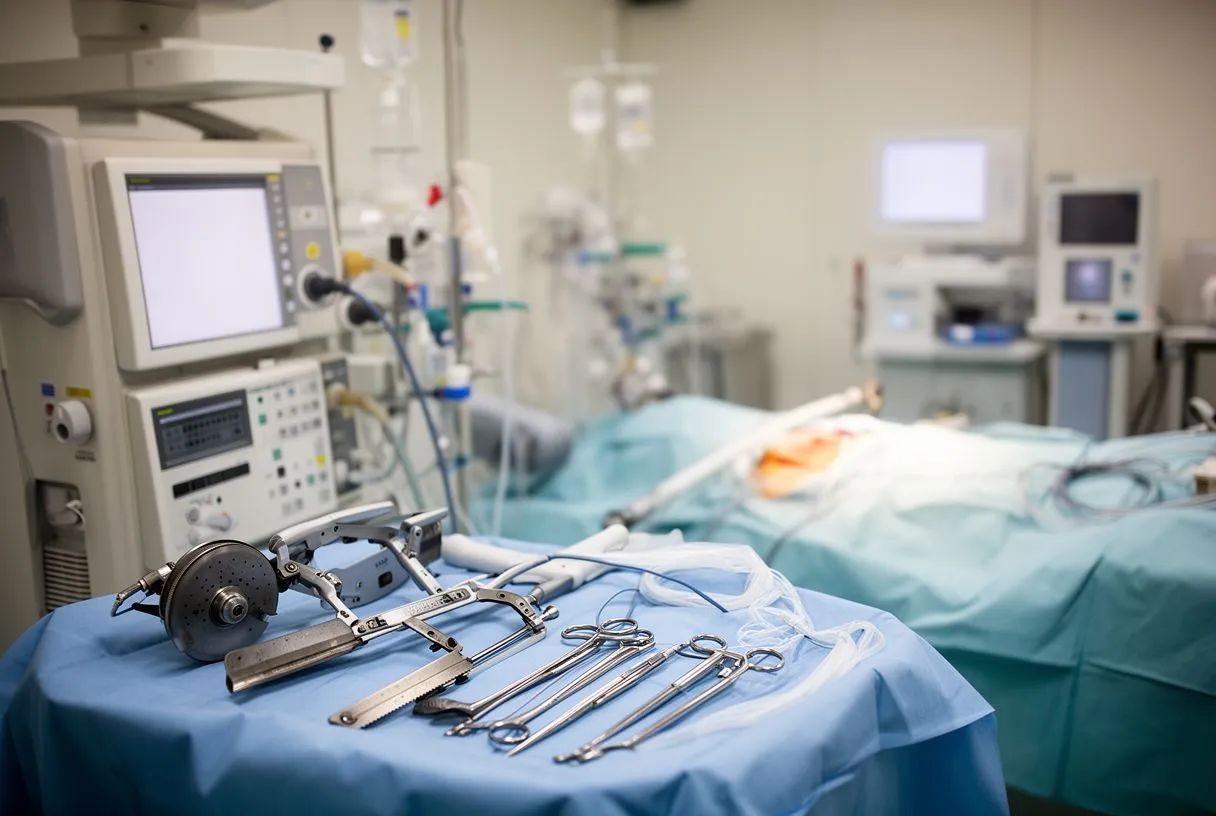
The preparation. After general anaesthesia, the surgical team harvests the conduit arteries — freeing the mammary arteries from the chest wall and, if used, the radial artery from the forearm — while the heart is still beating. This harvesting phase is delicate and takes time; it is one reason total arterial cases can run longer than conventional bypass.
On-pump or off-pump. The operation can be done with On-pump Bypass — where the Cardiopulmonary Bypass machine takes over circulation while the heart is stopped — or with Off-pump Bypass, where the surgeon operates on the beating heart with stabilising instruments. Both are established; the choice depends on the patient and the surgeon's judgement. Some centres also offer minimally invasive or robotic-assisted approaches for selected patients, where incisions are smaller and recovery can be faster.
A clinical study published in the Indian Annals of Thoracic Surgery compared antegrade with combined antegrade and retrograde delivery of cardioplegic solution — the protective solution that stops and preserves the heart during surgery — in patients with triple vessel coronary disease, illustrating how even details of heart protection during bypass are studied carefully to improve outcomes. Once the grafts are sewn in place, Weaning From Bypass begins: the heart is gradually restarted and the patient is separated from the machine, while the team monitors Pulmonary Artery Pressure and heart function through the transition. Dr Molina performs conventional, minimally invasive, robotic and transcatheter procedures, and recommends the less invasive route only where the evidence supports it for that specific patient.
What Does Total Arterial Revascularisation Recovery Look Like?
The first days. You will wake in an intensive care unit with a breathing tube for a few hours, monitoring lines, and care around the clock. Most patients sit up the next day and begin gentle walking within two to three days. Typical hospital stay is five to seven days when all goes smoothly.
How long to recover from triple bypass surgery? This is one of the most common questions patients ask. The broad answer: most people feel substantially better at six weeks, return to desk work at around six to eight weeks, and rebuild full strength — including driving, light exercise and most daily activities — over about three months. Because total arterial grafting may involve a forearm incision as well as the chest, the arm needs specific attention: hand and wrist exercises, avoidance of heavy lifting with that arm for several weeks, and care of the small forearm wound.
Cardiac rehabilitation is not optional. Supervised rehabilitation — graded exercise, education and risk-factor coaching — is one of the strongest predictors of a good outcome after any bypass. It rebuilds fitness safely and helps control the blood pressure, cholesterol and blood sugar problems that caused the disease in the first place.
What is the best body position for open heart surgery recovery? In the first weeks, sleeping on your back or on your side with a pillow supporting the chest wound is most comfortable. Avoid sleeping deeply on your stomach early on, and when getting out of bed, roll to your side and push up with your arms to protect the breastbone — the breastbone is cut in conventional bypass and must heal like a fracture, which takes six to eight weeks.
What Is the Arterial Graft Survival Rate Over the Long Term?
What the data shows. Rather than quoting a single "arterial graft survival rate" figure — which varies enormously by patient, target artery and surgeon — it is more useful to understand the pattern. Mammary artery grafts to the Left Anterior Descending Artery remain open and functional in the great majority of patients at fifteen and twenty years. Radial artery grafts, when placed on appropriately sized arteries with proper anti-spasm medication, perform well in modern series. Vein grafts, by comparison, show steady late failure. Studies of multiple arterial grafting — including work reported in The Lancet — indicate a survival benefit over the long term compared with single-arterial grafting, particularly when both mammary arteries are used.
Can I live a long life with coronary artery disease? Yes — many people do. A bypass does not cure the underlying disease; it manages it. The patients who live longest after surgery are the ones who stop smoking, control cholesterol and blood pressure, stay active, and attend follow-up. Graft choice is one important piece; your daily habits after surgery are the piece you control completely.
Follow-up matters. Long-term results depend on surveillance. Our team reviews every case against international practice guidelines before recommending treatment. Regular follow-up helps catch problems with grafts or new blockages early. Most programmes recommend periodic check-ups and, at intervals, imaging to confirm the grafts remain open.
What Are the Risks of Total Arterial Revascularisation?
Standard bypass risks. Total arterial grafting carries the general risks of any open-heart operation: bleeding, infection, stroke, irregular heart rhythm (particularly atrial fibrillation in the first weeks), kidney stress, and in a small minority of patients, more serious complications. Mortality for planned bypass in experienced centres is low, but it is never zero, and an honest surgeon will say so.
Risks specific to the arterial approach. Taking both mammary arteries is associated with a higher chance of chest wound healing problems, particularly in diabetic patients and those with lung disease. Radial artery grafts can go into spasm, which is why patients who receive them take calcium-channel blocker medication for a period and why the hand's blood supply is tested before the artery is removed. Rarely, a patient may notice coldness or cramping in the forearm — usually temporary.
Longer operative time. Harvesting several arteries takes longer than taking a vein. A longer operation means more time on the heart-lung machine, which carries its own small risks. This is a genuine trade-off that your surgical team should discuss openly.
None of this is meant to alarm. It is meant to equip you. We encourage every patient to seek a second opinion and treat that as a normal part of deciding about heart surgery — a decision this big deserves more than one perspective.
What Does Arterial Bypass Cost in Mexico, and How Do You Choose a Surgeon?
Cost realities for international patients. The operation itself, the technology and the training standards are the same; the cost difference reflects the healthcare economy, not the quality. Exact pricing always depends on the hospital, the complexity of your case and any additional procedures needed, so it should be quoted individually after your studies are reviewed. Ask what the quote includes — hospital stay, ICU time, surgeon and anaesthesia fees, and anticipated follow-up — and what it does not.
Questions to ask any surgical team. Before committing, bring these to your consultation:
- How many total arterial cases does the surgeon perform each year, and what are their results?
- Is my anatomy suited to bilateral mammary grafting, or would radial artery grafts serve me better?
- What are the specific risks for my age, diabetes status and heart function?
- What does the quoted price include, and what could change it?
- What does follow-up look like if I live abroad?
Choosing care in Guadalajara and beyond. Our team, led by Dr Alejandro Molina, consults in Guadalajara, Querétaro and Hermosillo, and the first contact is a free video consultation: we get to know you, talk through your condition, and tell you which studies are still needed so none are ordered unnecessarily. Dr Molina trained in cardiothoracic surgery at the Universidad de Guadalajara, in cardiac, minimally invasive, robotic and structural surgery at the University of Montreal, and in structural cardiology and TAVR at CHU Bordeaux — alongside team training in Jena, Bad Berka and Buffalo. That training matters when a technique like total arterial grafting, which depends on fine surgical judgement, is on the table.
Total arterial revascularisation bypass represents the current high-water mark of surgical coronary revascularisation: using the body's own durable arteries to rebuild blood flow to the heart, with the realistic promise of grafts that last decades and a lower chance of ever needing a second operation. It is not for everyone — emergency cases, frail patients and those with particular anatomy may be better served by the conventional approach — and a good surgical team will tell you honestly which category you fall into. The decision deserves time, clear information about your own angiogram, and ideally more than one professional opinion. If you are weighing a bypass operation and want to understand whether an all-artery approach fits your situation, start with a consultation with a qualified cardiac team who will explain your options in plain language — your heart, and your decision, deserve nothing less.






