

Transsubclavian Access for TAVR: An Alternative Route
Transsubclavian access TAVR is an alternative route when groin access isn't possible.
If your aortic valve has become too narrow and your heart team has recommended transcatheter aortic valve replacement, one of the first questions worth asking is simple: how will the new valve actually reach your heart? For most patients the answer is the artery in the groin, but when that route is blocked, too small or diseased, transsubclavian access for TAVR becomes a well-established alternative. This route uses the subclavian artery, the large vessel that runs beneath your collarbone and supplies the arm. In this guide we walk through what the procedure involves, how it compares with other access routes, what recovery looks like, and which questions to bring to your own heart team.
What Is Transsubclavian Access for TAVR?
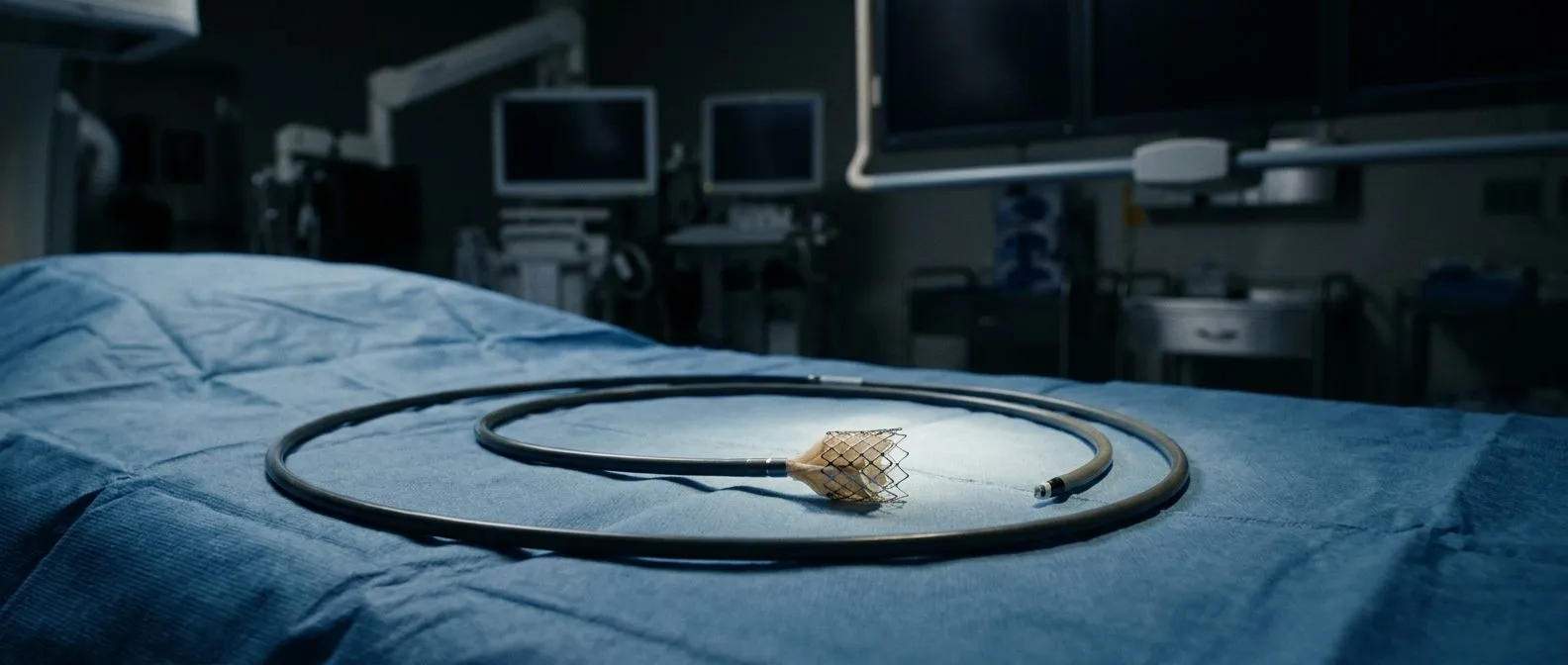
Transsubclavian access explained. TAVR is a procedure in which a replacement aortic valve, mounted on a collapsible frame, is guided to the heart through a blood vessel rather than through open chest surgery. In transsubclavian access, the entry point is the subclavian artery under the collarbone instead of the femoral artery in the groin. From there, a thin tube called a sheath carries the new valve up the aorta and into position inside the diseased valve.
Why the collarbone route exists. The subclavian artery connects to the aorta directly through arteries that branch near the heart, which means the valve travels a shorter, straighter path than it would from the groin. Surgeons have used this route for years, and it is one of the most studied alternative access options in the field. Reviews of self-expanding and balloon-expandable valves in difficult anatomies describe it as a dependable option when the groin cannot be used (Journal of Cardiovascular and Thoracic Research).
How it differs from other routes. Besides transsubclavian access, heart teams can consider other non-femoral options such as Transapical Access (through the chest wall into the heart's apex), Transaortic Access (directly through the upper aorta) and Transfemoral Access, which remains the first choice when anatomy allows. The access route does not change the valve itself — it only changes where the catheter enters your body. Our multidisciplinary team reviews every case together against international practice guidelines before recommending any one of these routes, and the final decision always rests with the patient.
Why Do Some Patients Need an Alternative Access Route TAVR?
Small or diseased leg arteries. The most common reason for an alternative access route TAVR is that the femoral arteries cannot safely accommodate the delivery sheath. Some patients have vessels that are naturally narrow, others have calcium build-up, tortuous (twisted) anatomy or previous stents that make the path from the groin unusable. Forcing the catheter through such vessels raises the risk of injury, so the team looks upward for a safer entry point.
Severe peripheral artery disease. Patients with peripheral artery disease — narrowing of the arteries outside the heart — often have disease in exactly the vessels a femoral approach would need. This group overlaps strongly with patients who have a history of smoking, diabetes or vascular surgery. Rather than abandoning TAVR, the team simply changes the doorway.
Previous groin surgery or aortic disease. Some patients have artificial grafts in the abdomen, prior stents or anatomical conditions that make the femoral route impossible. In others, severe disease of the aorta itself, such as a mobile plaque or an aneurysm, makes a long catheter journey through the aorta risky. In our consultations we take the time to show patients their own imaging and explain, in plain words, why one route fits their anatomy and another does not.
How Does the Subclavian Artery TAVR Approach Work?
Preparation and imaging. Before the procedure, a CT scan maps the size, calcification and course of the subclavian artery, just as it would map the femoral arteries. The team also checks that the artery is wide enough for the sheath and that the vessels supplying the brain and arm from that side are healthy. This planning step is what makes the route safe.
The access technique steps. The procedure is usually performed under general anaesthesia or deep sedation. The surgeon makes a small incision just below the collarbone, typically on the left side, and exposes the subclavian artery. A short segment may be controlled with soft loops or tapes, then the delivery sheath is introduced directly into the artery — sometimes through a tiny surgical cut and sewn closure afterwards, sometimes percutaneously. From there the technique mirrors any TAVR: a guidewire crosses the narrowed valve, the valve is positioned and deployed, and its function is checked with ultrasound before the sheath is removed.
Closing the entry site. Because the artery is exposed, the surgeon closes the small opening in the artery directly with fine stitches. This direct closure is one reason the bleeding risk at the access site can be well controlled. The skin incision is a few centimetres long and sits where a collarbone scar is barely noticeable.
Transsubclavian TAVR vs Femoral: Which Route Is Better?
The femoral route remains the default. When the groin vessels are healthy, Transfemoral Access is preferred because it needs no incision in the chest, can often be done with lighter sedation and usually allows a faster discharge. Meta-analyses tracking the evolution of TAVR outcomes show that complication rates have steadily fallen as the technique and devices have matured (Scientific Reports).
What changes when the subclavian route is used. Comparing transsubclavian TAVR vs femoral, the main differences are practical rather than about the valve result. The subclavian route usually requires general anaesthesia, a small surgical incision and a short period of arm and shoulder care afterwards. Procedural success and valve performance are broadly comparable when patients are properly selected.
- Femoral: no incision, often conscious sedation, quickest recovery — first choice whenever vessels allow.
- Subclavian: small incision below the collarbone, direct arterial closure, reliable when leg arteries are unusable.
- Apical or aortic: reserved for special anatomies; each carries its own trade-offs discussed with your team.
The honest answer. There is no universally "better" route — there is only the lowest-risk route for your particular anatomy. A subclavian approach in a patient with blocked groin arteries is safer than forcing a femoral approach in the same patient.
What Are the Benefits of Transsubclavian Access TAVR?
Key benefits for suitable patients. For patients whose anatomy rules out the groin, the advantages of this route are concrete:
- It keeps TAVR possible: patients who would otherwise need open-heart surgery can still receive a transcatheter valve — a genuine minimally invasive aortic valve replacement option.
- A straight, short path: the catheter travels from just below the collarbone directly to the valve, avoiding the curved journey through the abdominal aorta.
- Controlled closure: the artery is closed under direct vision with stitches, which gives the surgeon certainty at the entry site.
- Less strain on diseased leg vessels: no wires or sheaths pass through the femoral arteries at all.
Comfort and daily life. Many patients are surprised that the incision site causes little interference with daily activities. The scar sits below the collarbone, away from joints, and most people find it settles within weeks. In our experience patients who prepared for a long chest recovery are often relieved at how small the actual incision turns out to be.
What Are the Risks and Transsubclavian Access Complications?
Access-site risks. The possible transsubclavian access complications are similar in kind to those of any arterial access: bleeding, narrowing of the artery over time, injury to the vessel wall and reduced blood flow to the arm on that side. Because the artery is surgically exposed and closed directly, bleeding is usually visible and manageable during the procedure itself.
Nerve and arm considerations. The nerves that control the voice box and the shoulder muscles travel near the subclavian artery. Temporary hoarseness or shoulder weakness can occur in a small number of patients, and the team will check the artery's suitability beforehand to reduce this risk. The arm on the treated side is monitored for circulation after the procedure.
General procedure risks. Beyond the access site, TAVR itself carries well-described risks — stroke, bleeding, the need for a pacemaker, and kidney or lung complications. These risks depend far more on the patient's overall health and the valve used than on the access route chosen. Our team reviews every patient's computed tomography and heart studies together before recommending a route, precisely so these risks are weighed against the whole picture rather than decided by one specialist alone.
Who Qualifies? Subclavian TAVR Eligibility Criteria
The artery must be suitable. The main subclavian TAVR eligibility criteria are anatomical: the artery must be wide enough for the sheath (typically measured on CT), free of severe calcification at the planned puncture site, and not so twisted that the catheter cannot pass. The left side is usually preferred because it gives a straighter path to the aortic valve.
Other vessels must be protected. The team also confirms that the artery supplying the brain on that side — the vertebral artery — is adequate, and that blood can reach the left arm through alternative pathways. This is why a complete CT evaluation of the chest, neck and abdomen is standard before an alternative access route is chosen.
Overall fitness still matters. Eligibility is not only about vessels. The heart team weighs lung function, kidney function, frailty and the structure of the valve itself. The access route is one decision inside a larger plan. We encourage patients to seek a second opinion and treat it as a normal, sensible part of deciding about heart surgery — a confident decision is made with full information.

What Is the Transsubclavian TAVR Recovery Time?
Days one to three. Most patients stay in hospital for a few days. The first hours after the procedure are spent in an monitored setting where heart rhythm, blood pressure and the arm's circulation are checked. You will typically be encouraged to sit up and walk gently within the first day.
Weeks one to six. The transsubclavian TAVR recovery time at home is generally a few weeks. The collarbone incision needs to be kept clean and dry, and heavy lifting with the arm on the treated side is usually limited for a short period while the artery heals. Most patients return to light daily activities quickly and to normal routines progressively.
What follow-up looks like. Regular check-ups confirm the valve is working well and the incision has healed. Long-term care involves heart medicines, monitoring of the valve and the same healthy-living measures as after any valve procedure. Your own team will give you a recovery plan matched to your health, and this guide cannot replace it.
What Are the Big Five Complications After TAVR?
The complications teams track. Research and registries commonly group the major TAVR risks into five categories, and your heart team will discuss them with you before any decision:
- Stroke: debris can travel to the brain during valve placement; techniques and devices exist to reduce this risk.
- Major bleeding: most often related to the access site, which is why access choice matters so much.
- Pacemaker need: the new valve sits close to the heart's electrical system, and some patients need a pacemaker afterwards.
- Vascular injury: damage to the artery used for access — the reason vessels are measured so carefully beforehand.
- Acute kidney injury: temporary stress on the kidneys, usually related to the contrast dye and the patient's baseline kidney health.
How these risks are reduced. Careful imaging, the right access route, experienced operators and a multidisciplinary review all lower these risks. None of them can be brought to zero, and any team that implies otherwise deserves scrutiny. Every case we accept is reviewed by the whole multidisciplinary team against international guidelines before a recommendation is made, and we present patients with the alternatives, not just one plan.
How Do You Choose the Best TAVR Approach for High-Risk Patients?
The heart team decides together. The best TAVR approach for high-risk patients is not chosen by a single rule but by a heart team — an interventional cardiologist, a cardiac surgeon, and imaging specialists — reviewing the CT scan and the patient's overall condition. Frailty scores, kidney function, prior surgeries and the state of every artery are weighed together.
Questions worth asking your team. Before your procedure, ask: Why is this access route right for my anatomy? What happens if a problem arises at the access site? Who will perform the closure? How long will I stay in hospital? A team with clear answers is a team that has planned properly.
What is life expectancy after TAVR? Survival after TAVR depends chiefly on age, other health conditions and how sick the heart was before treatment — not on the access route. What the access route changes is procedural safety for your particular anatomy, not the long-term outlook of the valve itself. Many patients return to a good quality of daily life, and your team can discuss what the published evidence means for your situation.
Can you stent the subclavian artery? Yes — narrowing of the subclavian artery can be treated with a stent in its own right, and in some patients with narrowed subclavian arteries and limited blood flow to the arms this is done separately or beforehand. But stenting a diseased subclavian artery usually makes it less suitable as a TAVR access route, which is another reason the CT planning beforehand matters so much.
Our closing advice. If your heart team has raised the possibility of transsubclavian access for TAVR, it usually means they have studied your anatomy carefully and found the groin route unsuitable — which is exactly the kind of planning you want. Bring your questions, ask to see your imaging, and make sure every alternative route has been discussed. Dr Molina and our multidisciplinary team in Guadalajara, Querétaro and Hermosillo offer a free first video consultation: we get to know you, talk through your condition, and tell you which studies are genuinely needed before anything else is ordered. Book a consultation with a qualified cardiac team rather than making decisions from an article alone — your anatomy, your health and your preferences deserve a plan built around all three.






