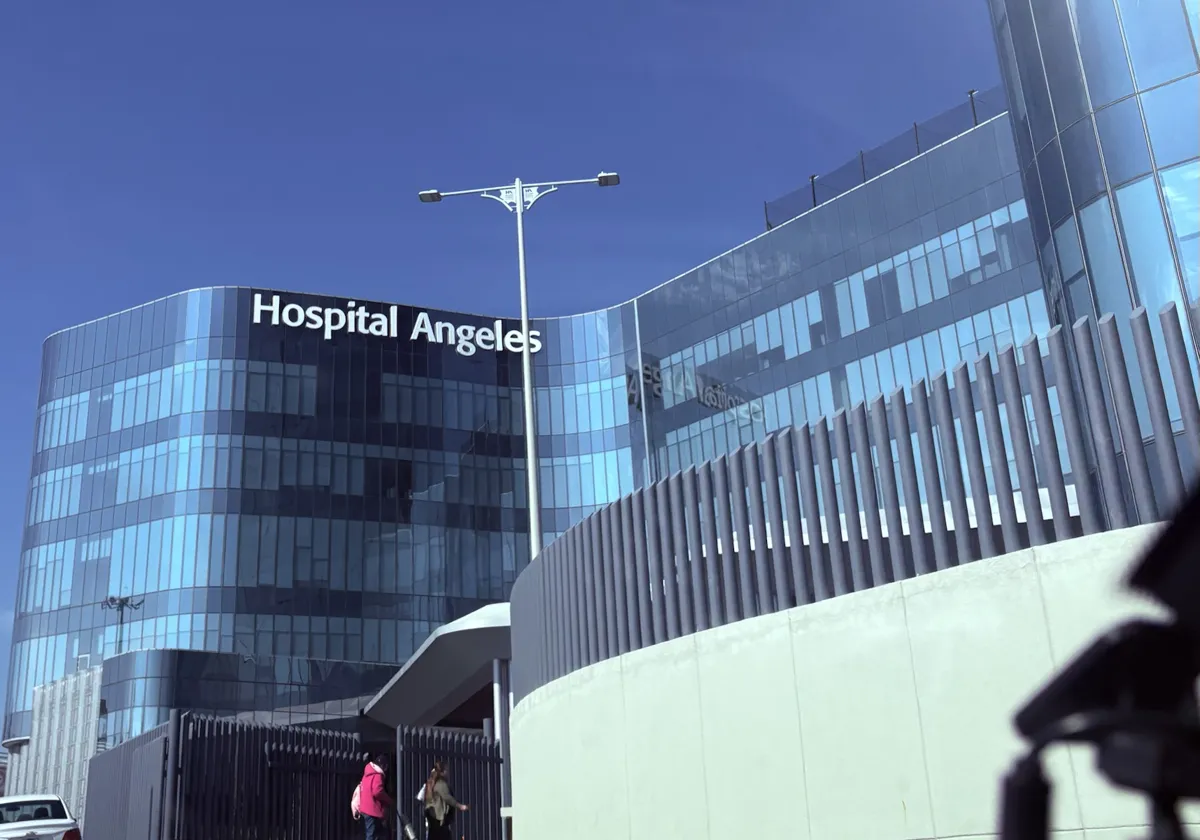
Hospital Ángeles Andares stands on Avenida Patria, in the Puerta de Hierro area of Zapopan. It is Grupo Ángeles' newest hospital in the Guadalajara metropolitan area and has a robotic surgery center. There, in 2026, Dr. Alejandro Molina performed the first robotic heart surgery in Guadalajara's history.
This page is for you if you have been told you might have robotic heart surgery, or if you want to know what the hospital offers before deciding. We gathered what can be checked in public sources, explain how robotic surgery works and walk you through the path from the first consultation to the operating room. The sources are at the end.
A new hospital in Zapopan
Grupo Ángeles announced the start of construction of Hospital Ángeles Andares in mid-2022. According to the figures released at the time, the project involved an investment of about 4 billion pesos, a 29-level tower, 150 beds, 15 operating rooms and more than 400 doctors' offices. These are announcement figures: the hospital does not currently publish its number of beds or operating rooms, so read them as a reference for scale.
The hospital is part of the Hospital Ángeles network, one of the private hospital groups with the widest presence in Mexico. Its emergency department is open 24 hours a day, every day of the year.
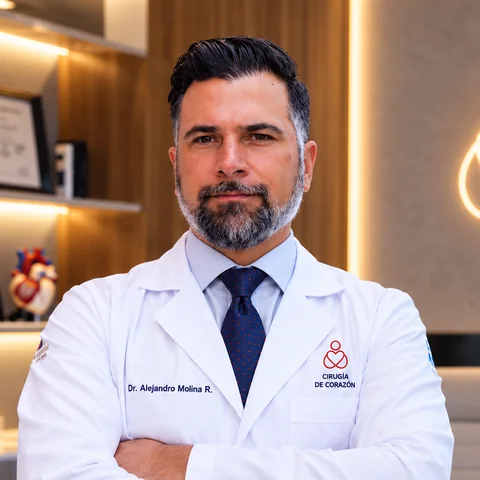
A practical detail: in Guadalajara, Dr. Molina has two offices, both in Ángeles hospitals. One is here, at Hospital Ángeles Andares: floor 27, office 2700, Cardiovascular Surgery. The other is at Hospital Ángeles del Carmen, in the Monraz neighborhood. You can consult at whichever suits you best; robotic operations take place at Andares.
Guadalajara's first robotic heart surgery
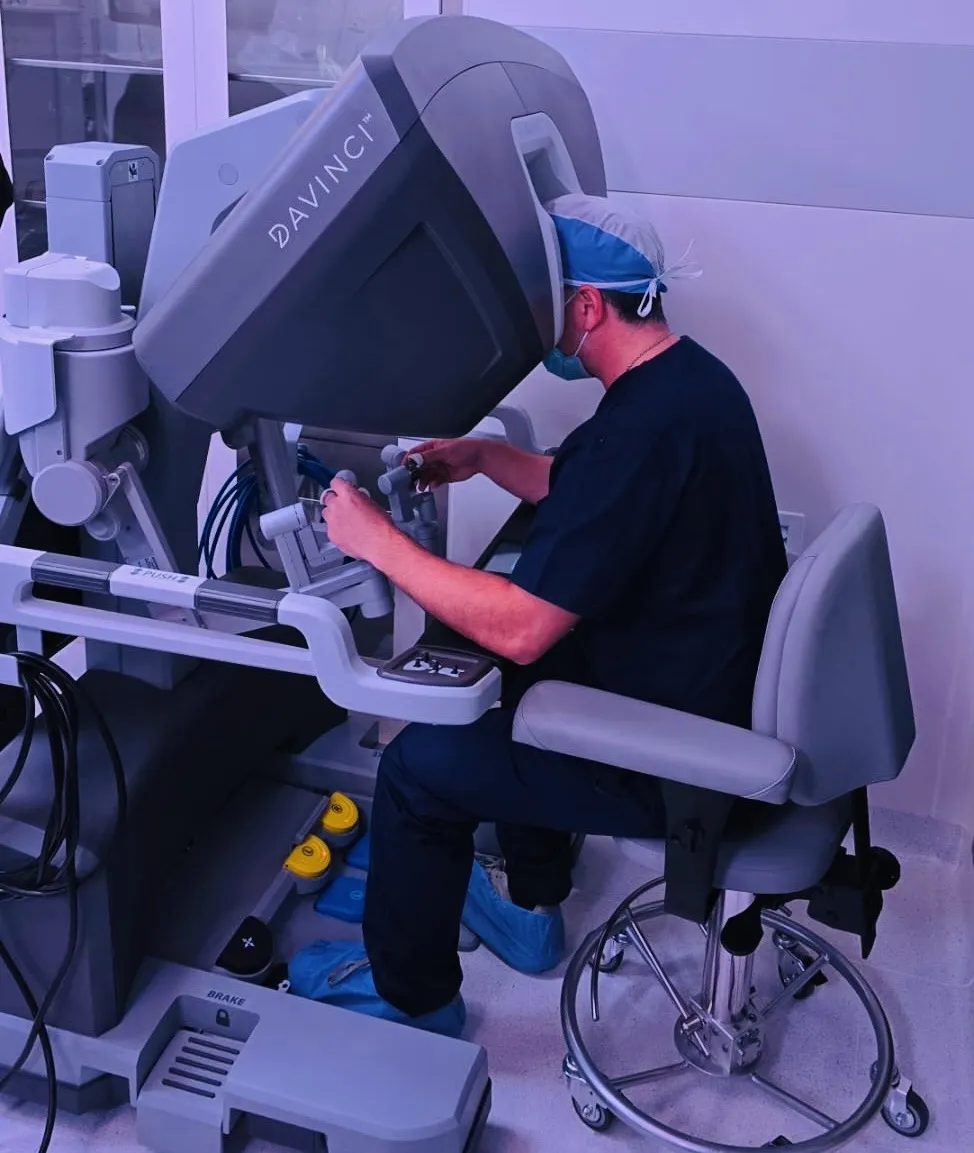
In 2026, at Hospital Ángeles Andares, Dr. Alejandro Molina, in collaboration with ICMI, replaced a patient's mitral valve using the Da Vinci surgical system. It was the first robotic heart operation in Guadalajara. Until then, a patient from Jalisco or the neighboring states who was a candidate for this kind of surgery had to leave the region.
In robotic surgery, the surgeon operates seated at a console, with a magnified, three-dimensional view of the inside of the heart. From there he moves very fine instruments that enter through small incisions between the ribs. The breastbone is not cut. The robot does not operate on its own: it reproduces the surgeon's movements, and around the patient works a full team of anesthesia, nursing and assistants trained for this type of surgery.
The full story of that first case is in For the First Time in Guadalajara, a Robot Operated on a Heart — Without Opening the Chest.
Guadalajara's first robotic heart surgery was performed at Hospital Ángeles Andares.
Which heart operations can be done robotically
Not every heart operation can be done with a robot, and not every patient is a candidate. The operations in which Dr. Molina uses the Da Vinci system include:
- Mitral valve repair and replacement.
- Tricuspid valve surgery.
- Hybrid revascularization, which combines a robotic coronary bypass with stents placed by catheterization.
- Removal of cardiac tumors, such as myxoma.
- Closure of an atrial septal defect, an opening between the two atria.
If your case is not suited to a robotic approach, there are other options: minimally invasive surgery, conventional open surgery or a catheter-based procedure. Dr. Molina performs all four, so the recommendation does not depend on a single technique but on what suits you best. We explain it in Robotic, Minimally Invasive or Open-Chest Heart Surgery: How to Choose.
What the hospital offers for the heart
Heart surgery, robotic or not, depends on everything around the operating room. According to the hospital's own information, Hospital Ángeles Andares has:
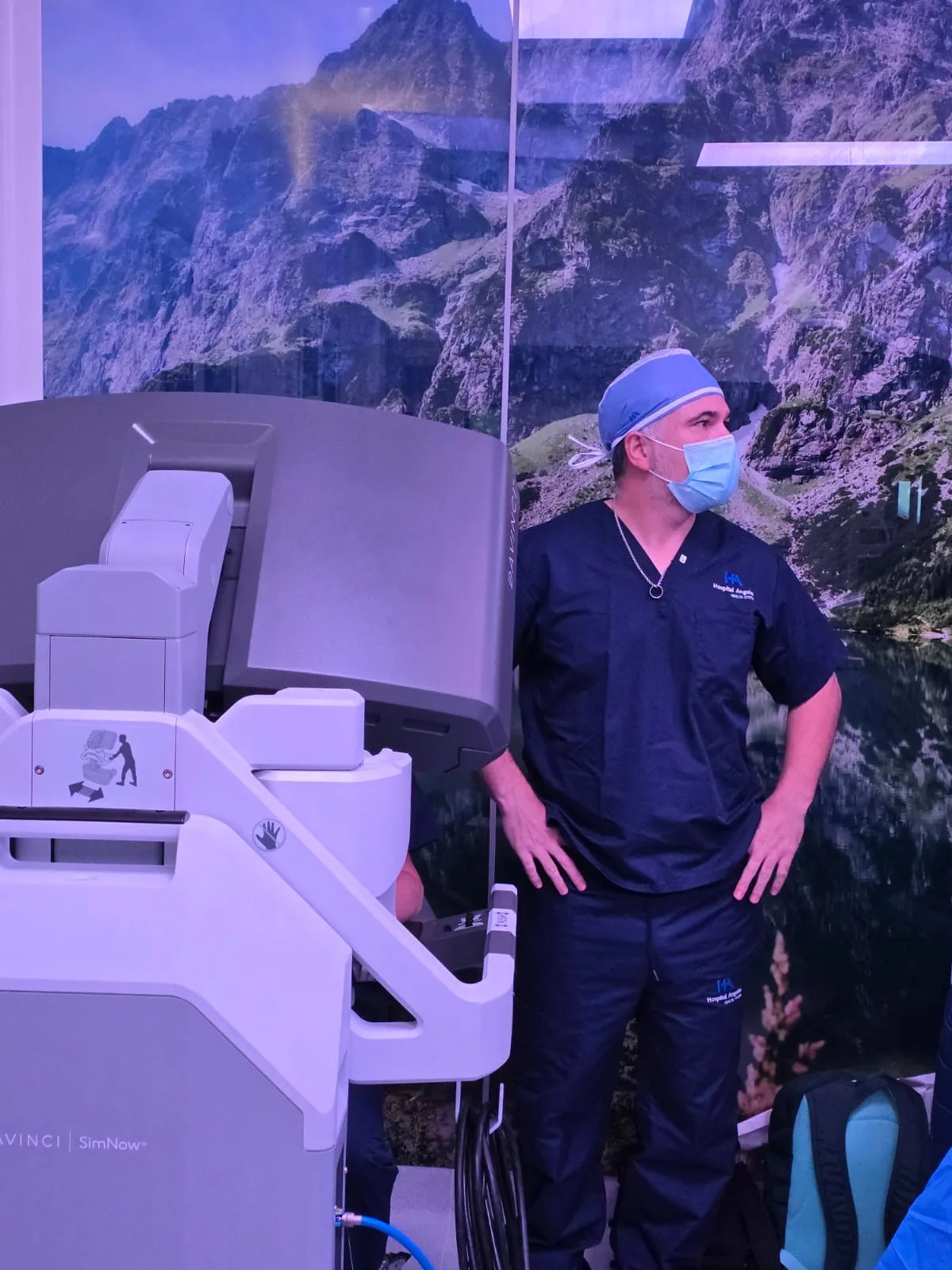
- A robotic surgery center, with a Da Vinci Xi system.
- Cardiac catheterization (hemodynamics) for scheduled and emergency cardiovascular procedures.
- An echocardiography unit.
- Intensive care for adults, an intermediate care unit, and pediatric and neonatal intensive care.
- Imaging: MRI, nuclear medicine and interventional radiology.
- A blood bank and clinical laboratory.
After heart surgery, patients usually spend the first hours or days in intensive care, with continuous monitoring of heart rhythm, blood pressure and breathing. Recovery then continues in a hospital room. Length of stay varies from person to person and depends on the procedure and your prior health; no one can promise you an exact figure in advance.
From consultation to the operating room
The path begins at either of Dr. Molina's two Guadalajara offices: here, on floor 27 of Hospital Ángeles Andares, or at Hospital Ángeles del Carmen. At the first consultation he reviews your tests, such as the echocardiogram, coronary angiography or CT scan, and explains with the images in front of you what is happening in your heart and what options you have.
If robotic surgery is an option for you, additional tests are usually ordered to plan it, because the robotic approach requires knowing the anatomy well before entering the operating room. With that information the technique is decided and the surgery is scheduled at Hospital Ángeles Andares.
For your first consultation, it helps to bring:
- Your previous tests, with their discs or image files if you have them.
- A list of your medications and doses.
- Reports from other doctors who have treated you.
- Your questions in writing. Your family is welcome.
How to read this information
A hospital having a robot does not mean that any heart operation can be done with it, or that robotic surgery is always better. Technology is a tool; what matters is that the technique chosen is right for your case and that the team has experience with it.
So at your consultation it is worth asking: am I a candidate for robotic surgery? What alternatives do I have? What are the risks and benefits of each in my case? A good consultation ends with clear answers to those questions.
Frequently asked questions
Does Dr. Molina have an office at Hospital Ángeles Andares?
Yes. It is on floor 27, office 2700, Cardiovascular Surgery (Av. Patria 1355, Col. Royal Country, Zapopan). Hours are Monday to Friday 8:30 am to 8:00 pm and Saturday 10:00 am to 1:00 pm. Phone: +52 33 1603 1390, +52 33 3621 0808 or +52 33 3621 0531. He also has an office at Hospital Ángeles del Carmen.
Can any patient have robotic surgery?
No. It depends on the diagnosis, the anatomy and the prior tests. At the consultation he assesses whether a robotic approach is an option for you or whether another technique is better.
What do I need to do to find out if I am a candidate?
Book a consultation and bring your tests. Dr. Molina reviews them with you and, if needed, tells you which additional tests are required to plan robotic surgery.
Can I ask for a second opinion?
Yes. If you have already been offered heart surgery, you can consult Dr. Molina to review your diagnosis and understand whether a robotic or minimally invasive approach is an alternative in your case.