


Anaemia Before Heart Surgery: Why It Is Treated First
Anaemia before heart surgery raises serious risks and is treated first to protect you.
If you or a family member has been told you need heart surgery, and a blood test has also shown anaemia before heart surgery, it is natural to feel worried about what that means. Anaemia simply means your blood is carrying less oxygen than it should, usually because your haemoglobin — the oxygen-carrying protein inside red blood cells — is below normal. It is one of the most common findings in patients scheduled for cardiac operations, and it is also one of the most treatable. This guide explains what anaemia is, why surgical teams treat it before the operation rather than during it, and what the practical steps look like, from screening to iron infusions to recovery.
What Is Anaemia and How Does It Happen?
Anaemia is a shortage of healthy red blood cells or of haemoglobin, the protein that picks up oxygen in your lungs and delivers it to every organ, including the heart muscle itself. When haemoglobin falls, your body compensates by making the heart beat faster and harder. Over weeks or months, that extra workload matters — especially when the heart is already struggling with valve disease or blocked coronary arteries.
How it develops: the most common cause is iron deficiency. Your bone marrow needs iron to build haemoglobin, so when iron stores run low, production slows and the cells it does make are smaller and paler than normal. Blood loss — from heavy periods, stomach ulcers, or years of routine testing and procedures — is a frequent driver. Chronic conditions such as kidney disease, heart failure, or long-standing inflammation can also blunt the marrow's output even when iron is available.
Why cardiac patients are especially affected: people awaiting heart surgery often have several of these factors at once. Heart failure itself is linked to iron deficiency through inflammation and poor appetite. Many patients have been on blood thinners for years, which can cause slow, unnoticed bleeding. And older adults, who make up most surgical candidates, absorb iron less efficiently. The Mayo Clinic notes that anaemia is common in older adults and in people with chronic disease — precisely the group facing heart operations.
Why Anaemia Before Heart Surgery Raises Your Risk
Surgery is a test of your blood's reserves. During a cardiac operation — whether a coronary bypass, a valve repair, or a transcatheter aortic valve replacement (TAVR) — there is always some blood loss, and the heart-lung machine used in open procedures dilutes your blood and consumes some red cells. If you start the operation already low, there is very little margin left.
The physiological problem: during bypass, oxygen delivery to the body depends on haemoglobin level. A patient with preoperative anaemia begins the operation with less oxygen-carrying capacity, so the team must either accept lower oxygen delivery to organs like the kidneys and brain, or transfuse earlier. Both carry consequences, which is why low hemoglobin before heart surgery is treated as a modifiable risk factor — something you can actually change before the day of surgery.
Why it matters for the heart specifically: anaemia forces the heart to pump harder to compensate. In a patient with coronary disease, that added demand can worsen symptoms such as angina (chest pain from reduced blood flow to the heart muscle) in the weeks leading up to surgery. Correcting anaemia beforehand is part of what surgeons call prehabilitation — preparing the body so it enters the operation in the best possible condition.
In our practice, every patient's blood count is reviewed by the multidisciplinary team before any recommendation is made, and if anaemia is found we explain exactly what it means for that person's operation and what can be done about it.
What Are the Signs of Low Hemoglobin Before Heart Surgery?
Anaemia is often silent in its early stages, which is why screening matters. But as it deepens, the body sends signals. Because many of these overlap with heart disease symptoms, patients sometimes dismiss them — or attribute them to their heart condition alone.
Common symptoms to watch for: fatigue that rest does not fix, breathlessness on stairs or hills that used to be easy, a racing or pounding heartbeat, dizziness on standing, and pale skin or inner eyelids. More unusual signs of iron deficiency can include brittle nails that spoon slightly, cracks at the corners of the mouth, a sore or smooth tongue, restless legs at night, cold hands and feet, unusual cravings for ice or earth (a condition called pica), and hair thinning.
Why symptoms can hide in cardiac patients: here is the honest complication — someone with heart failure or valve disease may already feel breathless and tired, so anaemia's symptoms blend in. That is exactly why a blood count, not symptoms, is the reliable way to detect it. A simple complete blood count (CBC), a standard test that measures haemoglobin and red cell characteristics, answers the question in minutes.
What Are the Types of Anaemia?
Not all anaemia is the same, and knowing the type changes the treatment. Broadly, doctors group anaemia by what is causing it, and several distinct types appear in patients heading for cardiac surgery.
The main categories: iron deficiency anaemia is the most frequent and the most straightforward to treat. Anaemia of chronic disease comes with long-standing illness — heart failure, kidney disease, inflammation — and responds partly to treating the underlying condition and partly to intravenous iron. Haemolytic anaemia is a different animal entirely: red blood cells are destroyed faster than the marrow can replace them. It can be caused by immune reactions, certain medications, or artificial valves. Kidney-related anaemia stems from reduced erythropoietin, the hormone that tells the marrow to make red cells. And aplastic anaemia, in which the marrow itself fails, is rare but serious.
Haemolytic anaemia in the cardiac context: this type deserves particular attention for heart patients, because a worn or leaky prosthetic valve can physically damage red cells as they pass through, causing chronic haemolysis. Patients with mechanical valves long ago sometimes develop this slowly. If you have a prosthetic valve and your counts have been drifting down, this is a possibility your cardiologist will specifically check.
- Iron deficiency: low iron stores; treated with oral or intravenous iron; most common type before cardiac surgery.
- Anaemia of chronic disease: tied to heart failure, kidney disease, inflammation; often needs intravenous iron plus treatment of the underlying condition.
- Haemolytic anaemia: red cells destroyed too quickly; relevant to patients with prosthetic valves; needs specialist haematology input.
How Is Anaemia Screened Before Cardiac Surgery?
Screening for anaemia in cardiac patients is now considered standard practice, and international patient blood management guidelines recommend checking the blood count at least several weeks before an elective operation — early enough to do something about it. Waiting until the pre-anaesthetic visit a few days before surgery leaves no time to correct the problem safely.
What the tests involve: the starting point is a complete blood count, which measures haemoglobin, the size and colour of red cells, and their total number. If that shows anaemia, further tests clarify the cause: ferritin (the body's iron storage protein), transferrin saturation (how much iron is actually available to the marrow), B12 and folate levels, and sometimes kidney function. In patients with ongoing blood loss, a search for the source — often the gastrointestinal tract — is part of responsible care.
Interpreting the numbers: normal haemoglobin ranges differ by sex — roughly 13 g/dL and above for men and 12 g/dL for women, though exact thresholds vary slightly between laboratories. Many surgical teams aim for a preoperative haemoglobin target in the higher part of the normal range, because the operation itself will consume some of that reserve. Anaemia screening cardiac patients receive is therefore not a box-ticking exercise; it directly shapes the surgical plan.
When a patient comes to us for a first free video consultation, we review any recent blood work with them, explain in plain words what the numbers show, and order only the studies that are genuinely still missing — so nobody undergoes unnecessary testing.
Iron Deficiency Before Heart Surgery: How It Is Treated
Treating iron deficiency before heart surgery is one of the clearest, most actionable ways to reduce surgical risk. The right approach depends on how low the iron and haemoglobin are, how much time there is before the operation, and whether the patient can absorb oral iron at all.
Oral iron supplements: tablets or capsules taken daily are the traditional first step, and they work when there is enough lead time — usually a matter of months — and when the gut absorbs iron normally. Practical tips matter: iron absorbs best on an empty stomach with vitamin C and away from tea, coffee, and calcium. A common modern approach is iron taken on alternate days rather than daily, which some research suggests improves absorption. The main limitations are slow results and side effects such as constipation or stomach upset.
Intravenous iron infusion: when time is short, iron levels are very low, or oral iron is not tolerated, an iron infusion delivers iron directly into the bloodstream through a drip. A pre-surgery iron infusion in cardiac patients can replenish stores within days to weeks rather than months. It is an outpatient procedure taking roughly thirty minutes to an hour, with a small risk of transient side effects that modern formulations have made uncommon. This route has become a cornerstone of preparing anaemic patients for cardiac operations.
When anaemia is not from iron: if the cause is chronic kidney disease, B12 or folate deficiency, or another condition, treatment targets that cause. What matters is that the type is diagnosed first — giving iron to someone whose anaemia comes from something else simply will not work, and it delays the real treatment.

What Is Patient Blood Management in Cardiac Surgery?
Patient blood management is the name for a coordinated, evidence-based strategy to make sure you arrive at surgery with the best possible blood status, lose as little as possible during it, and recover your counts quickly afterwards. It is not a single intervention but a whole pathway, and correcting preoperative anaemia is its first pillar.
The three pillars: first, optimise the red cell mass before surgery — treat anaemia and iron deficiency early. Second, minimise blood loss during the operation — refined surgical technique, cell salvage (a machine that collects and washes back blood lost during surgery), and careful management of blood thinners. Third, support recovery afterwards — restricting unnecessary blood draws, correcting any further deficiencies, and monitoring closely.
Why it is the modern standard: this approach exists because blood transfusion, while sometimes genuinely lifesaving, is not a risk-free default. Guidelines from international anaesthesia and cardiac surgery bodies now treat preoperative anaemia as a condition to be treated on its own merits, not merely as a reason to have units of blood cross-matched. Cardiac surgery blood optimisation has shifted from reaction to preparation.
Blood Transfusion Risk Heart Surgery: What You Should Know
Many patients assume a transfusion during heart surgery is routine and harmless — a top-up, nothing more. The reality is more nuanced, and understanding it explains why teams work so hard to avoid transfusions that are not needed.
The trade-offs: donated blood is a foreign biological material. Transfusion is associated with possible effects on the immune system, a small risk of transfusion reactions, and in cardiac patients in particular, associations with increased complications and longer hospital stays when given in situations where it was avoidable. None of this means transfusion is wrong when it is genuinely needed — in a major haemorrhage it saves lives, full stop. The point is that the best transfusion is often the one that becomes unnecessary because you arrived prepared.
How teams reduce the need: the strategies above — treating anaemia in the weeks before surgery, cell salvage in the operating room, careful anticoagulation management, and restrictive transfusion triggers (transfusing only when haemoglobin truly falls below safe levels rather than reflexively) — together mean many patients now undergo cardiac surgery without receiving any donor blood at all.
- Prepared patients: normal haemoglobin and iron stores going into surgery means maximum reserve and lowest need for donor blood.
- Restrictive triggers: modern practice transfuses only when the clinical picture truly demands it, not by habit.
- Genuine emergencies: when major bleeding occurs, transfusion is essential and available — preparation is about avoiding the avoidable, never about refusing necessary care.
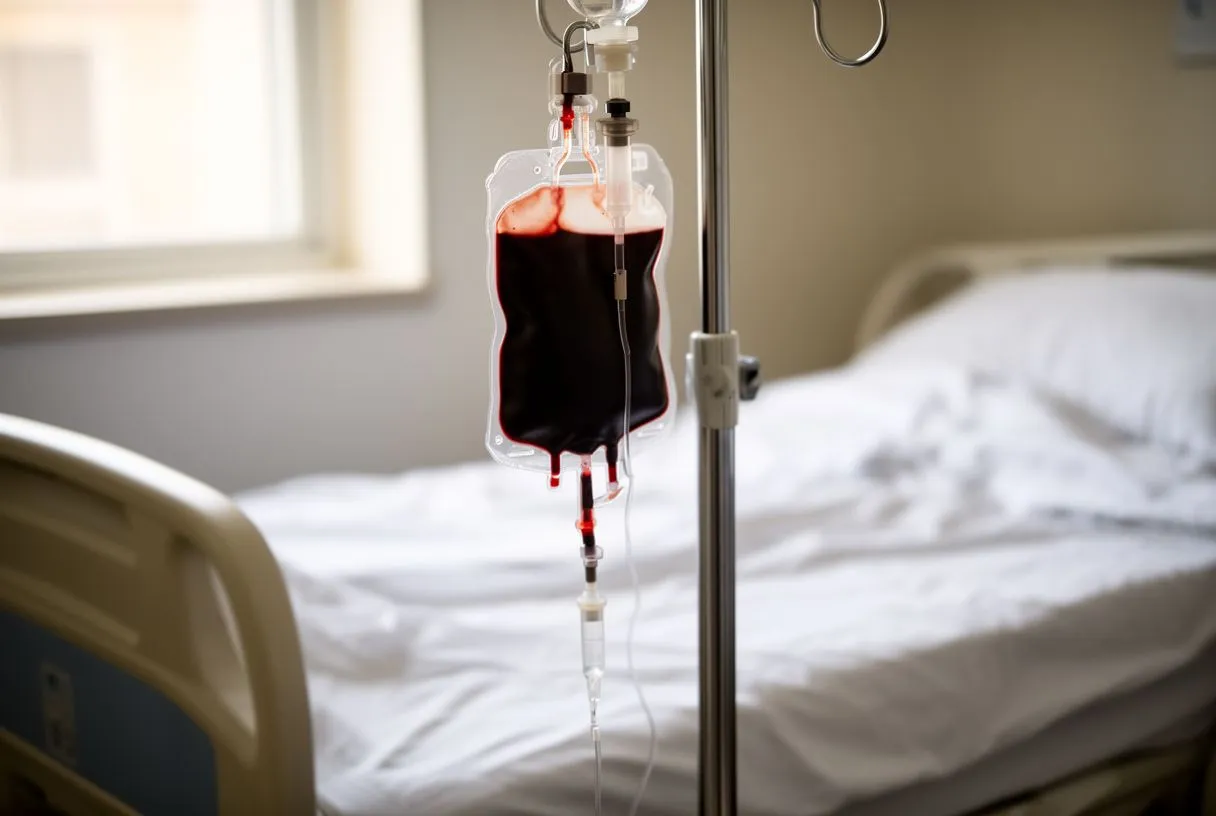
Prehabilitation and the Anaemia Heart Surgery Timeline
Prehabilitation means using the waiting period before surgery to strengthen every system you can — blood, fitness, nutrition, and mindset. For anaemic patients, the clock starts the moment surgery is planned, because iron treatments need time to work.
A realistic timeline: ideally, anaemia is identified four to six weeks before surgery or earlier. Oral iron needs the longest runway — often two to three months to rebuild stores meaningfully. Intravenous iron can produce a measurable haemoglobin response in two to four weeks, which is why it is favoured when the operation is sooner. If surgery is truly urgent, the team proceeds, accepting the added risk, because in an emergency the danger of waiting outweighs the benefit of optimisation.
Beyond iron: prehabilitation also includes gentle, structured exercise appropriate to the heart condition, stopping smoking, optimising nutrition with enough protein, and managing other conditions such as diabetes or sleep apnoea. Each of these has evidence behind it for surgical recovery, and together they compound. Prehabilitation anaemia treatment for heart surgery patients is therefore part of a broader preparation, not a standalone fix.
Our team reviews every case against international practice guidelines before recommending a treatment route — conventional surgery, minimally invasive, robotic, or transcatheter — and that review includes the blood count, because the right approach for an anaemic patient is not always the right approach for a non-anaemic one.
When to Talk to a Cardiac Team About Anaemia
If you have a heart operation on the horizon and your blood count has come back low, the message of this article is straightforward: raise it, and raise it early. Anaemia before heart surgery is one of the few surgical risk factors that patients can actively help fix, working alongside their medical team, in the weeks before the operation.
Questions worth asking: What is my haemoglobin level and what is the target for my surgery? What type of anaemia do I have and what is causing it? Do I need oral iron, an iron infusion, or another treatment? How much time do we have before surgery and how will we use it? If I need a transfusion, what is the plan? A good team welcomes these questions — deciding about heart surgery deserves a genuine conversation, not a rushed appointment.
Getting the right assessment: seeking a second opinion is a normal, sensible part of this process, and no reputable surgeon should object to it. If you are in Mexico or travelling here for care, the first step can be as simple as a video consultation: bring your recent blood results, hear what they mean in plain language, and get a clear picture of your options before committing to anything.
We are a multidisciplinary cardiac team led by Dr Alejandro Molina, with consulting rooms in Guadalajara, Querétaro and Hermosillo, and we start every relationship with a free video consultation — getting to know the patient, talking through the condition, and identifying exactly which studies are still needed.

Anaemia before heart surgery is common, detectable with a simple blood test, and treatable well before the operating room. The takeaway: ask for screening early, understand which type of anaemia you have, follow the iron treatment plan your team recommends, and use the waiting weeks to arrive at surgery in your best possible condition. Every one of those steps reduces the odds you will need donor blood and improves your recovery. But no article can replace a conversation about your specific situation — so bring your questions, your blood results, and your family to a qualified cardiac team, and book a consultation rather than trying to piece the answer together yourself.






