

Arterial Graft Versus Vein Graft in Bypass Surgery
Arterial graft vs vein graft — discover which bypass option offers longer-lasting results and fewer repeat surgeries.
If you or someone in your family has been told that blocked heart arteries need bypass surgery, one of the first decisions the surgical team makes is which blood vessel to use as the new route around the blockage. This choice — arterial graft vs vein graft — affects how long the bypass stays open, how the operation is performed, and how you recover. In this guide we explain, in plain language, where grafts come from, why arteries tend to last longer than veins, what happens during vein harvesting, and what recovery honestly looks like. By the end, you should feel able to ask your own cardiac team sharper, better-informed questions.
What Is Coronary Bypass Surgery Using an Arterial Graft?
Coronary artery bypass grafting, usually shortened to CABG, is an operation that creates a detour around a blocked coronary artery — one of the small vessels that feed the heart muscle itself. The surgeon takes a healthy blood vessel from elsewhere in your body, called a conduit, and attaches one end above the blockage and the other end below it. Blood then flows through this new route, restoring supply to the heart muscle downstream.
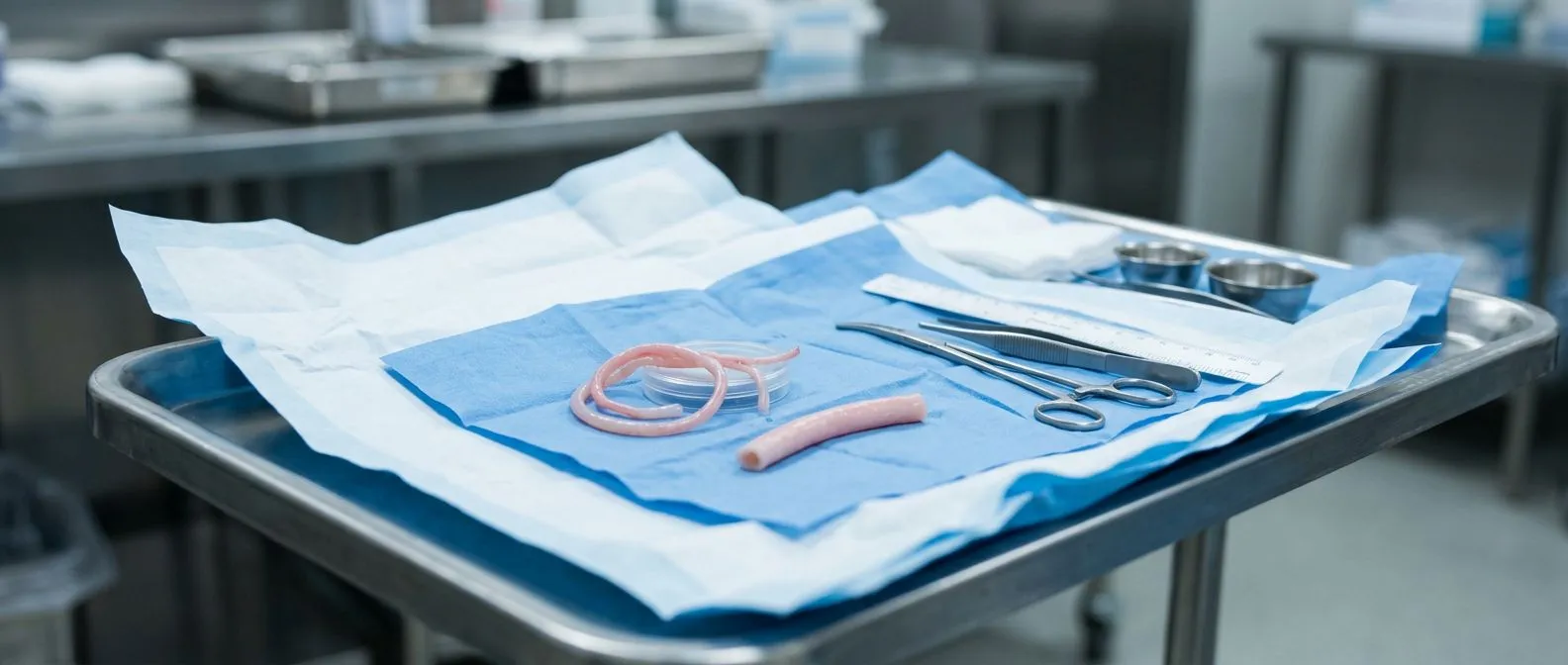
What makes a graft "arterial"? When the conduit taken is an artery rather than a vein, the bypass is called an arterial graft. The most common example is the internal mammary artery, a small vessel that already runs along the inside of the chest wall, just behind the breastbone. Because it already sits next to the heart, the surgeon often only needs to detach its lower end and redirect it to the coronary artery beyond the blockage — no cutting from the leg or forearm is needed for that graft.
Why the type of conduit matters. Arteries and veins are built differently. An artery has a thicker, more muscular wall designed to carry blood at high pressure, while a vein is a thinner, more flexible vessel used to low-pressure flow. When a vein is moved into the arterial system and asked to carry high-pressure blood, its wall undergoes changes over the years that can narrow it. This single anatomical fact explains much of the arterial graft vs vein graft debate — and it is why many modern teams aim for total arterial revascularisation when the patient's vessels and anatomy allow it. In our consultation, we explain which conduits suit your specific coronary anatomy and why, in plain words, before any decision is made.
Arterial Graft vs Vein Graft: What's the Difference?
The structural difference. The arterial wall layers — an inner lining, a muscular middle layer and an outer coat — are thicker and more elastic in arteries than in veins. This muscular middle layer lets an arterial graft adjust its calibre in response to blood flow, staying open where a vein might gradually stiffen and narrow. A vein, placed under arterial pressure, develops thickening of its inner lining called intimal hyperplasia, which is one of the main reasons vein grafts narrow over the years.
Where each graft is taken from. Arterial grafts typically come from the internal mammary arteries in the chest or the radial artery in the forearm. The standard venous graft is the saphenous vein, the long superficial vein of the inner leg, from ankle to groin. Harvesting — the surgical term for removing the conduit — differs greatly: the internal mammary artery is taken down through the same chest incision used for the bypass, while the saphenous vein requires a separate leg incision or several small incisions.
The practical trade-offs. Neither choice is universally right. The saphenous vein is easy to harvest, comes in generous length, and handles multiple blockages in one operation — which is why it remains widely used, especially in urgent or multivessel cases. Arterial grafts take more surgical skill and time, and the radial artery comes with hand-circulation checks beforehand. When our multidisciplinary team reviews a case, we weigh conduit choice against the patient's age, vessel quality, urgency and anatomy, always against international practice guidelines — and the patient receives a clear proposal with the alternatives, the final decision always theirs.
Types of Bypass Grafts Used in Heart Surgery
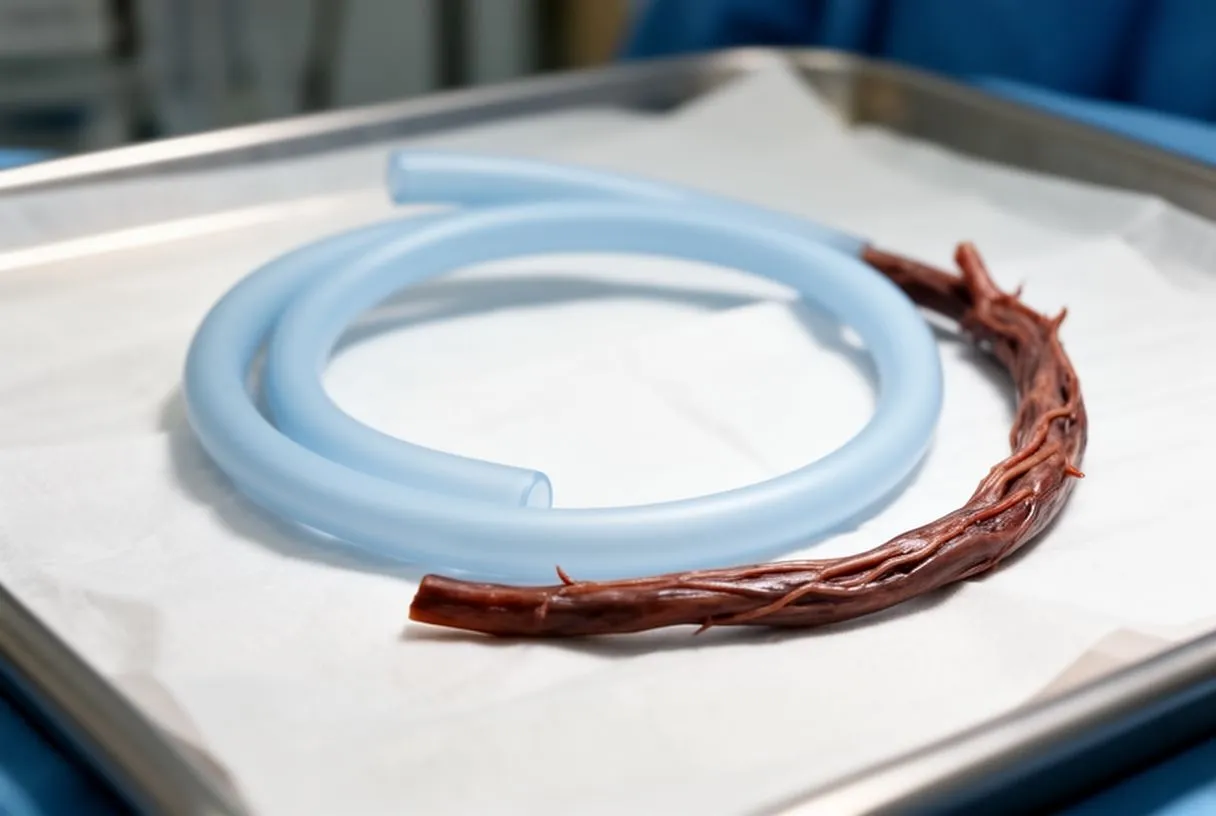
The main conduits in use today. Surgeons draw from a small toolbox of conduits, each with strengths and drawbacks. Understanding them helps you follow your team's explanation at the consultation.
- Left internal mammary artery (LIMA): the workhorse of bypass surgery, attached in place to the chest wall and redirected to the most important coronary artery, the left anterior descending. Longest-lasting conduit available.
- Right internal mammary artery (RIMA): the mirror-image artery on the right side of the chest, used when the surgeon wants more arterial grafts in one operation.
- Radial artery: taken from the forearm, offers a strong arterial conduit for additional bypasses; the hand usually tolerates its removal because two arteries supply it.
- Saphenous vein graft: the classic venous graft from the leg, easy to harvest and available in long segments, used for multiple bypasses including to the right coronary territory.
- Composite and polyester grafts: a composite graft joins conduits together, sometimes with a polyester graft — a synthetic tube — as a connector; these are tools for special situations rather than routine choices.
How a team chooses. The selection depends on which arteries are blocked, how many, how good the vessels are downstream of the blockage, and the patient's other conditions such as diabetes or poor leg circulation. In an emergency, simplicity and speed may favour vein grafts; in a planned operation with good anatomy, more arterial grafts are usually the goal.
Bypass circuit considerations. Most bypass operations still run on a cardiopulmonary bypass machine — the heart-lung machine — connected through an arterial cannula and venous lines, with the bypass time kept as short as reasonable. Some operations are done off-pump, without the machine, while the heart beats. Conduit choice is separate from this: both on-pump and off-pump approaches use the same graft materials, though some surgeons find delicate arterial grafts easier to handle on a still, arrested heart.
Internal Mammary Artery Graft vs Vein Graft: Which Lasts Longer?
The short answer. In long-term comparisons of internal mammary artery graft vs vein graft, the artery stays open substantially longer. Vein grafts develop blockages at a meaningful rate within the first year and continue to narrow with each passing decade, while the internal mammary artery typically remains open for the patient's lifetime. This durability difference is exactly what the arterial graft vs vein graft longevity question is really asking about.
Why the artery endures. The internal mammary artery is already adapted to serving the heart's territory, and its wall physiology resists the narrowing process that afflicts veins. It also stays connected to its own blood supply from the chest wall along most of its length, which helps keep the graft wall healthy. A saphenous vein graft, by contrast, is severed from its surroundings at harvest and must adapt — not always successfully — to arterial pressures.
What this means for survival. Large clinical research, including trials reported by The Lancet, has shown that bypass operations built around arterial grafts, with total arterial revascularisation in suitable patients, reduce the need for repeat operations compared with vein-only strategies. Graft patency — the medical term for a graft staying open and carrying blood — is the measure behind these findings, and improved patency translates into fewer symptoms and fewer reinterventions over the years. In our practice, we review every case as a multidisciplinary team against international guidelines and recommend the conduit strategy that best protects long-term patency for that specific patient.
Radial Artery Graft Benefits and When It's Used
Why surgeons like the radial artery. The radial artery of the forearm is a robust arterial conduit with good length, and radial artery graft benefits include a muscular wall similar to the internal mammary artery and excellent handling characteristics once harvested. It is the natural second arterial graft when the surgeon wants more than one arterial bypass — a strategy some surgeons describe as moving toward complete arterial revascularisation, which aims for the best coronary bypass graft material across all blocked vessels.
Checking the hand first. Because the hand is supplied by two arteries — the radial and the ulnar — the team confirms, with a simple bedside test and sometimes an ultrasound, that the ulnar artery alone can keep the hand well supplied. People with poor circulation in the arm, certain connective conditions, or kidney disease requiring dialysis access are usually not candidates for this graft.
Recovery from forearm harvesting. Most patients regain full hand and wrist function within weeks, with a small scar on the inner forearm. Numbness near the incision and a mild aching with grip can linger for a while; hand exercises and use speed recovery. In our consulting rooms we check the arm thoroughly before recommending a radial graft, and we discuss openly how the hand feels afterward.
What Is Vein Harvesting and What Is It Used For?
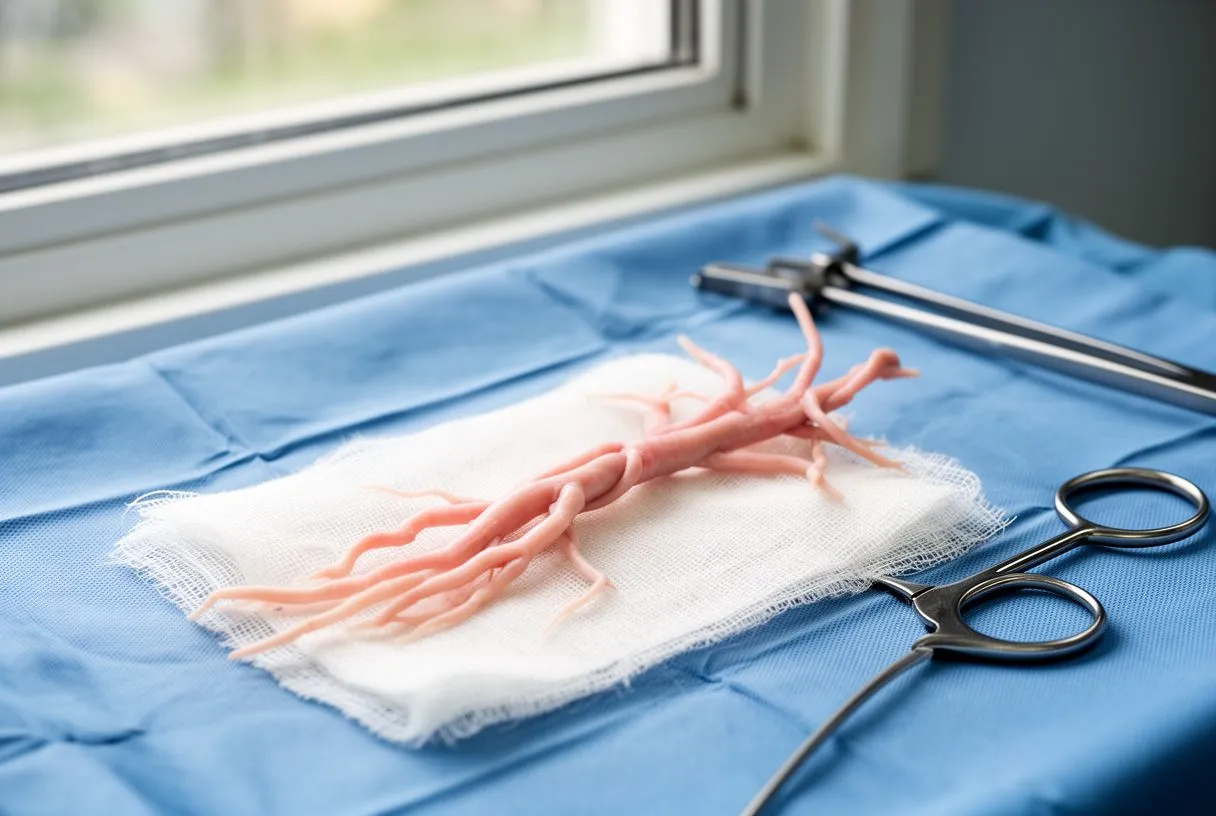
The definition. Vein harvesting is the surgical removal of a healthy vein — almost always the saphenous vein from the leg — to use as a bypass conduit. It remains one of the most common steps in CABG worldwide and answers the frequent question of what vein harvesting for CABG is used for: creating the detour around blocked coronary arteries when an arterial graft is unavailable, unsuitable, or needed elsewhere.
Open versus endoscopic harvesting. Traditionally the vein was removed through a long incision down the leg. Today many teams use endoscopic vein harvesting: a small incision near the knee or ankle through which a camera and instruments free the vein, leaving only tiny openings. This reduces leg wound pain and healing problems, which matter enormously to comfort in the weeks after surgery.
Legs after vein harvesting. The deep veins of the leg carry on the work the saphenous vein did, so removal rarely causes serious circulation problems. Some patients notice ankle swelling by the end of the day or visible scars; compression stockings and elevating the legs help. Patients who keep up gentle walking and follow the wound-care instructions usually recover leg comfort steadily over the first months.
Why Do Vein Grafts Fail Over Time?
The mechanism. Vein graft failure rate is driven by three processes: early clot formation in the first weeks, intimal hyperplasia — overgrowth of the vein's inner lining — over the first months to years, and atherosclerosis, the same cholesterol-driven disease that blocked the original coronary arteries, in later years. Put simply, the vein is being asked to live a life it was never designed for, and it adapts by thickening and narrowing.
Where the risk concentrates. Grafts to smaller or poorly supplied downstream arteries close earlier, as do grafts carrying less flow. Graft occlusion — the complete blockage of a bypass — can be silent or can bring back angina, the chest tightness that may have led to surgery in the first place. This is why heart teams plan bypasses so that the most durable conduit serves the most important artery, and why follow-up care continues for life.
Protecting your grafts. The patient's own habits matter as much as surgical technique. These measures measurably protect graft patency over the years:
- Stop smoking completely — it is the single strongest accelerator of graft disease.
- Take antiplatelet medication and statins as prescribed; they slow narrowing in vein grafts especially.
- Keep blood pressure, cholesterol and blood sugar well controlled with your cardiologist.
- Stay active within your team's guidance — walking programs support both grafts and the heart muscle.
Recognising trouble early. Returning chest symptoms, unusual breathlessness, or symptoms like those you had before surgery deserve prompt evaluation, not waiting. Vein graft disease caught on imaging can sometimes be treated with a stent rather than repeat open surgery.
Which Graft Is Better for CABG?
The honest answer. Which bypass graft is better depends on the patient, and there is no single winner. For the left anterior descending artery — the vessel whose blockage most affects long-term outcome — the internal mammary artery is the clear standard, because its durability is unmatched by any venous graft. For additional bypasses, the decision between a radial artery, the right internal mammary artery, and the saphenous vein is individual.
Factors that tilt the choice. A useful way to think about it: your surgical team is matching each blocked artery to the conduit most likely to stay open serving it. These factors shape the match:
- Target vessel quality: arteries with good downstream flow support arterial grafts; small or diseased targets may do better with a vein.
- Urgency: emergency operations may favour the fastest, most reliable harvest, which is often the saphenous vein.
- Patient factors: diabetes, kidney disease, previous chest or leg surgery, and arm circulation all influence which conduits are safe.
- Surgeon and team experience: arterial grafting demands specific technical skill; teams with strong experience achieve better arterial graft outcomes.
How we approach the decision. In our practice, led by Dr Alejandro Molina, every candidate for bypass is reviewed by the multidisciplinary team against international practice guidelines, and the recommendation — including which grafts we propose and why — is laid out for the patient together with the alternatives. We actively encourage second opinions, because we treat seeking one as a normal part of deciding about heart surgery, not a slight on anyone.
How Risky Is a Coronary Artery Bypass Graft?
The overall picture. How risky is a coronary artery bypass graft today? For planned surgery in reasonably stable patients, CABG is one of the most studied and refined operations in medicine, and serious complications are uncommon — but they are real and worth understanding honestly. Risks include bleeding, infection of the chest or leg wounds, irregular heart rhythm after surgery, stroke, kidney stress, and heart attack on the operating table.
Rhythm problems are common but usually temporary. Postoperative atrial fibrillation — a fast, irregular rhythm affecting the heart's upper chambers — occurs in a substantial share of patients in the first days after bypass surgery. The landmark review of postoperative atrial fibrillation occurring after coronary bypass graft surgery shows it is usually managed with medication and settles before discharge, though it deserves monitoring because it can prolong hospital stay. That publication, from the Latin American journal of cardiothoracic surgery, is a useful reference for families who want the detail.
Who carries higher risk. Age, diabetes, reduced heart muscle function, kidney disease, lung disease and emergency surgery all raise the risk profile, and scoring systems such as EuroSCORE II exist precisely to quantify this before the operation. In our consultations, we walk through each patient's individual risk in plain words — what the numbers mean, what we can influence, and what we cannot — and answer every question before any decision is made.
What Is Life Like After Heart Bypass Surgery?
The first weeks. What is life like after heart bypass surgery in the early days? Expect a hospital stay of roughly five to seven days, waking with chest and possibly leg wounds, and significant tiredness — the body has been through major surgery and the bone of the breastbone, divided to reach the heart, needs about eight weeks to knit. Driving, lifting and pushing are restricted during that period; walking builds up steadily from short corridors to longer circuits.
Diet after bypass. Patients often ask what you can never eat again after a heart bypass — and the honest answer is: no food is absolutely forbidden, but the heart-protective pattern matters for the grafts' future. A Mediterranean-style diet rich in vegetables, legumes, fish and olive oil, with salt, saturated fat, sugar and alcohol kept low, supports both the grafts and the rest of the coronary arteries. For patients with diabetes, the question of minimally invasive versus conventional bypass has even been studied for its metabolic impact, and one recent analysis of minimally invasive versus conventional coronary artery bypass grafting in patients with type 2 diabetes compared perioperative course and early metabolic recovery between approaches — worth discussing if you are a candidate for either.
The longer view. Most people who recover well return to normal daily activities, work and a satisfying quality of life, and many report that symptoms that shaped their life before surgery — the chest tightness on a hill, the fear of the next attack — are gone. Recovery is a marathon of small weeks, not a single leap, and cardiac rehabilitation programs make an enormous difference. Follow-up through that first year typically checks wounds, rhythm and graft symptoms, and the plan is adjusted as the recovery unfolds.
Bringing it together. The arterial graft vs vein graft question is ultimately about durability: arteries, led by the internal mammary artery, tend to stay open far longer, while veins offer speed, length and simplicity where they are needed. The right answer for you depends on your coronary anatomy, your health, and the experience of your surgical team — never on a general rule. If bypass surgery is being discussed for you or a family member, bring these questions to a qualified cardiac team rather than deciding alone. Our team offers a free video consultation as a first step: we get to know you, talk through your condition, and identify which studies are still needed so no unnecessary ones are ordered — and when you decide to go ahead, a face-to-face visit at our consulting rooms in Guadalajara, Querétaro or Hermosillo follows. Your heart, and your choice of graft, deserve that conversation.






