

Extracorporeal Circulation in Heart Surgery
Extracorporeal circulation heart surgery explained: how the heart-lung machine works, real risks, recovery timeline.
Extracorporeal circulation in heart surgery is the technique that allows a surgical team to stop the heart temporarily, repair it in a still and bloodless field, and keep the rest of your body alive the whole time. If you or a family member has been told you need valve surgery, coronary bypass, or another cardiac procedure, you have probably heard the words "heart-lung machine" and felt a wave of questions. This guide explains, in plain language, how the machine works, what it feels like from the patient's side, what the real risks are, and how long recovery takes. No jargon without a translation, and no reassurance without evidence.
What Is Extracorporeal Circulation in Heart Surgery?
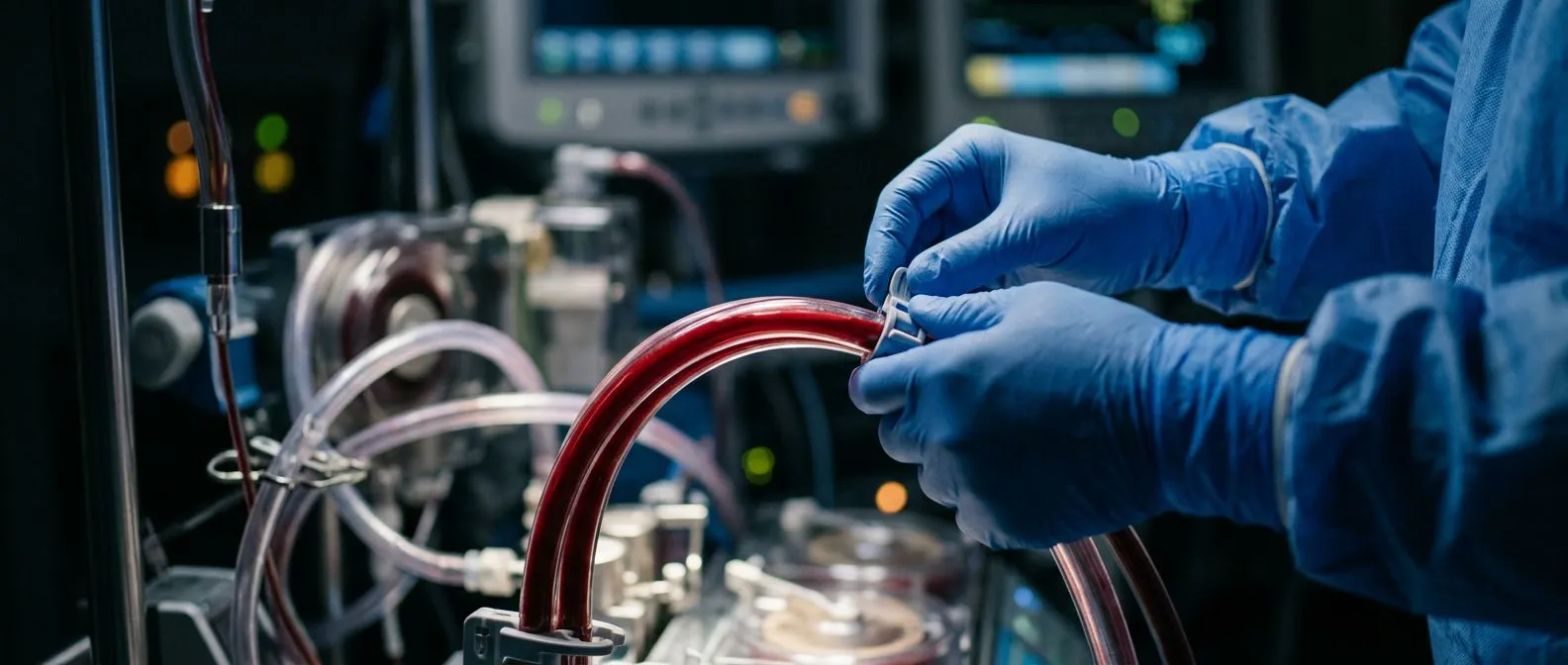
How the circulation is taken over. During extracorporeal circulation, the blood is diverted out of your body through tubes, passed through a machine that adds oxygen and removes carbon dioxide, and then pumped back into your aorta, the large artery that carries blood to the whole body. The heart and lungs can rest while the machine does their work. Surgeons call this cardiopulmonary bypass, because the blood bypasses both organs.
Why it matters for surgery. A beating heart moves constantly, and it is full of blood. To sew a delicate valve or attach a tiny graft to a coronary artery, the surgeon needs a still, dry field. Extracorporeal circulation makes that possible. A medication called cardioplegia stops the heart in a controlled, protected way, and the machine keeps the brain, kidneys, and every other organ supplied with oxygenated blood.
Who runs it. A specially trained professional called a perfusionist manages the pump throughout the operation, watching pressures, blood gases, and temperature minute by minute. The technique has been used in humans since the early 1950s and is refined by decades of published research, including reviews of the technique's history and safety collected by the National Institutes of Health.
What Does Extracorporeal Mean?
Breaking the word down. "Extra" means outside, and "corporeal" means the body. So extracorporeal simply describes anything that happens outside the body. Blood leaving your veins, traveling through sterile plastic tubing, receiving oxygen in a membrane chamber, and returning to your arteries is extracorporeal circulation. The word sounds intimidating, but the concept is straightforward: temporary support outside your body.
Where you will hear the term. The same word appears in several contexts. Cardiopulmonary bypass during an operation is one. Extracorporeal Membrane Oxygenation, shortened to ECMO, is another — a form of the same technology used for hours or days in intensive care when the heart or lungs cannot do their job on their own. The word is also used in kidney dialysis machines, which filter blood outside the body without pumping support.
What the patient actually experiences. You experience none of it. The connections are made after you are asleep under general anesthesia, and they are removed before you wake up. Many patients tell us afterwards that they expected to feel something from the machine, and are surprised that the only memory of the operation is the anesthetic falling asleep and waking up in the intensive care unit. In our consultations we take the time to explain what the studies actually show, in plain words, and to answer every question before any decision is made.
How Does the Heart-Lung Machine Work?
The circuit, step by step. Before the operation, the anesthesiologist gives you heparin, a medication that prevents the blood from clotting inside the tubing. Thin tubes are then placed in the right atrium — the upper right chamber of the heart — to drain venous, oxygen-poor blood into the machine. Inside the machine, four things happen in sequence:
- Reservoir: the venous blood collects in a sterile chamber, just like blood in the heart's own chambers.
- Oxygenator: the blood passes through a membrane that exchanges gases exactly as the lungs do — oxygen in, carbon dioxide out.
- Heat exchanger: the blood is warmed or cooled, because many operations are performed with the body cooled to a few degrees below normal, which protects the organs.
- Pump: an oxygenated-blood pump returns the blood to the aorta, from where it flows to the whole body.
Stopping the heart safely. Once the machine is taking over, the surgeon infuses cardioplegia — a potassium-rich, protective solution — into the coronary arteries. The heart stops in a relaxed state rather than a chaotic one, and this protection is what makes the operation safe. The heart is not dead; it is preserved, like a paused video.
Restoring the heartbeat. At the end of the repair, the surgeon removes the clamp, the warm blood washes the cardioplegia out, and the heart usually resumes beating on its own. Occasionally a controlled electric shock is used to start it. The perfusionist then gradually reduces the machine's support, the heart takes over the circulation again, and the tubes are removed.
Are You Intubated During Heart Surgery?
Yes — and here is why. You are always intubated during heart surgery performed under general anesthesia. A breathing tube is placed in the trachea after you are fully asleep, and a ventilator breathes for you throughout the operation. This is not specific to the heart-lung machine; it is standard for any operation requiring general anesthesia. The tube is removed in the intensive care unit, usually within a few hours of the operation ending, once you are awake, breathing well, and able to protect your own airway.
What waking up feels like. Patients often describe the tube as the strangest part of the whole experience, so it is worth knowing in advance. You cannot speak while it is in, and you may feel a gagging urge. The nursing team anticipates this and reassures you constantly; you are never alone in the room. The moment it comes out, most patients describe immediate relief — the first deep breaths are sore, but each hour gets easier.
Longer ventilation when needed. Some patients need the tube for longer, for example overnight or more, if the lungs need time to recover. This is more common in older patients, in people with lung disease such as COPD, and after longer or emergency operations. Our team reviews every case against international practice guidelines before recommending surgery, and we plan the ventilation strategy in advance so that families know what to expect in the intensive care unit.
How Do They Do Open Heart Surgery?
The general sequence. Most open-heart operations follow a familiar order. The anesthesiologist puts you to sleep and places the monitoring lines. The surgical team prepares the chest, makes the incision, and opens the pericardium — the sac around the heart. The blood thinner is given, the heart-lung machine is connected, and the heart is stopped. Then the actual repair is performed, whether that is bypass grafts, a valve replacement, or a combination. Finally, the heart is restarted, the machine is weaned off, the chest is closed, and you are taken to the intensive care unit.
Surgical approaches. "Open heart" does not always mean a long sternum incision. There are several routes, and each has trade-offs in exposure, cosmetic result, and recovery time:
- Full sternotomy: the breastbone is divided in the middle; it is the classic approach and gives the widest access to the heart and aorta.
- Minimally invasive incisions: a small cut on the right side of the chest, or a partial sternum split, used for suitable valves and some coronary cases.
- Robotic and transcatheter approaches: robotic arms allow repairs through tiny ports, and TAVR — transcatheter aortic valve replacement — reaches the aortic valve through an artery in the groin without opening the chest at all.
Choosing the route. The approach is not a matter of preference alone; it depends on the anatomy, the disease, and your overall health. Aortic stenosis in an elderly patient with fragile lungs may suit TAVR, while a young patient with complex mitral disease may benefit from a robotic repair with a full repairable native valve. Dr Molina performed the first robotic mitral valve repair in the Ángeles Health System and the first robotic heart surgery in Guadalajara, and our team recommends the less invasive route only where the evidence supports it for that specific patient.
Extracorporeal Circulation vs Beating Heart Surgery
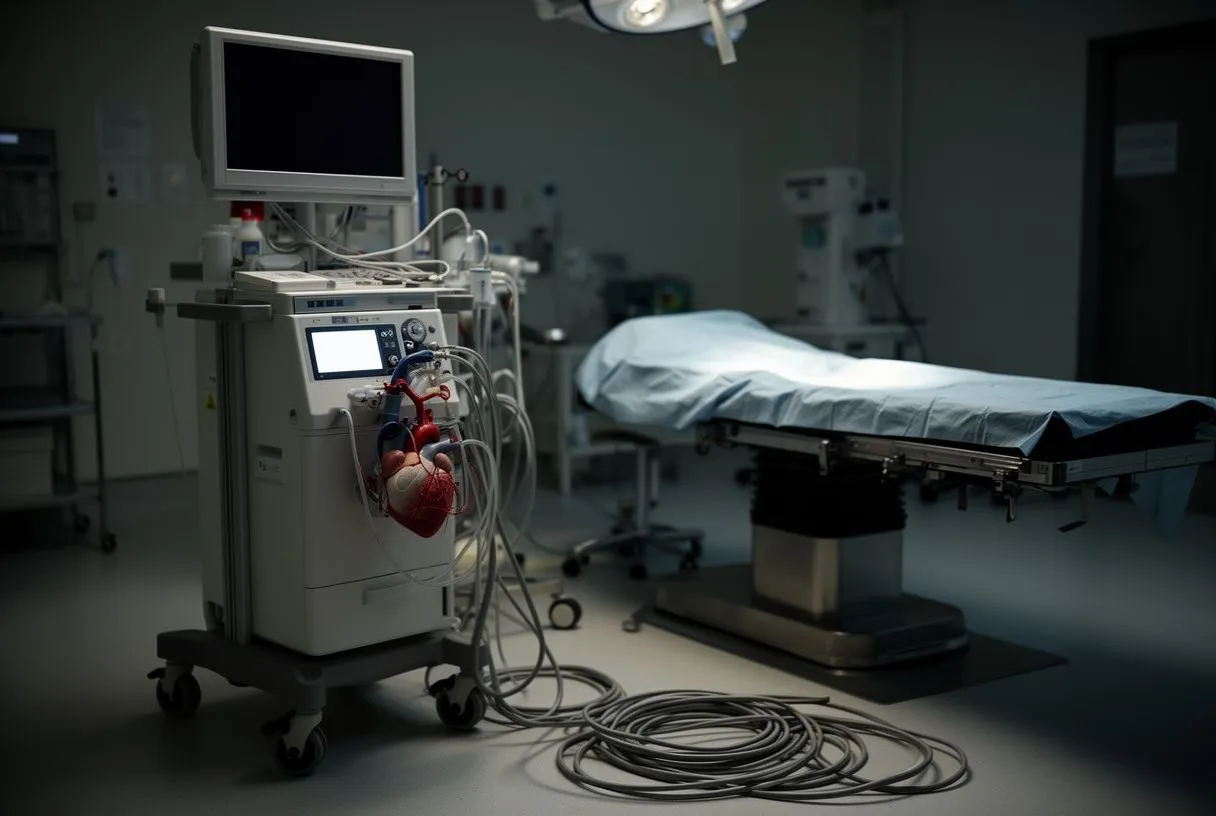
Two ways to do coronary bypass. Conventional coronary bypass uses the heart-lung machine with the heart stopped, which is what we call extracorporeal circulation. Beating heart surgery, also called off-pump coronary artery bypass, skips the machine entirely: the surgeon operates on the heart while it is still beating, using a stabilizer device to hold the small area of the operation still. Both approaches can produce excellent results, and the choice depends on the patient, the number of grafts, and the surgeon's experience.
What the evidence shows. Each technique has theoretical advantages. Avoiding the machine may reduce exposure to the foreign surface of the tubing, which is relevant for patients with extensive aortic disease. On the other hand, the on-pump technique offers a still, dry field and more precise graft placement, which matters for complex multi-vessel disease. Large trials have found similar long-term results in most patients, which is why individualized assessment matters more than a fixed rule.
How we decide. Our multidisciplinary team reviews every case against international practice guidelines before a recommendation is given, and the patient receives a clear proposal with the alternatives — the final decision is always theirs. If you have been told one approach or the other, it is entirely reasonable to ask why, and to ask what would happen if the opposite were chosen. We also encourage second opinions and treat seeking one as a normal part of deciding about heart surgery.
What Is the Role of Extracorporeal Membrane Oxygenation?
Support beyond the operating room. Extracorporeal Membrane Oxygenation, or ECMO, is the same technology as the heart-lung machine, but designed for longer use in the intensive care unit. It can run for days or weeks, and it comes in two main forms. One supports the lungs alone; the other supports both the heart and the lungs. When a patient's heart or lungs fail after an operation, after a heart attack, or during a severe infection, ECMO can buy the time those organs need to recover.
The role of ECMO in heart surgery. In cardiac surgery, ECMO serves several purposes. It can be started before a high-risk operation to stabilize the patient. It can be left running after a difficult operation while the heart recovers from the stress of the surgery. And it underpins ECPR — extracorporeal cardiopulmonary resuscitation — in which the circuit is started during a cardiac arrest to restore circulation. For a study of how these techniques support high-risk cardiac procedures, see the Reanimatology review on organoprotective effects of ECMO and intra-aortic balloon pumping in high-risk interventions.
How ECPR differs from ordinary ECMO. ECPR is a specific application: it is started emergently during a resuscitation, when a heart has stopped and the usual CPR is not restoring circulation. The team rapidly places the circuit and takes over the circulation within minutes. Regular ECMO, by contrast, is planned and placed while the patient is still stable enough for a careful insertion. The distinction matters for families because ECPR is a time-critical emergency decision, not a routine step.
What Are the Risks of Cardiopulmonary Bypass?
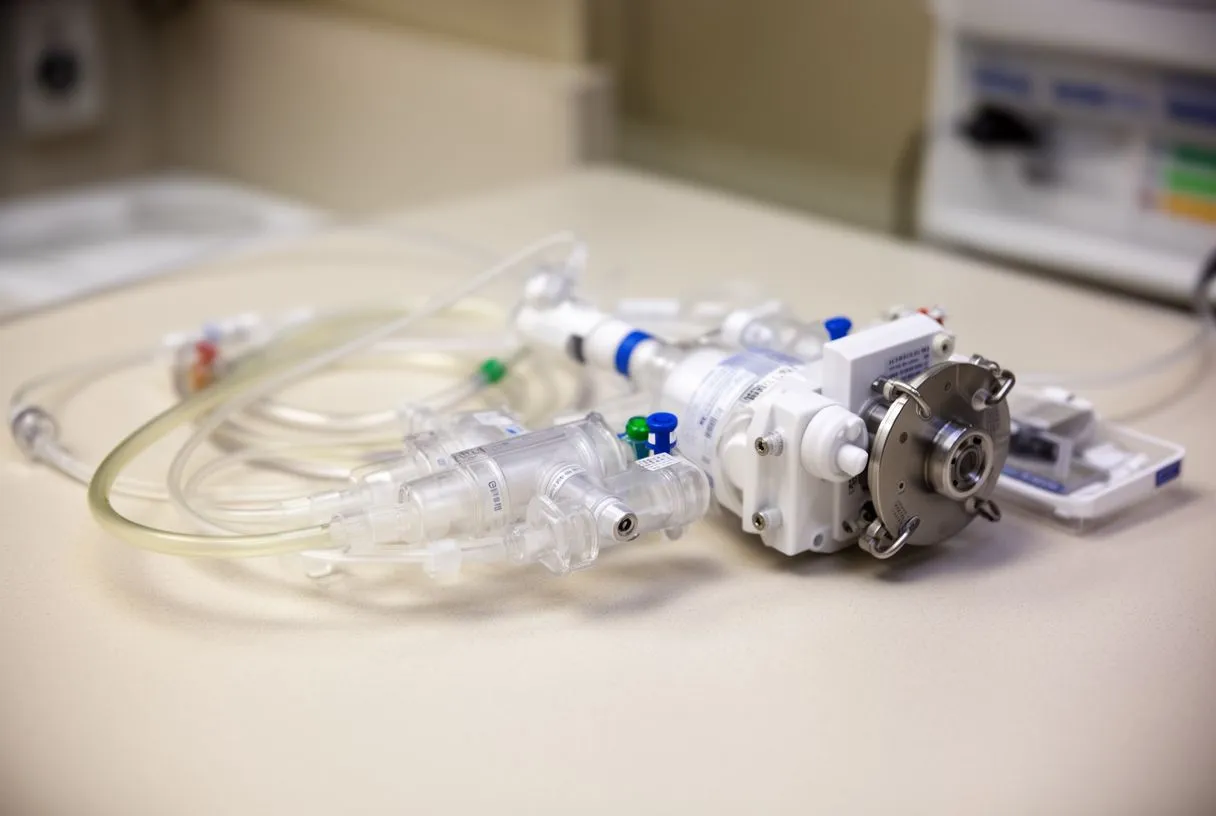
Being honest about the risks. Modern extracorporeal circulation is safe, but it is not risk-free. The blood travels through a foreign surface, and the body responds to that with a mild inflammatory reaction. This is usually temporary. However, the honest risks worth discussing with your surgeon include stroke, kidney injury, bleeding, atrial fibrillation — a temporary rhythm disturbance — and, less commonly, cognitive changes such as short-term memory or concentration issues.
Who carries more risk. Risk is not the same for everyone. Factors that raise the likelihood of complications include advanced age, pre-existing kidney or lung disease, diabetes, previous strokes, urgent rather than planned surgery, and disease of the aorta, where clamping can dislodge plaque. Risk-scoring systems such as EuroSCORE II estimate the individual risk from these factors, and your team should share that estimate with you in plain numbers.
How the risks are reduced. Our team reviews each case against international guidelines before recommending surgery, and studies of the aorta, the kidneys, and the carotid arteries help decide the technique. Techniques that reduce risk include operating below moderate hypothermia rather than deep cooling, using filters in the circuit, minimizing blood transfusions, and in some patients choosing off-pump surgery or avoiding a clamp on the aorta. Ask any team you consult what their specific precautions are — the answer tells you a great deal.
What Is Recovery Like After Surgery on the Heart-Lung Machine?
The first days. You wake up in the intensive care unit with the breathing tube already coming out, or soon removed. Lines monitor pressures, and temporary wires on the outside of the heart can pace the rhythm if needed. Most patients sit up in a chair within a day or two and start walking short distances within a few days. The breastbone, if it was divided, takes about eight to twelve weeks to heal, and lifting restrictions apply during that time.
The typical recovery timeline. Every patient is different, but a common pattern looks like this:
- Days 1–5: intensive care, then transfer to a ward; breathing tube out, walking begins.
- Weeks 1–4: home recovery, gradual walking, cardiac rehabilitation starts.
- Weeks 4–8: increasing activity, return to desk work for many patients.
- Week 12: bone healed; driving, most normal activities, and gradual return to exercise.
Cognitive and emotional recovery. Some patients notice trouble with concentration or memory in the first weeks — a phenomenon sometimes called "pump fog." For most, it improves gradually over weeks to months. Anxiety and low mood after open-heart surgery are also common and worth mentioning to your team rather than enduring quietly.

How Do You Choose the Right Heart Surgery Team?
What to look for. The team performing your surgery matters as much as the operation itself. Look for a team that offers a full range of approaches — conventional, minimally invasive, robotic, and transcatheter — because a team limited to one technique tends to recommend that technique. Ask about the training background of the surgeons, whether the case is reviewed by a multidisciplinary board, and how often the specific procedure you need is performed there.
Questions worth asking at a consultation. You are entitled to clear answers, and a good team will welcome them. Useful questions include: What exactly does my study show? Which approach do you recommend and why? What is my individual risk, and what reduces it? What will the machine, the tube, and the intensive care unit be like for me? What is the recovery plan and who will follow me afterwards?
A practical first step. Our first contact is a free video consultation: we get to know the patient, talk through the condition, and say which studies are still needed so that no unnecessary ones are ordered; a face-to-face visit at the consulting rooms follows when the patient decides to go ahead. Dr Molina trained in cardiothoracic surgery at the Universidad de Guadalajara, in cardiac, minimally invasive, robotic and structural surgery at the University of Montreal, and in structural cardiology and TAVR at CHU Bordeaux, and the team also trained at Jena, Bad Berka and Buffalo. If you are facing heart surgery, do not self-diagnose your options or decide from reading alone — bring your questions to a qualified cardiac team and let them review your specific case.
Extracorporeal circulation in heart surgery is the foundation that makes modern cardiac surgery possible: a machine that briefly takes over the work of your heart and lungs, so that a team can repair your heart in a still, protected field. The technology has been refined over seven decades, the risks are real but manageable, and the choice between a machine-supported operation and a beating heart or transcatheter approach should always be made for your specific anatomy and health. The most important step is not reading about it — it is sitting down with a cardiac team, reviewing your own studies, and deciding together. Book a consultation with a qualified cardiac team, ask every question, and take the decision with people who can explain it in plain words.






