Flying After Heart Surgery: When It Is Safe to Travel Home
Flying after heart surgery: learn when it's safe to travel home, what your surgeon checks, and how to reduce clot risk on your flight.
Flying after heart surgery is one of the first questions patients ask once the operation is behind them — often because home is a plane ride away. Whether you are flying home from Guadalajara after a valve procedure or planning a holiday months after a bypass, the timing matters. This guide explains what actually changes inside your body after surgery, when most teams clear patients to fly, and how to make the trip itself safer and calmer. Nothing here replaces your own surgeon's advice; it is meant to help you ask better questions.
Is It Safe Flying After Heart Surgery?
For most patients, flying after heart surgery is safe once the early healing phase has passed. The main concerns are not the flight itself but three things that happen during it: reduced cabin oxygen, immobility for hours, and the stress of airports and luggage. A healthy heart tolerates these easily. A heart still recovering needs more time, and that is what the waiting periods are designed to protect.
Cabin pressure in a commercial aircraft is equivalent to sitting at roughly 6,000 to 8,000 feet. Your heart must pump slightly harder to compensate, but for a repaired heart this is usually well within its capacity. The bigger risk for cardiac patients is sitting still, which slows blood flow in the legs and raises clot risk. We will come back to that.
What your surgical team actually checks: before clearing you, a team looks at how the incision is healing, whether your rhythm is stable, how well your heart is pumping, and whether you can walk a reasonable distance without breathlessness or chest pain. If you can climb a flight of stairs comfortably, you can usually handle the exertion of a flight. In our practice, every case is reviewed by the team against international guidelines, so the patient hears one clear recommendation with the alternatives laid out.
When Can You Fly After Heart Surgery?
The question of when you can fly after heart surgery has a general answer and a personal one. General aviation guidance commonly suggests waiting about 7 to 10 days after uncomplicated keyhole procedures, around 10 to 14 days after a straightforward bypass or valve operation through the chest, and often 4 to 6 weeks after major open-heart surgery. Your own numbers may differ, and only your team can confirm them.
Short flights versus long-haul flights: a two-hour domestic hop is a very different proposition from a ten-hour transatlantic journey. Long flights add hours of immobility, dehydration from cabin air, and disrupted sleep. Many surgeons apply stricter rules to long-haul travel and prefer patients to wait longer, especially after sternal (breastbone) incisions.
Factors that shorten the wait: a smooth recovery, stable heart rhythm, good mobility, and a small incision all work in your favour. Factors that extend it include heart failure symptoms, an irregular rhythm, a slow-healing wound, complications during surgery, or needing extra time in intensive care. The honest answer to "how long before flying after heart surgery?" is: as long as your specific recovery requires, and no longer.
Heart Surgery Flying Restrictions by Procedure
Heart surgery flying restrictions are not one-size-fits-all, because "heart surgery" covers procedures with very different recovery paths. A catheter-based procedure leaves no chest incision; a full sternotomy does. Here is how the main categories compare.
- Catheter procedures (angioplasty, stents, TAVR): often cleared within days to a week for short flights, longer for long-haul, because there is no sternal incision and recovery is much faster.
- Open-heart surgery through the sternum: usually 4 to 6 weeks minimum, because the breastbone needs time to knit back together before you carry luggage or sit for hours.
- Minimally invasive and robotic surgery: recovery is typically faster than open surgery, but clearance still depends on your individual healing, not the technique alone.
Why the incision type matters so much: when the breastbone is divided and wired back together, it behaves like a healing fracture. Coughing, lifting a suitcase overhead, or bracing against a turbulence jolt all transmit force through it. Our team performs conventional, minimally invasive, robotic and transcatheter procedures, and we recommend the less invasive route only where the evidence supports it for that patient — partly because a faster return to normal life, including travel, is one of its genuine advantages.
Flying After Open Heart Surgery and Sternal Healing
Flying after open heart surgery is mostly a question of sternal healing. The breastbone typically takes 6 to 8 weeks to become solidly fused, and full strength can take months. During that window, surgeons restrict lifting — commonly nothing heavier than 10 to 15 pounds with each arm — and flying rules follow the same logic.
Sternal healing and flying after surgery: the flight itself rarely harms the healing bone. The concern is everything around the flight: hauling a suitcase off a carousel, reaching up into an overhead bin, or catching yourself during a stumble. If you must fly early, plan for a wheeled bag you never lift, ask for help at the airport, and request assistance services in advance.
Warning signs to take seriously: new or worsening chest pain, a clicking or grinding sensation at the breastbone, redness or discharge from the wound, or fever above 100.4 °F (38 °C) are reasons to contact your surgical team before boarding. A fever of 102 °F after surgery is never something to fly through and hope for the best — it needs medical evaluation first, since infection and fluid around the lungs are among the more common post-operative problems in the first weeks.
In our consultations we take the time to explain what the healing studies and follow-up tests actually show, in plain words, so a patient flying home knows exactly which sensations are normal and which mean "call us first."
Air Travel After Heart Bypass and Stents
Air travel after heart bypass surgery (coronary artery bypass grafting, or CABG, where vessels are rerouted around blocked arteries) follows the open-heart timeline above: commonly 4 to 6 weeks for short flights, and often longer for long-haul routes, depending on recovery. The bypass grafts themselves are not disturbed by cabin pressure or altitude; the heart does not "know" it is flying. The risks are immobility, dehydration, and the physical effort of travel.
After a stent or angioplasty: patients who had a stent placed through the wrist or groin are usually cleared much sooner — often within a week for uncomplicated cases — because there is no chest incision. If a stent was placed during a heart attack, the timeline may be longer while the heart muscle itself recovers.
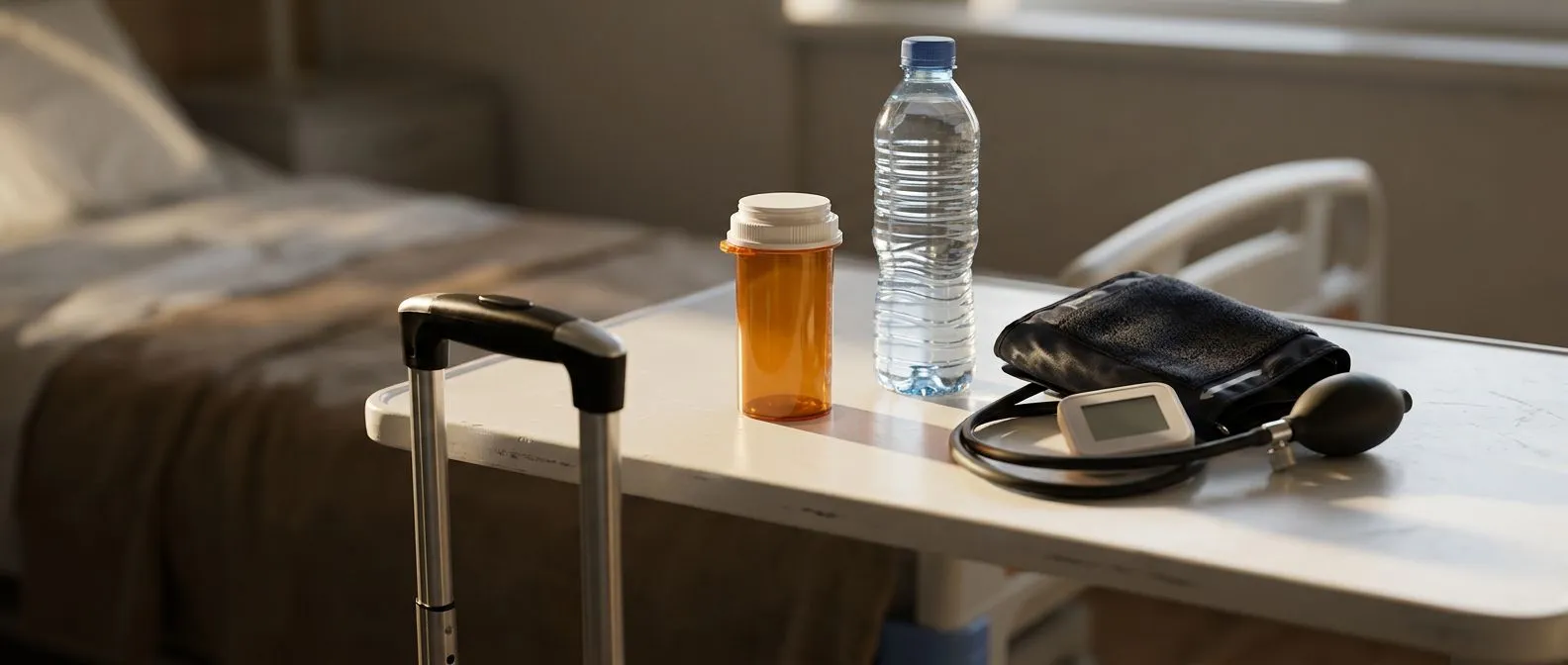
Blood thinner air travel considerations: many cardiac patients fly while taking antiplatelet drugs such as aspirin and clopidogrel, or anticoagulants like warfarin or a DOAC. These medications do not prevent you from flying, but they matter for planning: keep them in hand luggage in original packaging, carry a copy of your prescription, and take them at your usual time regardless of time zones. If you are heading home on blood thinners, ask for the exact schedule and what to watch for in writing, so nobody has to guess mid-journey.
Heart Valve Replacement Flying and Pacemakers
Heart valve replacement flying rules depend on how the valve was replaced. A surgical valve replacement through the chest follows the open-heart timeline. A transcatheter aortic valve replacement — TAVR, where a new valve is delivered through a blood vessel in the groin and expanded inside the old one — usually allows much earlier travel because there is no sternum to heal. Patients are often mobile within days, though clearance for long flights still needs the team's sign-off.
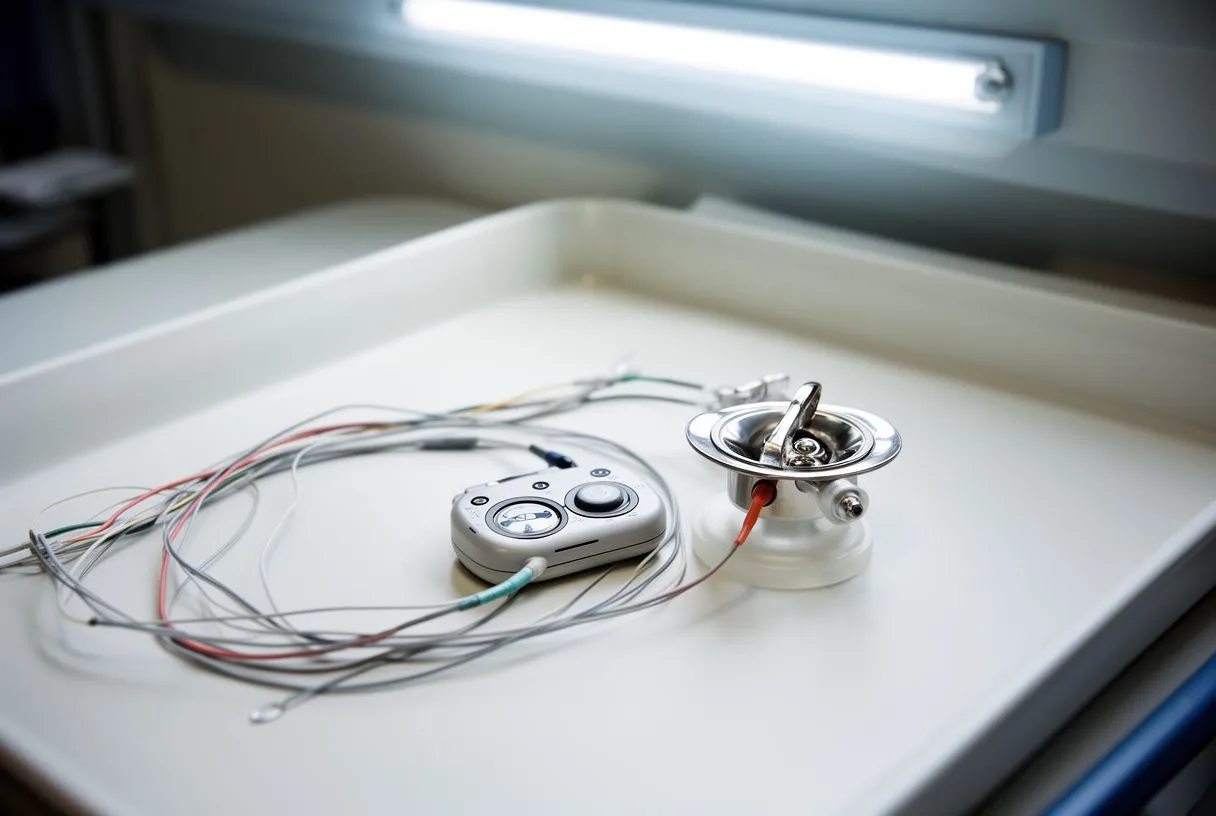
Pacemaker surgery flying: pacemaker and defibrillator implantations are minor procedures from a flying standpoint. Most patients can fly within a few days, once the incision site is stable and there are no complications. Airport security is a common worry, but it is manageable: modern pacemakers are shielded, metal detectors will not damage them, and carrying your device card lets security staff screen you appropriately. Hand wands should not linger over the device, and you can always request a pat-down instead.
Mechanical valves and anticoagulation: a mechanical valve means lifelong blood thinners, which adds the considerations described above — regular INR checks if you take warfarin, consistent timing across time zones, and awareness of bleeding risk with long immobile flights. Because our team also trains and operates in structural cardiology and TAVR, we see both surgical and catheter valve patients regularly, and we match the flying guidance to the specific procedure each person had.
Deep Vein Thrombosis Flying Risk for Cardiac Patients
Deep vein thrombosis — a blood clot forming in the deep veins of the legs, sometimes called DVT — is the best-documented travel risk after cardiac procedures. Long periods of sitting slow the blood in the leg veins, and clots that form there can travel to the lungs. This risk applies to everyone on a long flight, but it is higher after surgery, with some cancers, and with a recent COVID-19 infection; large-scale UK research published in Nature mapped which health conditions sharply raise the risk of severe outcomes with COVID-19, reinforcing why recovering cardiac patients should also stay current on vaccination — a step the Springer literature on perioperative medicine generally supports. Severe illness from an infection like influenza or COVID-19 adds strain a healing heart does not need, so flying with the flu is not advised, and the BNT162b2 vaccine's safety and efficacy profile, documented by researchers in The New England Journal of Medicine, is one reason vaccination before travel is a reasonable protective step.
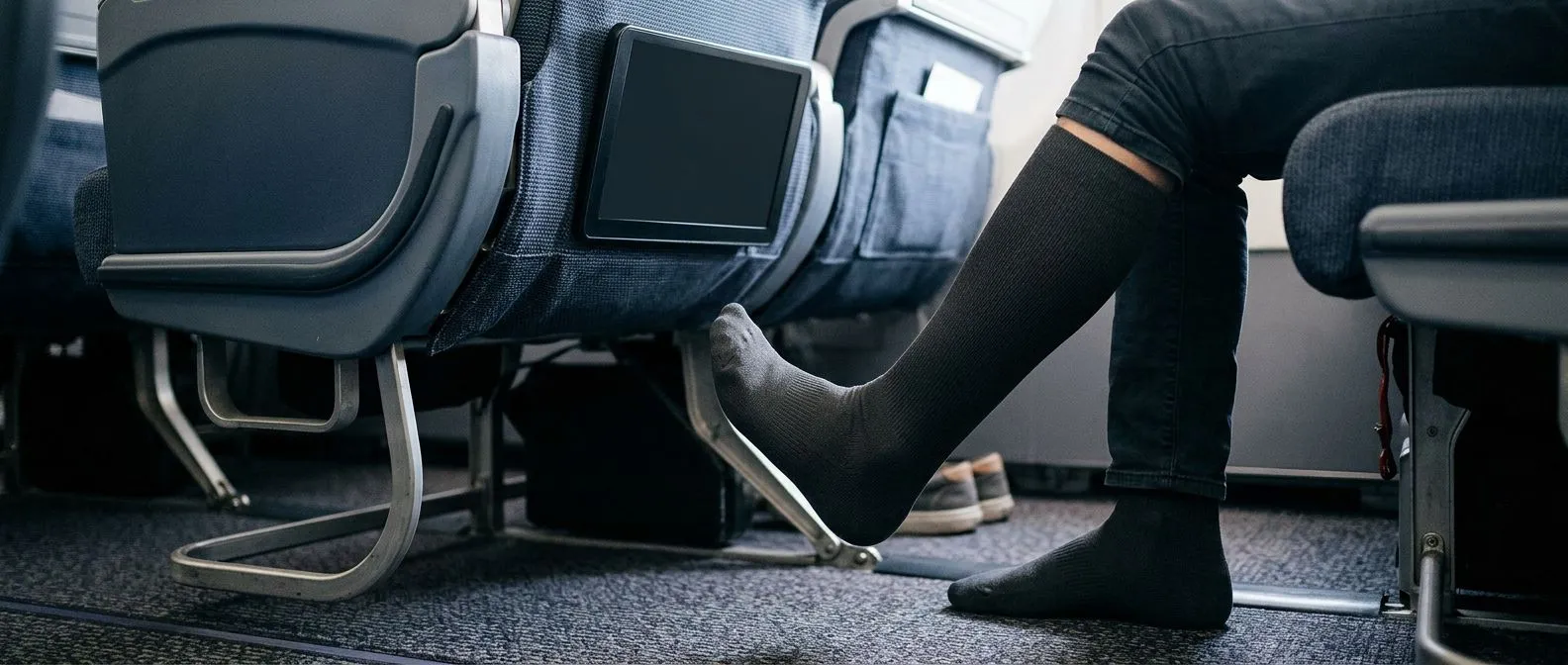
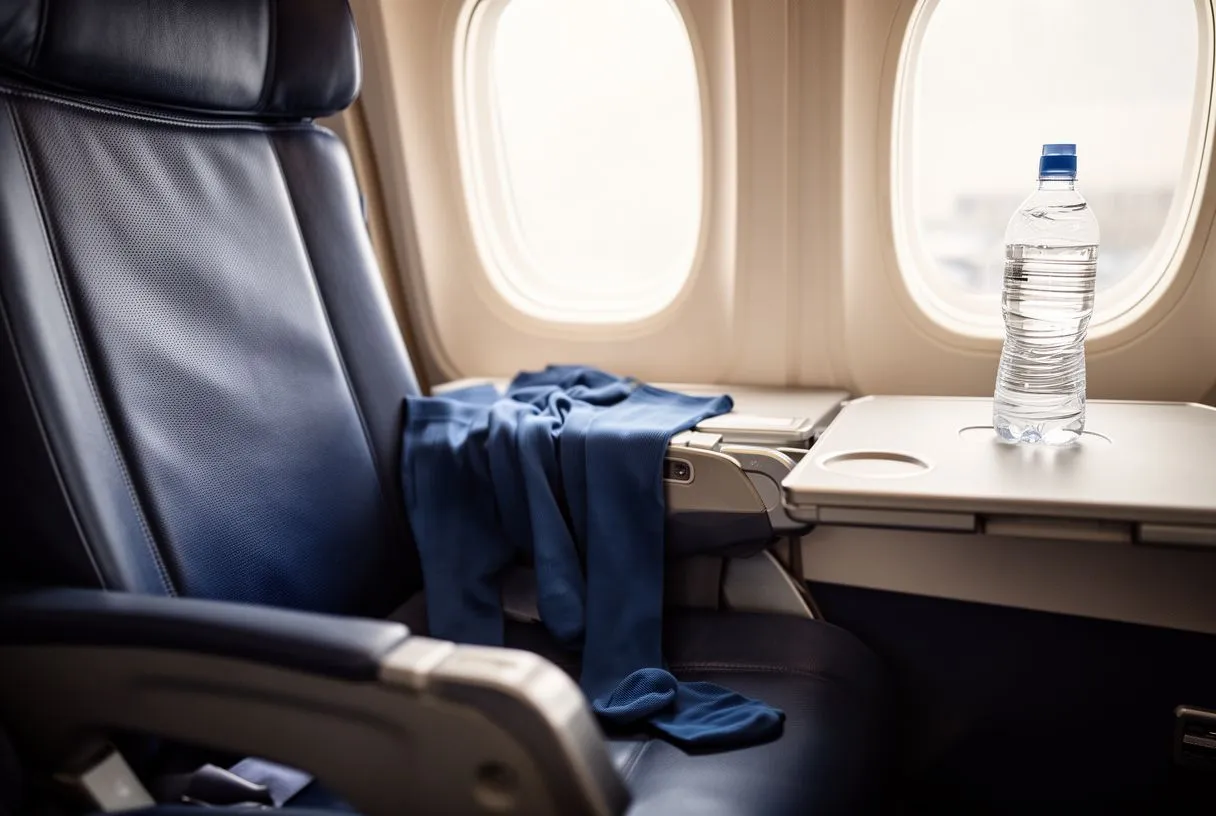
Practical clot prevention on the flight: the measures that lower deep vein thrombosis flying risk for cardiac patients are simple and free:
- Hydrate steadily: cabin air is very dry; drink water regularly and go easy on alcohol, which dehydrates you and disrupts sleep.
- Move every hour: walk the aisle when you can, and when seated, do ankle circles and heel-toe pumps every 30 minutes.
- Compression stockings if advised: some teams prescribe graduated compression stockings for long flights after surgery — ask whether they apply to you.
If you take blood thinners, they already lower this risk considerably. If you have had a previous clot, tell your team before booking, because a temporary dose adjustment before long flights is sometimes recommended.
Cardiac Rehab Before Flying and Follow-Up Care
Cardiac rehab before flying is one of the most underused tools in travel preparation. Cardiac rehabilitation is a supervised programme of gradually increasing exercise, education, and lifestyle coaching after a cardiac event or procedure. It rebuilds your exercise capacity in a controlled setting, which means that by the time you fly, your heart has already handled structured exertion — stairs, brisk walking, cycling — with your rhythm and symptoms monitored.
Why rehab shortens the path to travel: a patient who completes several weeks of rehab can usually demonstrate exactly what a flight demands: sustained standing, carrying a light bag, managing mild stress. That evidence makes clearance decisions easier and flights safer. Travel clearance is best based on what rehab or follow-up exercise testing shows rather than on counting days on a calendar.
Healing faster after surgery: the things that genuinely speed recovery are unglamorous but proven: walking daily from the first days, taking prescribed medications exactly as directed, eating enough protein, sleeping well, not smoking, and managing pain so you can stay active. Wound care matters too — keep the incision clean and dry, and follow your team's instructions rather than home remedies.
Heart surgery follow-up care travel: before flying home, confirm you have a follow-up plan on the other end. That includes copies of your operative report, discharge summary, medication list, and recent test results, plus a named cardiologist or surgeon near home who will see you.
Returning Home After Heart Surgery Abroad
Returning home after heart surgery abroad adds a layer of planning that local patients never face, and it deserves its own checklist. This is the reality of medical tourism: heart surgery in destinations such as Guadalajara means your recovery timeline and your flight date have to be coordinated deliberately, not left to chance.
Timing the journey: as a general pattern, patients who travelled for catheter-based procedures often fly home within a week or so, while those who had open-heart surgery usually stay closer to the surgical centre for two to four weeks so early complications — wound issues, rhythm problems, fluid around the lungs — can be caught while the surgical team is nearby. Flying too early does not usually undo the surgery, but it can make an evolving problem much harder to manage at 35,000 feet.
Post heart surgery travel tips for the journey itself: book an aisle seat so you can stand and stretch without asking; pack medications, documents, and a spare shirt in your carry-on; accept wheelchair assistance — it is not a concession, it is energy saved; avoid lifting anything heavy for the first weeks; and build a buffer day or two into your itinerary in case your team wants one more check before you board. Heart surgery medical travel insurance is worth discussing before the trip, because standard travel policies often exclude pre-existing or recently treated cardiac conditions unless you declare them and arrange specific cover.
Choosing the team you travel to: credentials and continuity of care matter more than slogans. Dr Molina trained in cardiothoracic surgery at the Universidad de Guadalajara, in cardiac, minimally invasive, robotic and structural surgery at the University of Montreal, and in structural cardiology and TAVR at CHU Bordeaux — and the wider team also trained at Jena, Bad Berka and Buffalo — so patients travelling to us from abroad are operated on by surgeons whose training matches international standards.
Best Time to Book a Flight After Heart Surgery
The best time to book a flight after heart surgery is later than most people expect — and more flexible than most airlines assume. Book refundable or changeable fares. Your clearance to fly should come from your surgical team, and recovery rarely follows a reservation calendar. A fare you can move is worth far more than a fare you saved a little on.
Booking strategy that protects your recovery: wait for your follow-up appointment before locking in a firm date; choose daytime flights when you are rested rather than red-eyes after a hospital discharge; allow generous connection times so you are never sprinting between gates; and fly with a companion for the first journey home if you can. Direct flights reduce total travel time and the number of times you must handle luggage.
Because the first contact with our team is a free video consultation, patients travelling from abroad can talk through their condition and travel timeline before they ever commit to a flight — we tell them which studies are genuinely needed so no unnecessary ones are ordered, and the final decision about surgery and about travelling always rests with the patient.
When to seek help instead of flying: chest pain at rest, new breathlessness lying flat, fever, a wound that is opening or draining, or palpitations that will not settle are all reasons to be seen rather than board a plane. Airlines and your surgical team would both rather rebook you than have an emergency over the ocean. We encourage second opinions as a normal part of deciding about heart surgery, and that same principle applies to travel decisions — if something does not feel right, get it checked.
Flying after heart surgery comes down to three things: the procedure you had, how your recovery is actually going, and how well you plan the journey itself. Respect the healing timeline, move during the flight, protect your incision, carry your records and medications, and never book a non-changeable flight before your team has cleared you. The safest trip is the one your cardiac team has reviewed, your body is ready for, and your plans can bend around. If you are weighing a procedure and a journey home, start with a conversation with a qualified cardiac team — a consultation costs nothing but gives you a clear, honest picture of your own timeline.